Will you be going to a new area in the future … for birding or just a trip but you are still curious about which of our feathered friends are in that locale? Meet BirdWeather.Com, and it’s free! This service logs the daily results from “bird song listening stations” whose owners have chosen to make their device’s public, like me!
BirdWeather seems to be easier to use from a desktop computer (Apple or PC), as the geographical map interface refreshes quicker via a desktop computer / laptop than a mobile device. In addition, the larger computer screen allows for easier use. Better yet, one may bookmark and save specific birdsong listening stations for repeated and later use. Please note only the birdsong listening devise’s owner has the data over 24 hours old.
BirdWeather lists devices on its map from the commercial bird song listening station, BirdWeather PUC and BirdNET-Pi. You may wish to learn more about BirdNET-Pi listening stations, which a person builds themself (like me) via a Raspberry Pi project (my blog post on BirdNET-Pi). Please note the other commercially available bird song listening station, Haikubox, also has a free “map like” service which allows the guest user free access to owner boxes, but Haikubox’s global geographical distribution is not as extensive as BirdWeather at the time I am authoring this post.
You heard the phrase, a picture is worth a thousands words?! Here are some annotated screenshots demonstrating the value and use of BirdWeather.Com. Very important … make certain you delay by a few seconds each time you move your mouse around the BirdWeather map or application when selecting a new station or region. A lot of data will be loading in the background, and the application needs to catch up.
Using BirdWeather
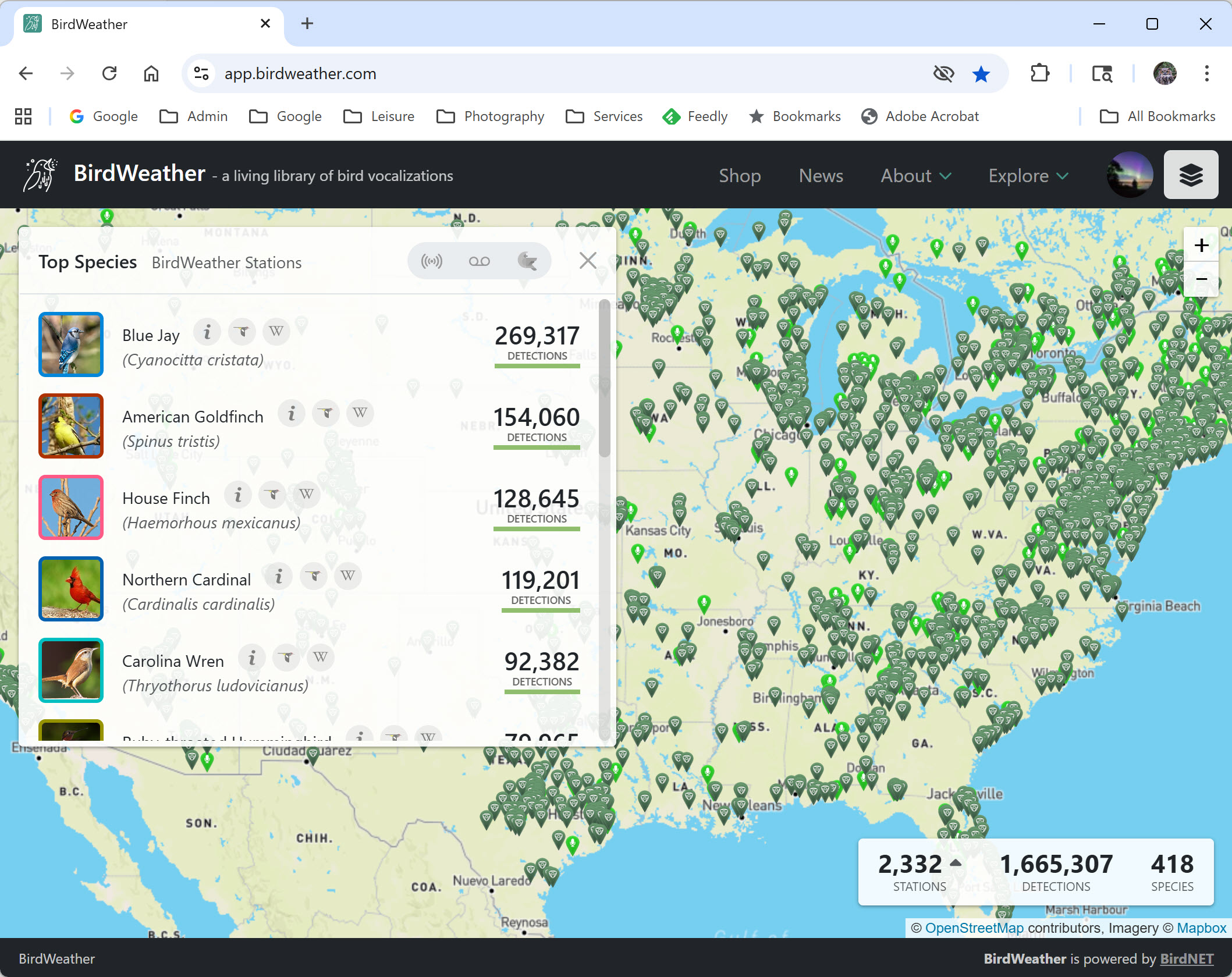
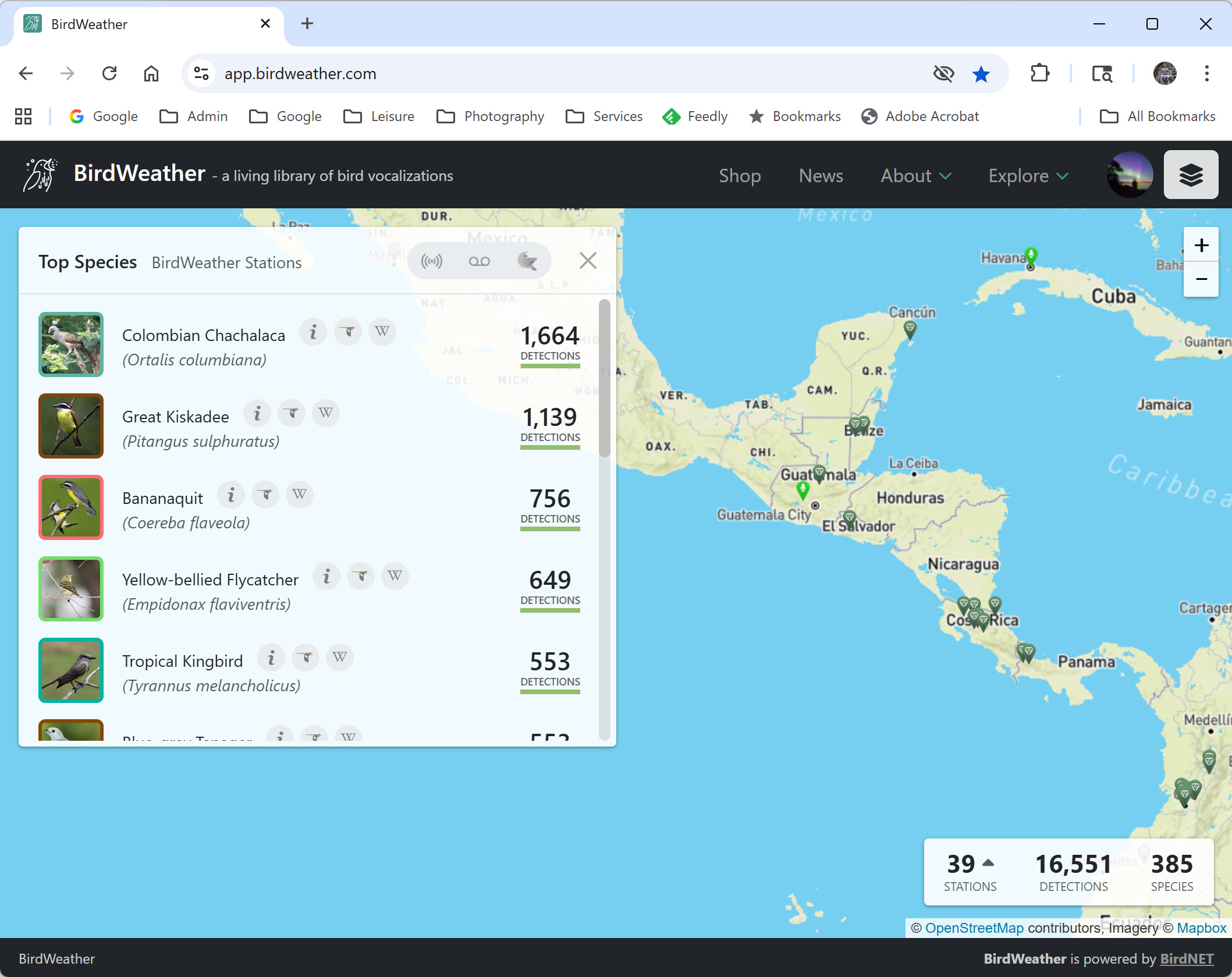
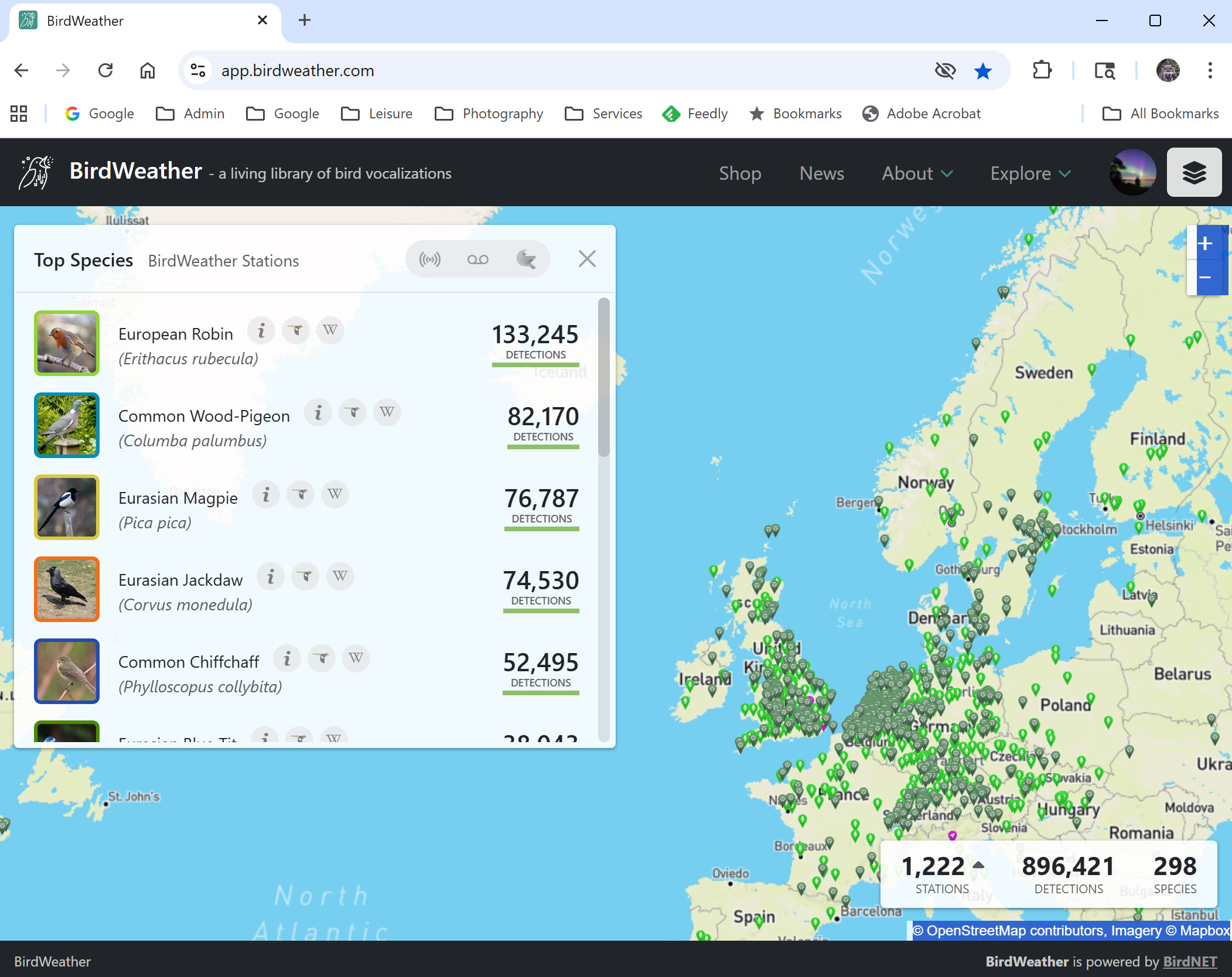
A screenshot of the global map that loads upon access. Use your mouse and move around the world. I have taken screenshots of the United States, Central America and Western Europe. The two types of icons represent the two different types of bird song listening stations … BirdWeather Puc and BirdNET-Pi. The results from either kind of device is provided in an identical manner.
One uses the “plus” and “minus” icons to drill in and out on the map, or a person may just click, drag, scroll, etc. with a mouse.
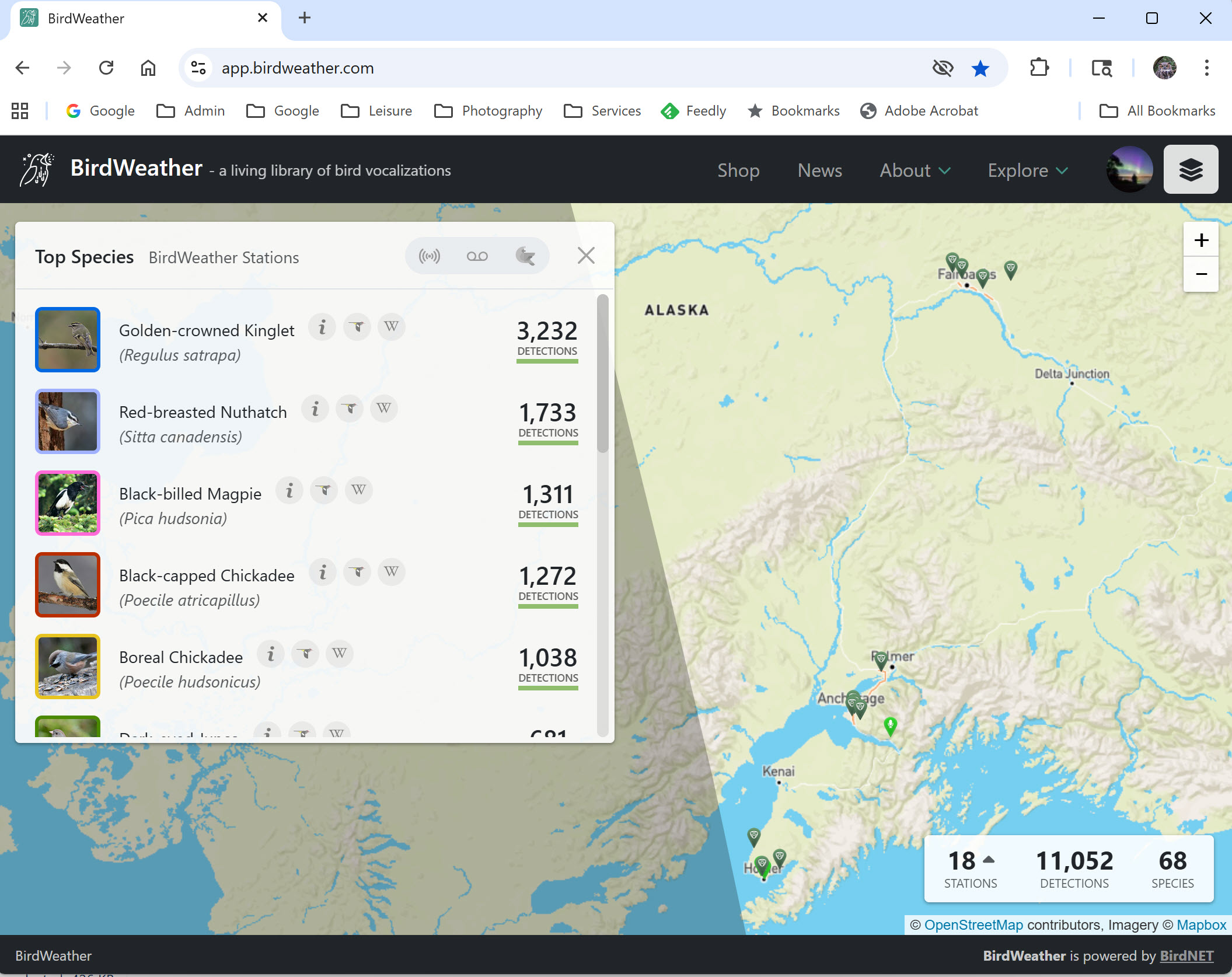
An specific BirdWeather example which assumes a person is going to visit the Fairbanks area in Alaska. One drills in on the map, and ultimately “clicks upon” a specific bird song listening station’s icon which accomplishes two facts:
- One may bookmark that station for ease or revisiting via the web
- The data for that specific station is loaded (explained later)
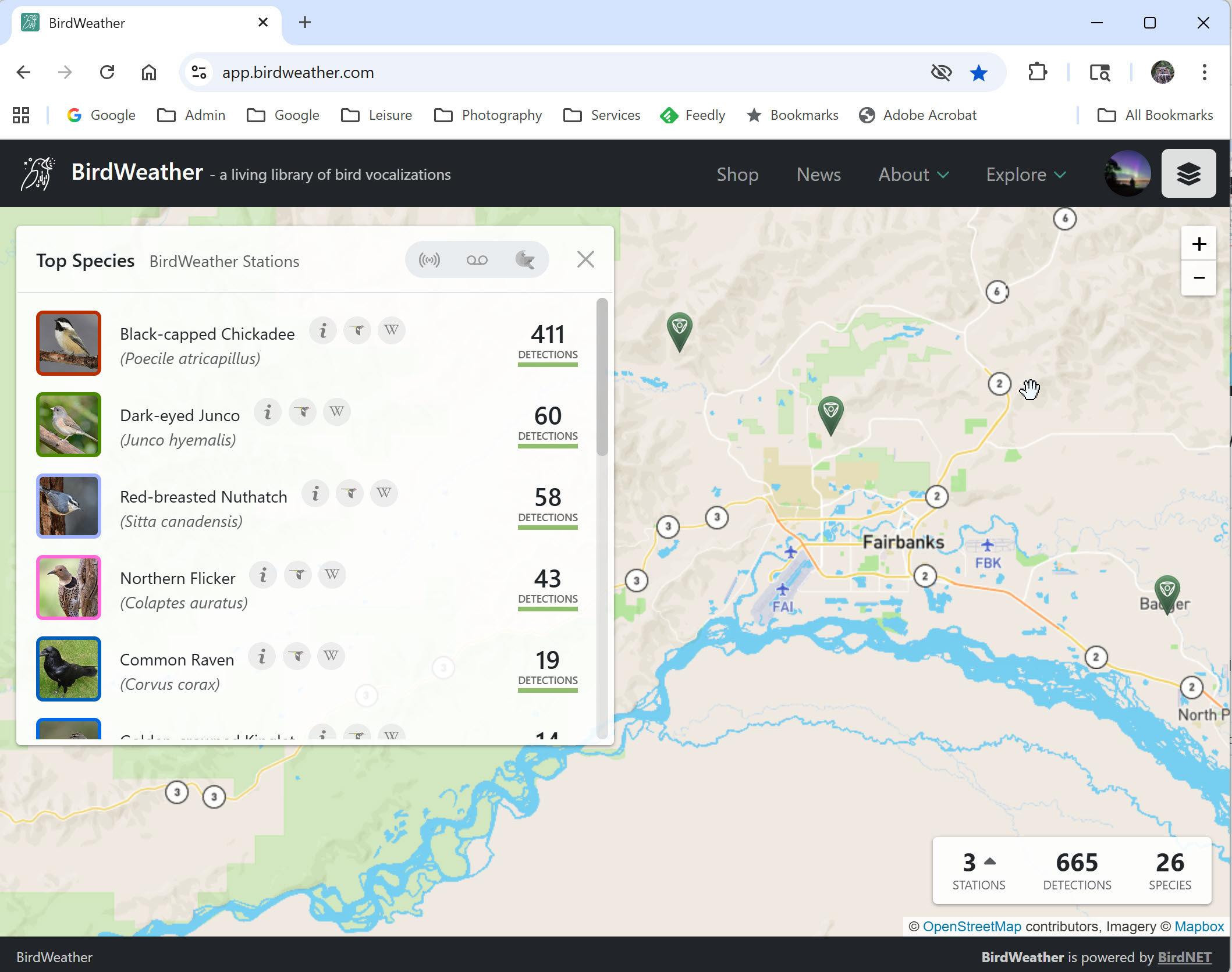
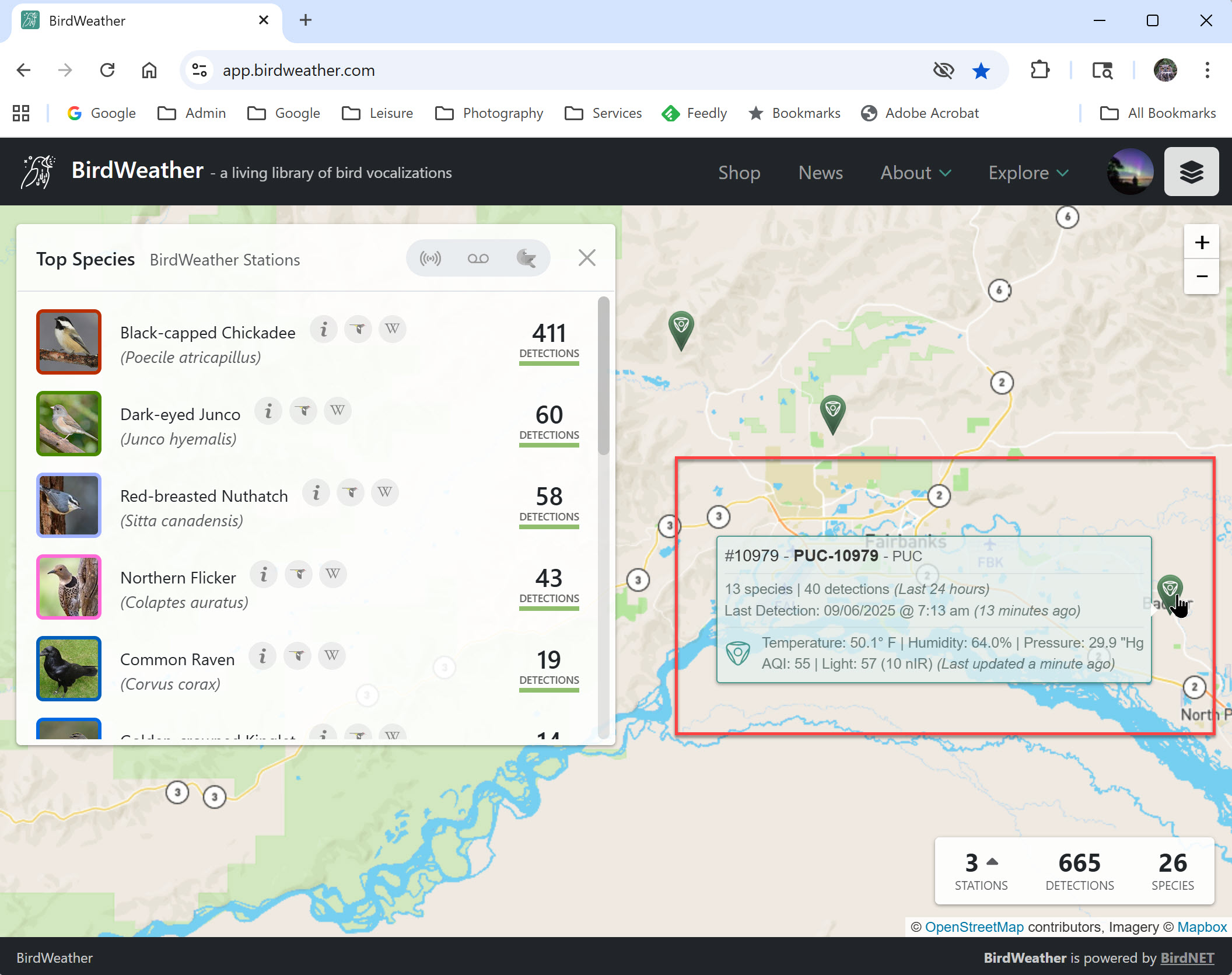
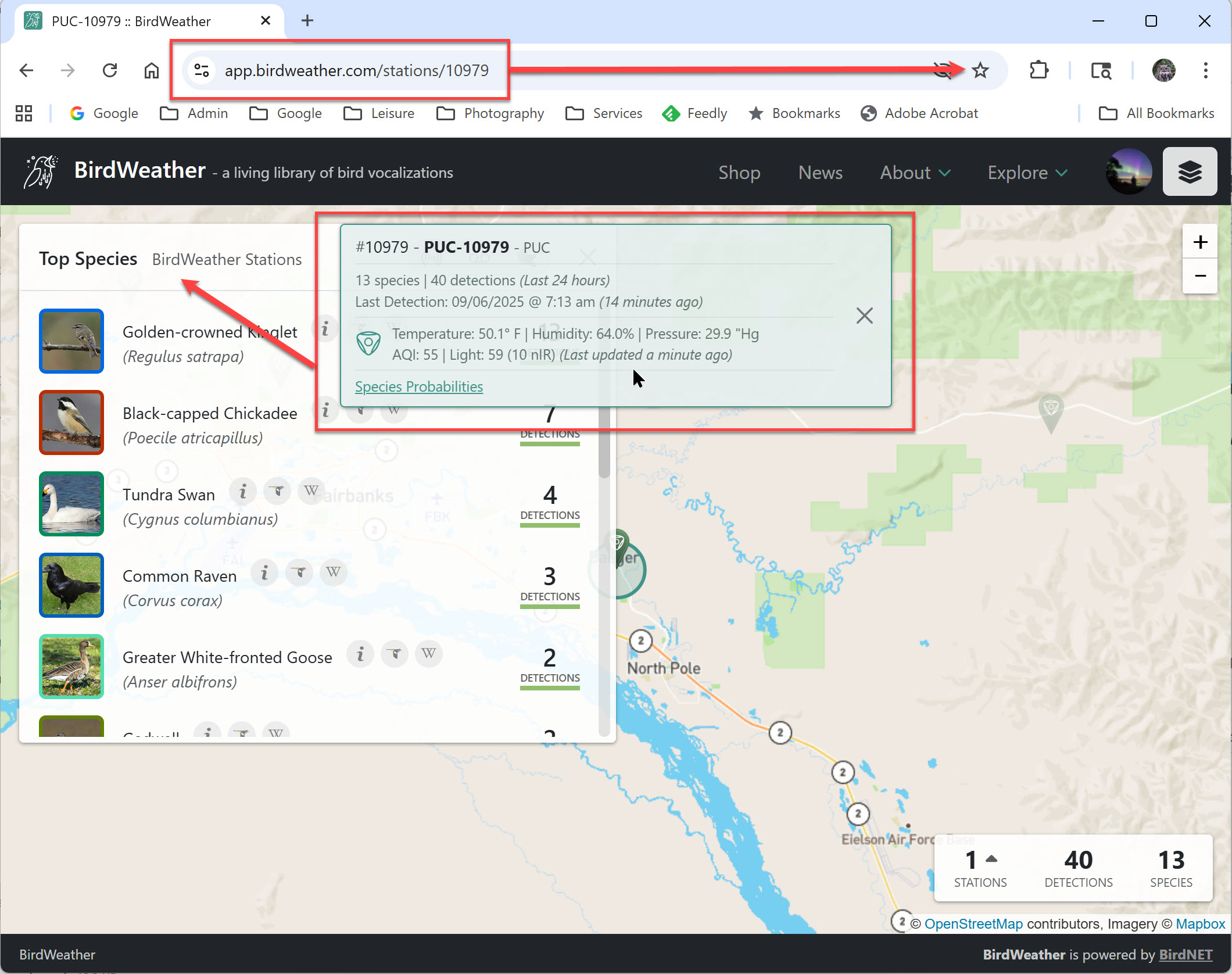
Accessing the data and Listening to the bird songs recorded by a specific station.
- My Listening Stations (use BirdNET-Pi)
- Amity (600 yards above Lake Superior and across from Amity Creek)
- Northstar Lake (southernmost lake of the Hudson Bay Watershed in northern Minnesota)
Navigate to a specific bid song listening station (via the map or a bookmark)
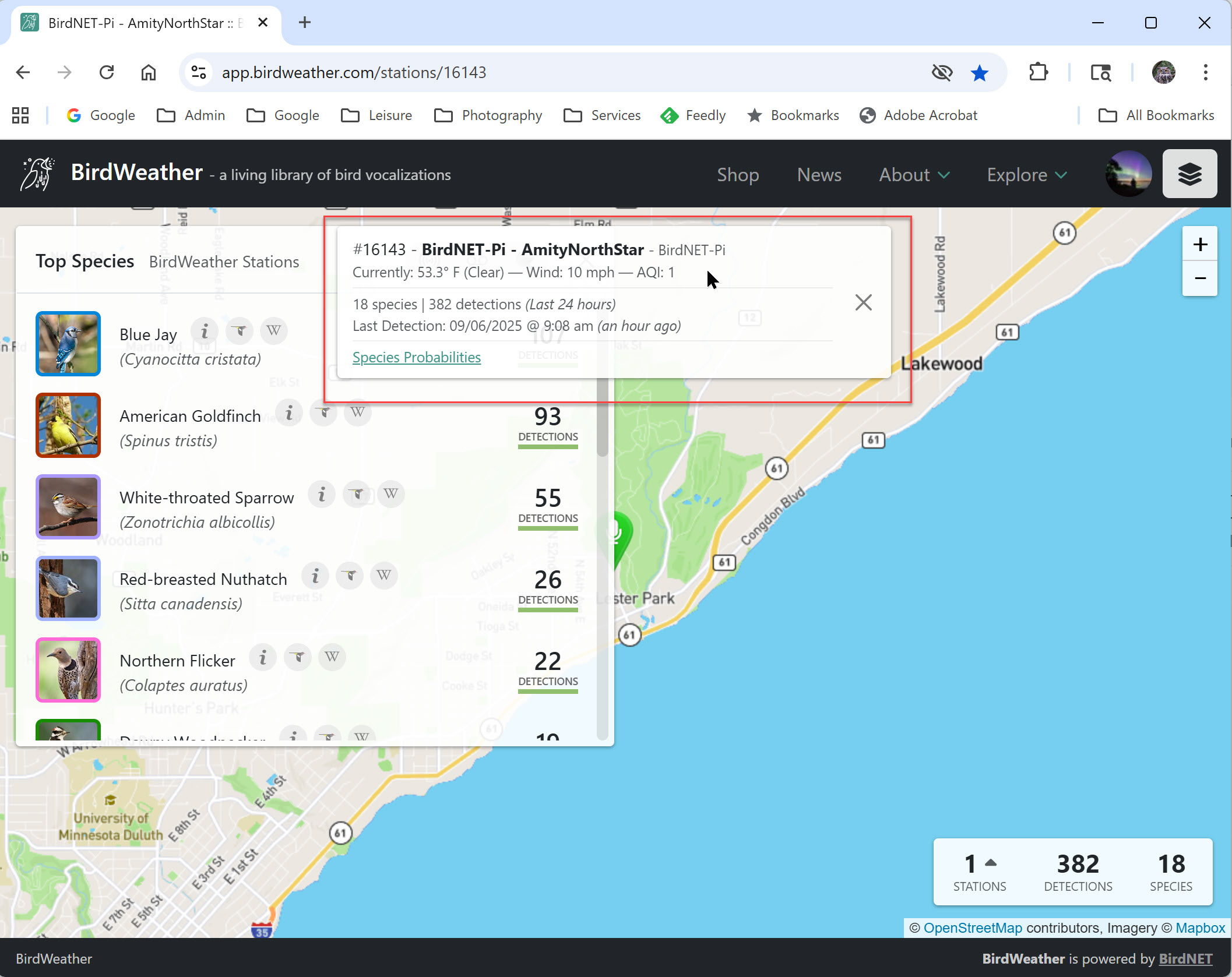
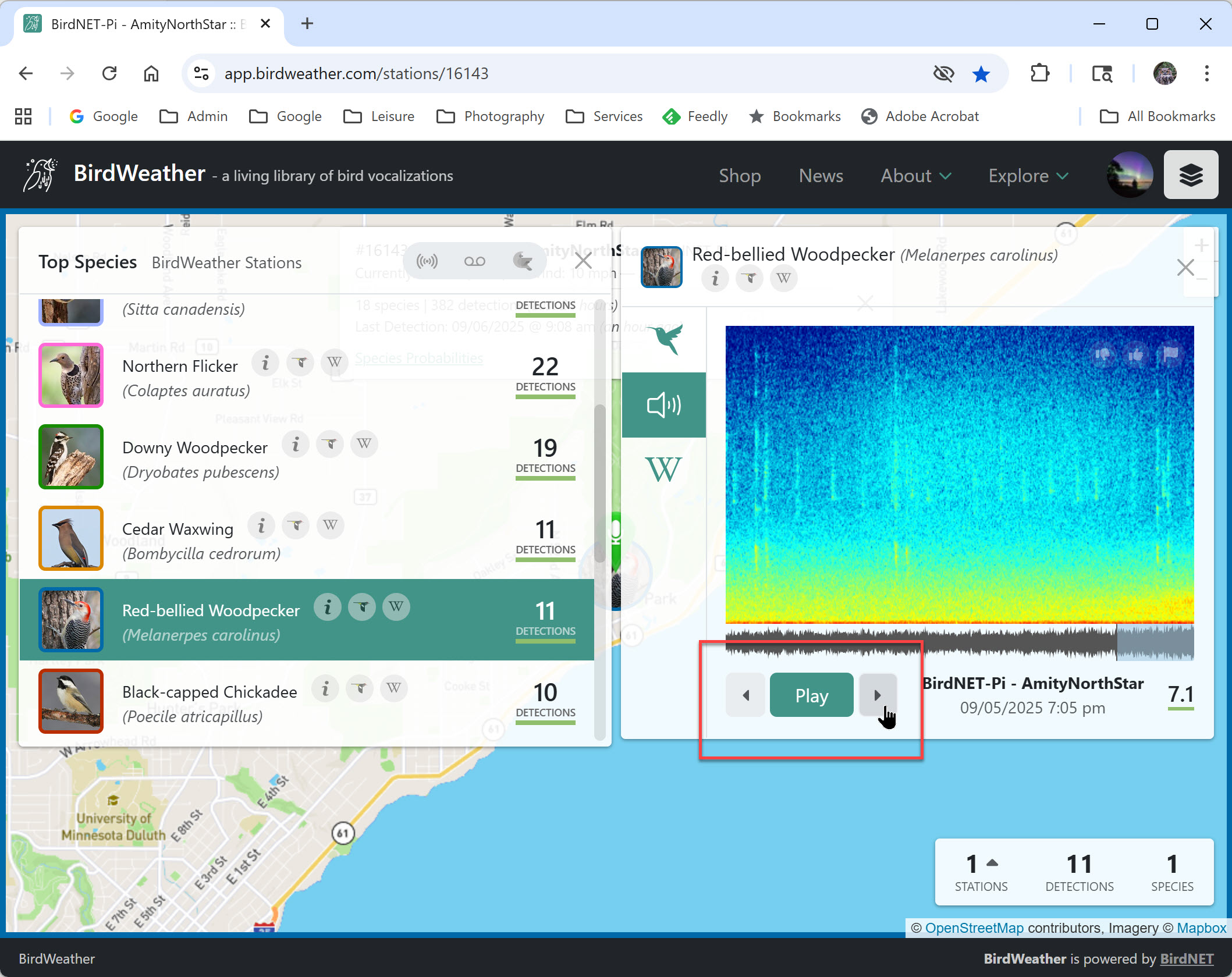
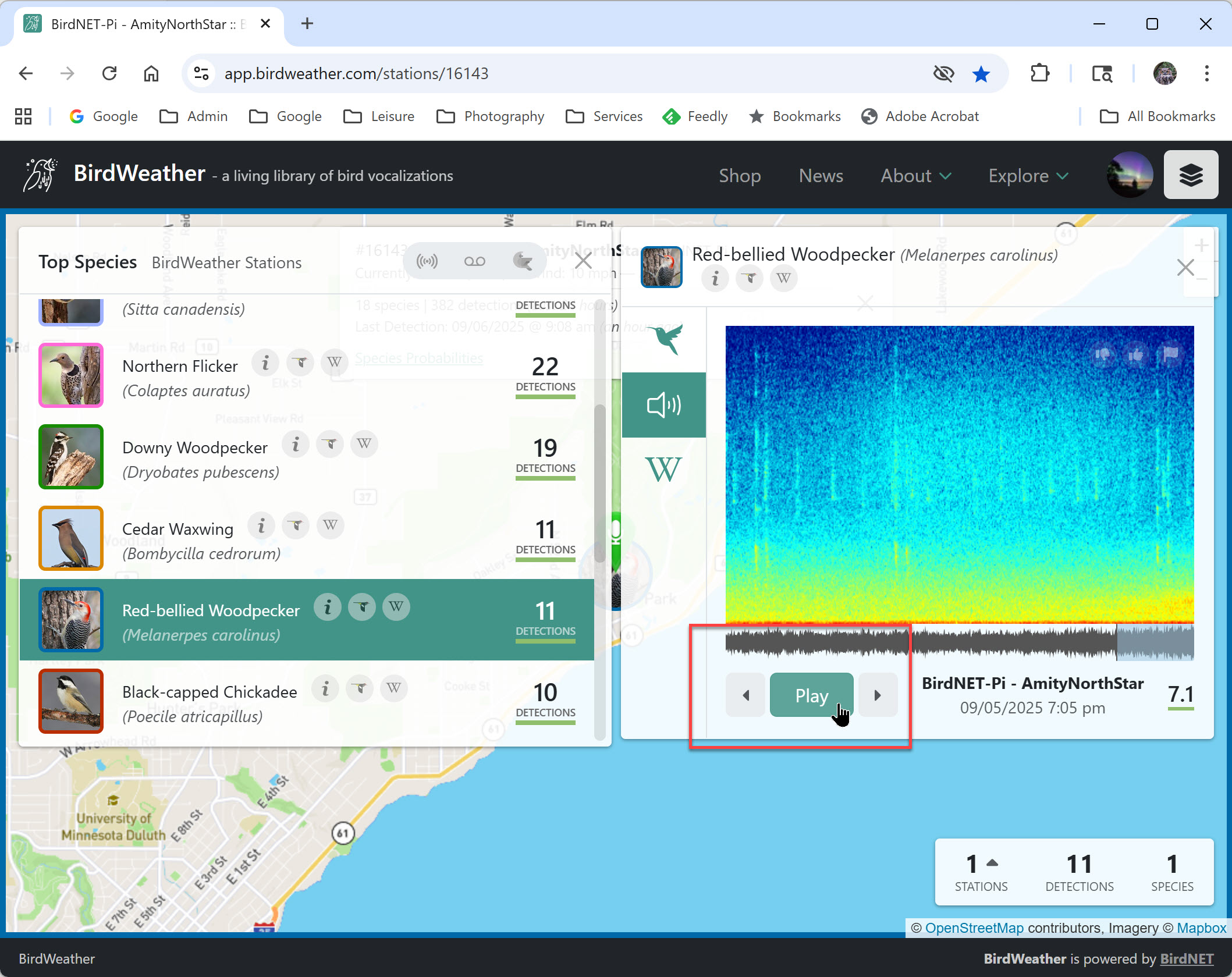
Click upon the “Top Species” window for the list of birds that is displayed behind the basic data for a given listening station. This brings that station’s window to the forefront.
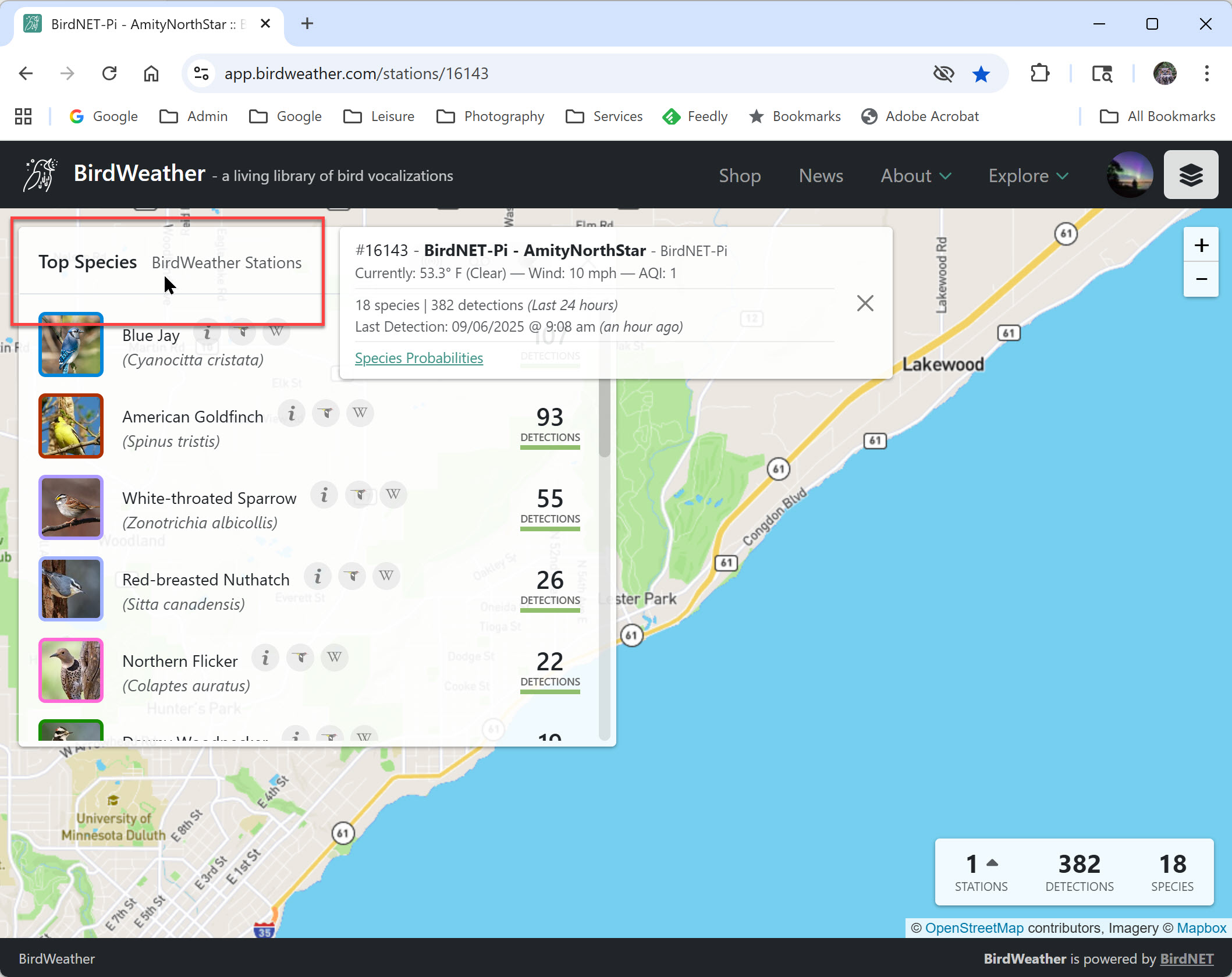
- You may now review the list of bird species ID’d over the past 24 hours. HOWEVER, as you scroll up and down the list … pause and wait a few seconds … the service will load additional bird species (if available) to which you may scroll down.
- Highlight any desired species. This example uses a Red-Bellied Woodpecker.
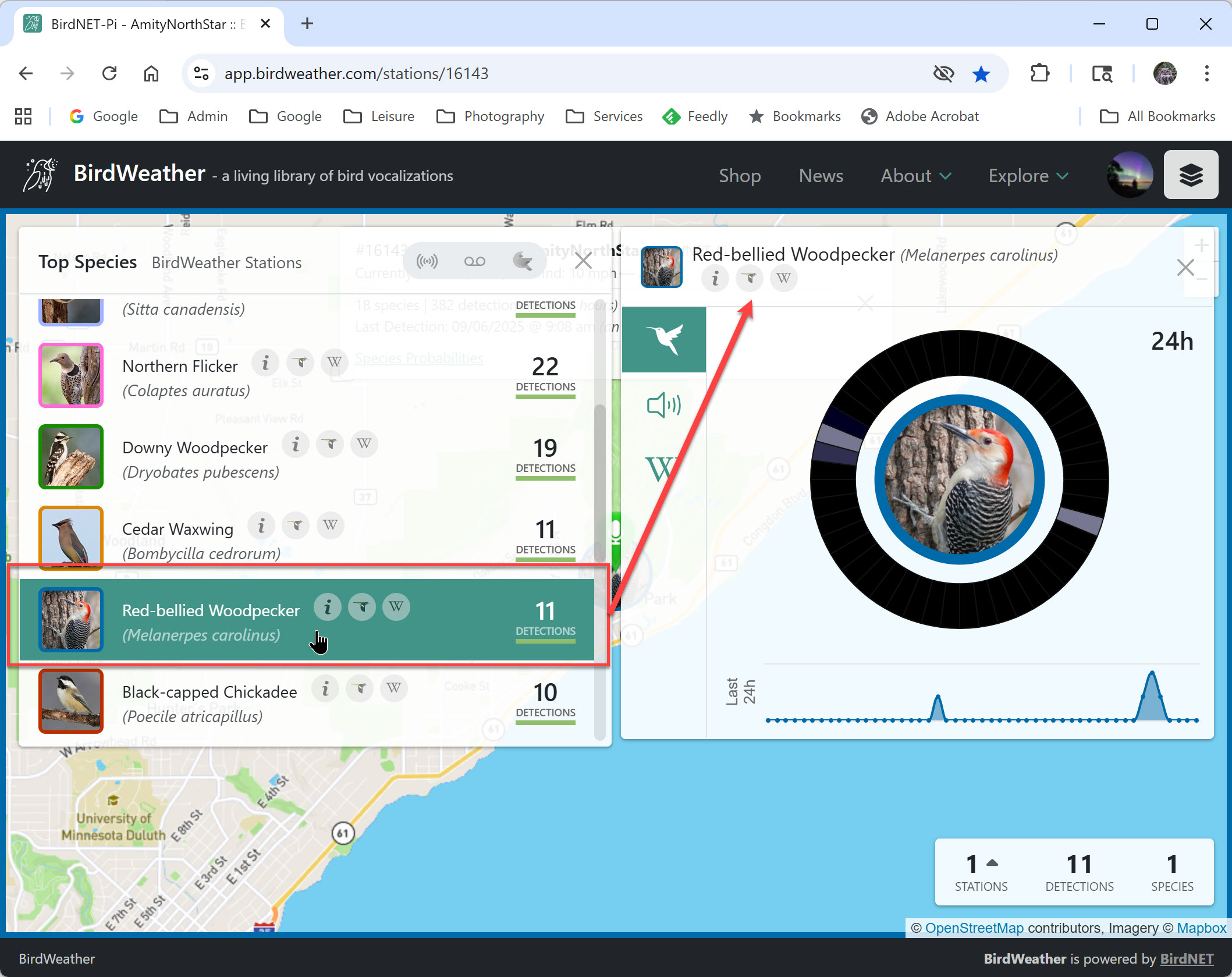
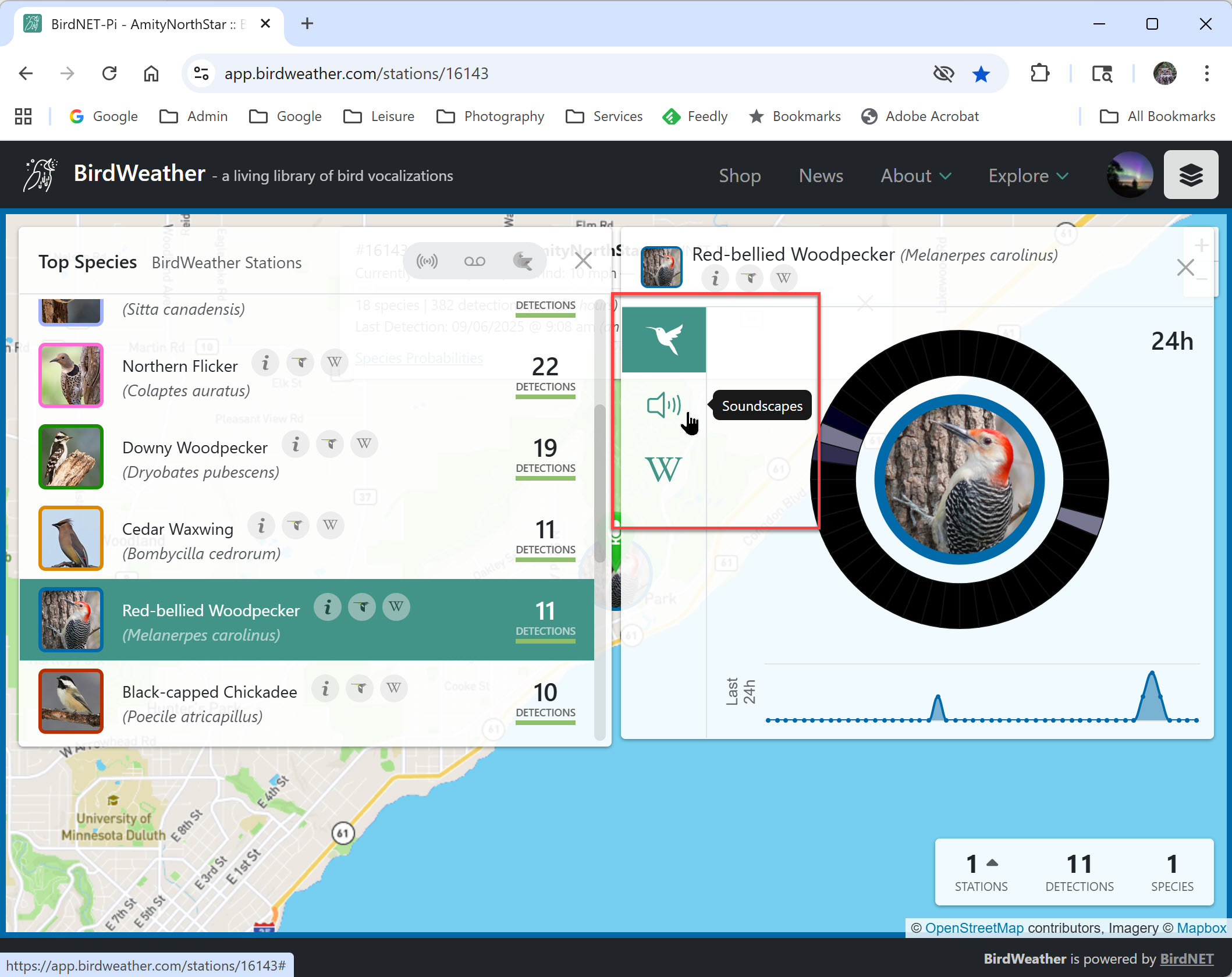
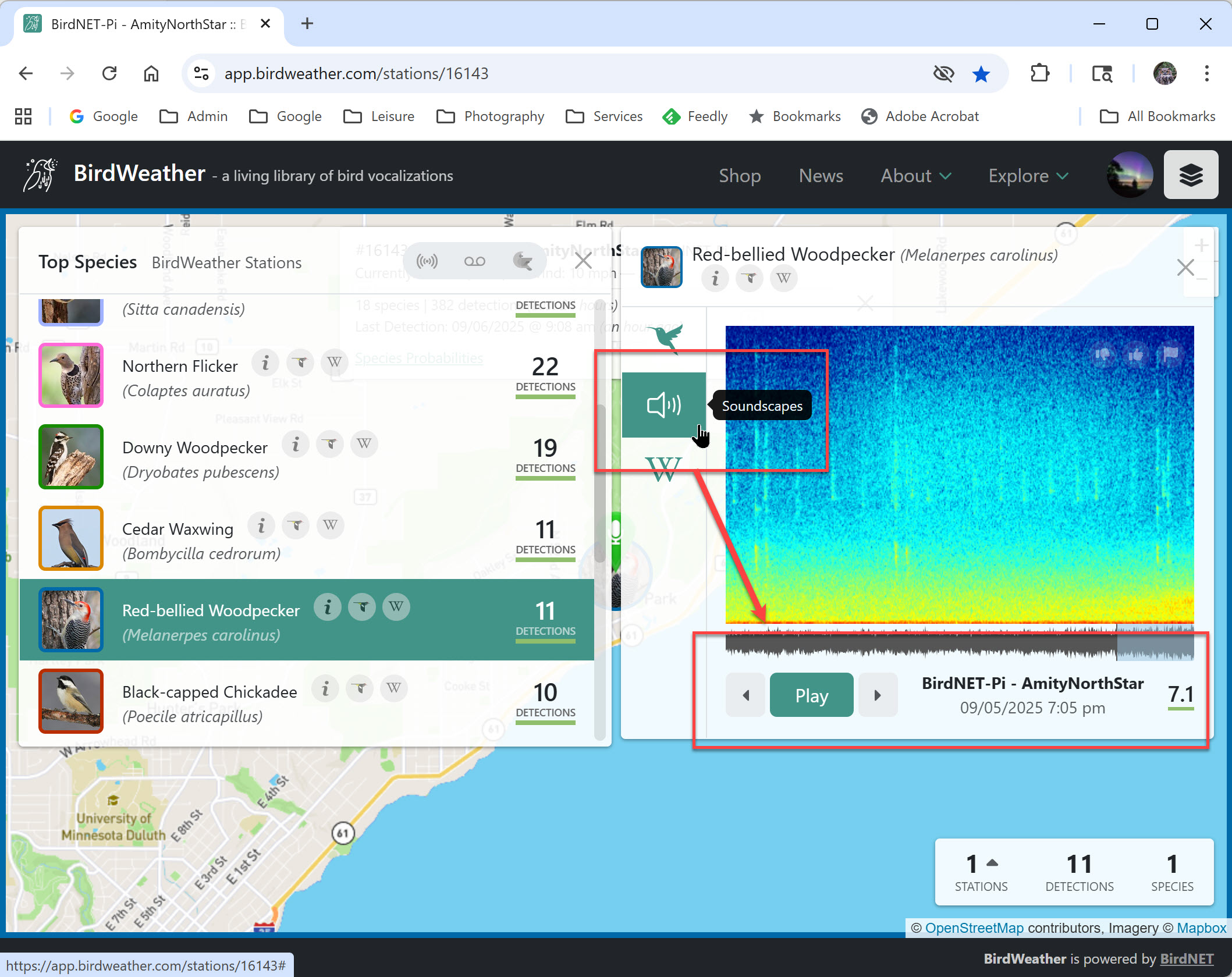
- Once a given bird species is selected, use the icons on the left of that window to either:
- view the detection distribution over the past 24 hours
- listen to specific (or all) recordings from the past 24 hours
- learn more about a bird species via Wikipedia
- Remember: As an owner of the bird listening device, I have access to all data, not just the past 24 hours and via a different software interface.
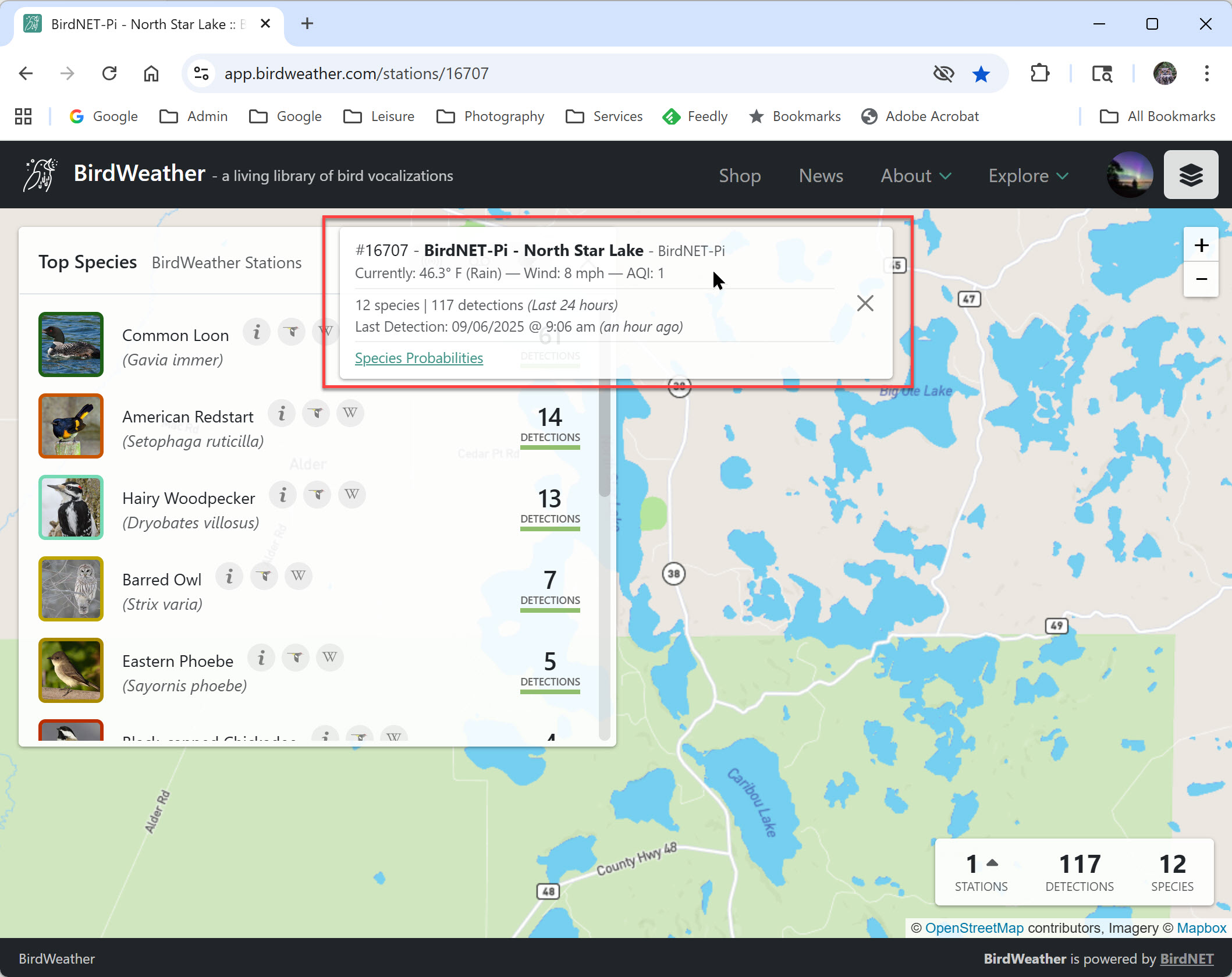
I hope you’ve enjoyed this brief tour of BirdWeather. Here is one final screenshot of my Northstar Lake cabin. Via BirdNET-Pi (my listening device) which has now been active at my cabin for the past two weeks I have learned I have both Great Horned and Barred Owls at my cabin!
Discover more from 365 Days of Birds
Subscribe to get the latest posts sent to your email.