Over the past ten years, early every June I manage to see Great Gray Owls up in Sax-Zim Bog. However, I have noticed that the hunting owls almost never take prey back into the forest, and thus a nearby nest. My curiosity kicked in and I found it hard to believe all the owls were juveniles … older than one year, but not yet of breeding age. Thus, started my own research.
I found a great study conducted by the United States Forest Service. It appears most of the Great Gray Owls seen in early June are moms who are newly re-independent. Apparently about 3+ weeks after the owlets fledge, the moms leave the area! Mom’s job is done, and dad owl now takes care of the owlets on his own, hunting for and feeding them.
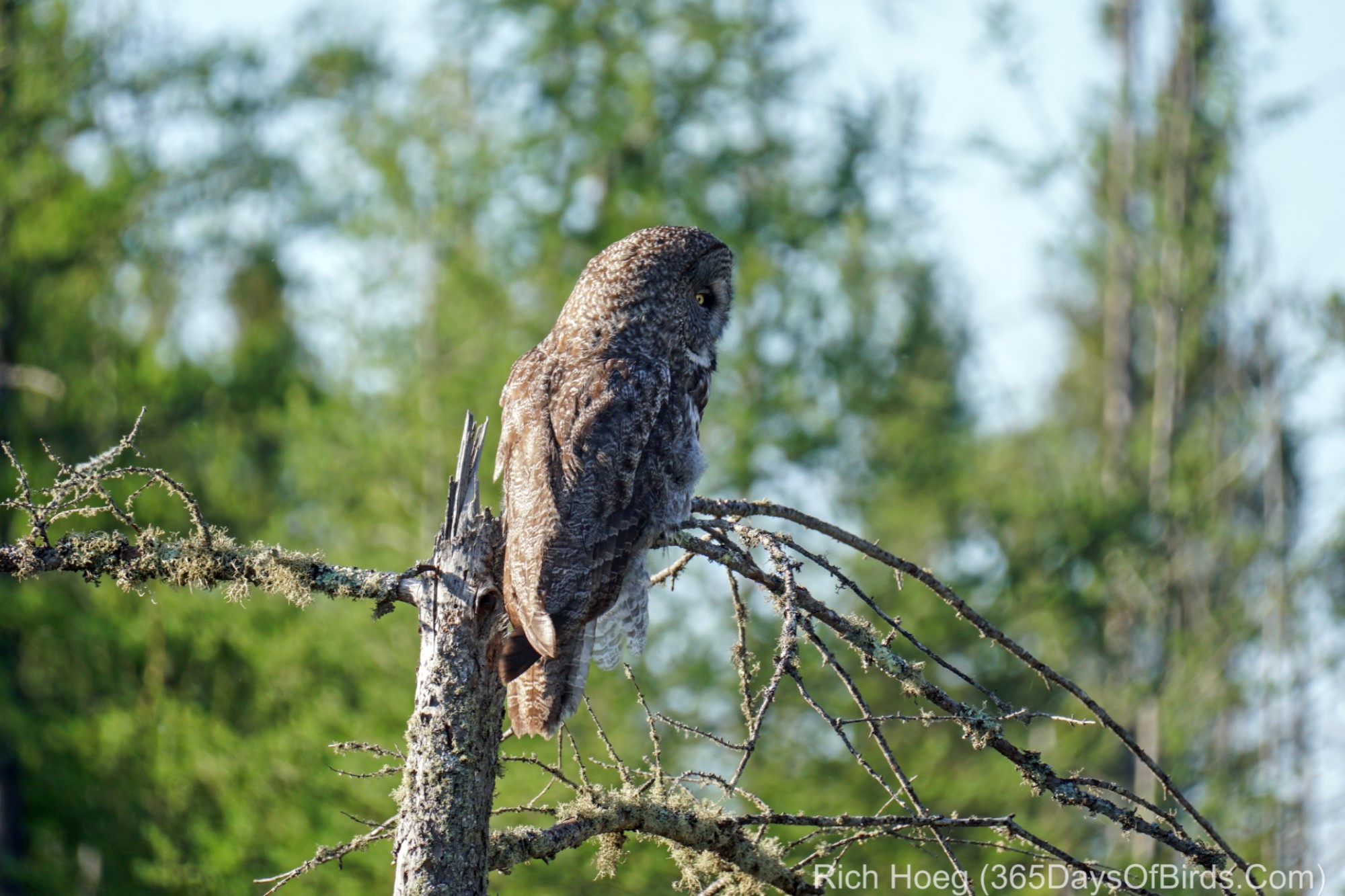
You may download and read the full study from the US Forest Service. It is a worthy read on the life of the Great Gray Owl. Here are also two of my photographs from this June. Beneath the images you will find an excerpt from the forest service study.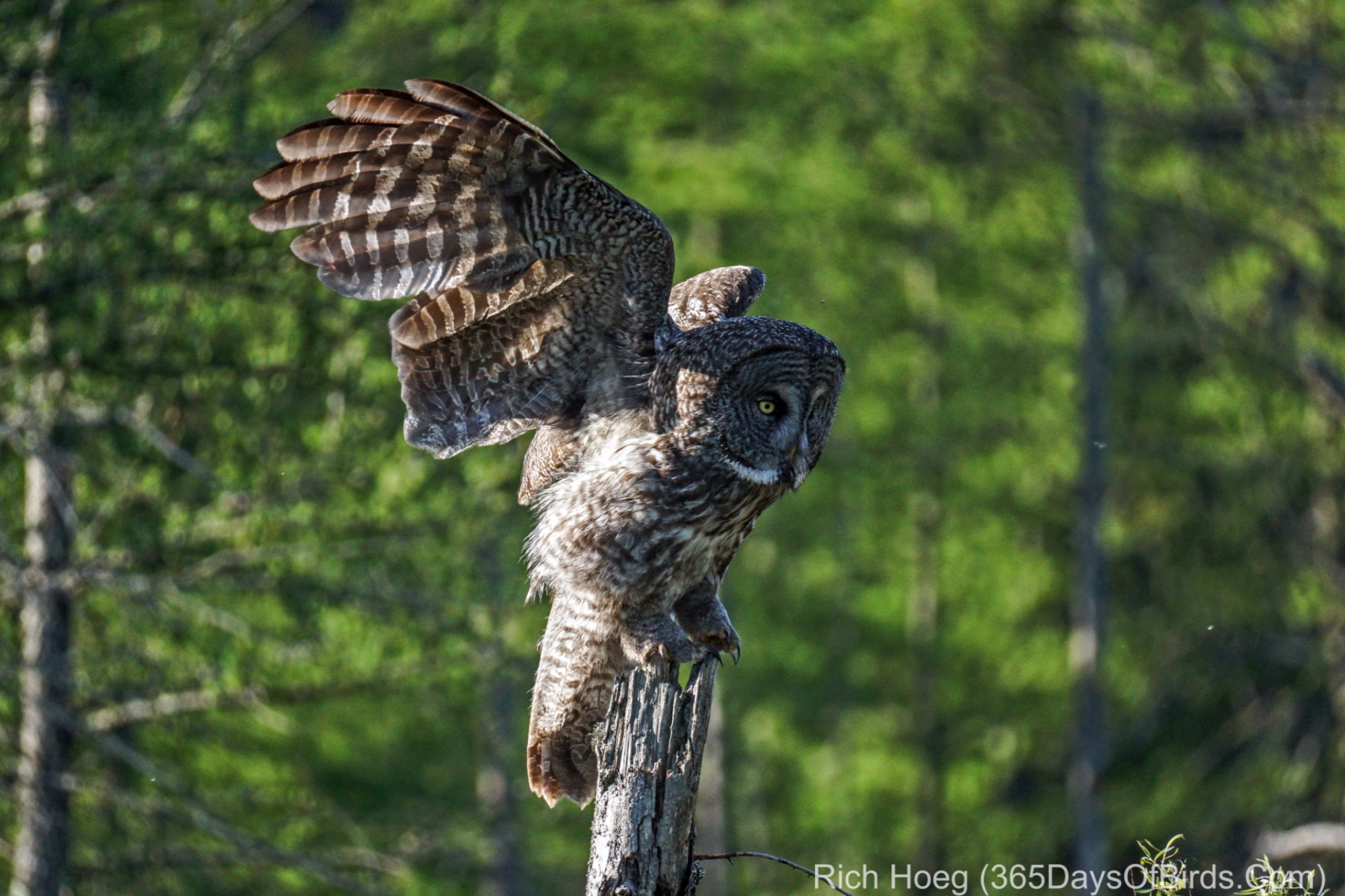
- Quoting the US Forest Service Research Study …
- Ecology of the Great Gray Owl (Evelyn Bull and Mark Henjum)
“After about 3 weeks, the female no longer brooded the young during the day but perched near the nest. After about 4 weeks, the young owls left the nest (color plate A). Assuming, incubation lasted 36 days, as reported by Mikkola (1983) in Finland, the mean number of days in the nest was 26 days. Young left the nest between 14 May and 19 June. Nestlings raised at Spring left the nest earlier than nestlings raised in the other study areas (fig. 3).
…. continued later ….
After young left the nest, the female stayed near to protect them. Any intruder-person, beast, or bird-coming near the young was immediately warned by the angry hoots of the female. If her warning went unheeded and the intruder approached the young, the female frequently attacked. The male continued to feed both the female and young. After several days, the male usually took prey directly to the young, and the female caught her own prey. Some females also caught prey for the young. After 3 to 6 weeks, 11 of 12 females had apparently left the care of the young to the male; the females were at least 2 kilometers away, and we never saw them near the young again. One of these 12 females remained near the male and young for several months. Males continued to feed the young for up to 3 months after the young left the nest. After this time, the young started to catch prey on their own.”