All posts by richardhoeg@gmail.com

Birding in the Past: Evening Grosbeaks!

The birds one finds in northern Minnesota have definitely changed since my youth (I’m 62 years old). Our family home was only a few miles from where my wife and I live now. We had two huge bird feeders which were always busy, particularly in the winter. Like clockwork, every fall I could count upon the fact that when the Mountain Ash berries ripened in our yard, the Evening Grosbeaks would appear out of the Boreal Forest. When the berries were gone, and the grosbeaks were sufficiently drunk from fermented berries, they would then spend the rest of the winter in our yard … visiting our feeders many times per day. As the snows began to fall, Red Crossbills would join the backyard celebration.

It has been decades since I have had either bird specie in my feeders. However, now each winter sees my flock of Mourning Doves making their daily visits to my feeders, and Mr. and Mrs. Cardinal normally appear. While mourning doves were always present when I was a child, they never braved the northern Minnesota winters. To see a cardinal, one had to travel way south of Duluth. Yes … times and weather have changed.

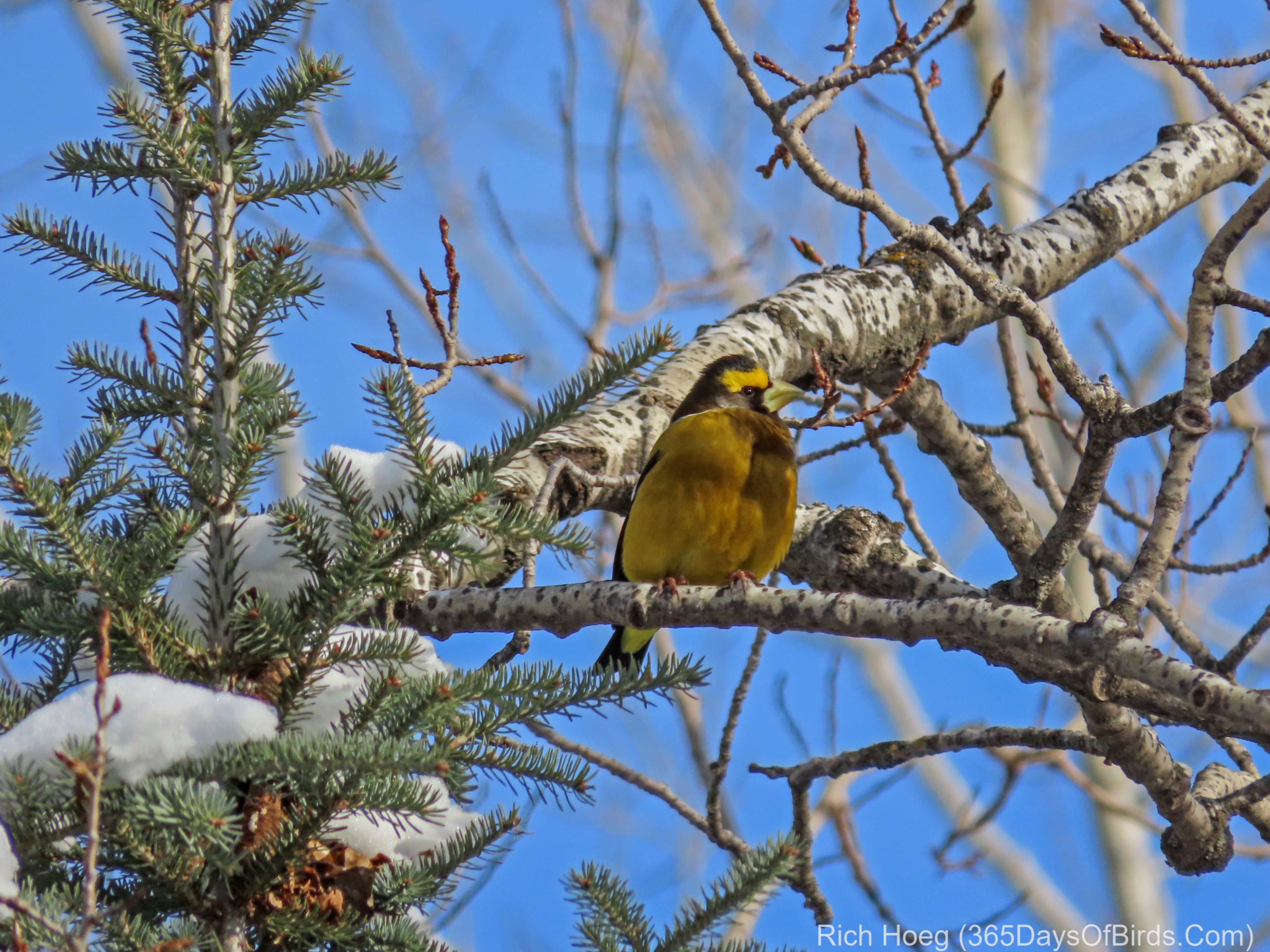
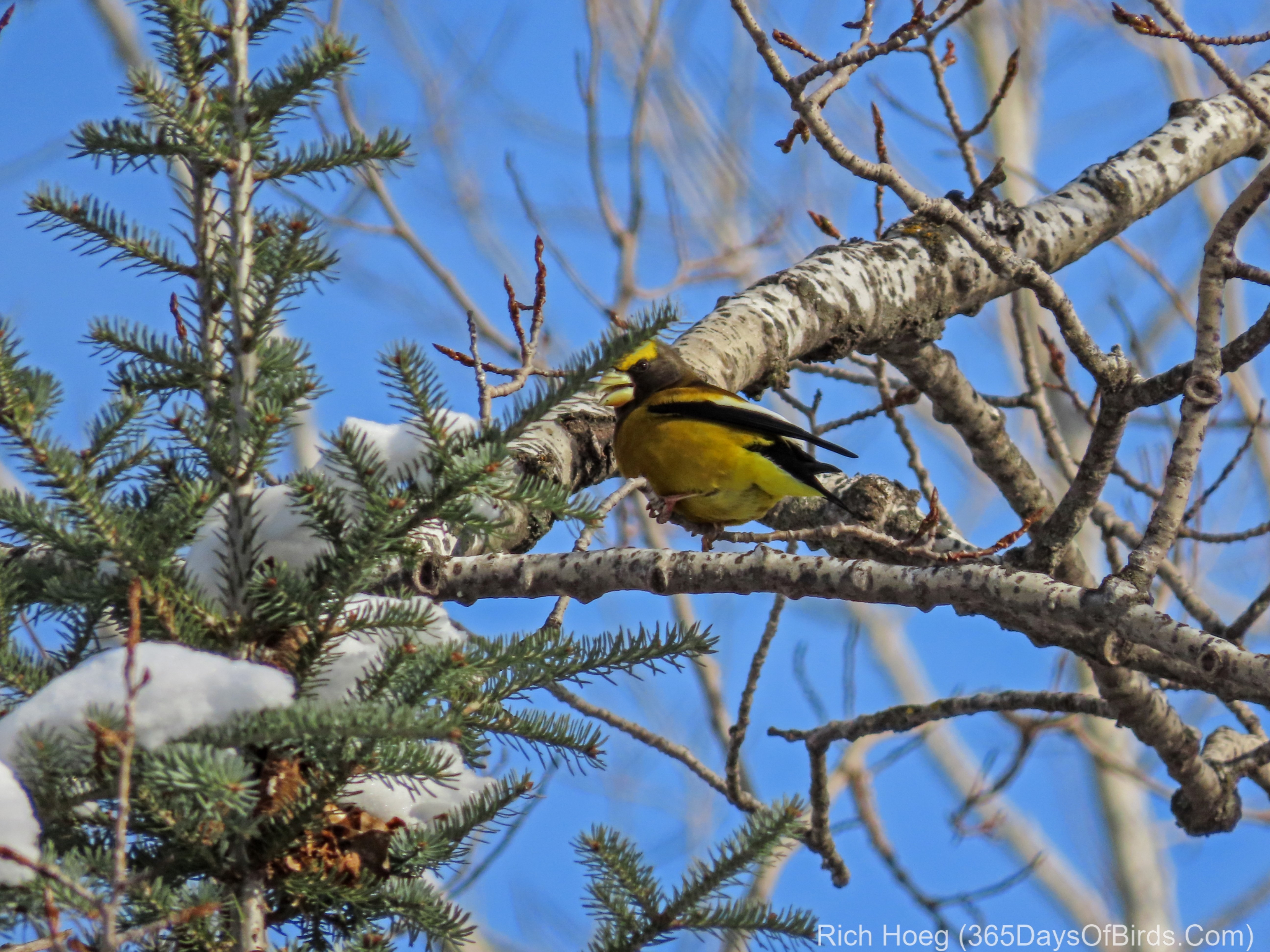
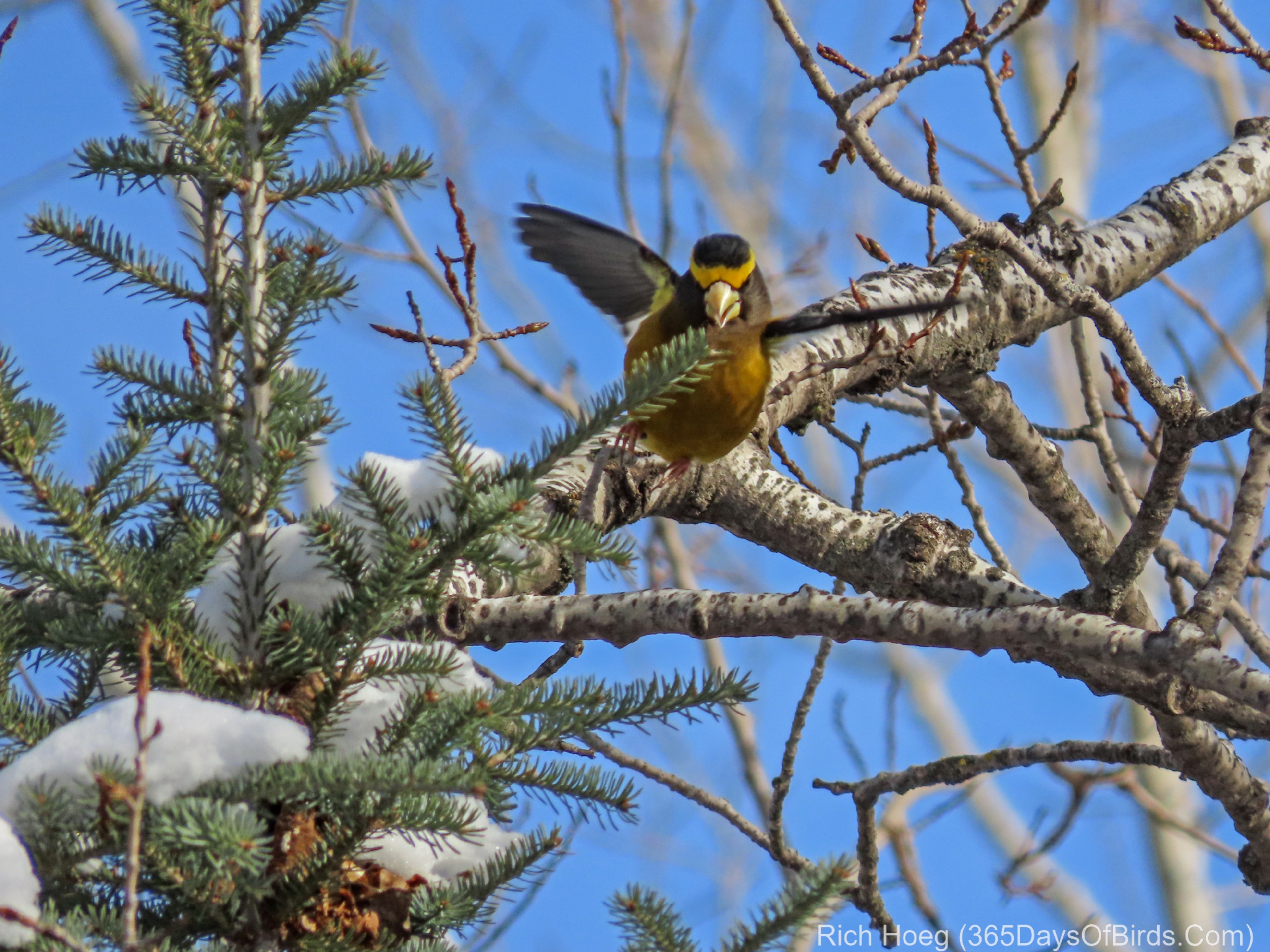
Thus, you can imagine my pleasure when while birding yesterday morning I heard Evening Grosbeaks! Even though I normally only find these birds once or twice per year, their song is etched into my memory. I knew immediately what birds were near by, and looking up to the very tops of some ash and pine trees … there were my yellow friends. Life is good.

Since your own youth, what birds do you now see, or don’t?

Evening Grosbeaks on McDavitt Road in Sax-Zim Bog
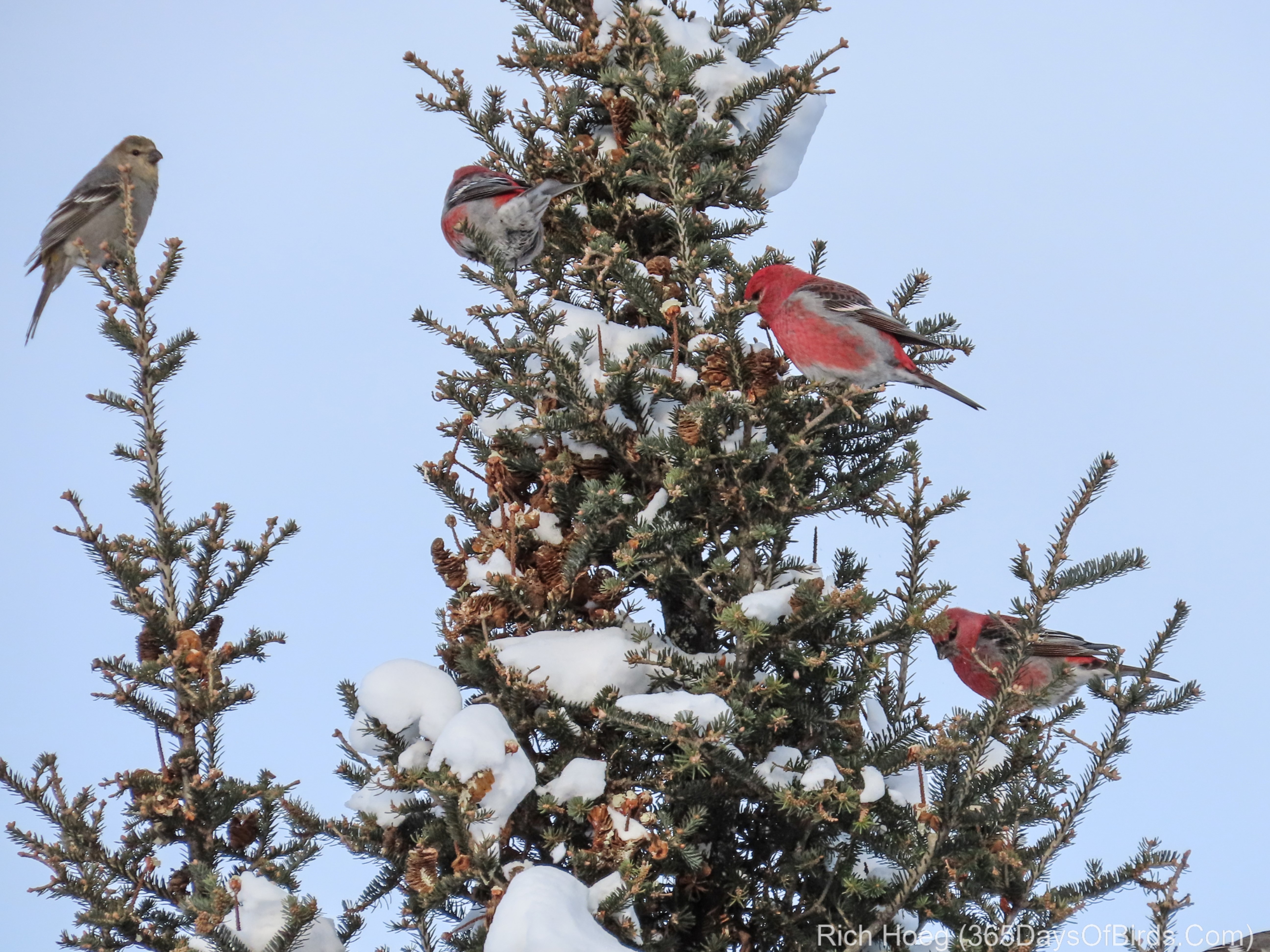
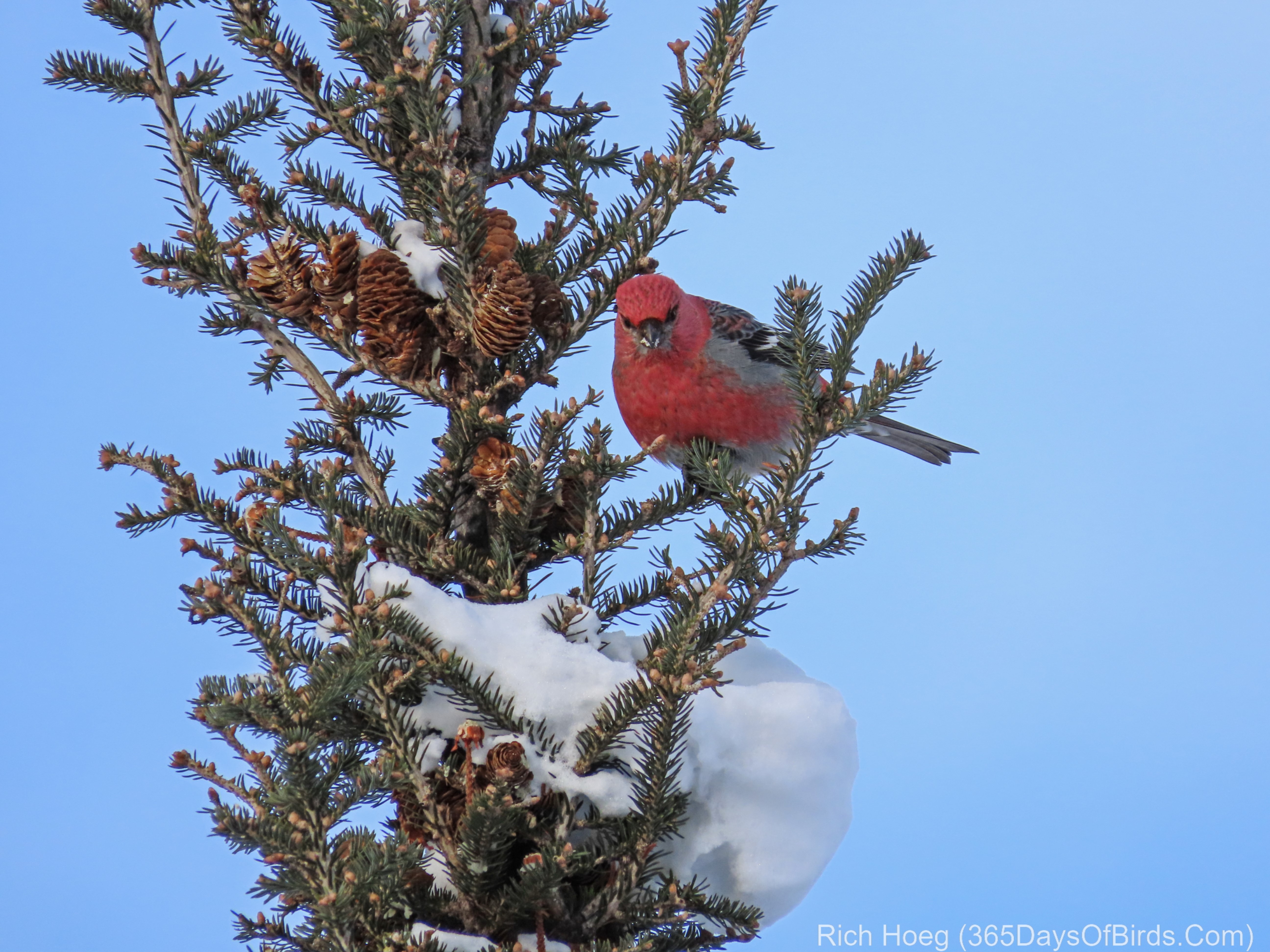
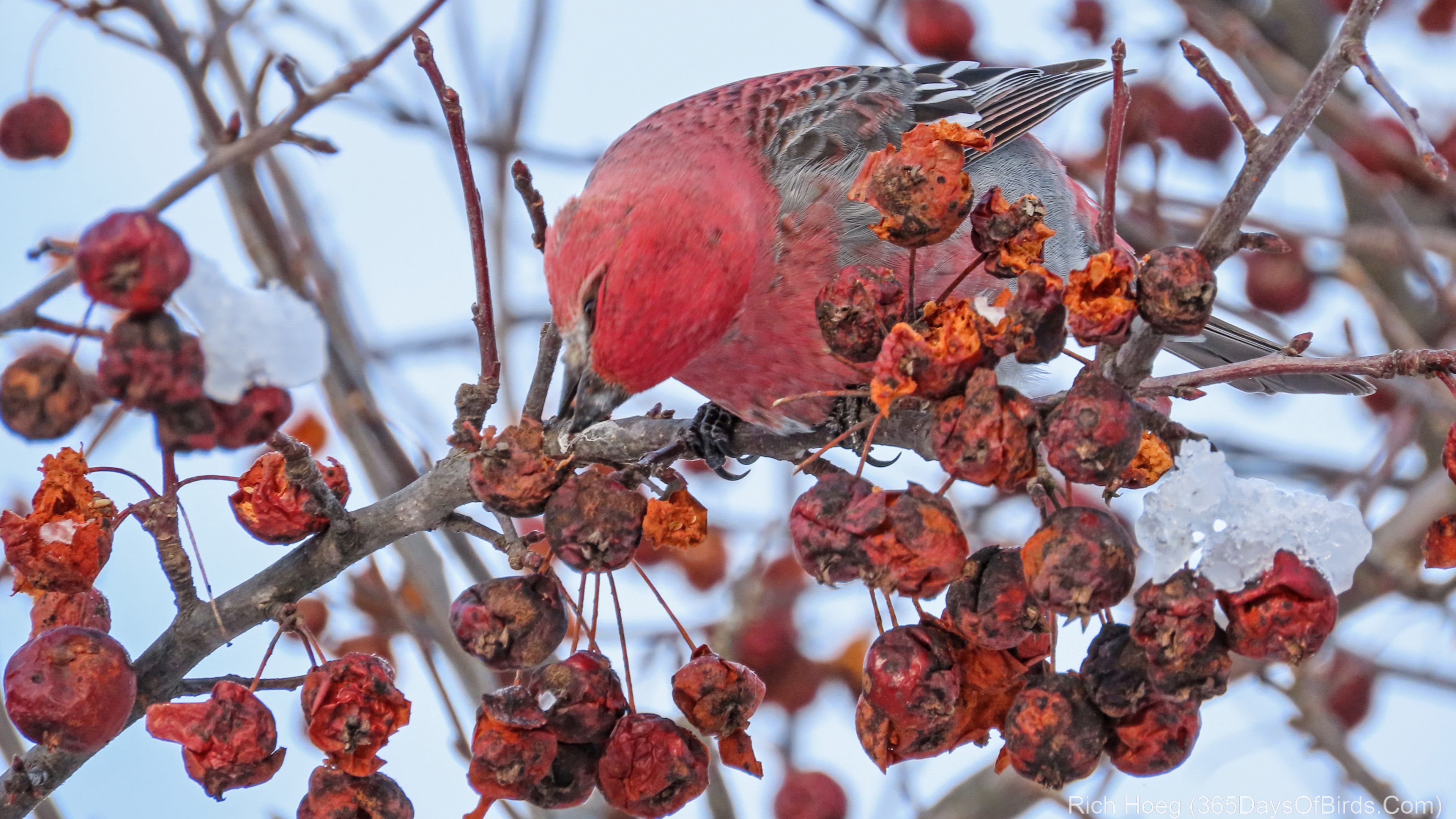
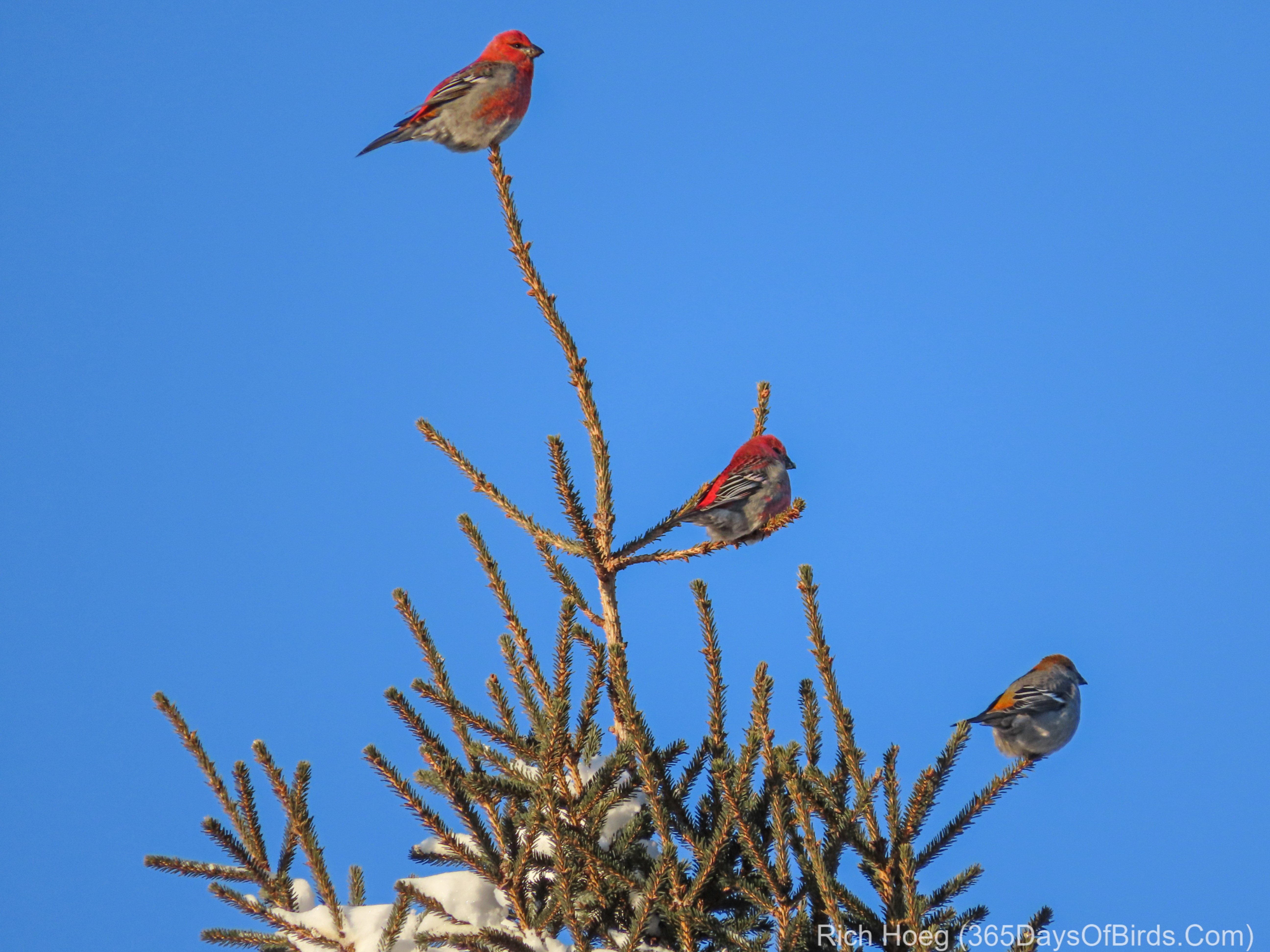
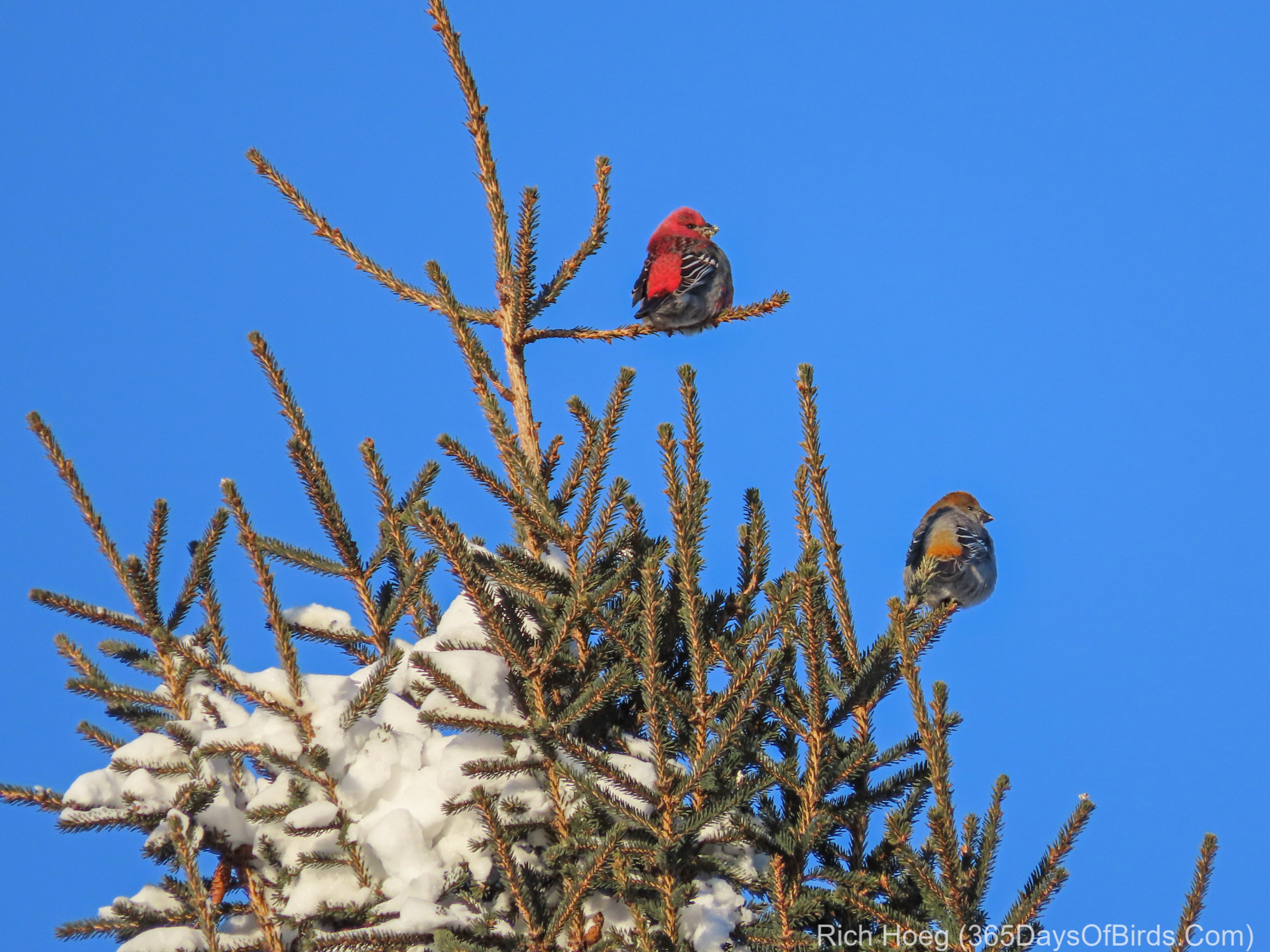
The Other Grosbeaks! (Pine Grosbeaks at an old Berry Farm near Duluth)
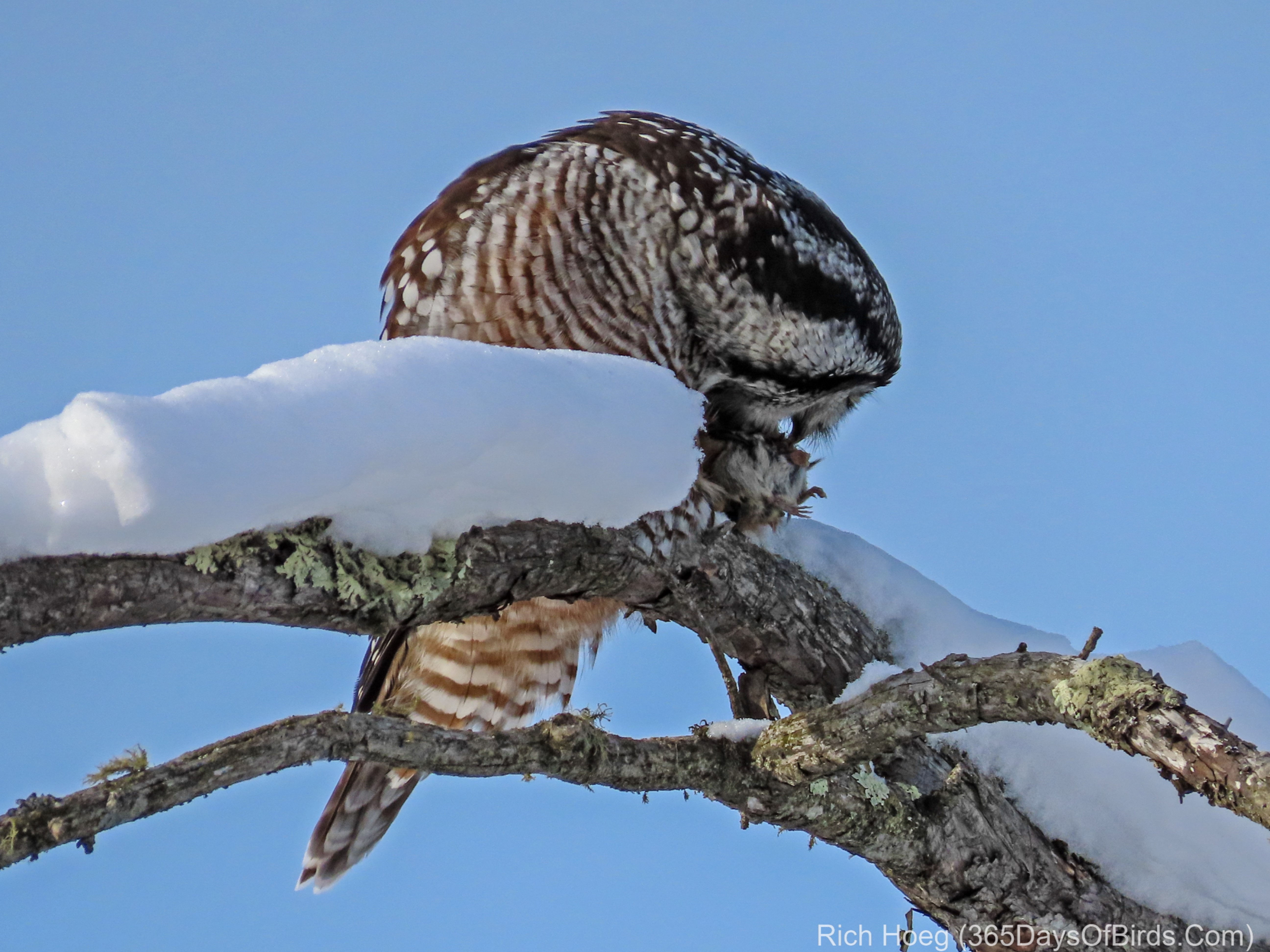
The Daily Northern Hawk Owl Fix (a vole was about to meet its doom)
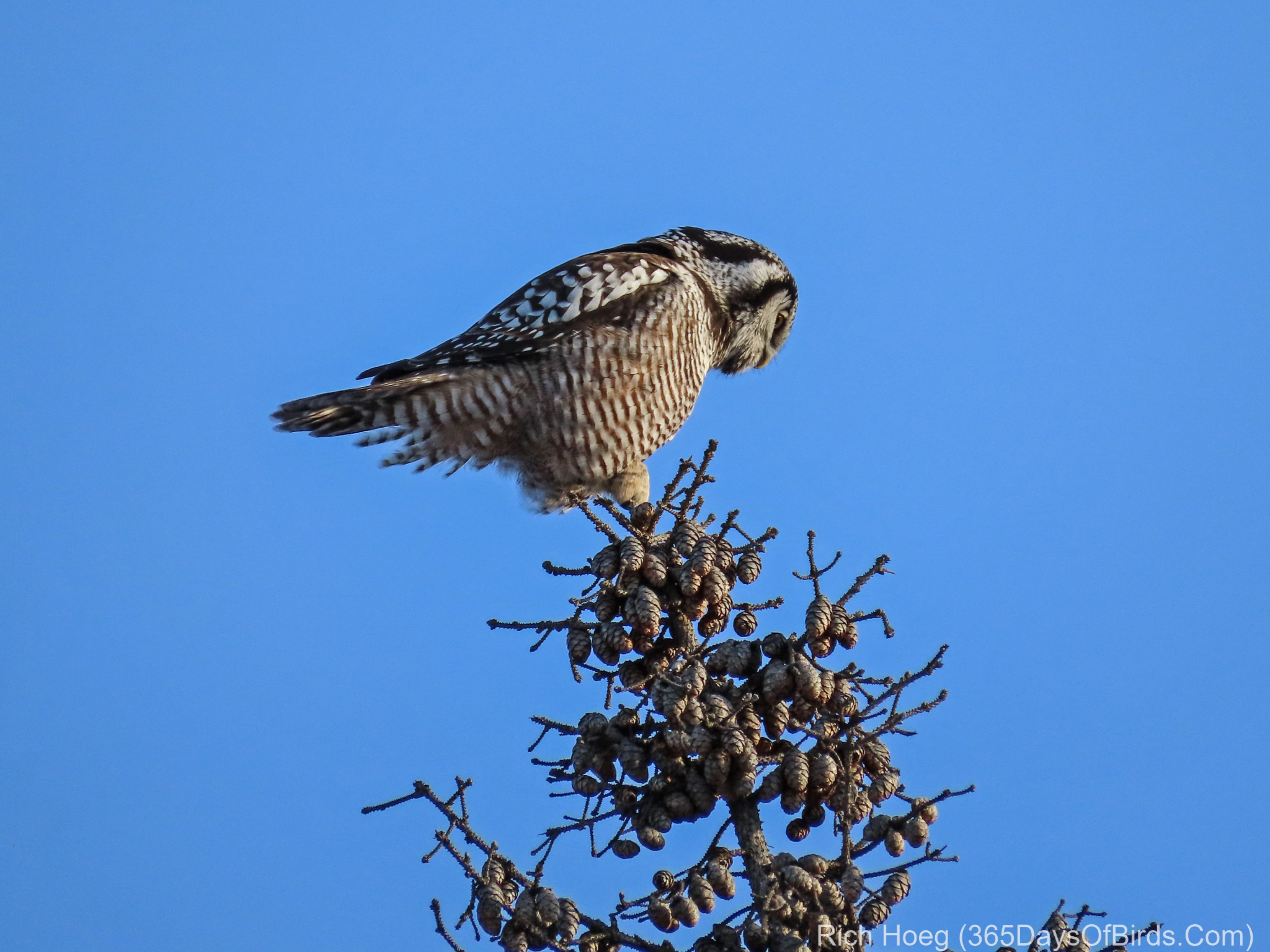
Eating a vole (earlier in the day before the sun really came out)
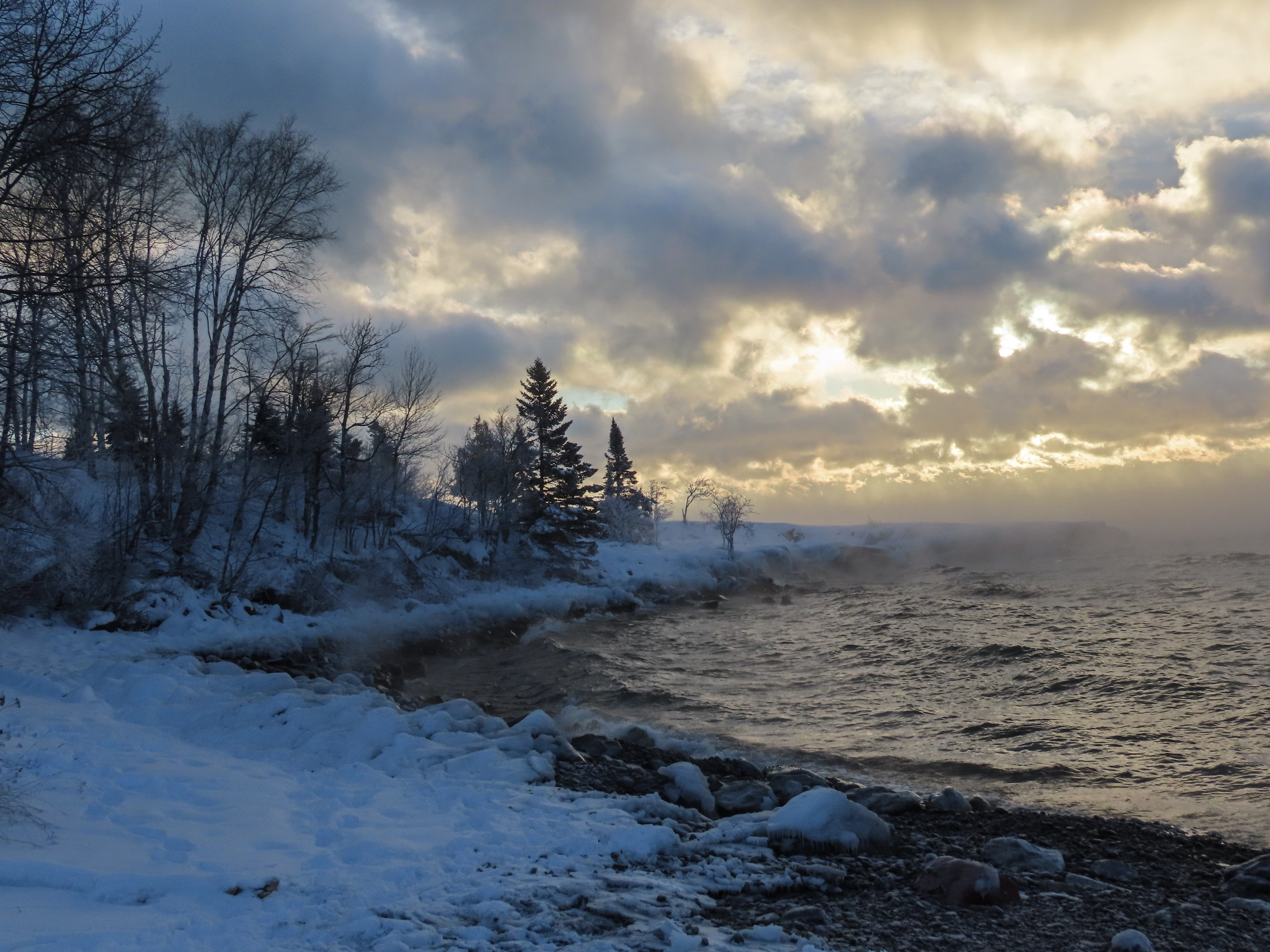
Canon SX70 Landscape Test

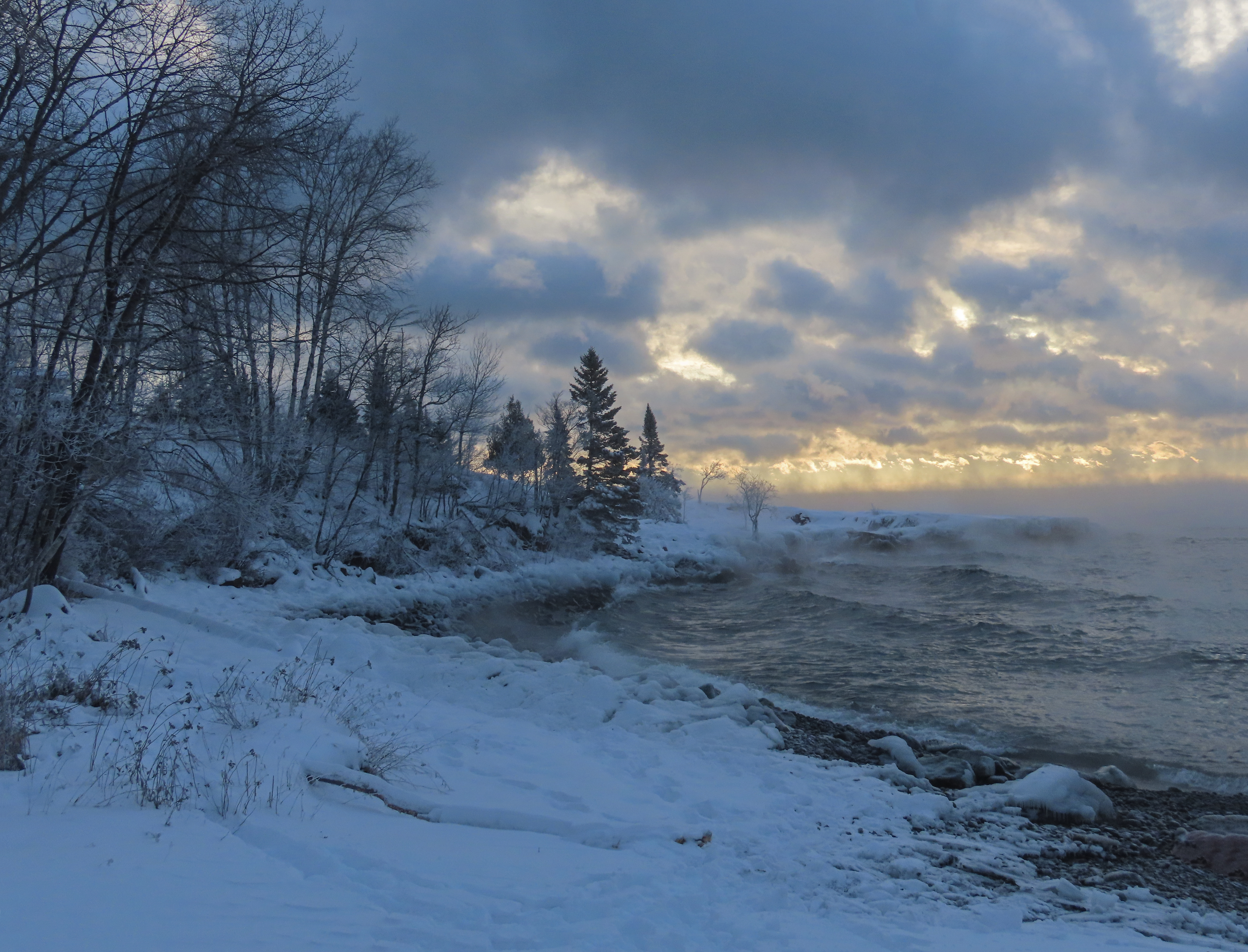
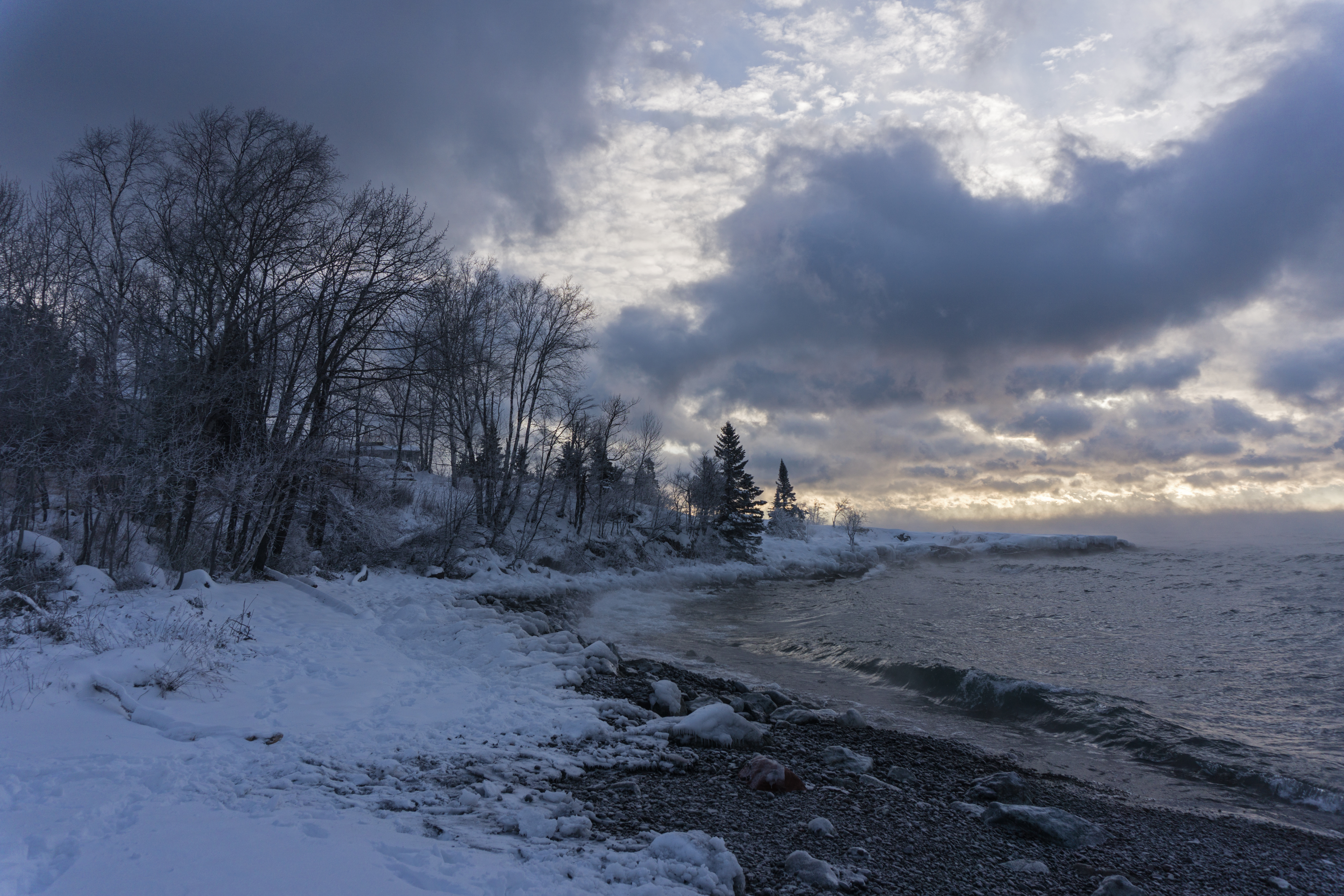
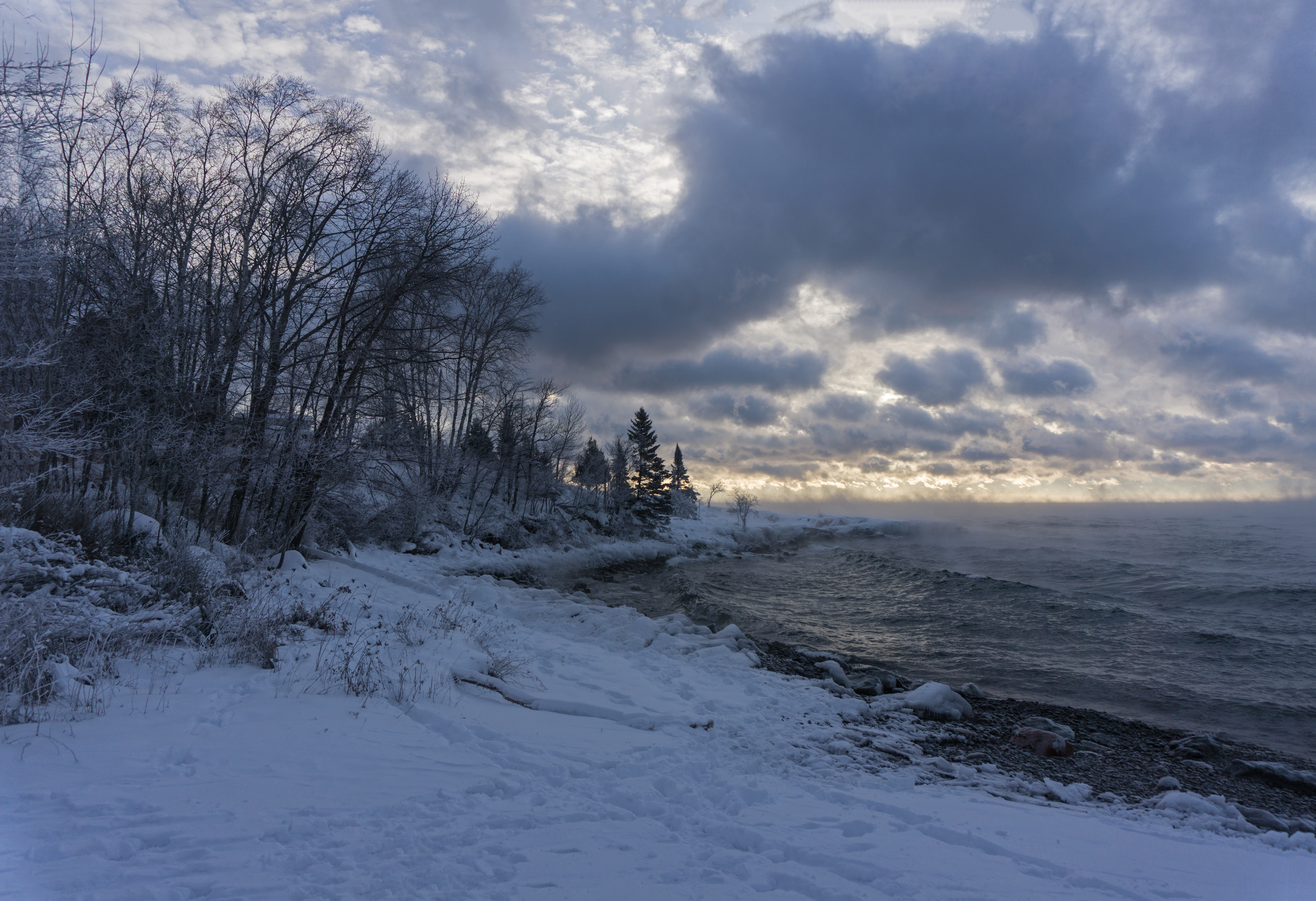
It was -9F (-23C) this morning. In short, a perfect morning for a landscape test. I put on my long johns and drove over to Two Harbors on the shores of Lake Superior. Shortly after dawn, with a crisp wind blowing, I found the perfect opportunity for a landscape photography test. Sea Smoke!

For those of you who live in warmer climates, sea smoke (steam ) forms early in the winter when the air temperature is dramatically colder than the water temperature.  We photographers love the combination of sea smoke, water, ice, and interesting light. This morning qualified on all accounts.

Please note I own both my Canon SX70 which I use primarily for bird photography, and I love its small form factor and zoom when I hike / ski / kayak into the back country. However, I also own a Sony A6000 which I prefer for landscape and astro-photography. Actually it is worth noting the SX70 is not able to be utilized for astro-photography. Canon has limited the ISO to 100 when exposure times exceed 1.3 seconds. Within a year I expect CHDK will be available to overcome this artificial limitation.

I am actually not going to rate the SX70 in terms of landscape photography. It performed well, but I will let my readers be the judge as I will almost always use the Sony A6000 for landscapes. For the purposes of the test, I set up both cameras using similar parameters.

  • Both cameras were set to Aperture Priority. I actually used a setting of 5.6 rather than a traditionally higher setting. I wanted the frozen point to be tack sharp, and given the high wind, I needed a faster shutter speed.
  • Both camera were set to ISO of 100
  • A 2 second shutter delay was used to minimize camera shake
  • A monopod was used to minimize camera shake
  • Each camera set its own exposure times which were plenty fast (1/250th to 1/400th of a second)
  • I tried to take photographs with similar lighting and cloud effects, but conditions change very fast … as in micro-seconds some times.

These are the original, full sized images … non watermarked. See my other SX70 reviews.

Canon SX70 Lake Superior Sea Smoke Photographs

Sony A6000 Lake Superior Sea Smoke Photographs

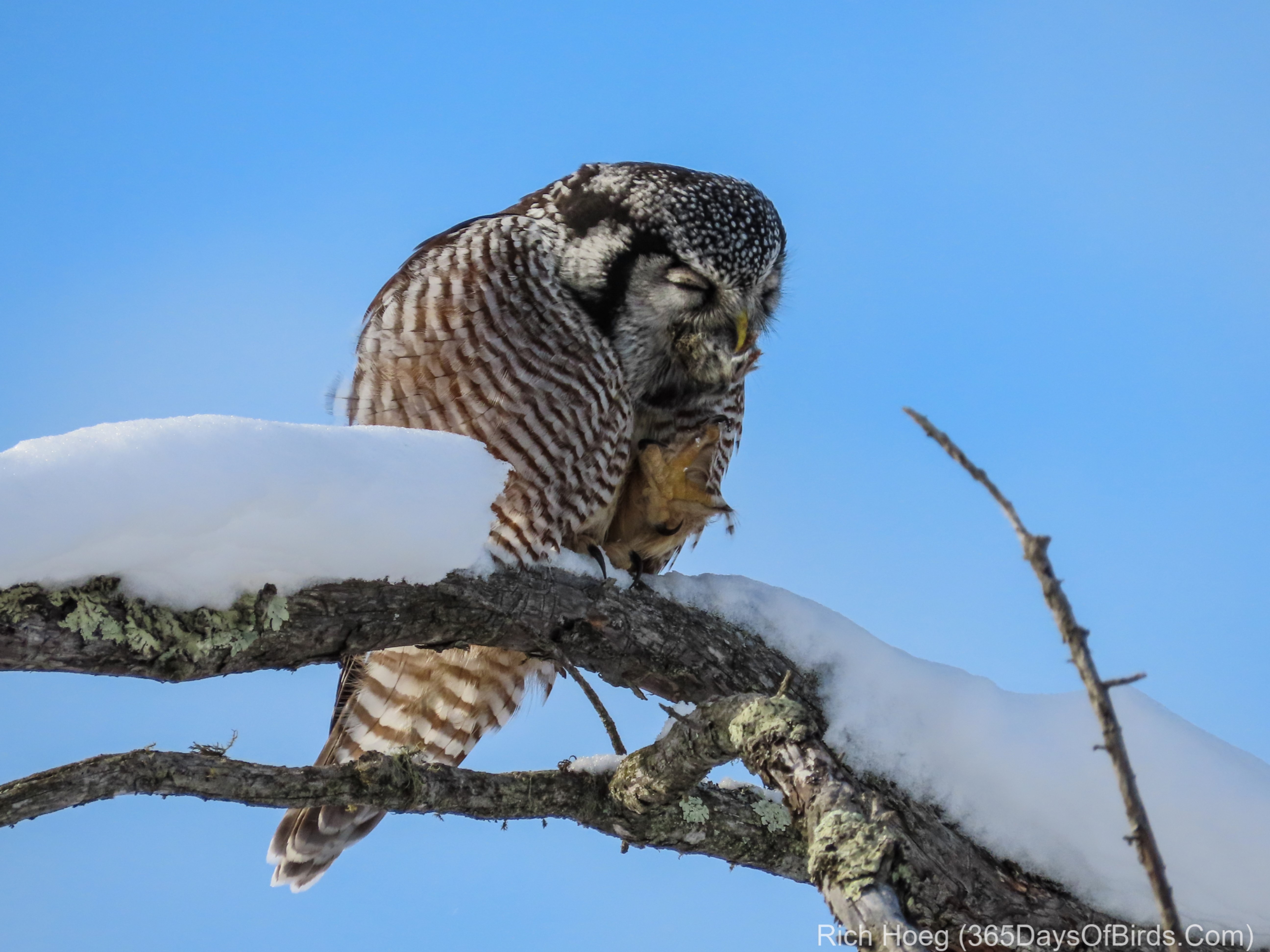
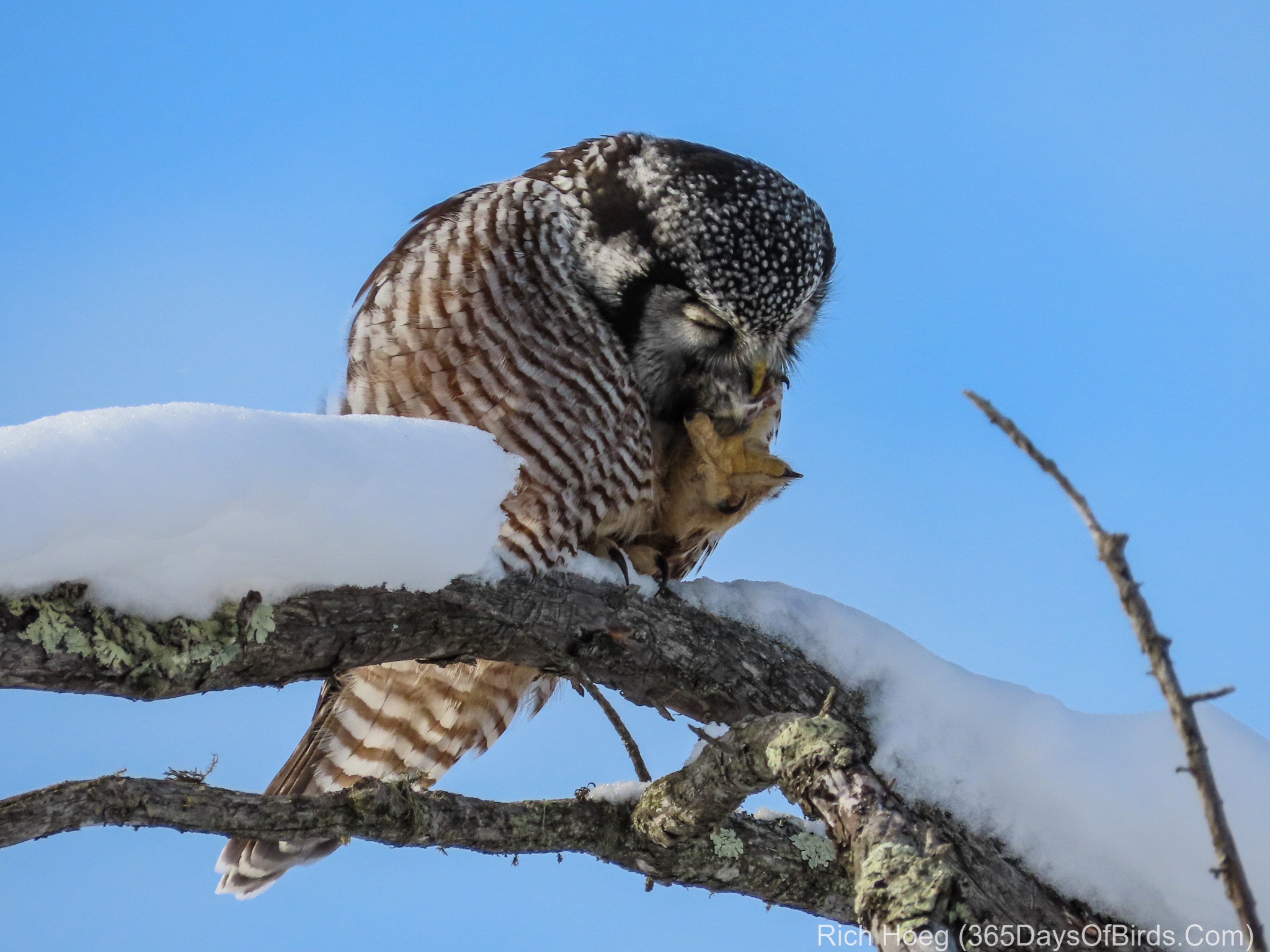
Northern Hawk Owl Eating a Vole!

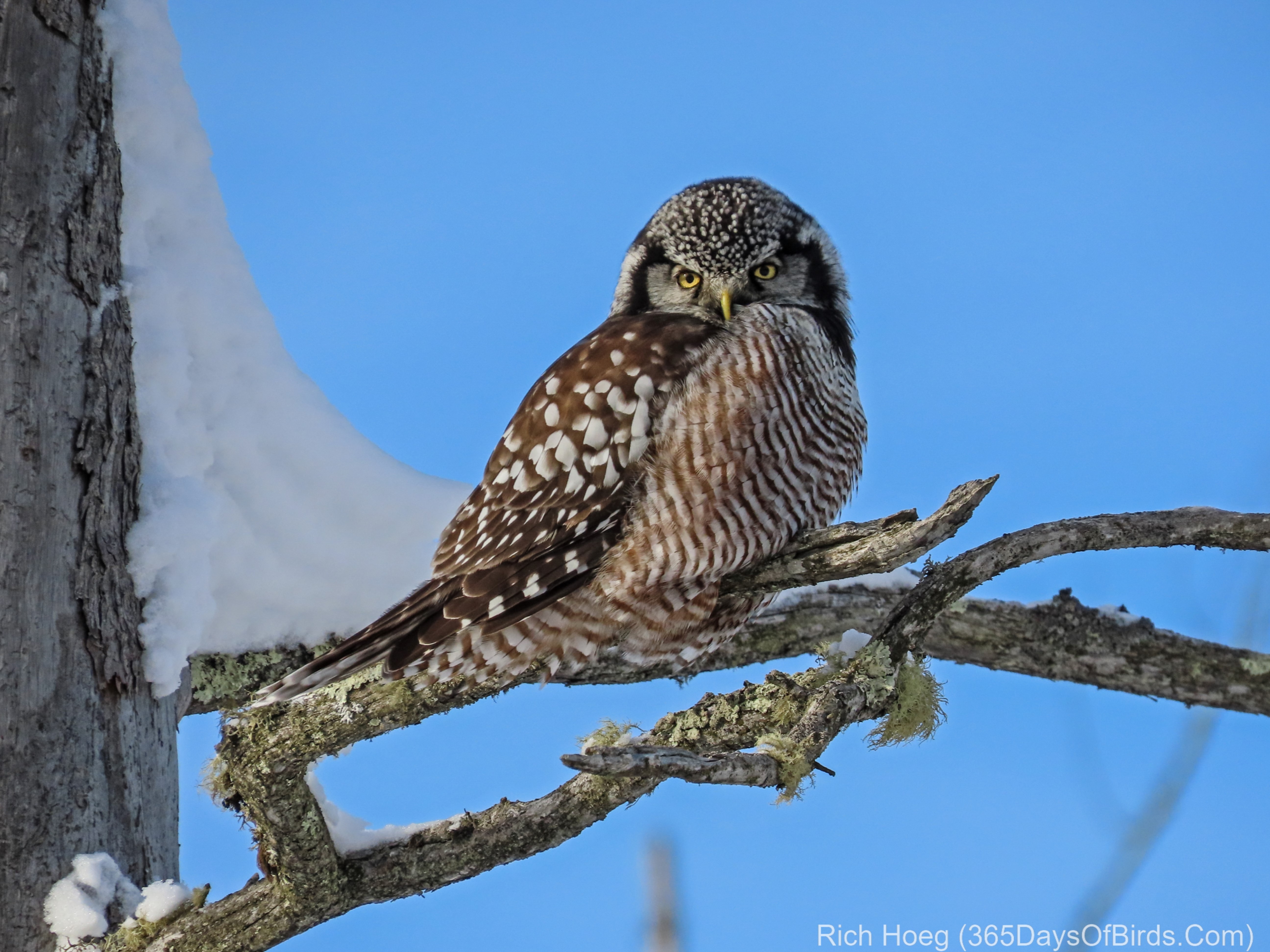
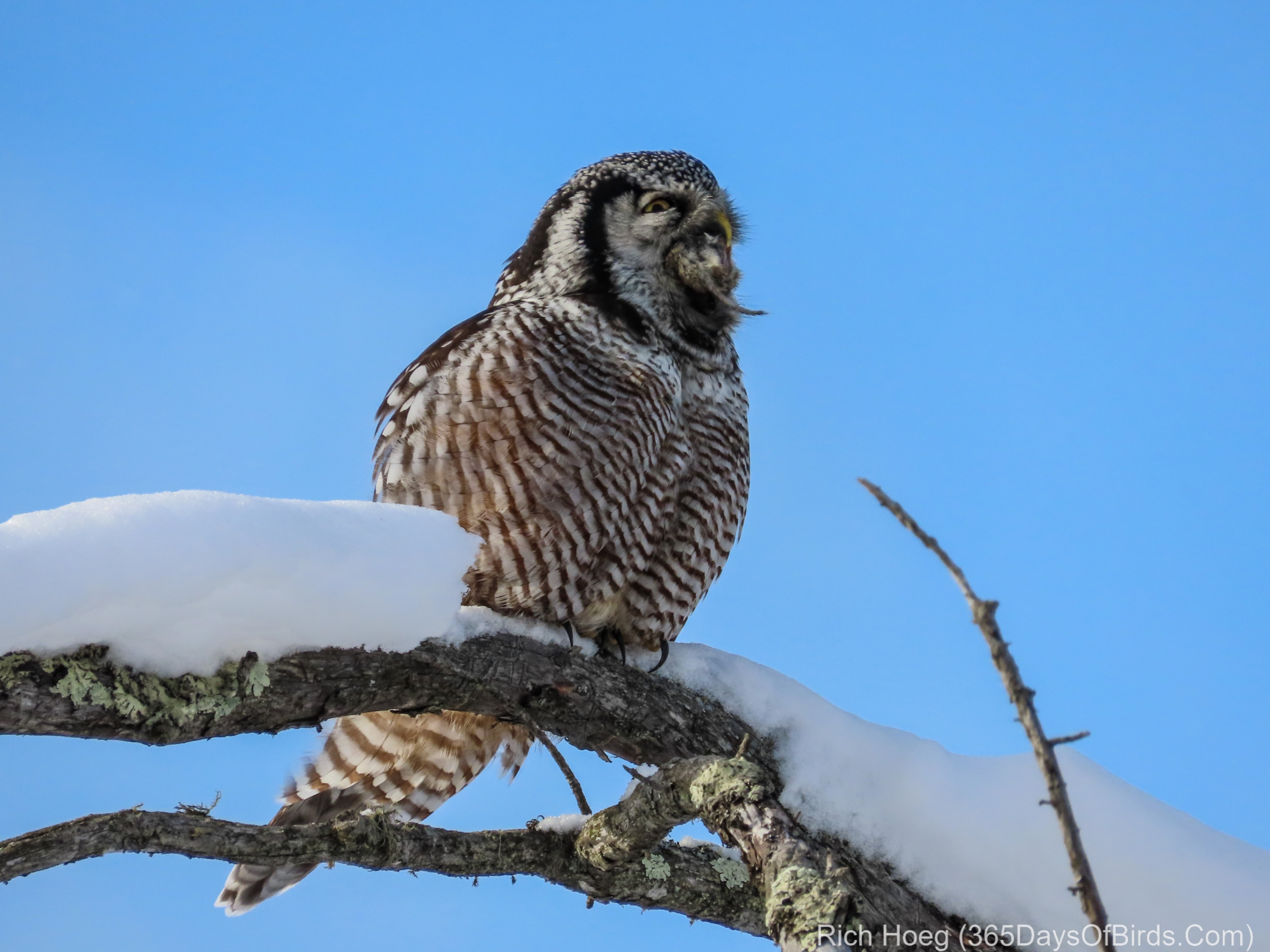
After the winter storm yesterday, a Canadian high pressure system screamed into northern Minnesota bringing temperatures of -20F ten miles away from the lake. Before the mercury dropped too much I made my final trip of the year over to the Bog and hiked into the back country. While much of the way I was able to use a poorly maintained snowshoe trail, for the last 400 yards I slogged through deep, deep snow … that rose up to my mid thighs (I am 6 feet 2 inches tall). The effort was well worth the trouble as I got to watch this Northern Hawk Owl try to consume its prey. Here is one still image followed by a short stop action video which demonstrates the gyrations the Northern Hawk Owl went through while trying to eat a vole. The owl actually had to try five times to successfully swallow its prey, stopping to tear some flesh off the vole before it was successful at eating the vole. Guess its eyes were bigger than its stomach (or in this case its mouth and throat).

This first still image was taken moments after the owl had finally consumed the vole. It looked over at me (only 15 yards distant) and seemed to say with its stare: “What are you watching, bub?”

This stop action video was created from 23 images. The actual length of what you are watching took a little over 2 seconds

A few more still images which document the experience!