BirdNET-Pi bird listening devices are fantastic. Based on and installed upon a Raspberry Pi Linux computer, these small inexpensive boxes are game changing. Unlike BirdWeather PUC or Haikubox, these kits perform wonders for a small amount of money. Read my full review of BirdNET-Pi which include DYI instructions, links for project sites, and hardware requirements including costs.
Thus, I built a second BirdNET-Pi, or in this case … Portable Pi! As BirdNET-Pi need not be connected to a network, I wondered if it would run reliably w/o being hooked up to the electrical gird. With that thought in mind I bought “Amazon Choice’s” 60,000 miliamp portable power bank for $30 (Amazon power bank link … not sponsored). In addition I bought a small weather proof box to keep my electronics out of the rain / snow. The outdoor electrical box was $20 upon writing this post, and has dimensions of 10.5 x 5.5 x 4.0 inches (Amazon product link).
My results were FANTASTIC. The BirdNET-Pi ran for 33 hours and the power bank still had 12% power left when I picked it up yesterday evening. The environment during my test was stable weather but cool. I dropped of my Portable Pi two mornings ago at 8:00 am when the temperature was 38F. Both operational days had highs just under 70F with an overnight low between the two days of 35F. Thus, while my test did not have to handle Minnesota’s extreme cold of winter, the overnight temperature was brisk.
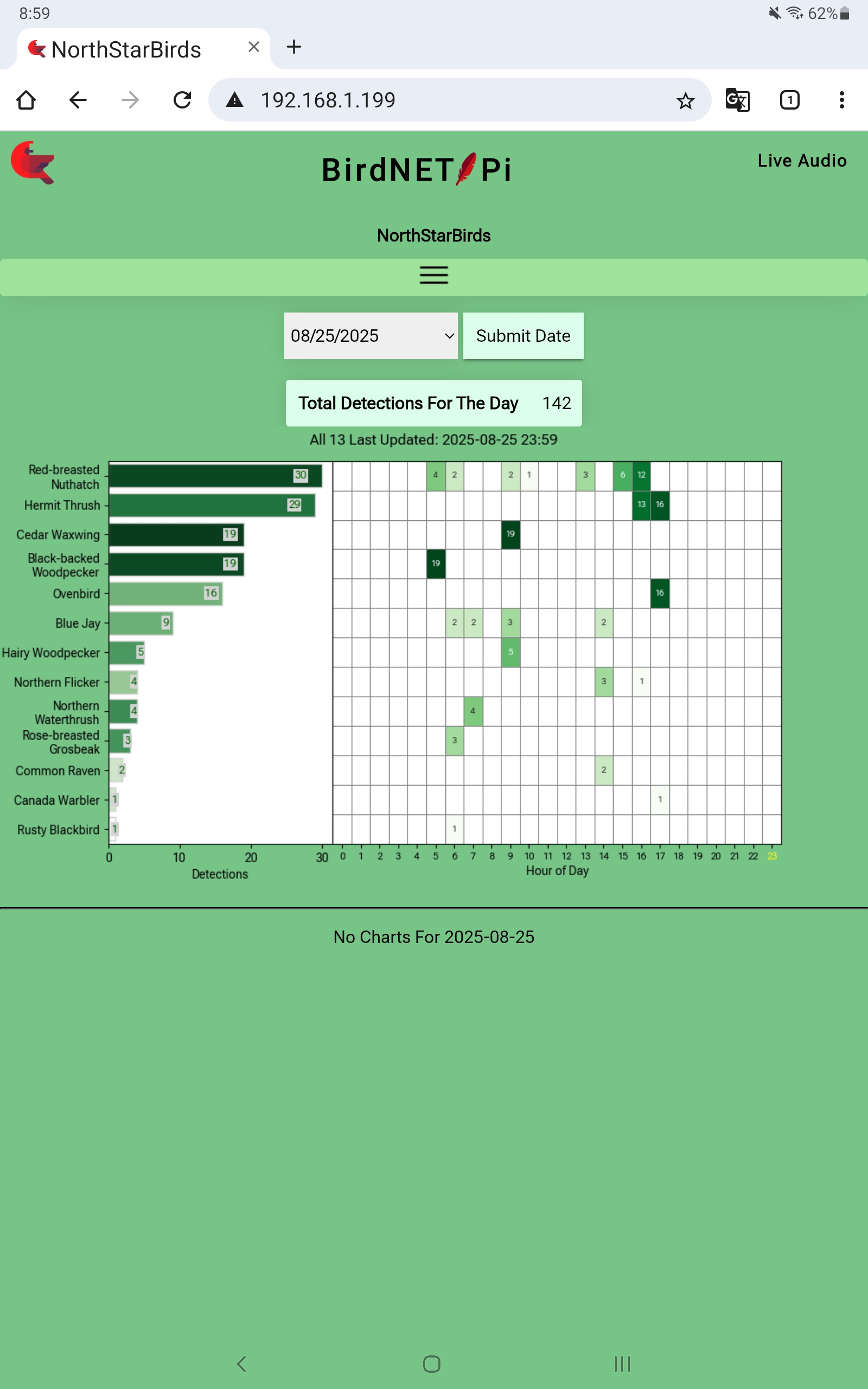
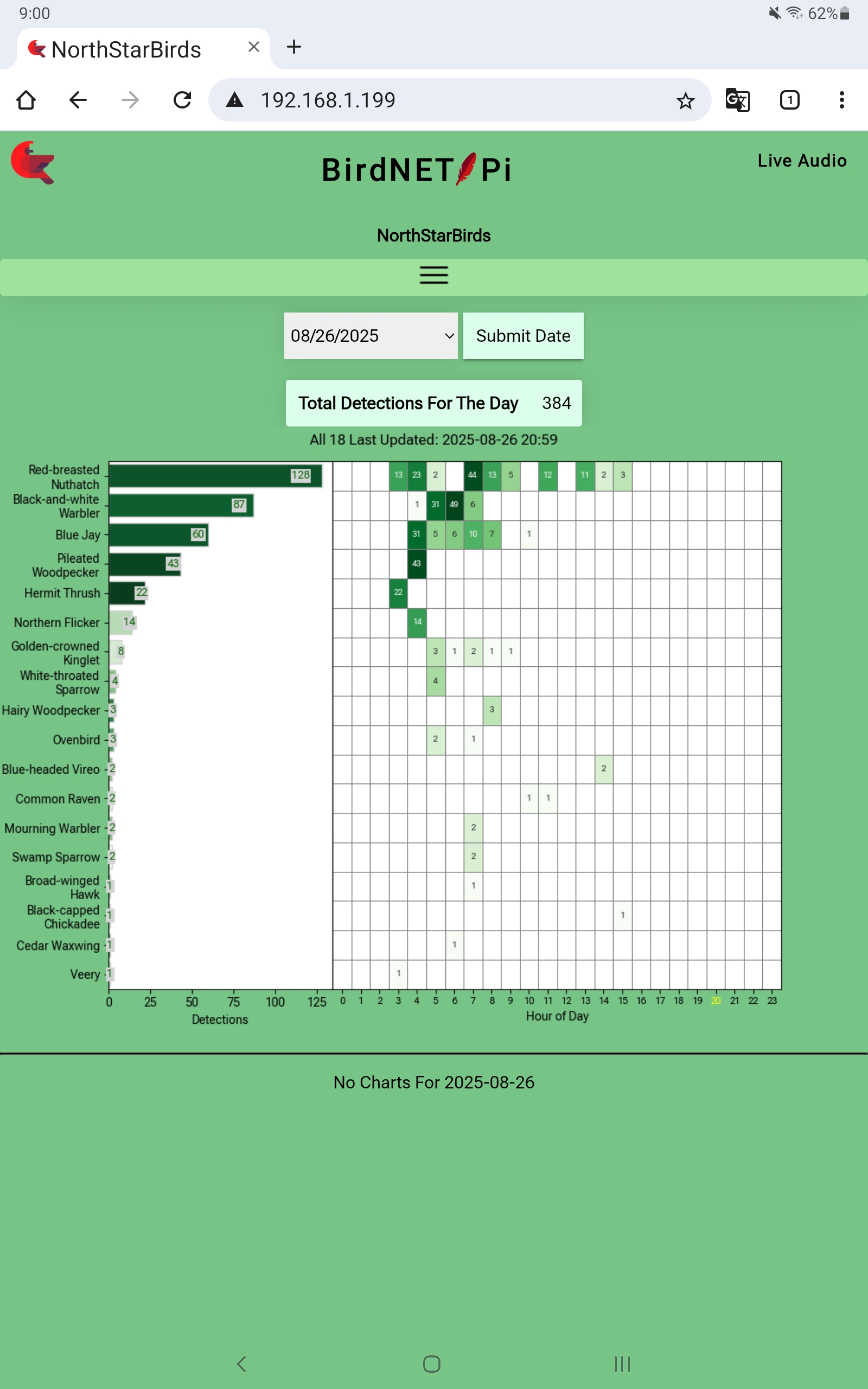
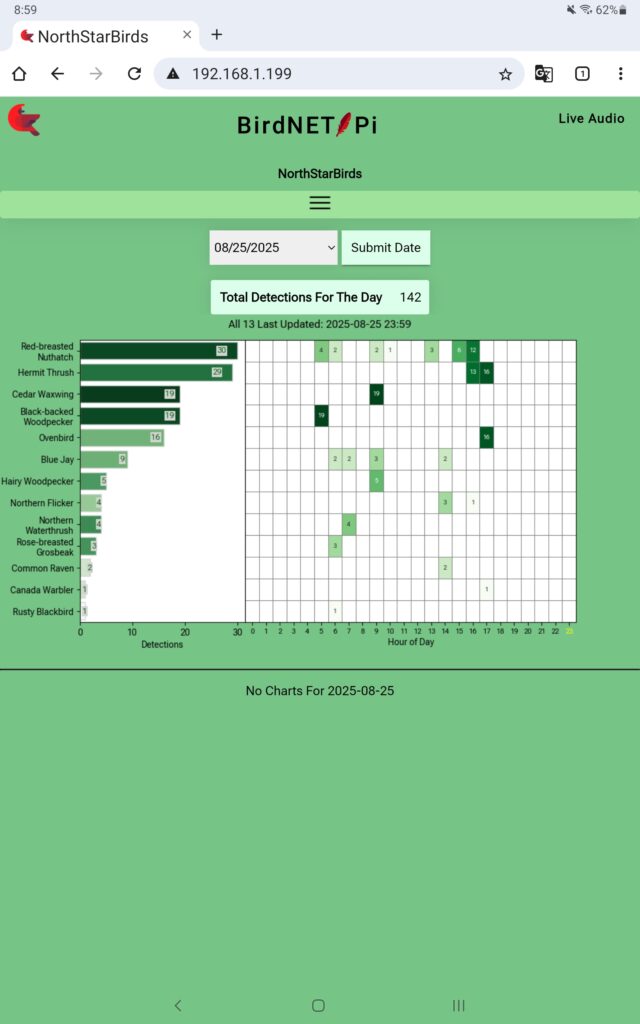
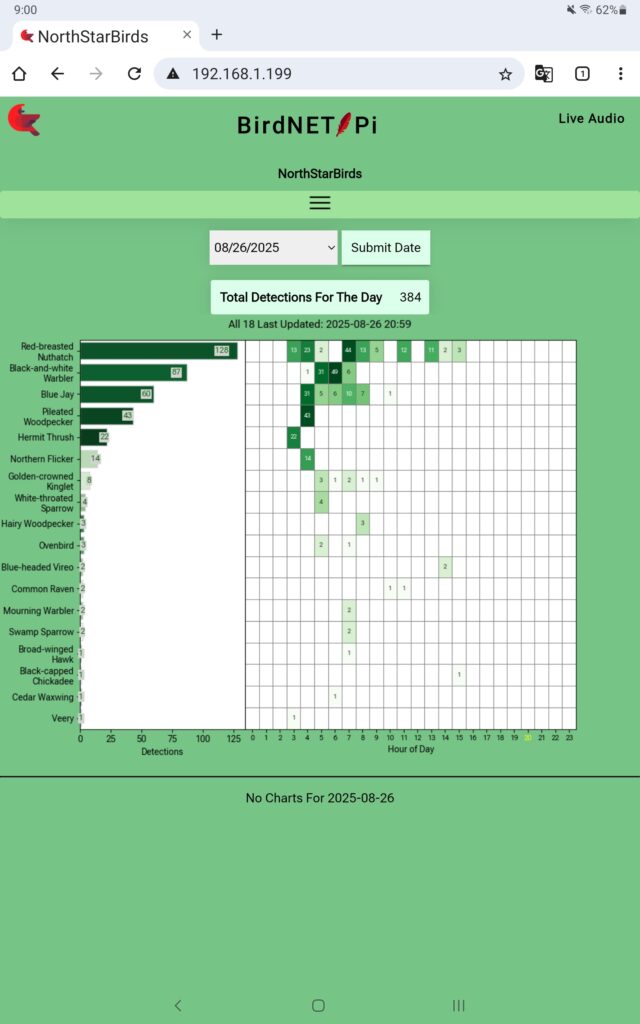
Okay … the obvious question … did my Portable Pi, BirdNET-Pi, operate fine via a power bank? Yes! Here are screenshots of my birdsong ID results from the past two days:
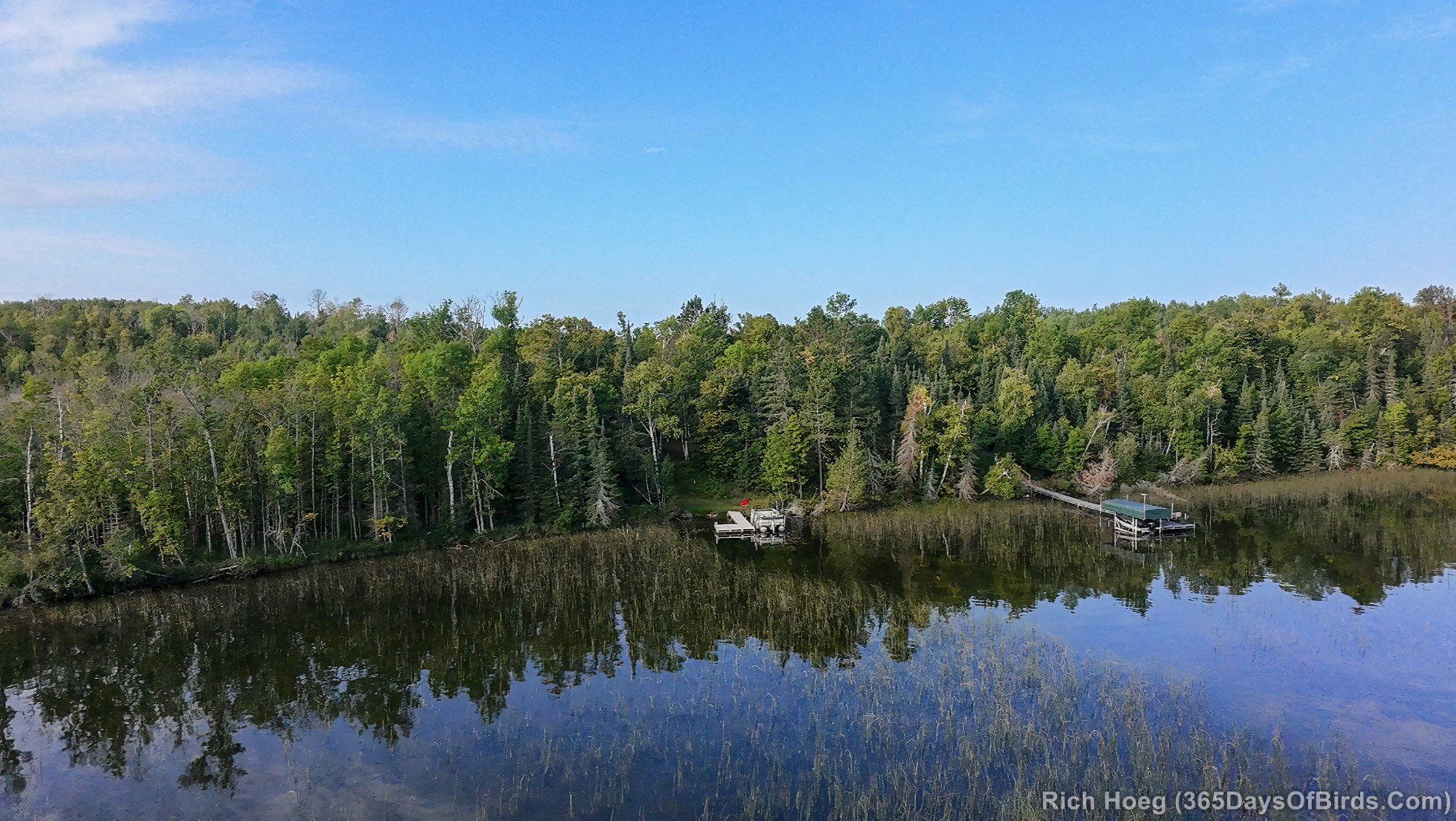
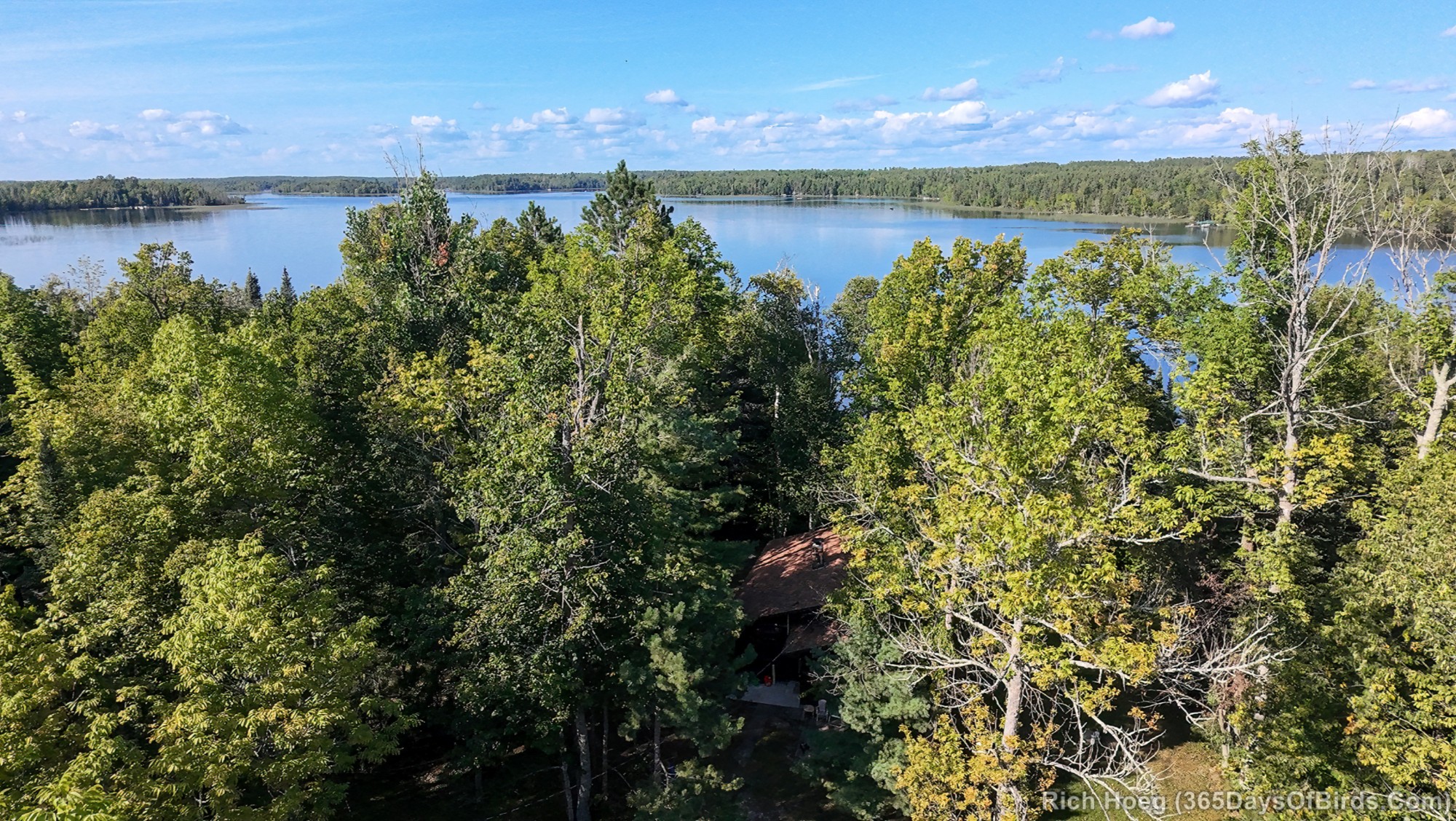
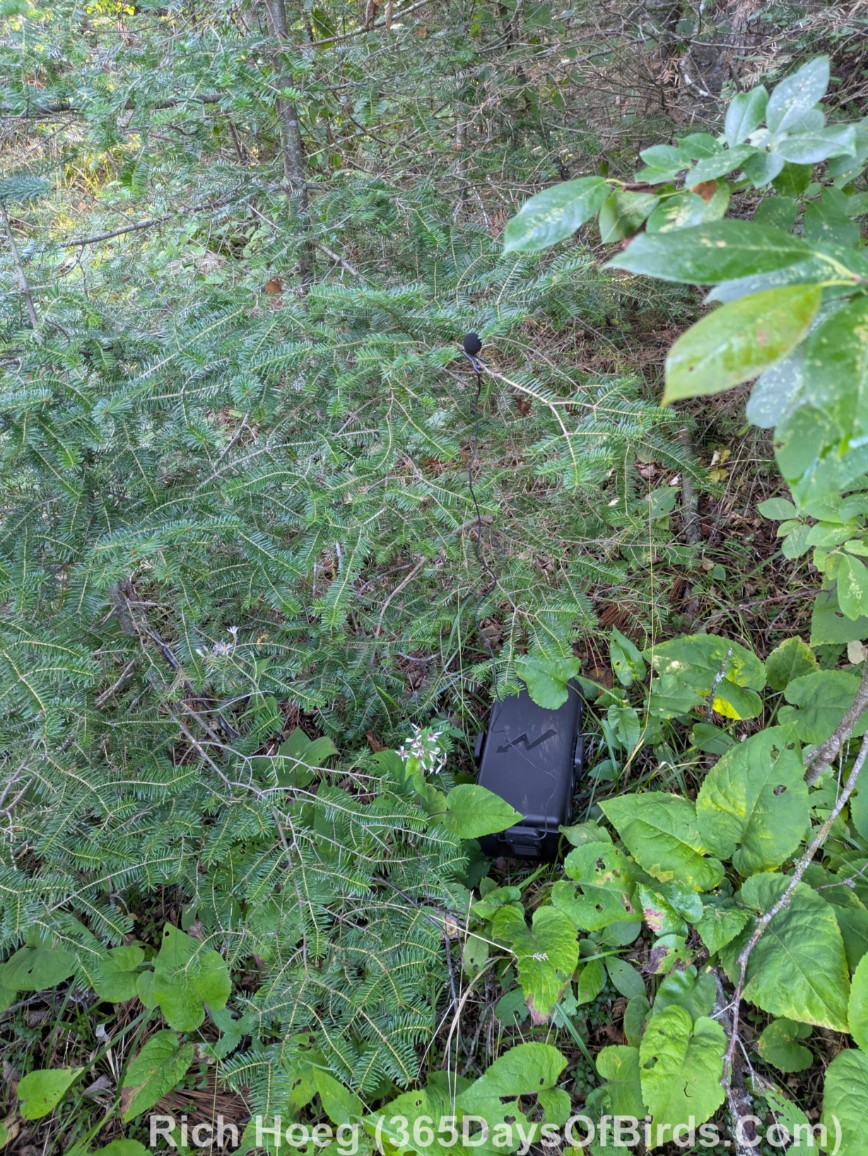
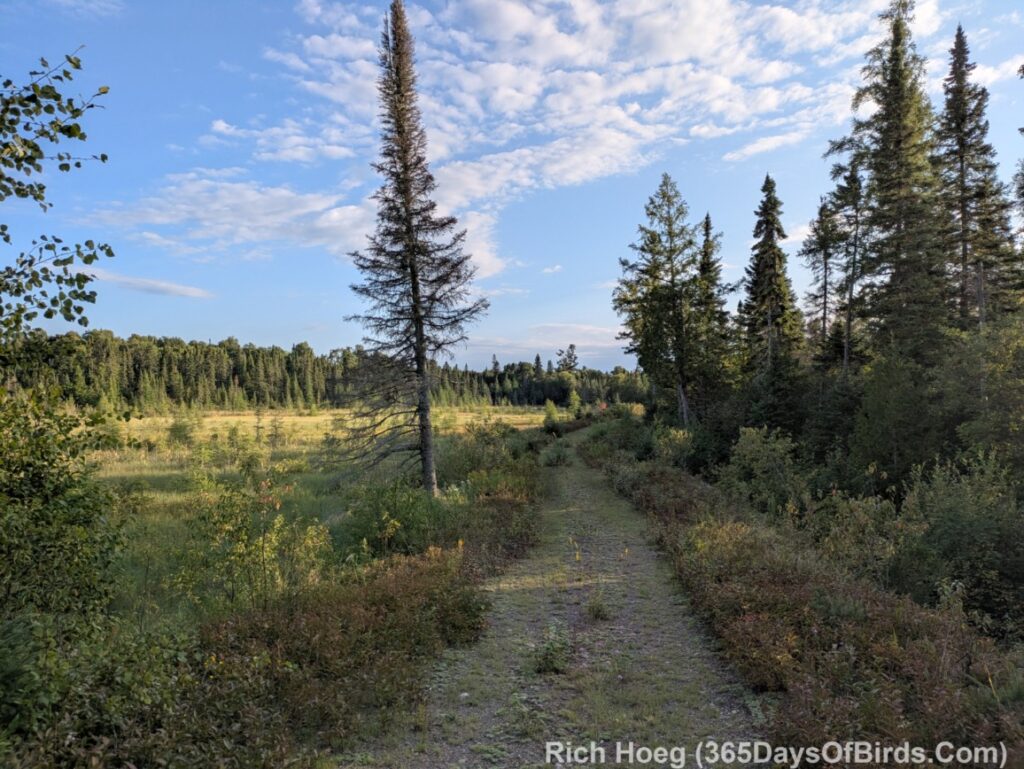
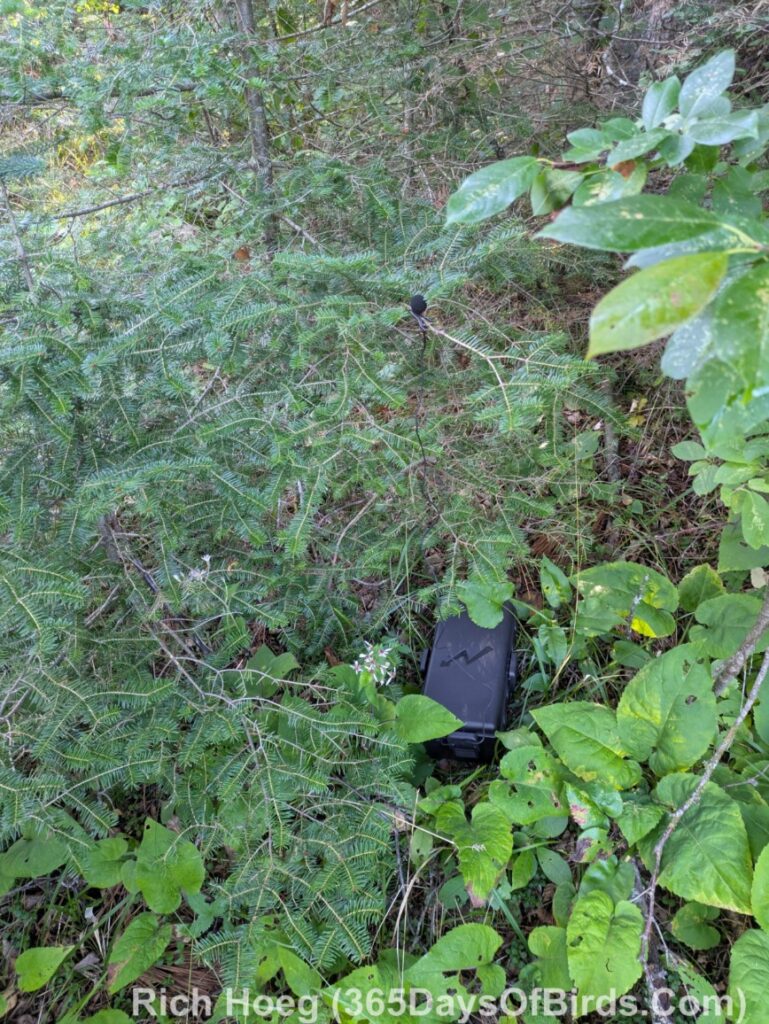
Location of Portable Pi (Greenwood Bog which is about 1 mile from Lake County 2. Note how I have clipped the microphone to a cedar branch. Everything fit in the weatherproof box {10.5 x 5.5 x 4.0 inches} without any difficulties.)
Screenshots of the Bird Identifications (click/press upon to maximize)
August 25 (13 species of birds)
Please note I suspect the ID times are slightly off because BirdNET-Pi grabs the date and time from the network, which there is none in the Greenwood Bog. Thus, I suspect it started counting time from the last entry in my database.
August 26 (18 species of birds)
In closing I am SUPER pleased with BirdNET-Pi … whether connected to the network or running remotely. 33 hours of run time out in the forest with a cold night is great. Ultimately I will be running one BirdNET-Pi at my house except when I leave it somewhere in the northern forest, one BirdNET-Pi at my cabin near the Canadian border, and finally my original Haikubox (also running at home and doing a good job!).
I will post the public links to these bird listening stations once I finish some final configurations up at my cabin over Labor Day Weekend. Finally, I am considering running a “free class” to help folks build their own BirdNET-Pi (perhaps at the Duluth Folk School). As I have noted, one need not be an engineer, and I think with my guidance folks could build and deploy their own birdsong listening devices. I WOULD REQUIRE anyone who is interested in such a class to:
- Purchase the parts required IN ADVANCE (see my review … about $118 financial outlay for parts … any maybe another $96 … no subscription fee)
- Class participants would be required to equally share in the cost of the Duluth Folk School rental costs. My time as previously noted, would be donated. I think a one day class would work fine … on a Saturday … allowing non Duluth folks to attend … class might start at 9:00 am.
- Contact me via email if interested (not a commitment). My email may be found on the About Rich page of this web site.