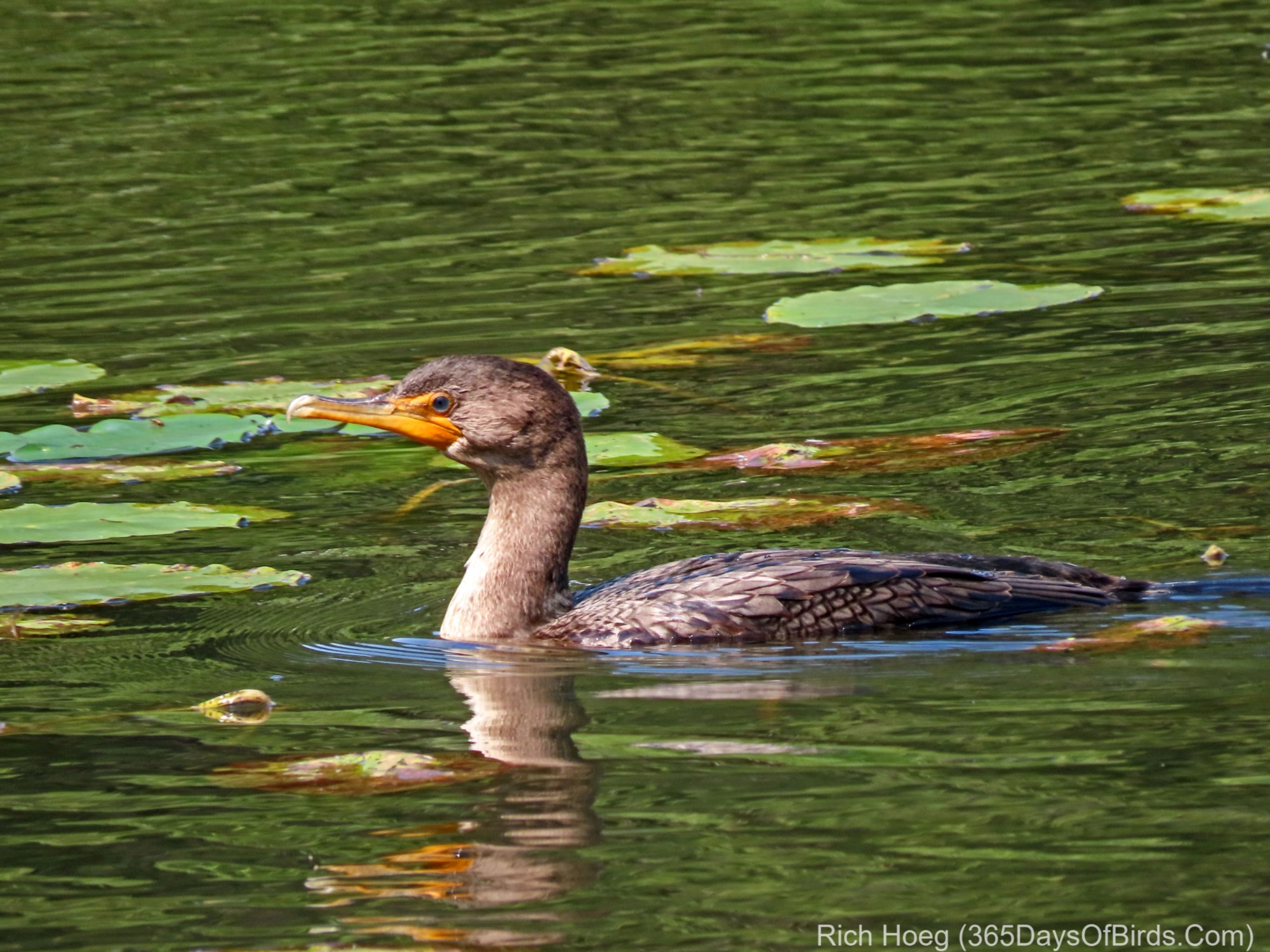
Yesterday evening a good friend texted me. They had found a young hawk on their lawn, and needed identification help. Shortly thereafter through the exchange of photographs I figured out the bird was a Juvenile Northern Goshawk. By chance a Ruffed Grouse had hit their window earlier in the day. Knowing grouse were a favorite prey of Goshawk’s, the dead grouse was offered to the young hawk. It happily took the offering.
The Goshawk was willing to let my friends get within a few feet. Knowing this was not normal, I asked them to contact me in the morning if the bird was still present. At 7:45 am I received a phone call that the Goshawk was again standing in their yard eating the remains of the grouse. No matter how close they got to the bird, it would not fly (no obvious injuries).
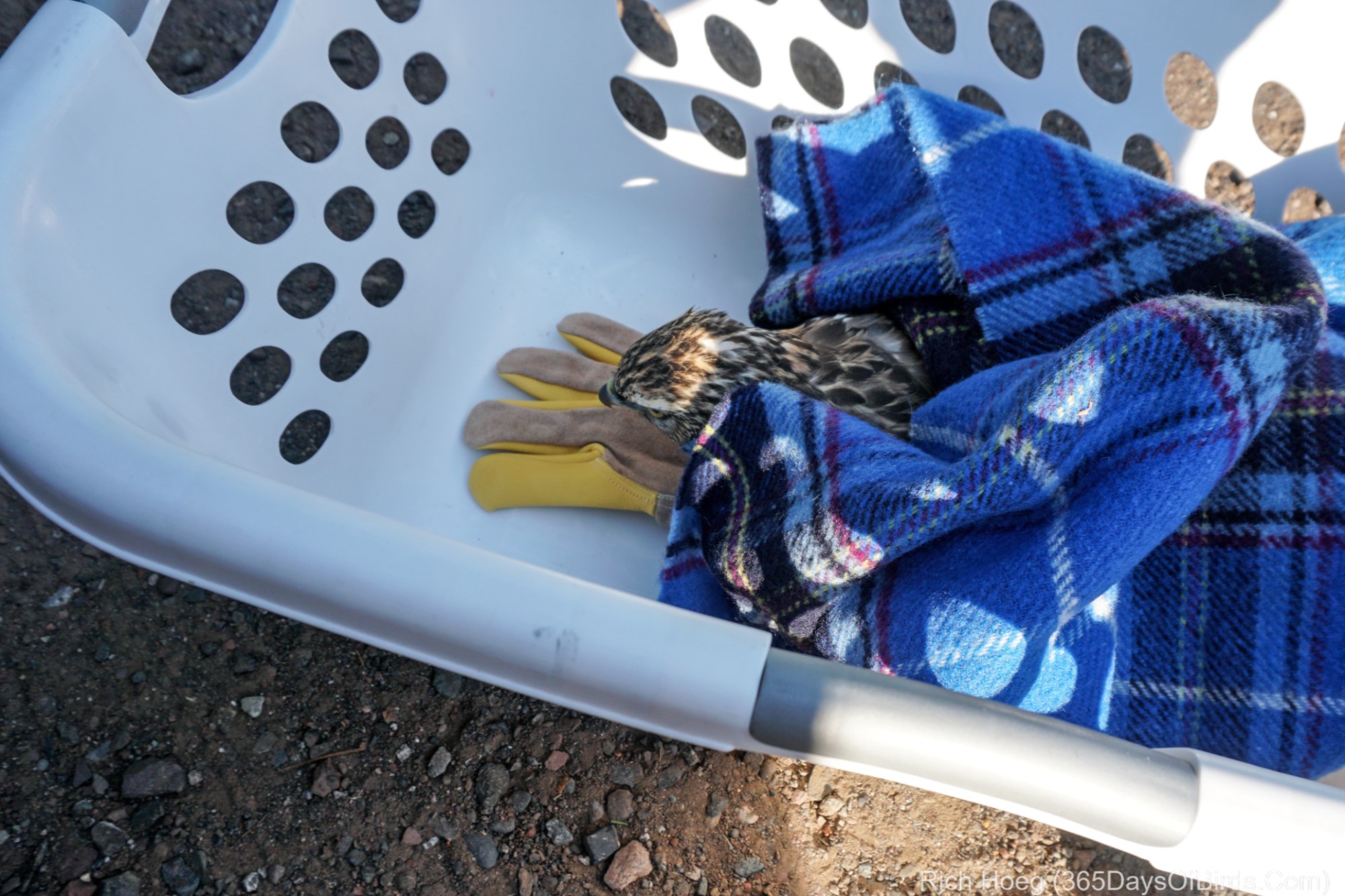
My assessment was that the juvenile was starving. When parent birds stop feeding youngsters, the juveniles need to quickly learn how to become successful hunters. I drove over to my friend’s house, and the hawk let me walk right up to it (not normal). I then hand captured the bird by dropping a blanket over it from behind. This accomplishes a few things:
- Birds talens only go forward. Thus, coming up behind a bird protects me.
- Covering a bird with a blanket has a calming effect. Although a bird is stressed out from the capture, covering its eyes makes life a bit better.
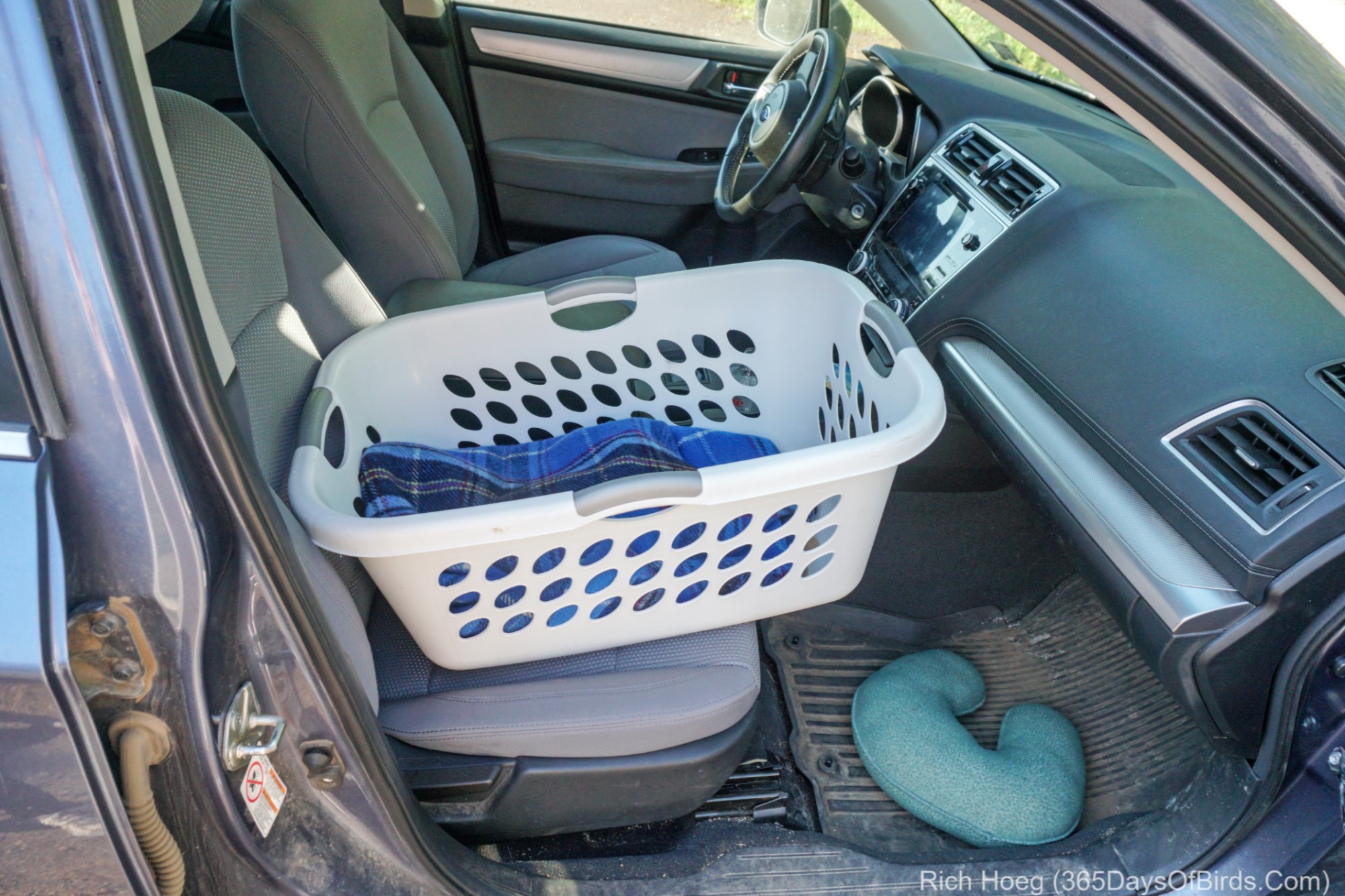
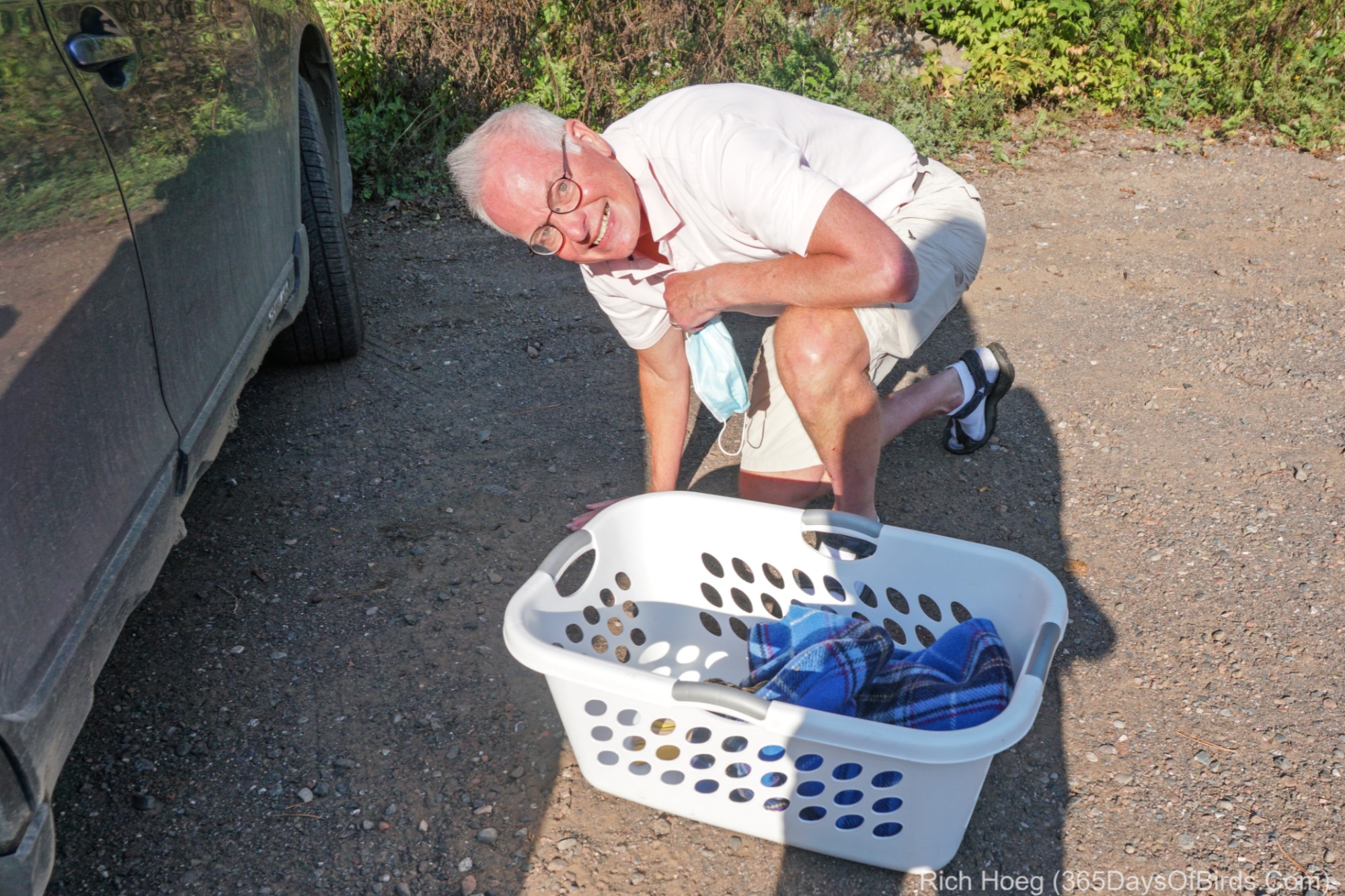
Once the Goshawk was in my car, I called WildWoods Rehab Center. Just by good luck, they had a driver going down to the University of Minnesota’s Raptor Center in 45 minutes. Anyhow, I put the pedal down on my car and safely delivered the Goshawk and made the relay. The hawk should arrive at the Raptor Center about noon. Life is good!
The Northern Goshawk enjoying some grouse (just before I hand captured the bird)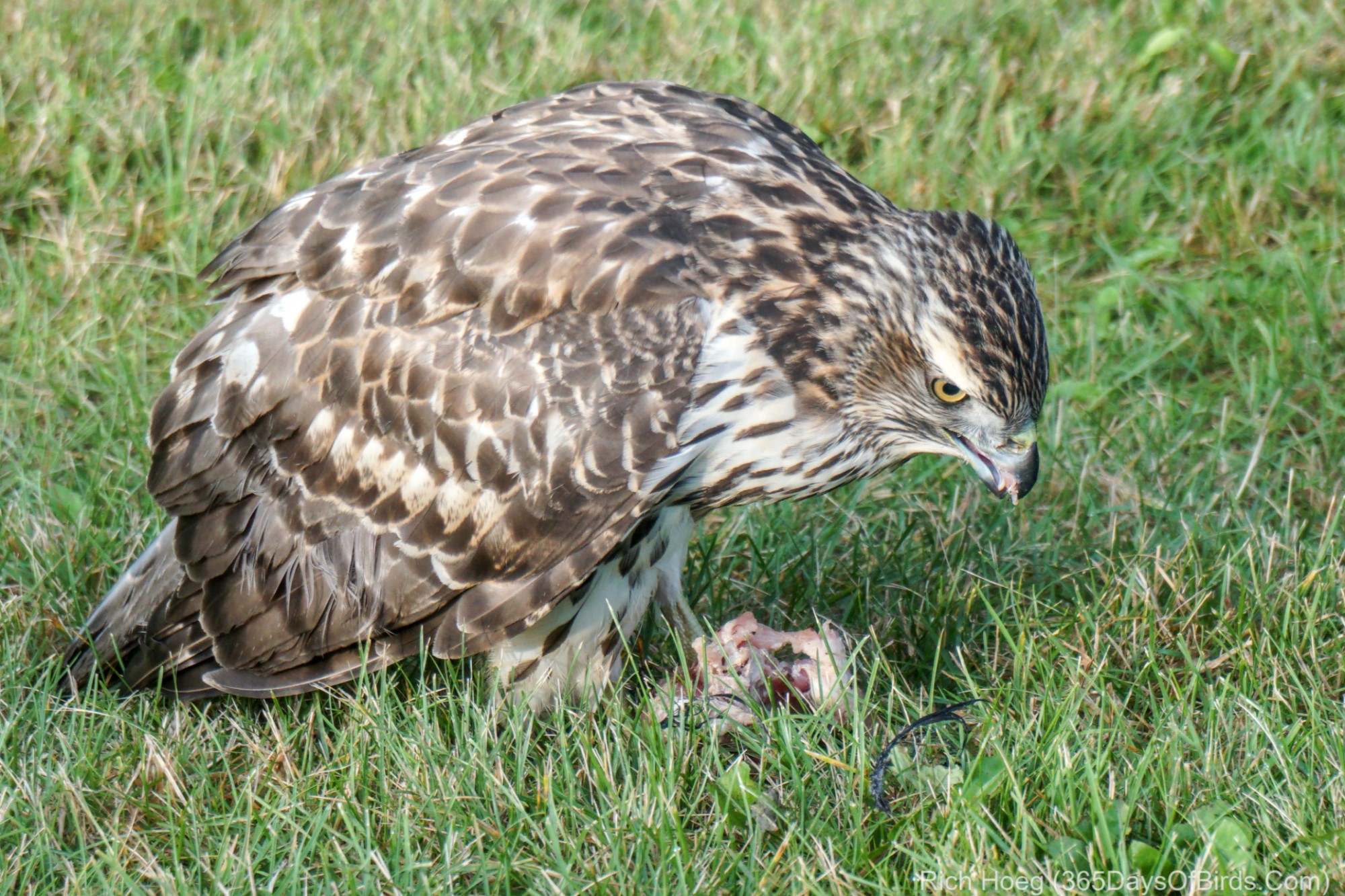
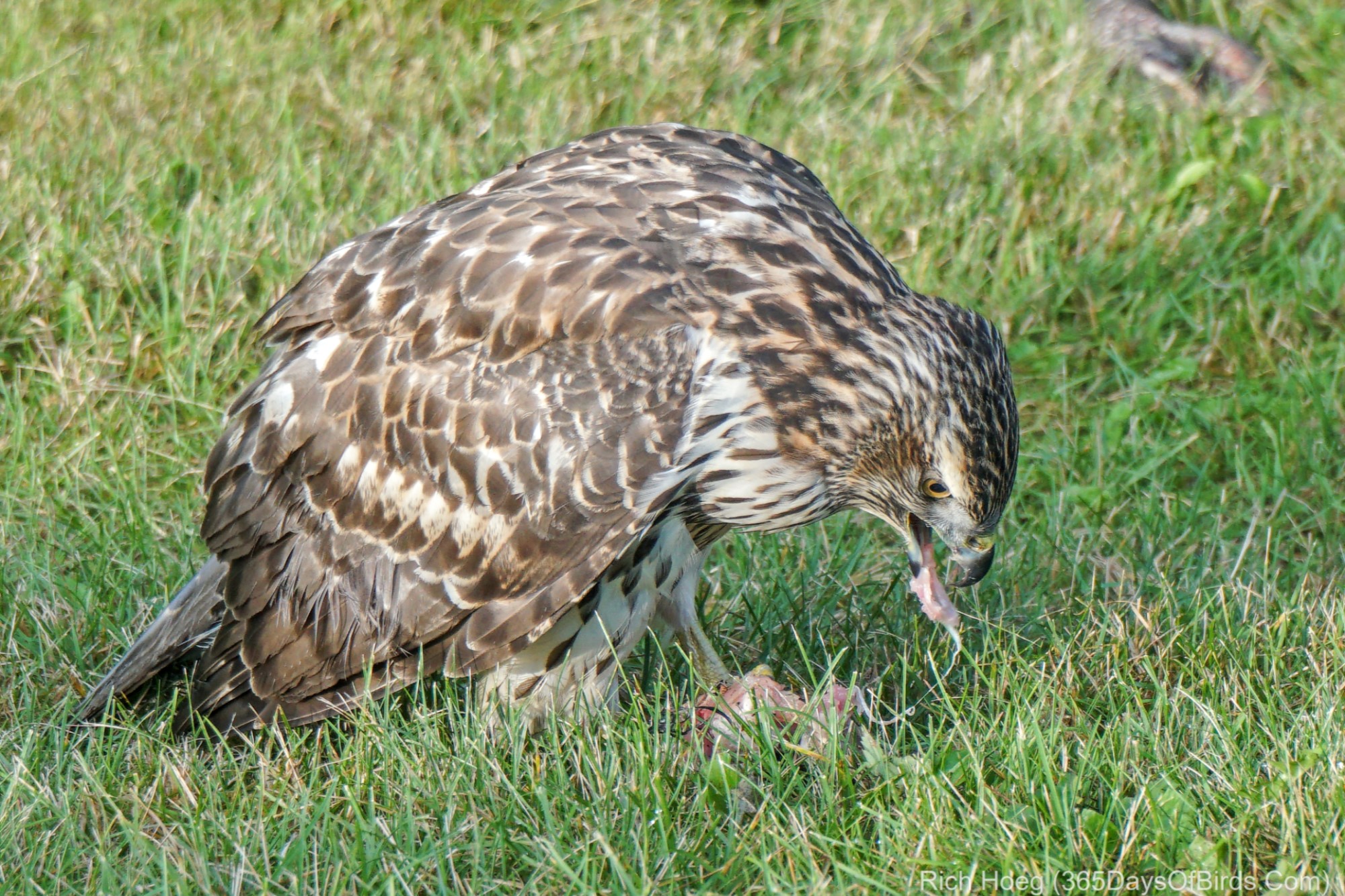
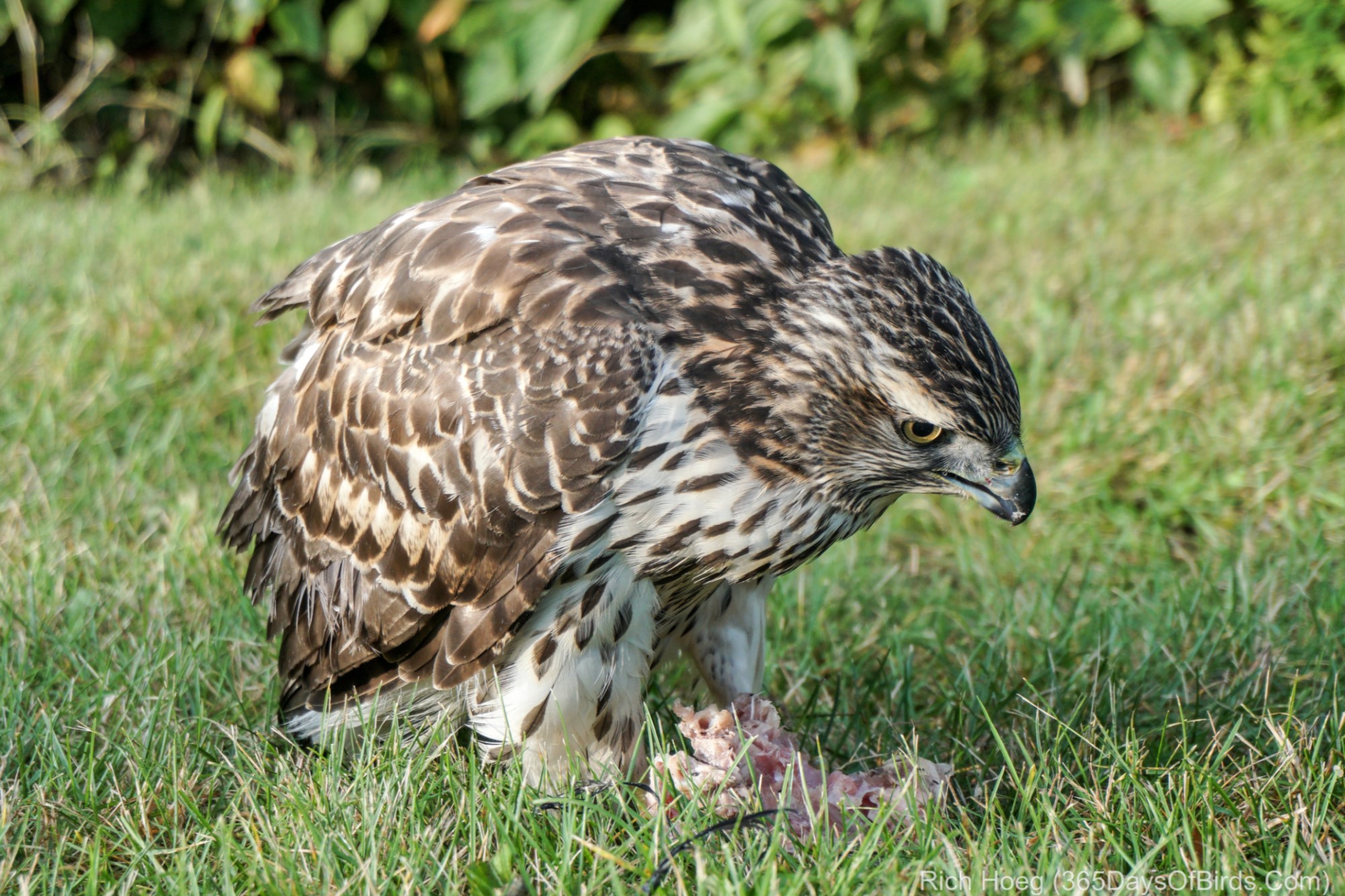
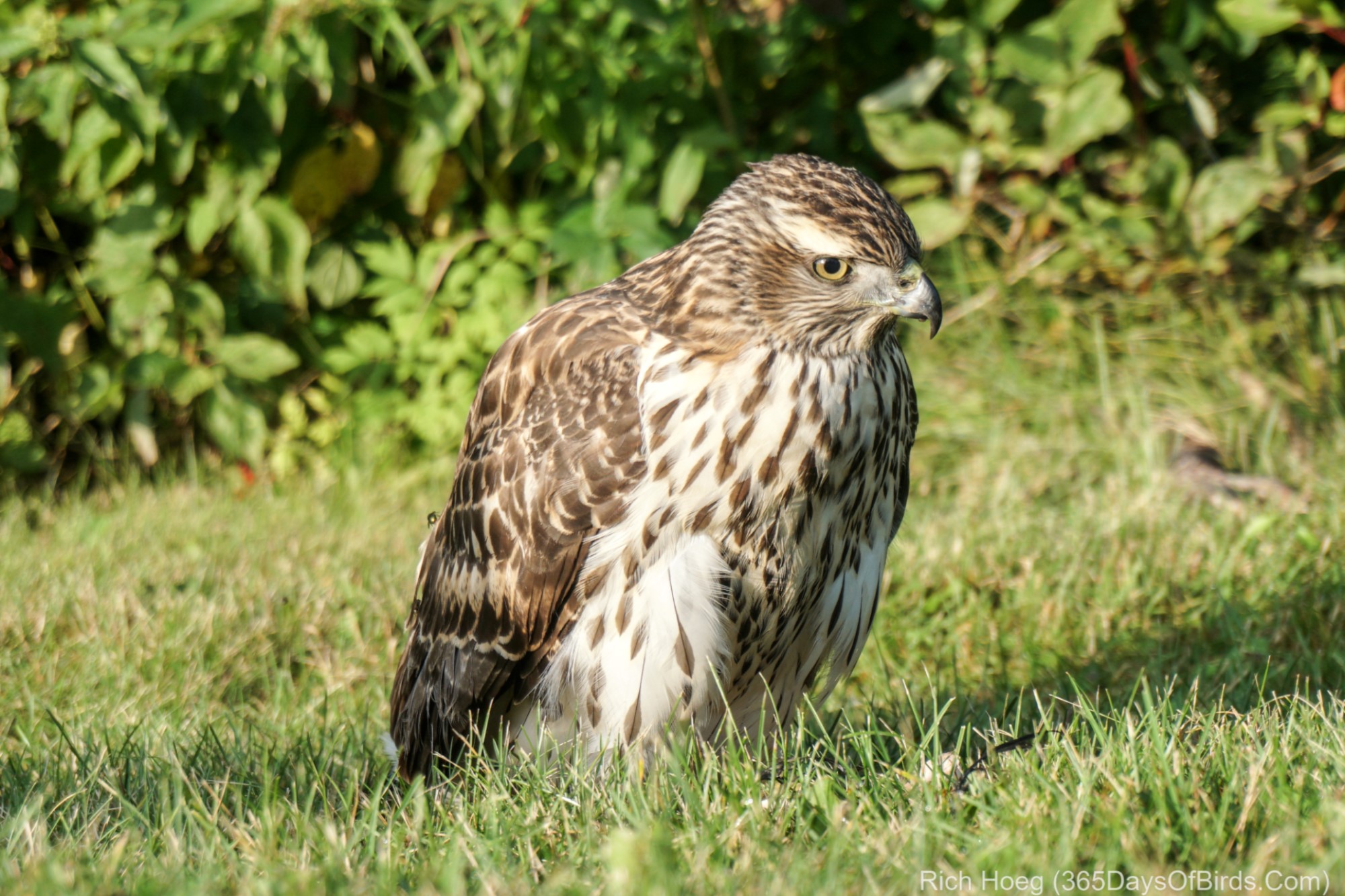
Having its meal …
(video link for email subscribers)
The Rescue: I did have to keep one hand on the blanket to encourage the Goshawk to remain covered and not get free!