Great Gray Owl Banding and Hunts

I’ve been spending a lot of time up in the Superior National Forest for many reasons. The Hoar Frost has been dumbfoundingly beautiful for over a week, and there are quite a few Gray Gray Owls. Unfortunately for the first time since well before Christmas the temperature rose above freezing … melting hoar frost and snow off pine trees. The artist in me was in love with the conditions. However all good things must end.

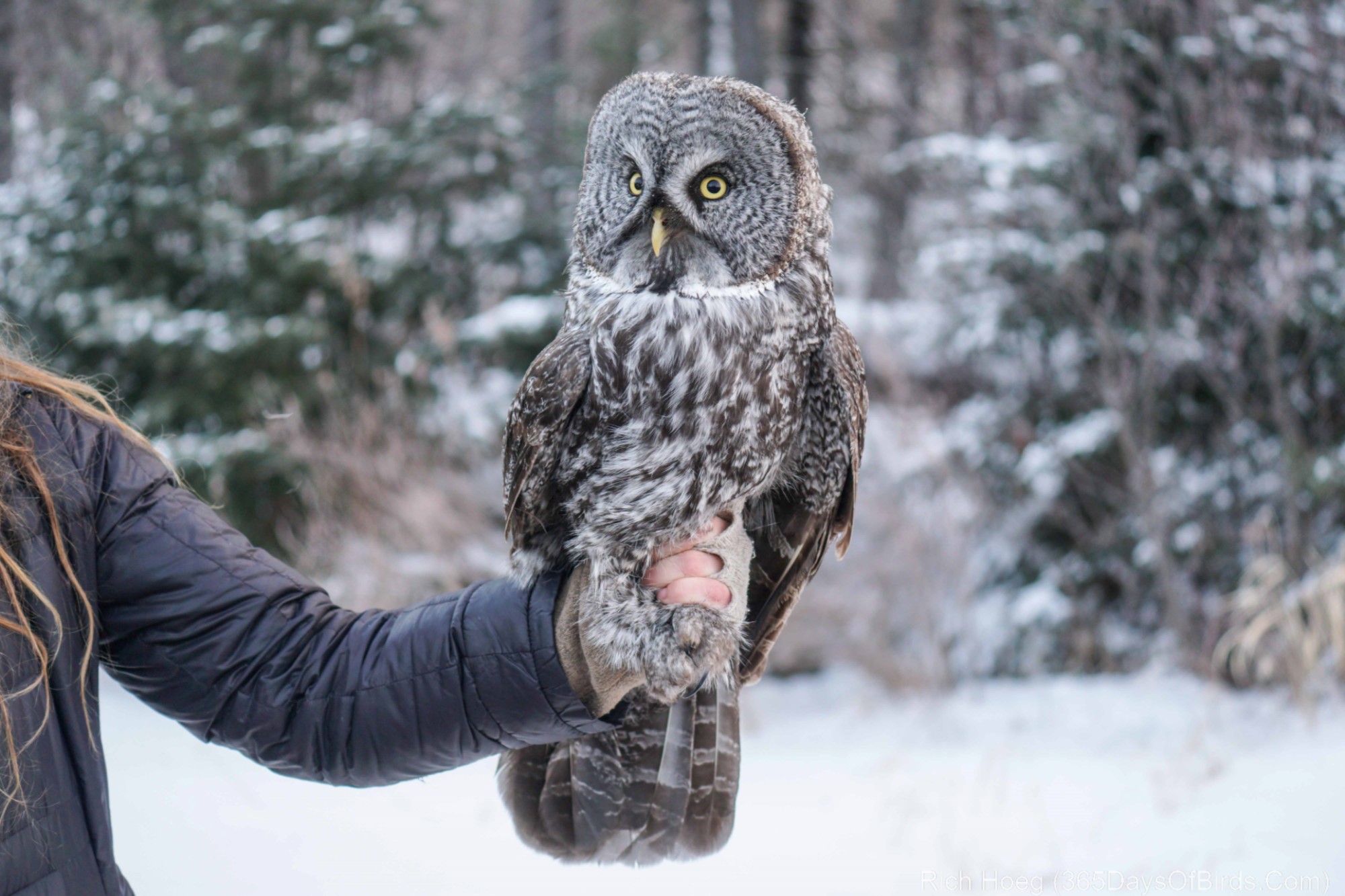
Early yesterday morning I came across some friends who were banding a Great Gray Owl. I appreciate their research. It was fun to touch the owl … look at its ears … and count wing bands to determine age. The owl was also checked for general health (good) and many other items which were all recorded. A Great Gray Owl has an amazing amount of down, which is required to survive our northern winters where temperatures may fall below -20F.

Here is the subject of the banding effort … a 3rd year female.
You might also enjoy this video (link for email subscribers) of Denver Holt from the Owl Institute as he bands a Great Gray Owl family in much warmer conditions. The Owl Institute does great research and I am personally a donor.


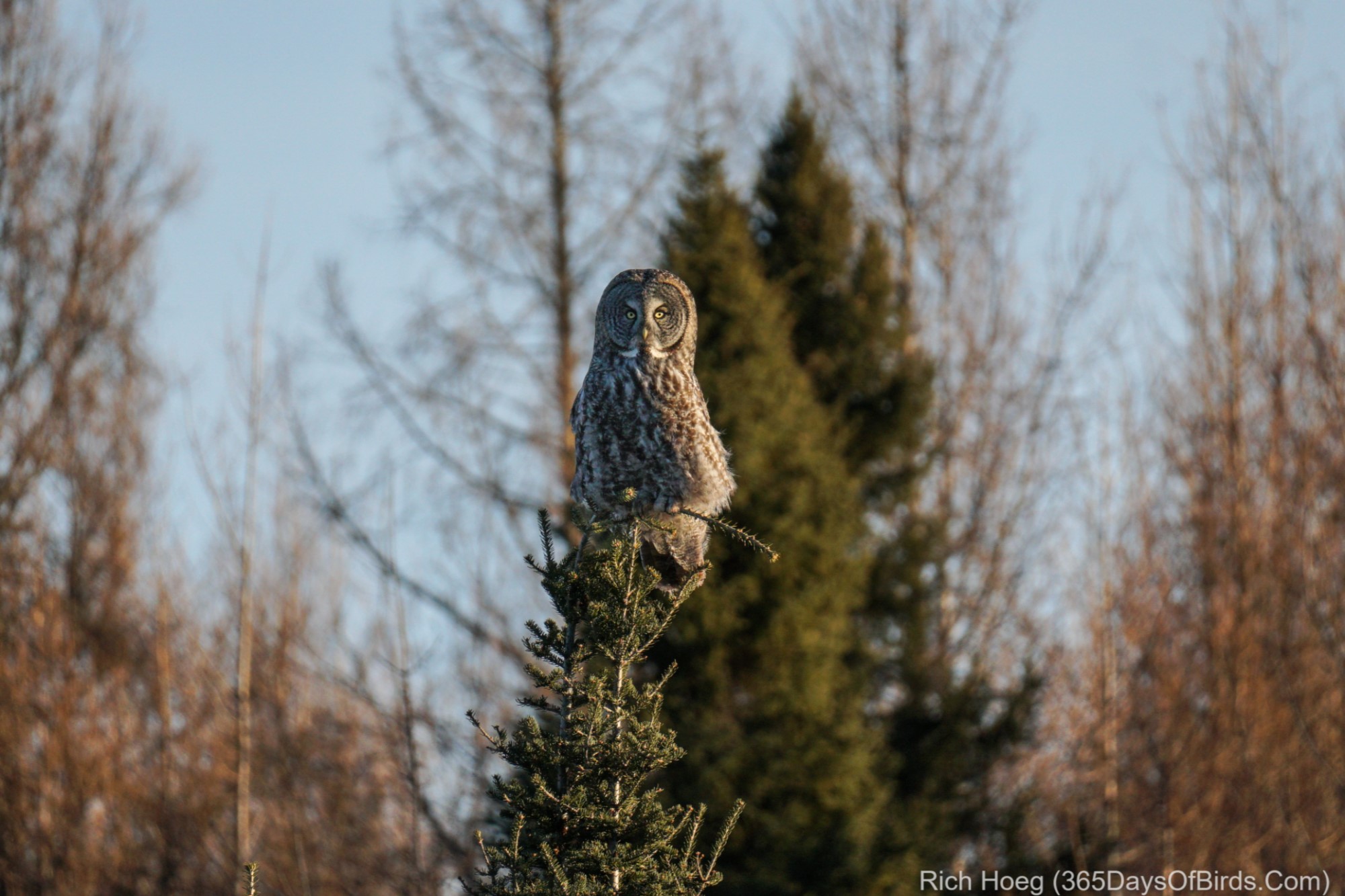
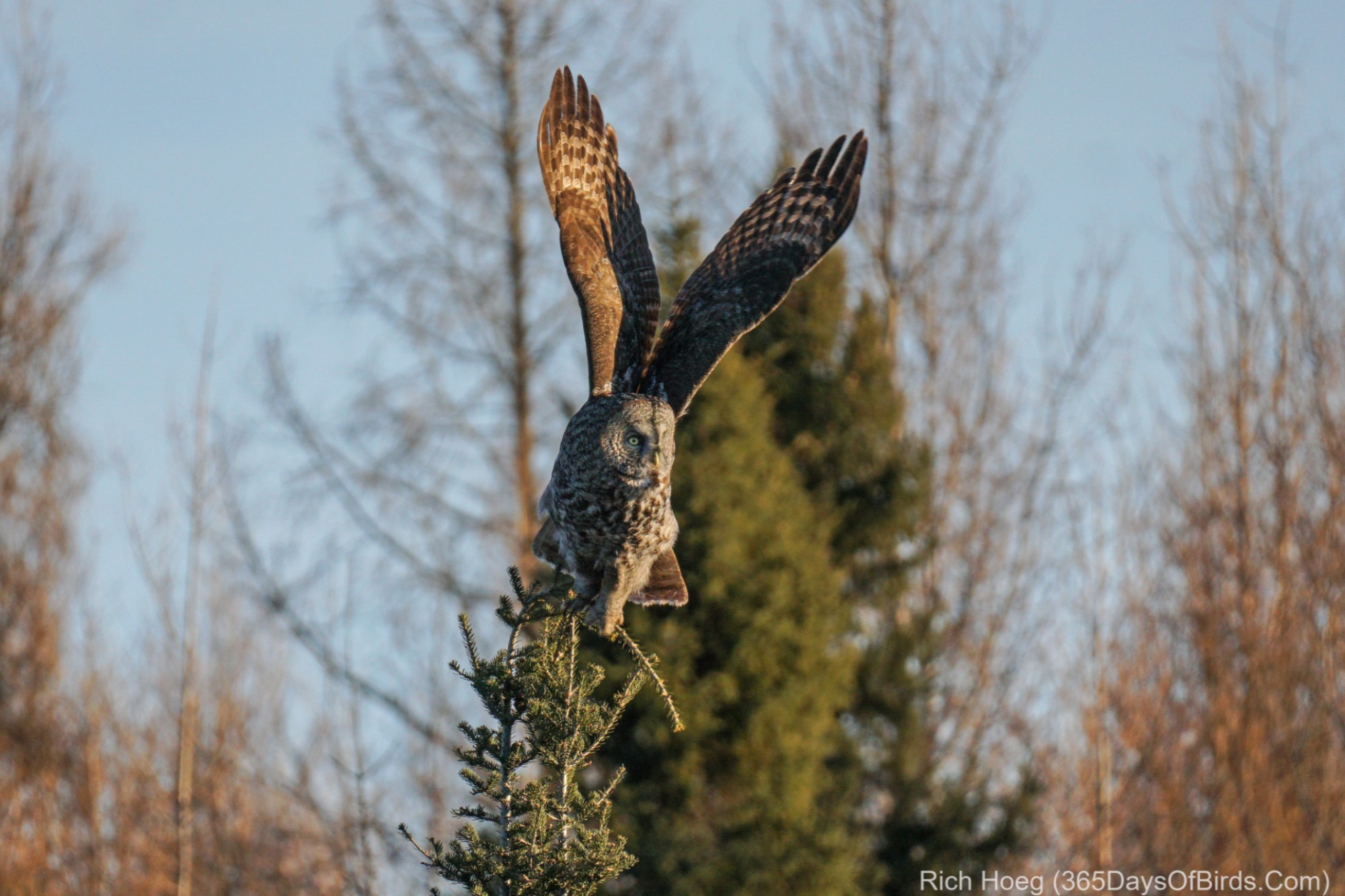
In total over the past two days, I have seen 10 unique owls … 8 Great Gray Owls and 2 Snowy Owls. The images below unfortunately were taken without hoar frost. Either the birds were not cooperative with their perches, or it was in the afternoon after the frost had melted. Still a great time!

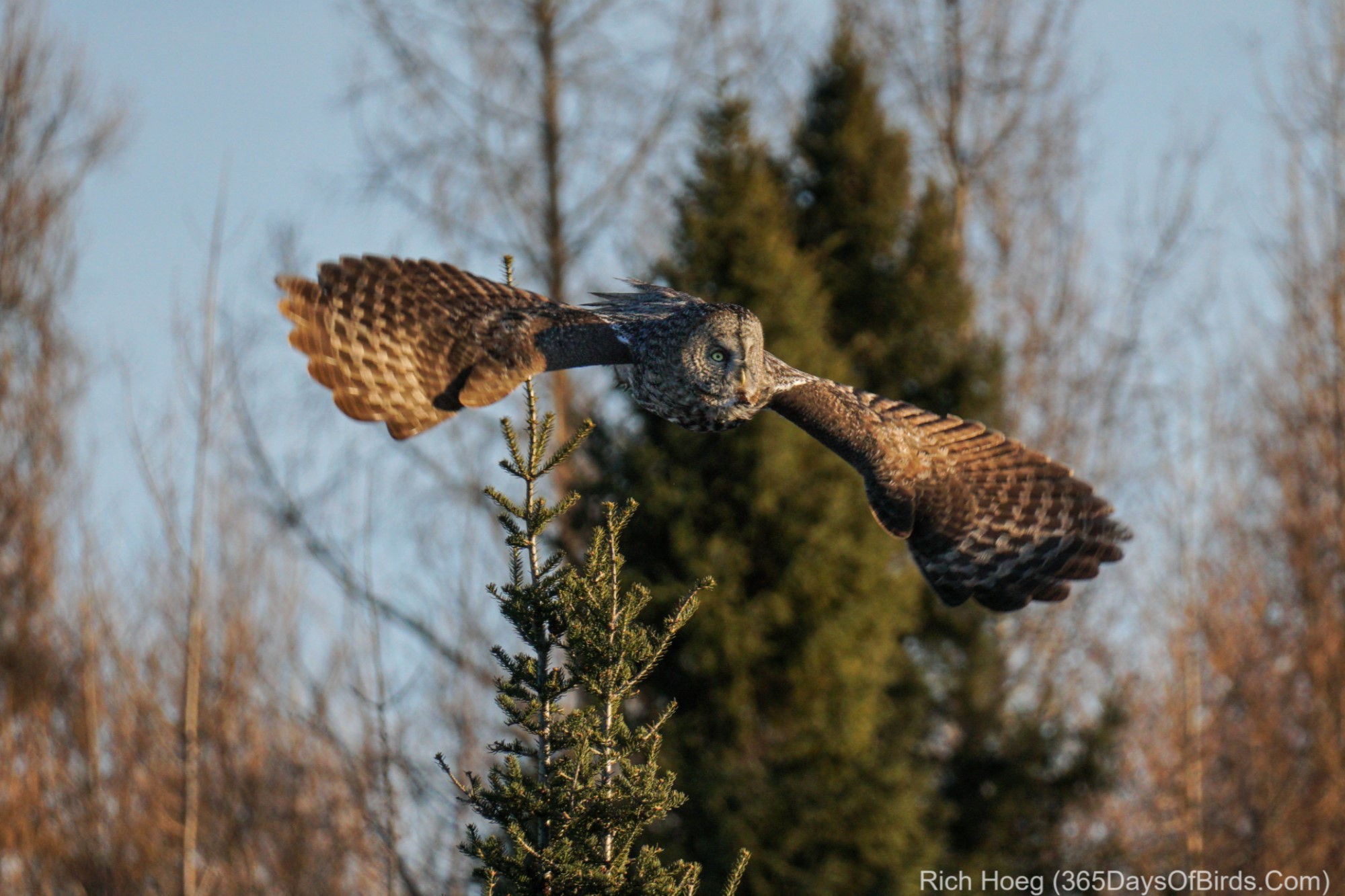
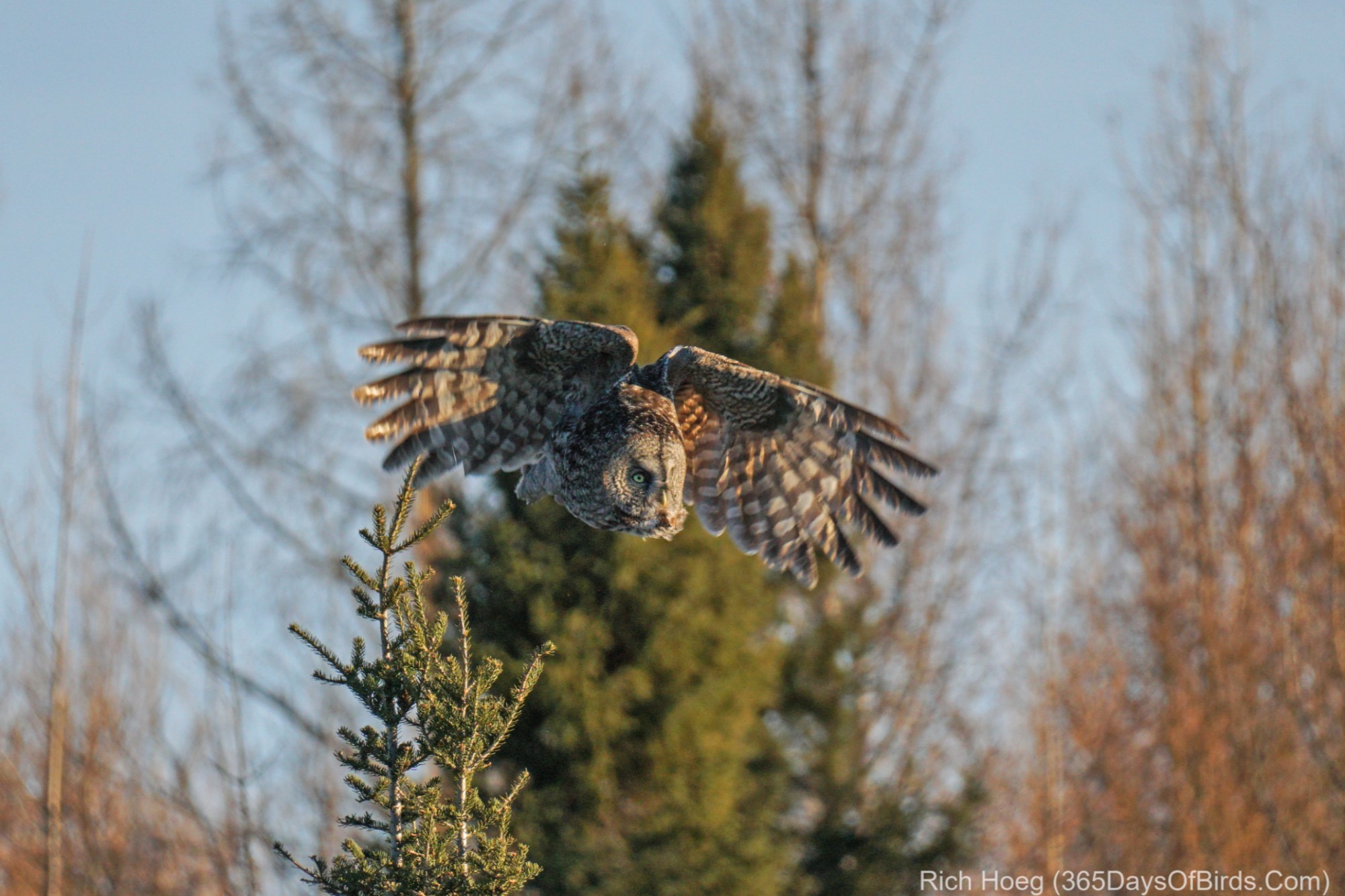
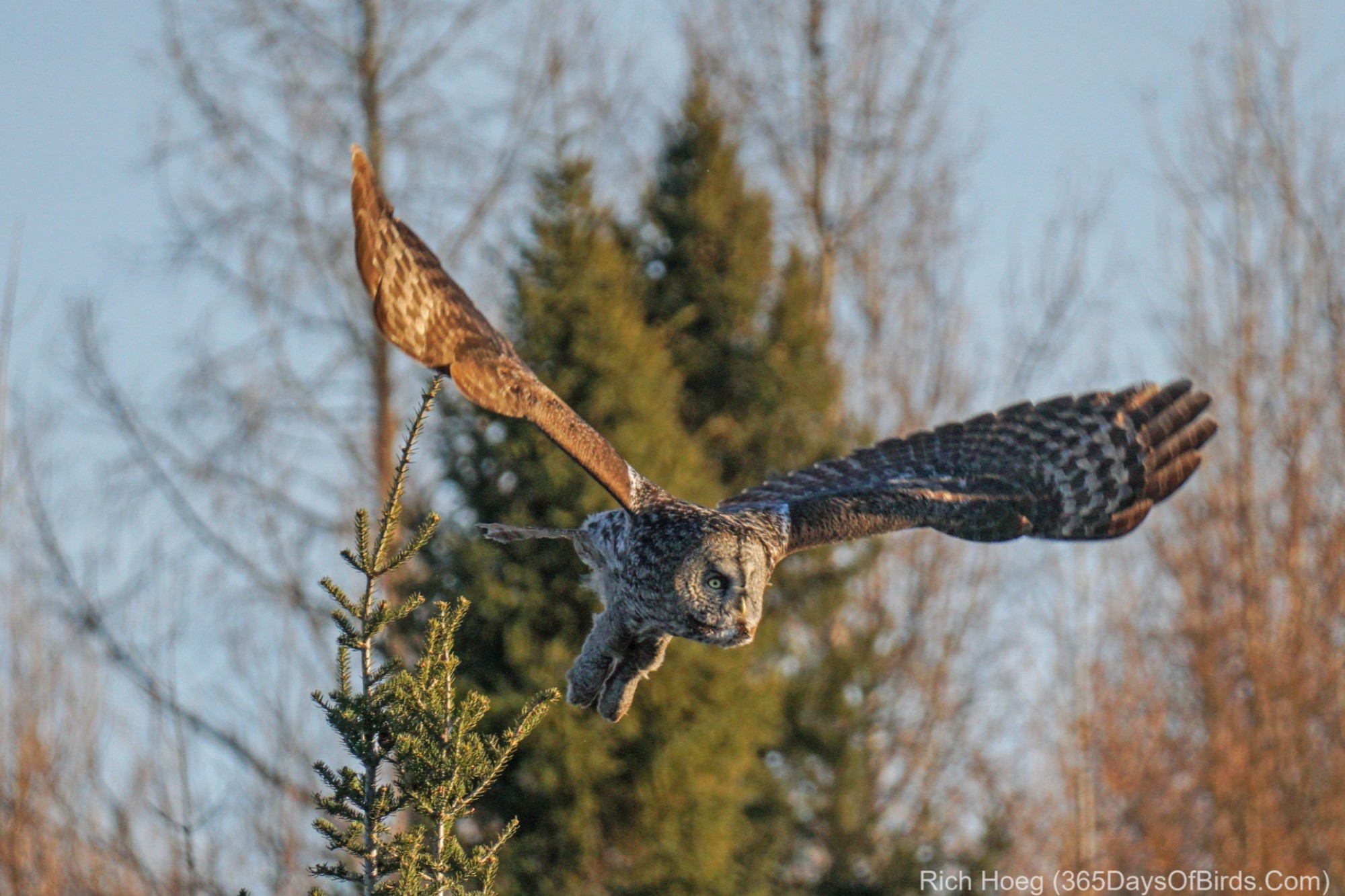
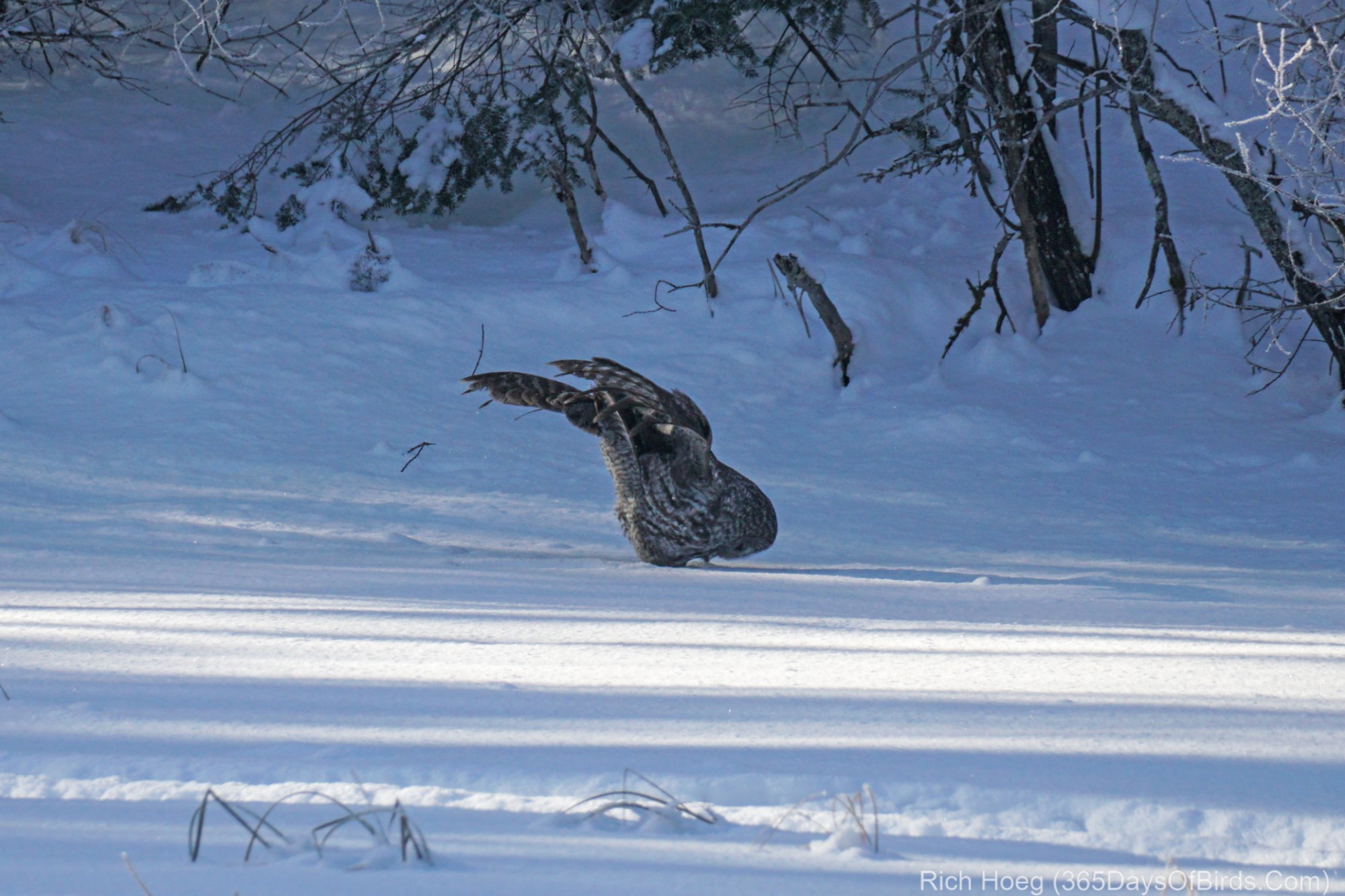
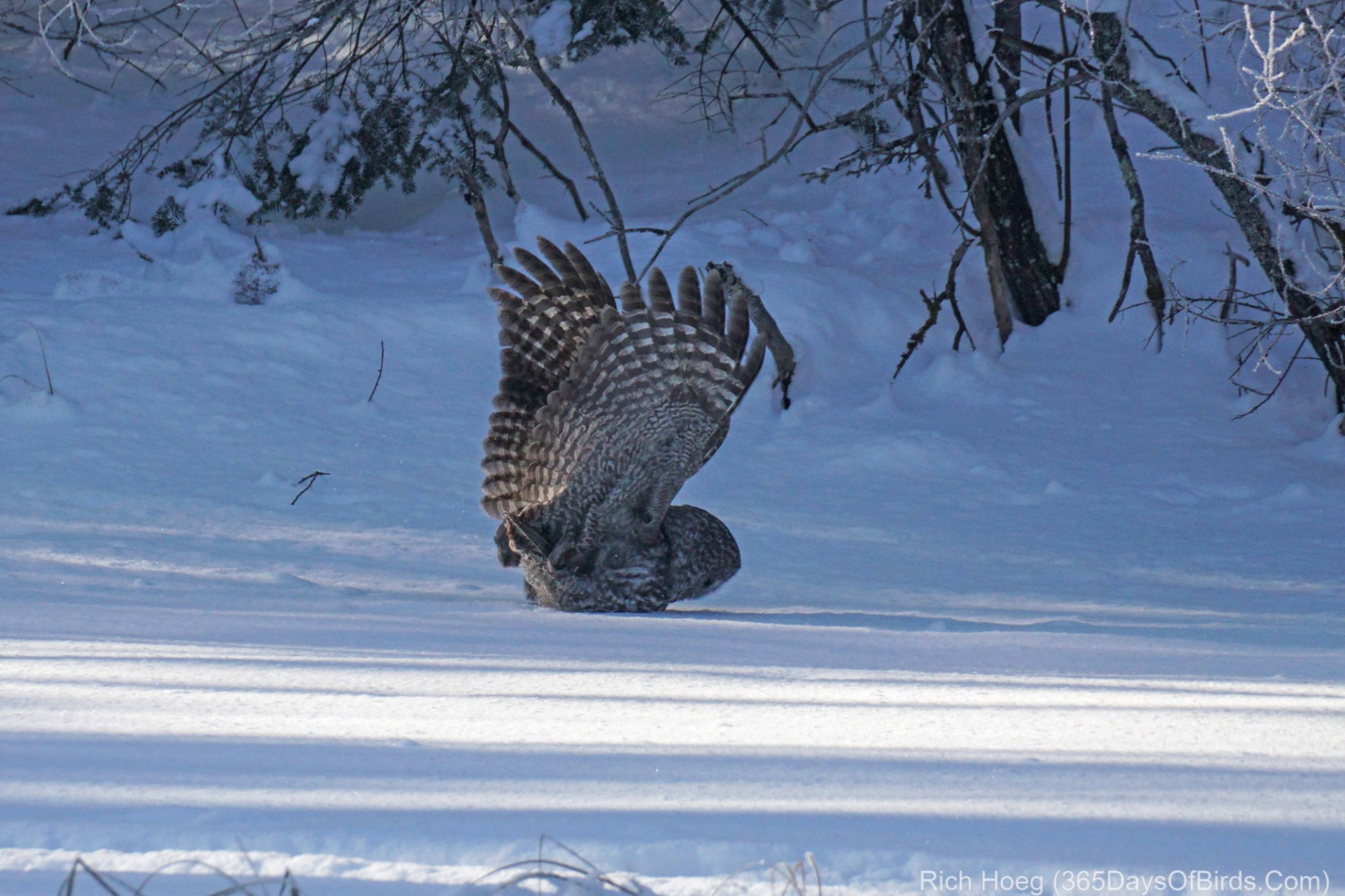
Hunt #1: Great Gray Owl Sunset Hunt
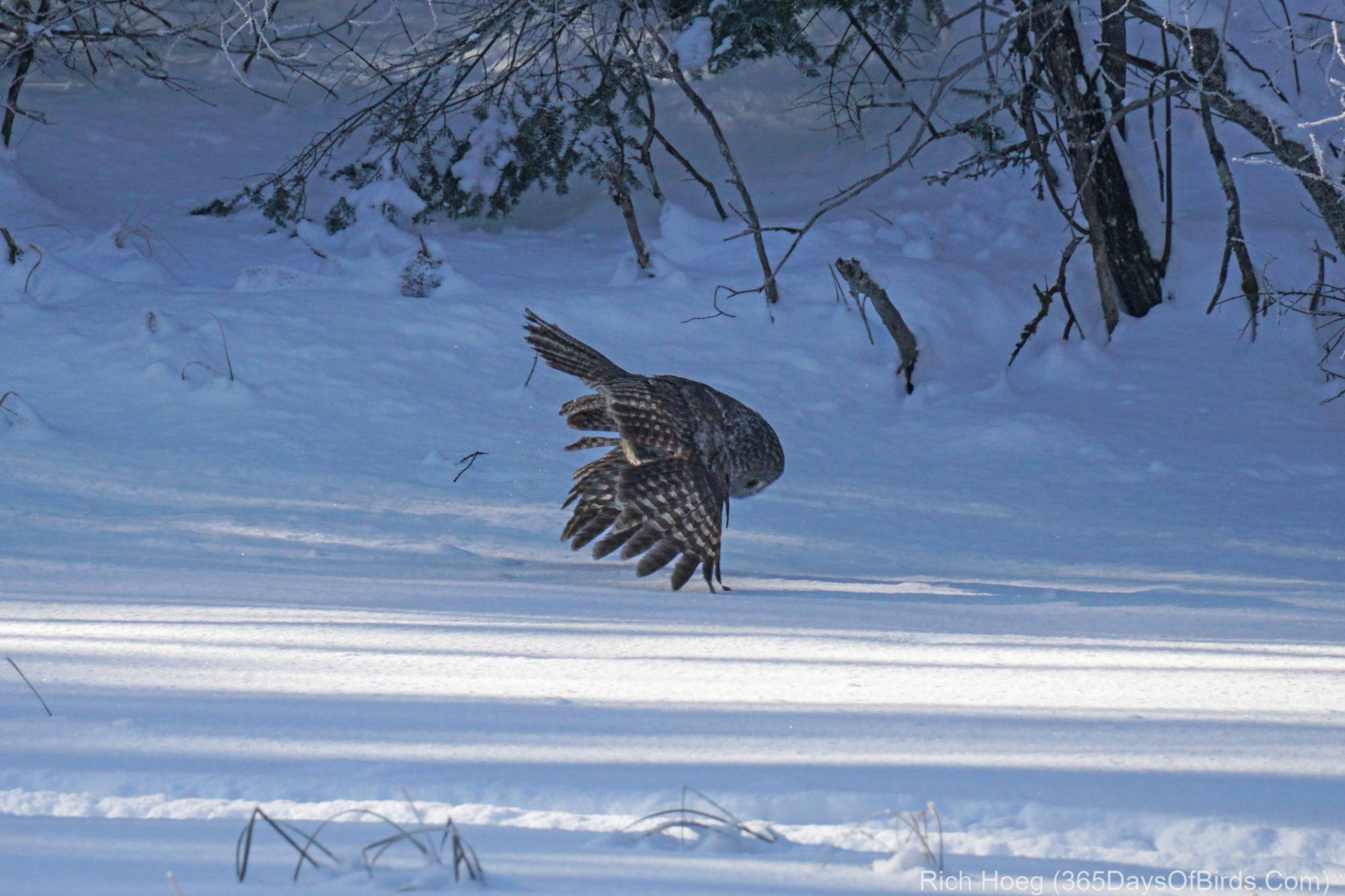
Hunt #2: The Strike! (Notice how the owl is striking the snow with its talens. It uses its offset ear and trigonometry to triangulate a mouse or vole running beneath the snow. Thus, death smashes through the snow from above.)
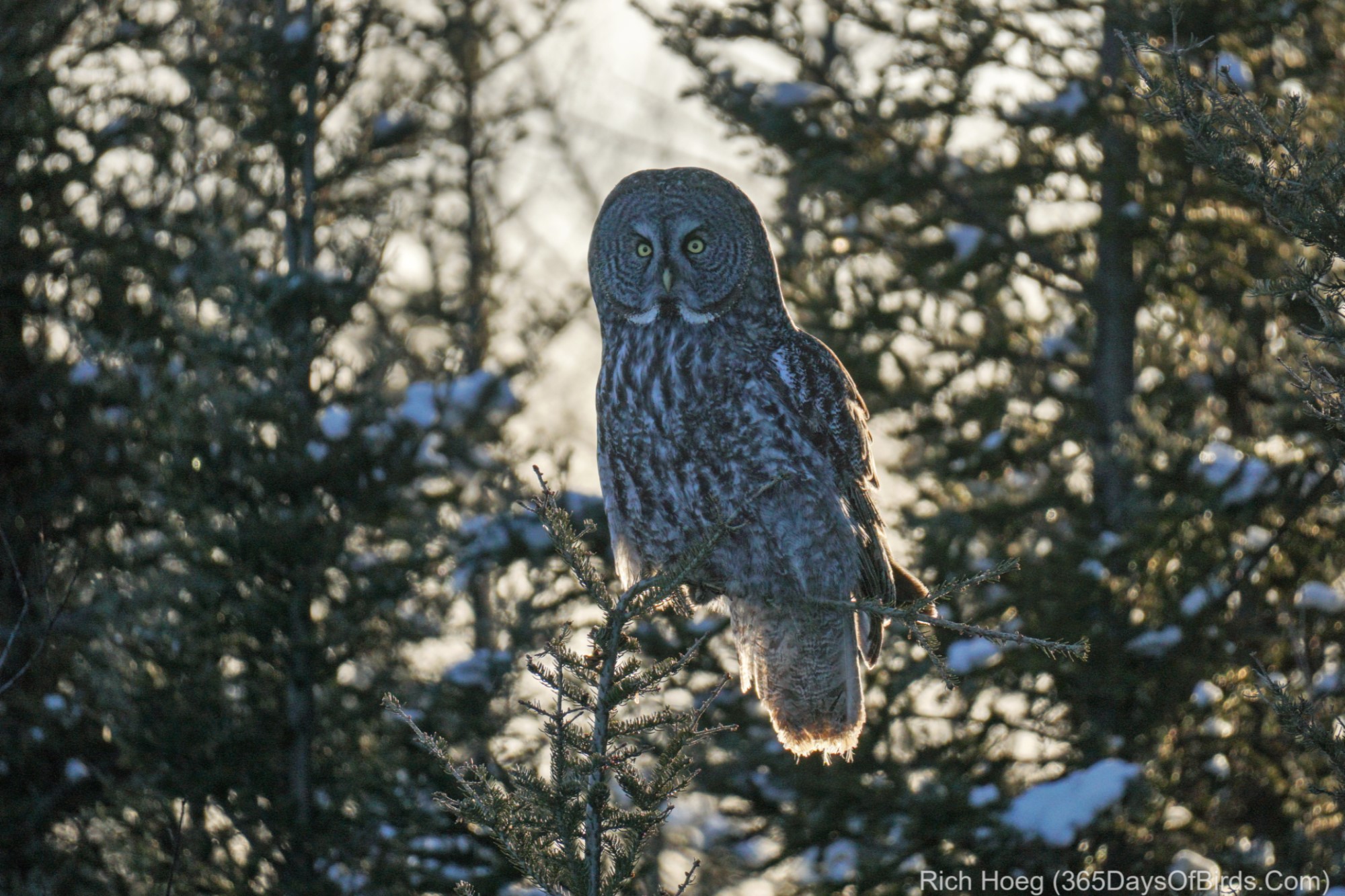
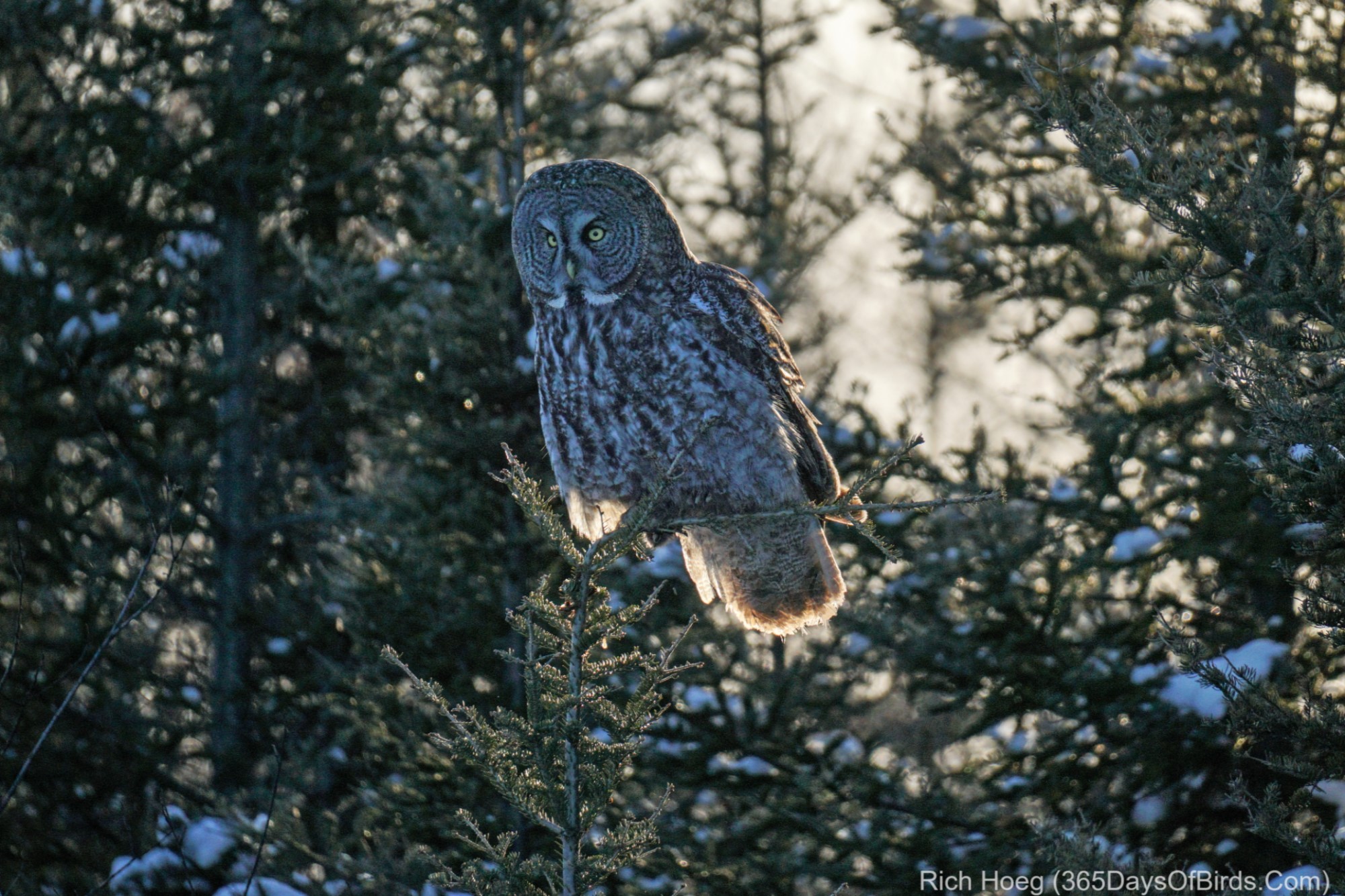
Backlit! (taking images directly into the setting sun can be rewarding)
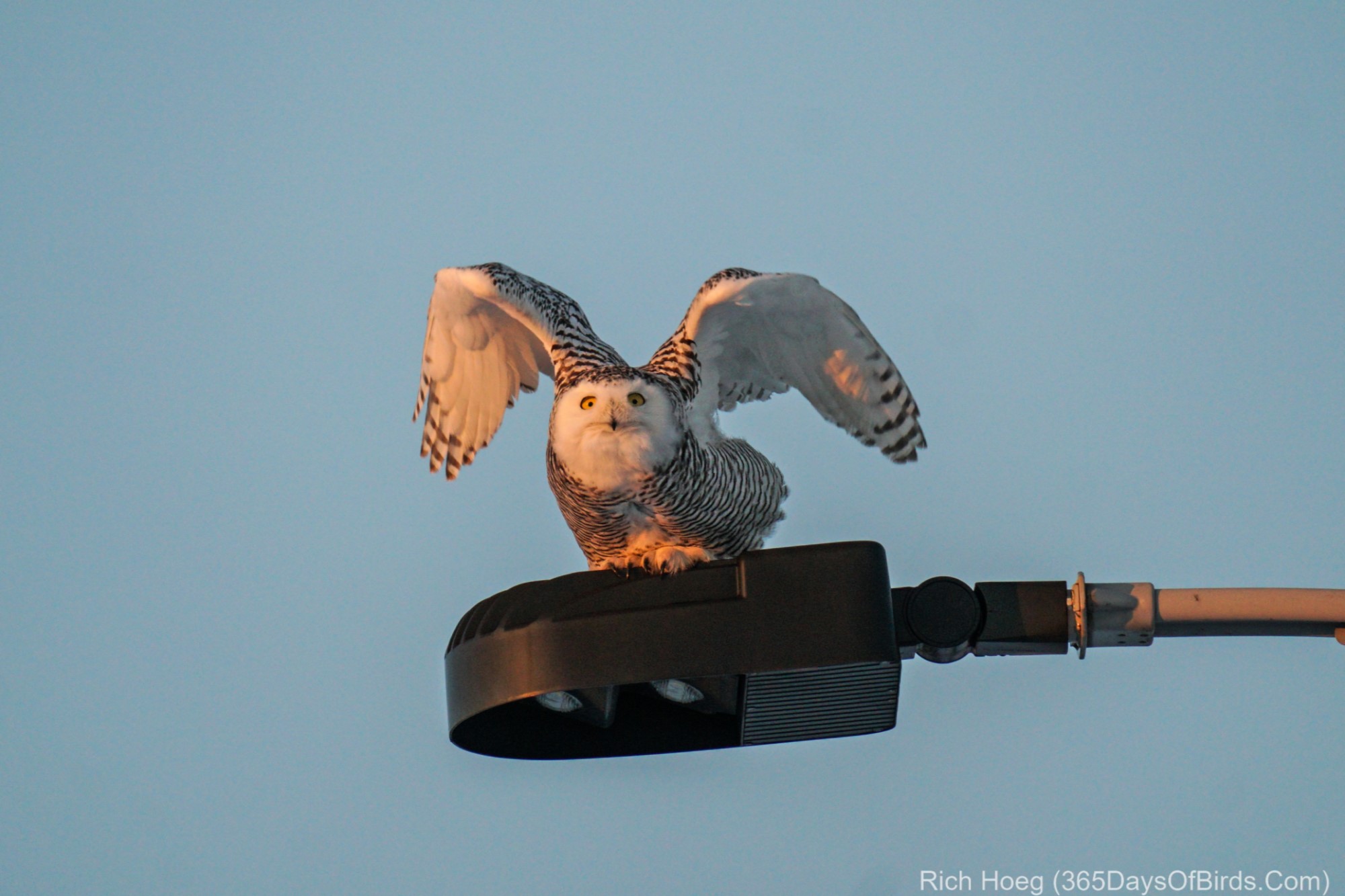
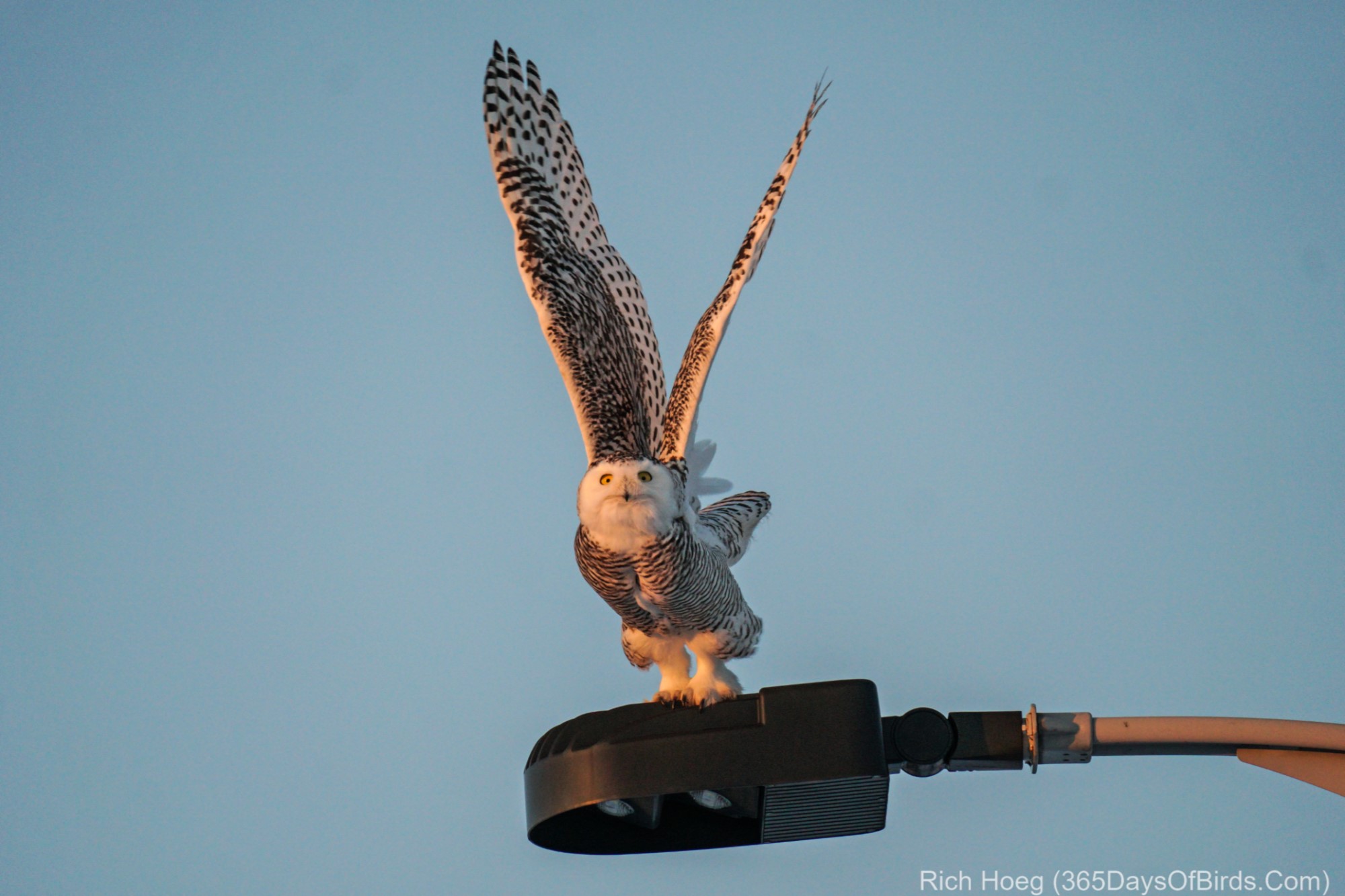
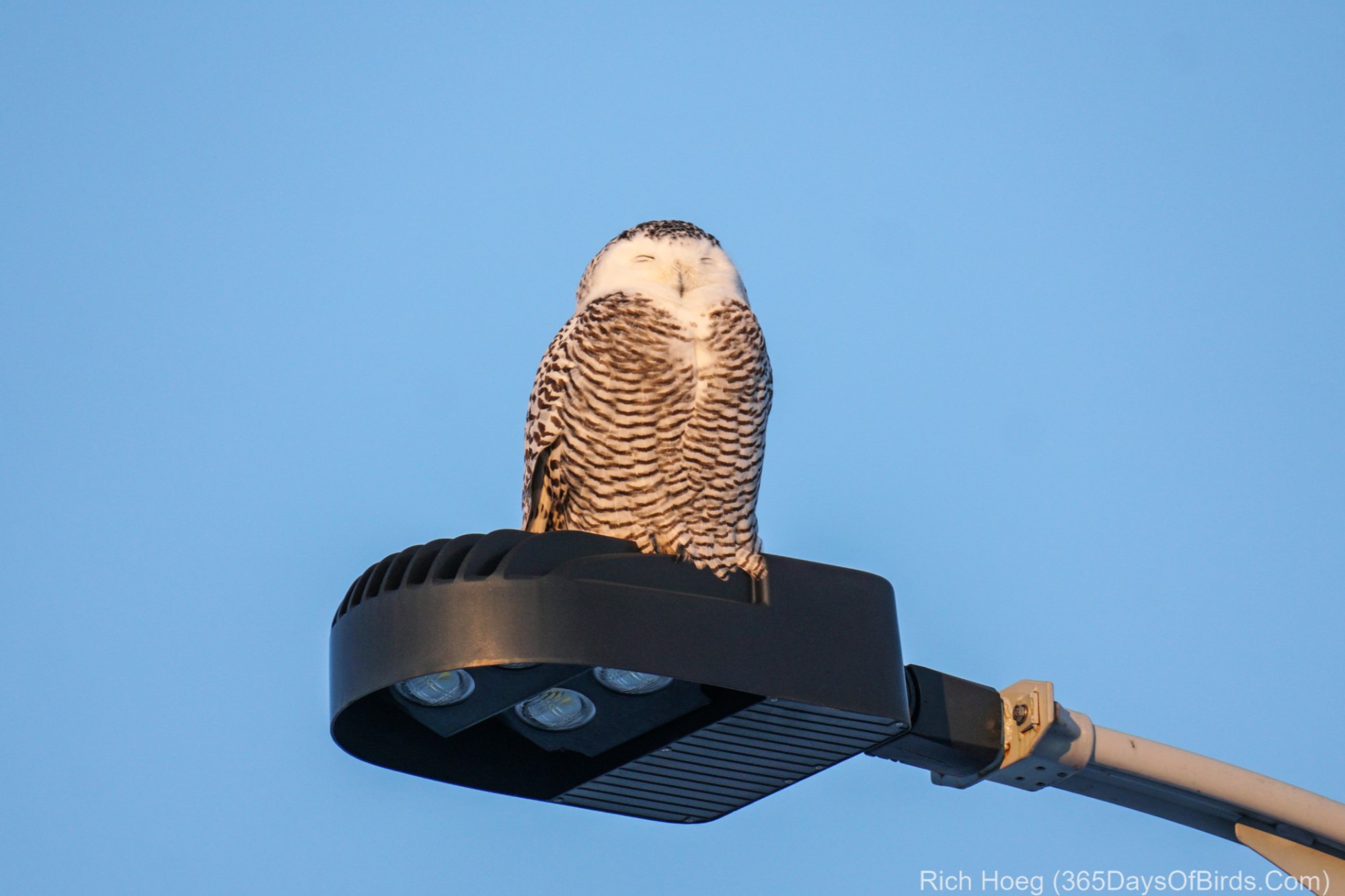
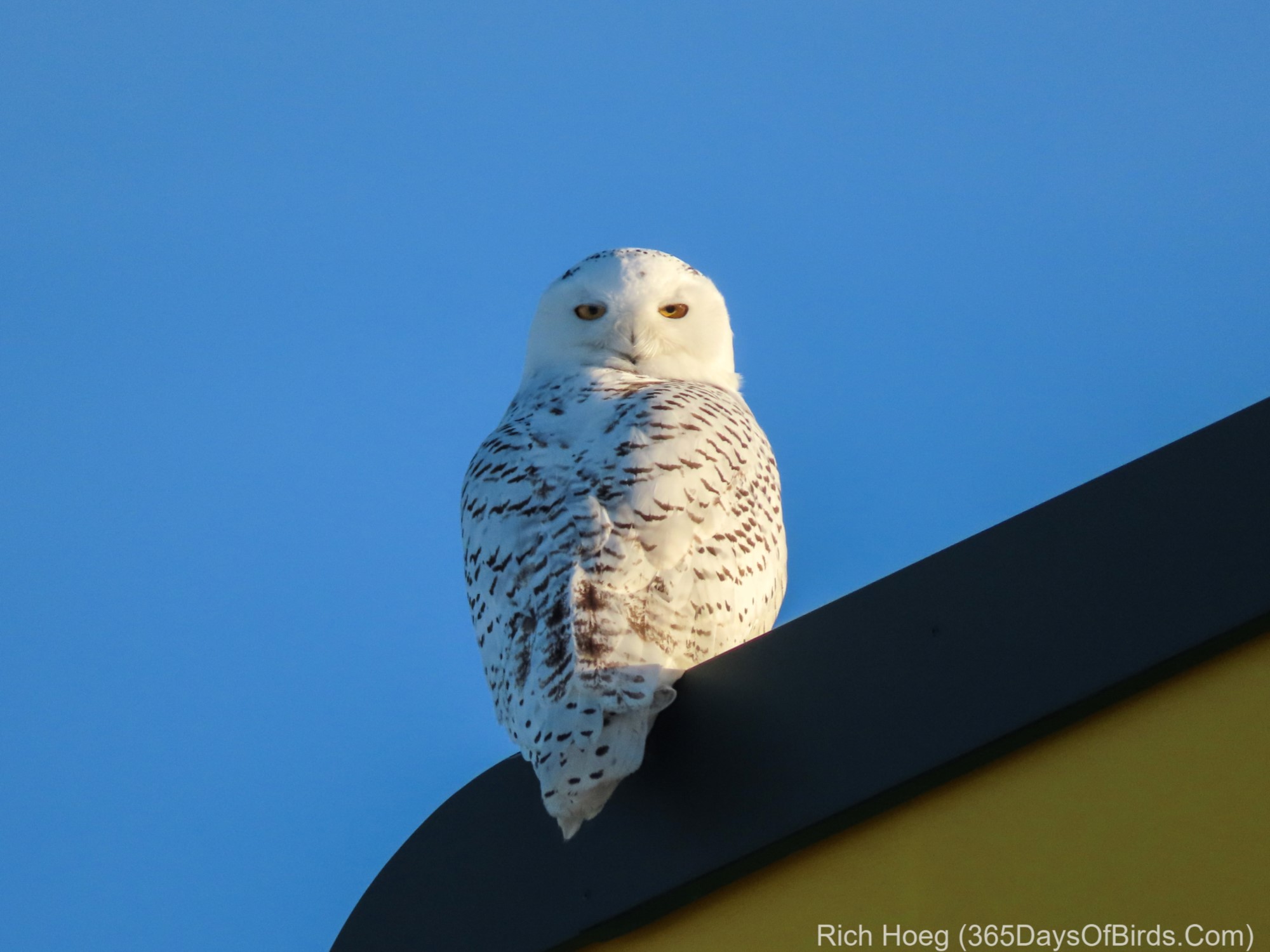
A Snowy Owl (immature male shopping at Menards!)(LOL … its perch)
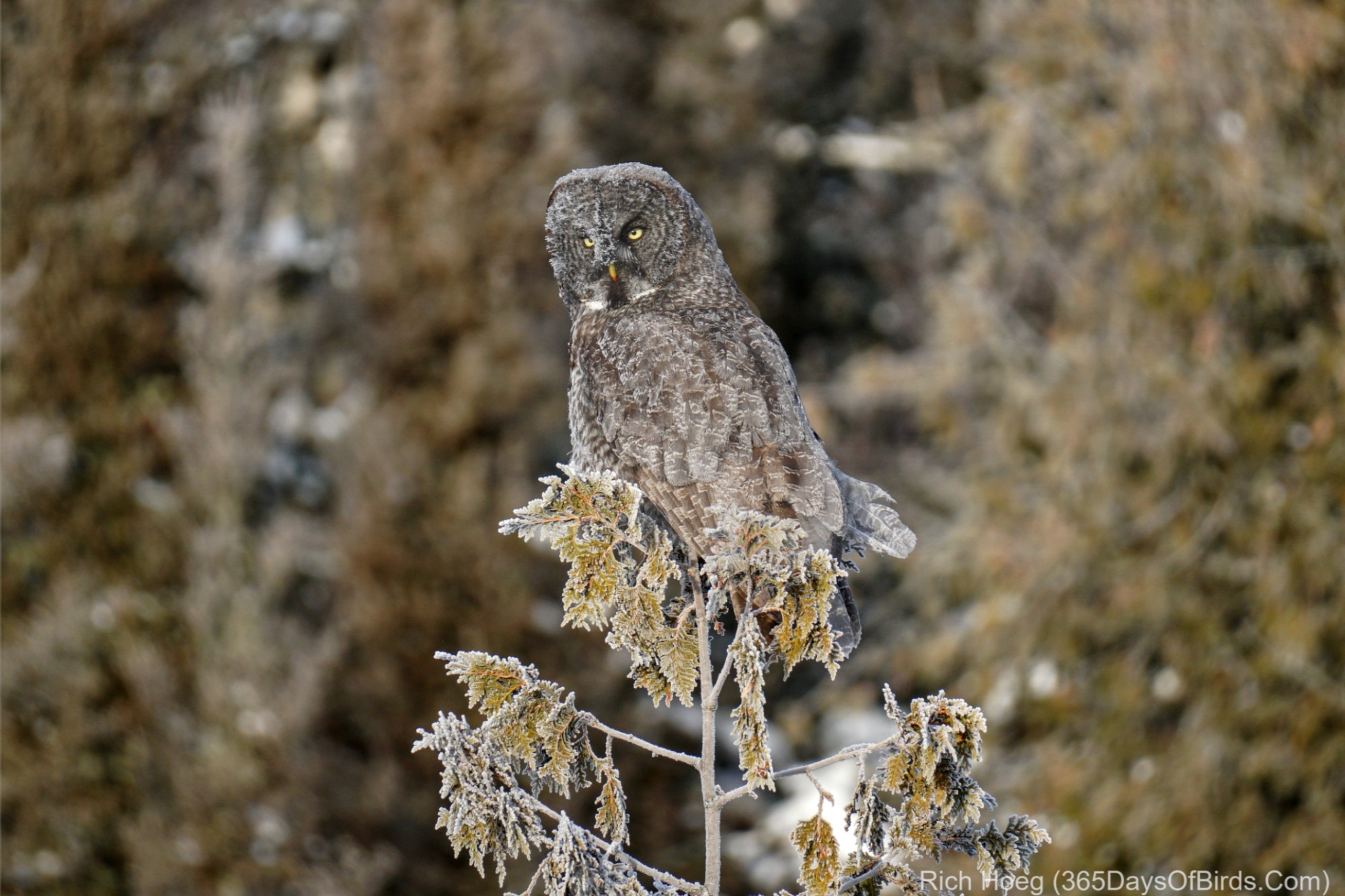
Frost Encrusted Great Gray Owl

While all the recent Hoar Frost and Freezing Fog makes for beautiful conditions, animals and birds may not like the frozen moisture. Yesterday morning I found this Great Gray Owl hunting after the fog lifted. You may need to maximize the photograph, but in addition to the frost encrusted cedar branches, the owl itself has a lot of frost on its body. It’s tough being a bird out there in this environment.

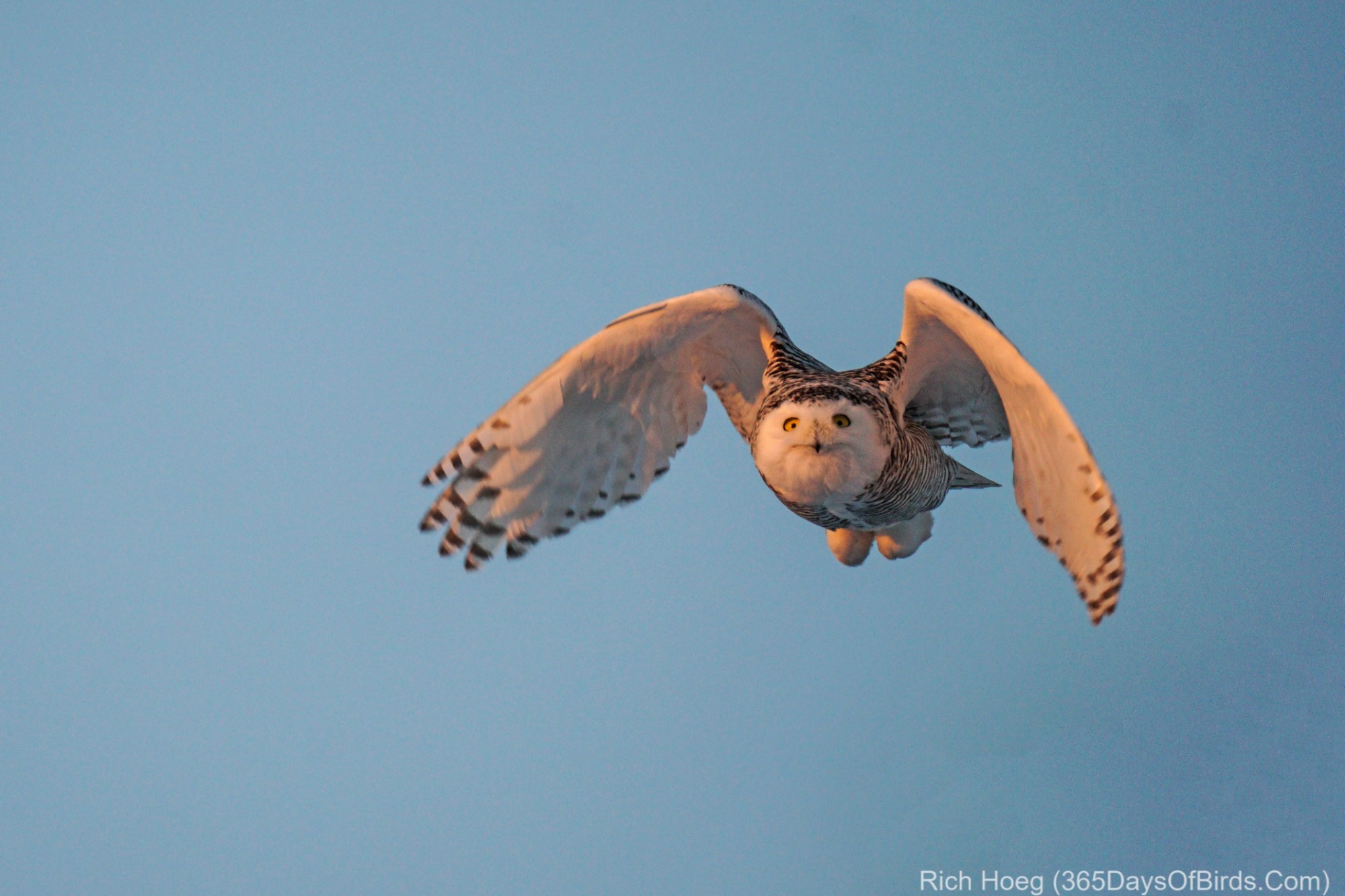
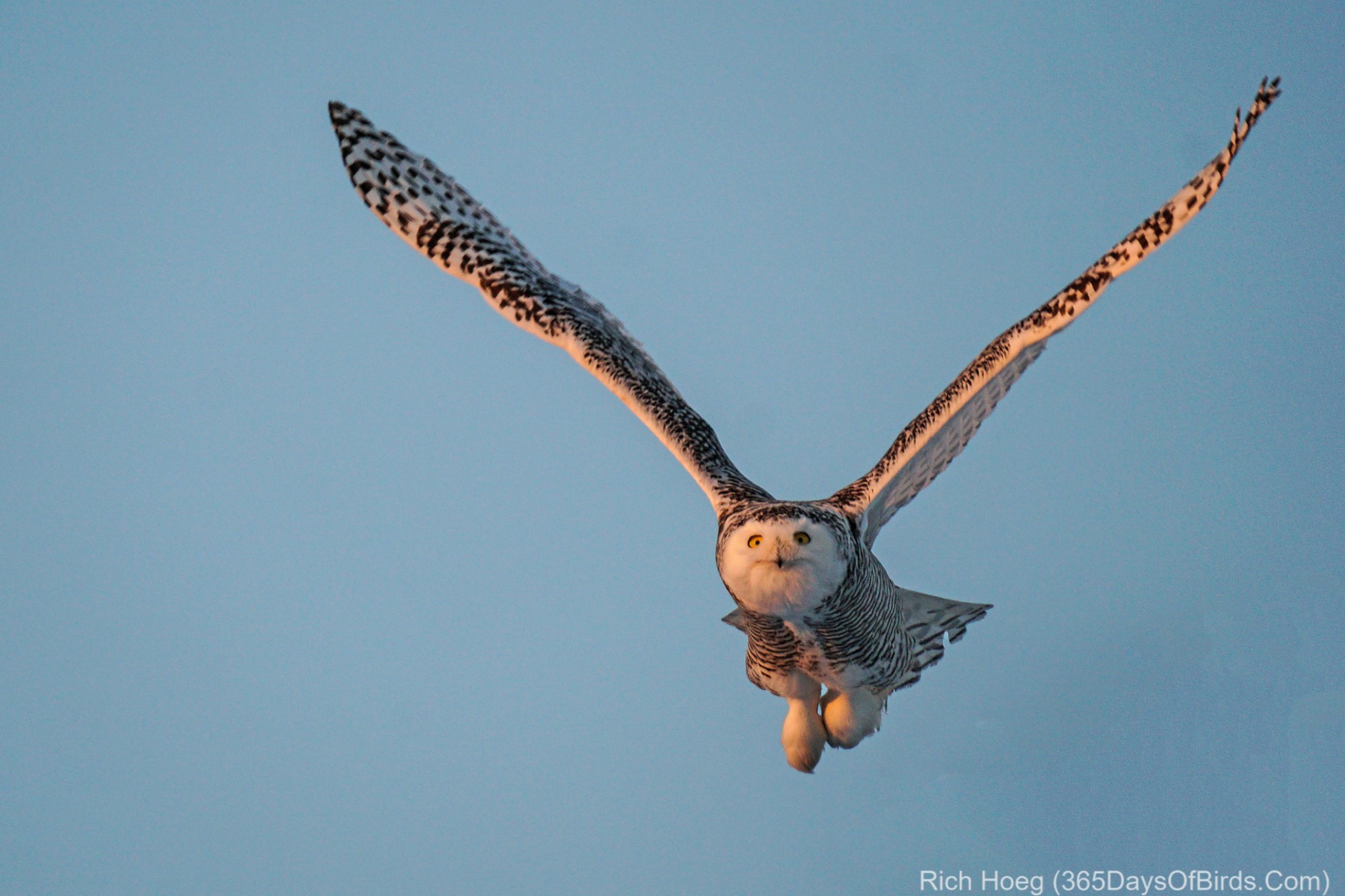
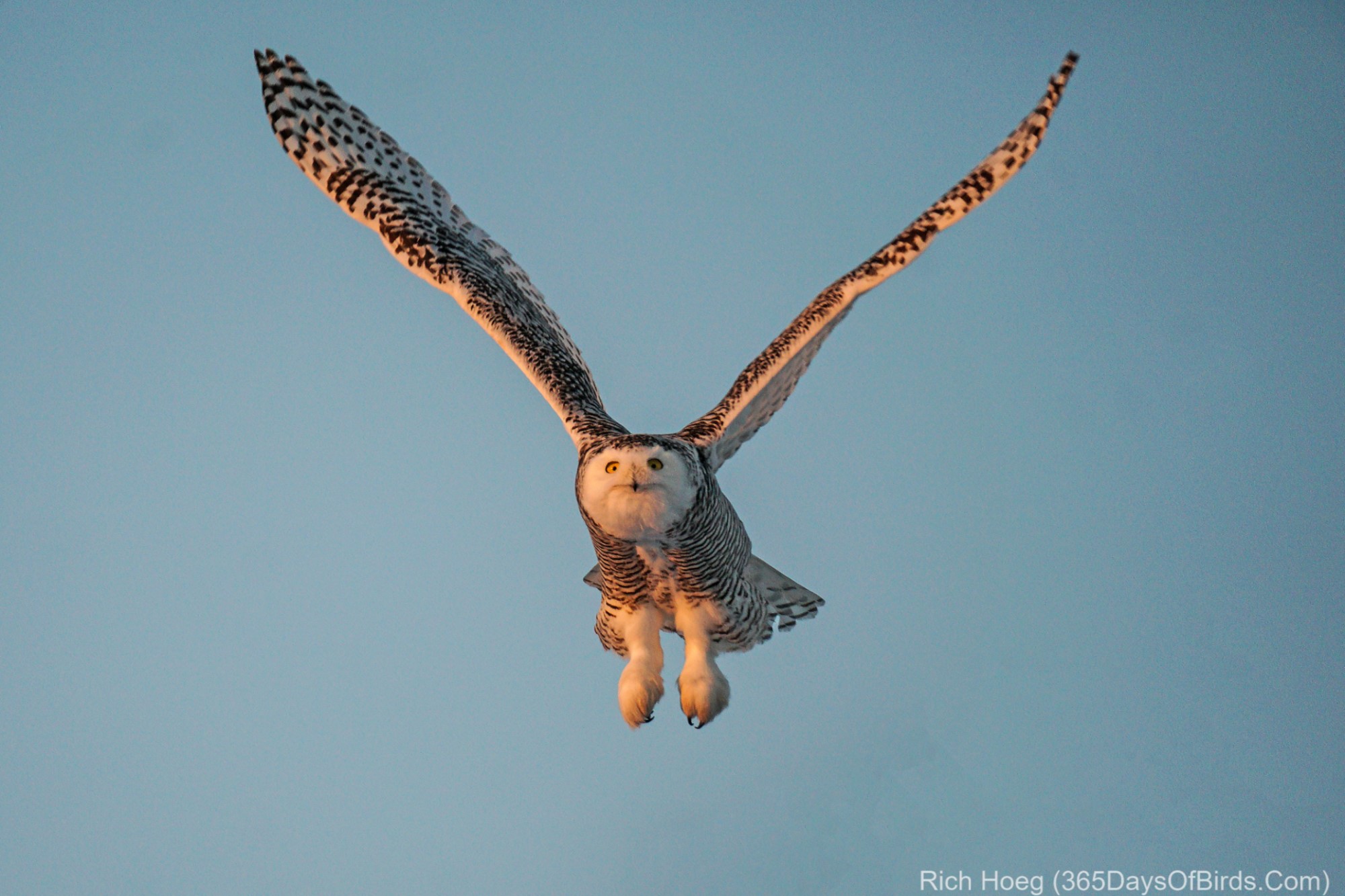
Snowy Owl Sunset Flight

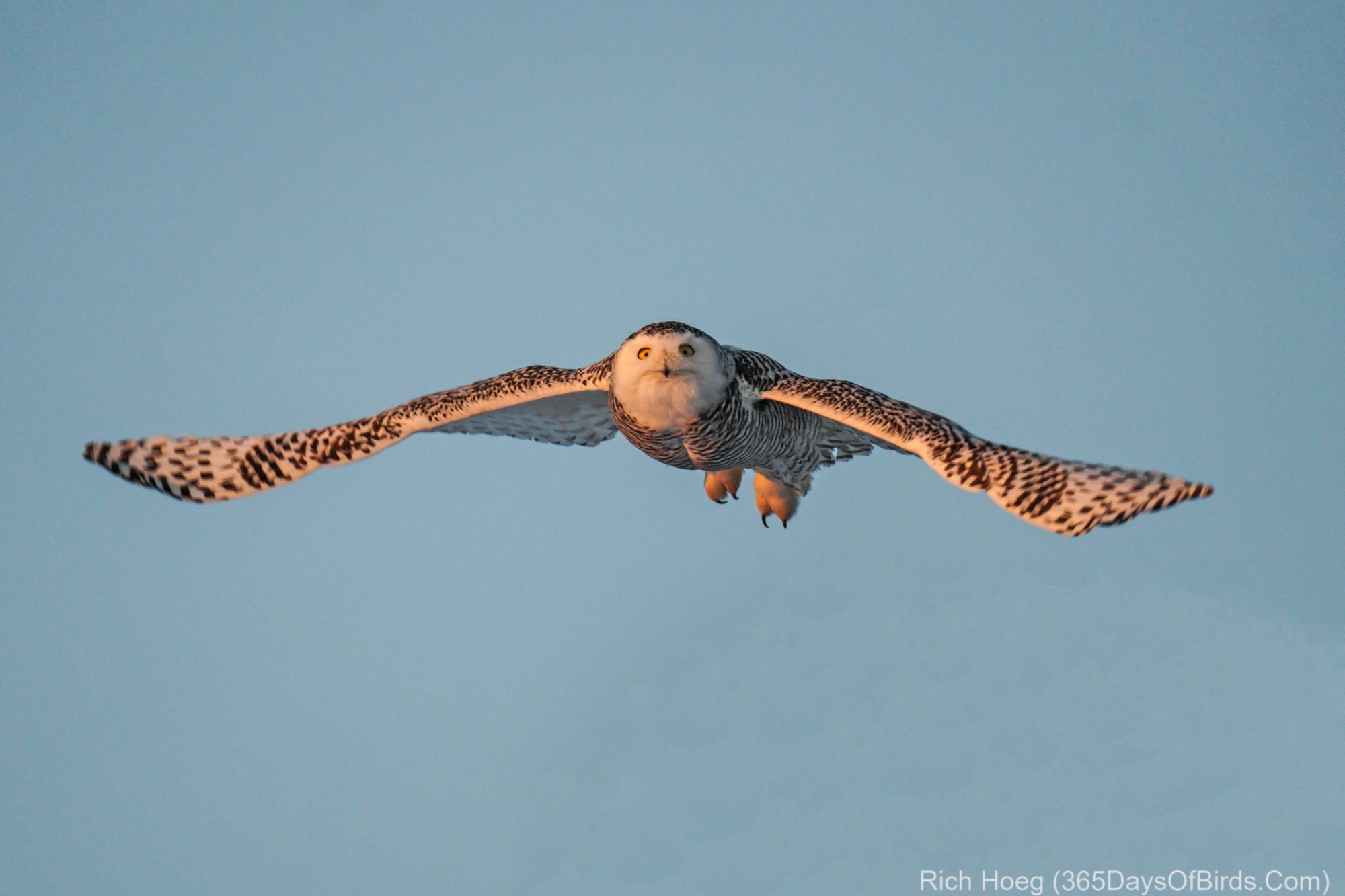
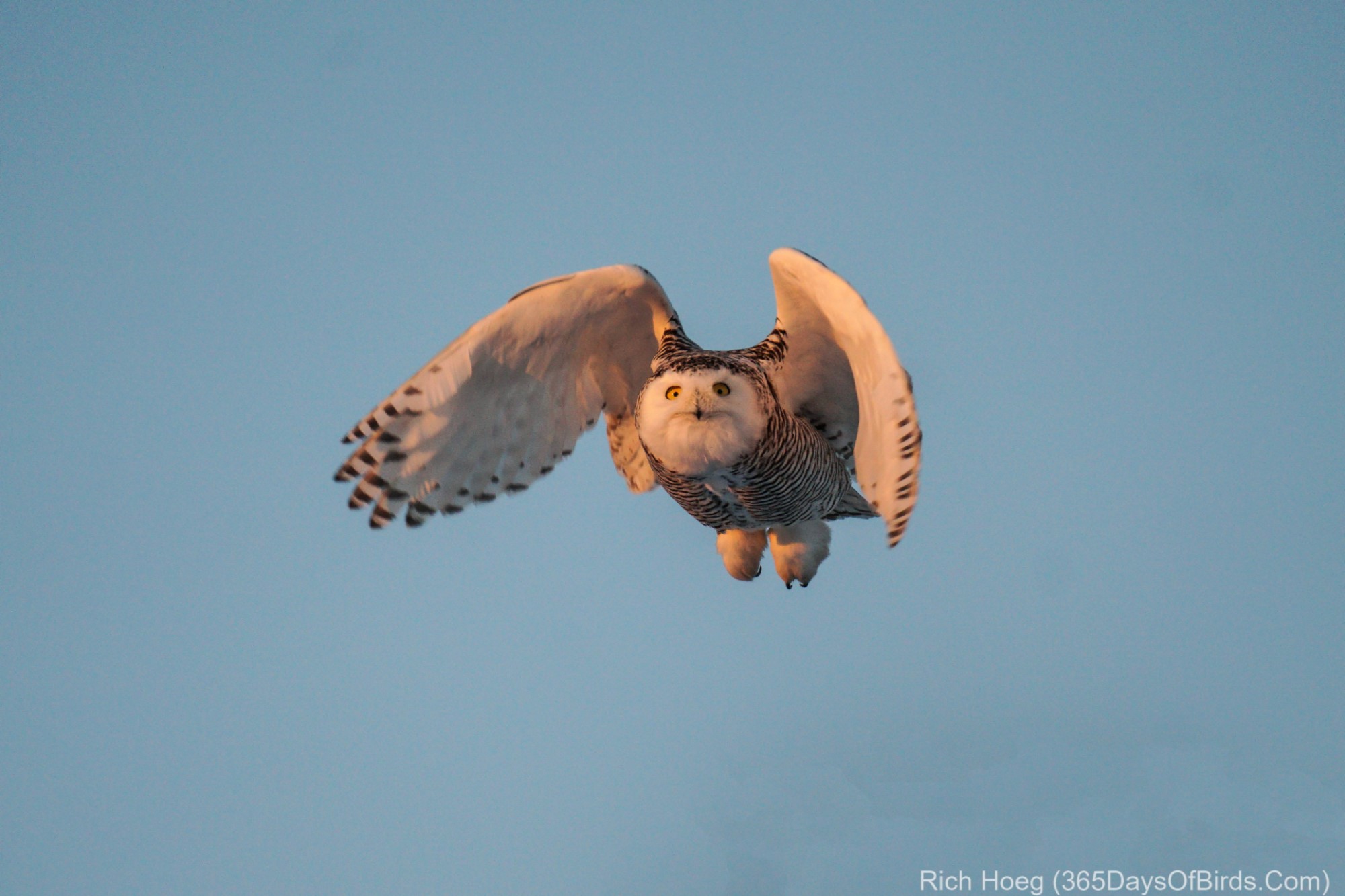
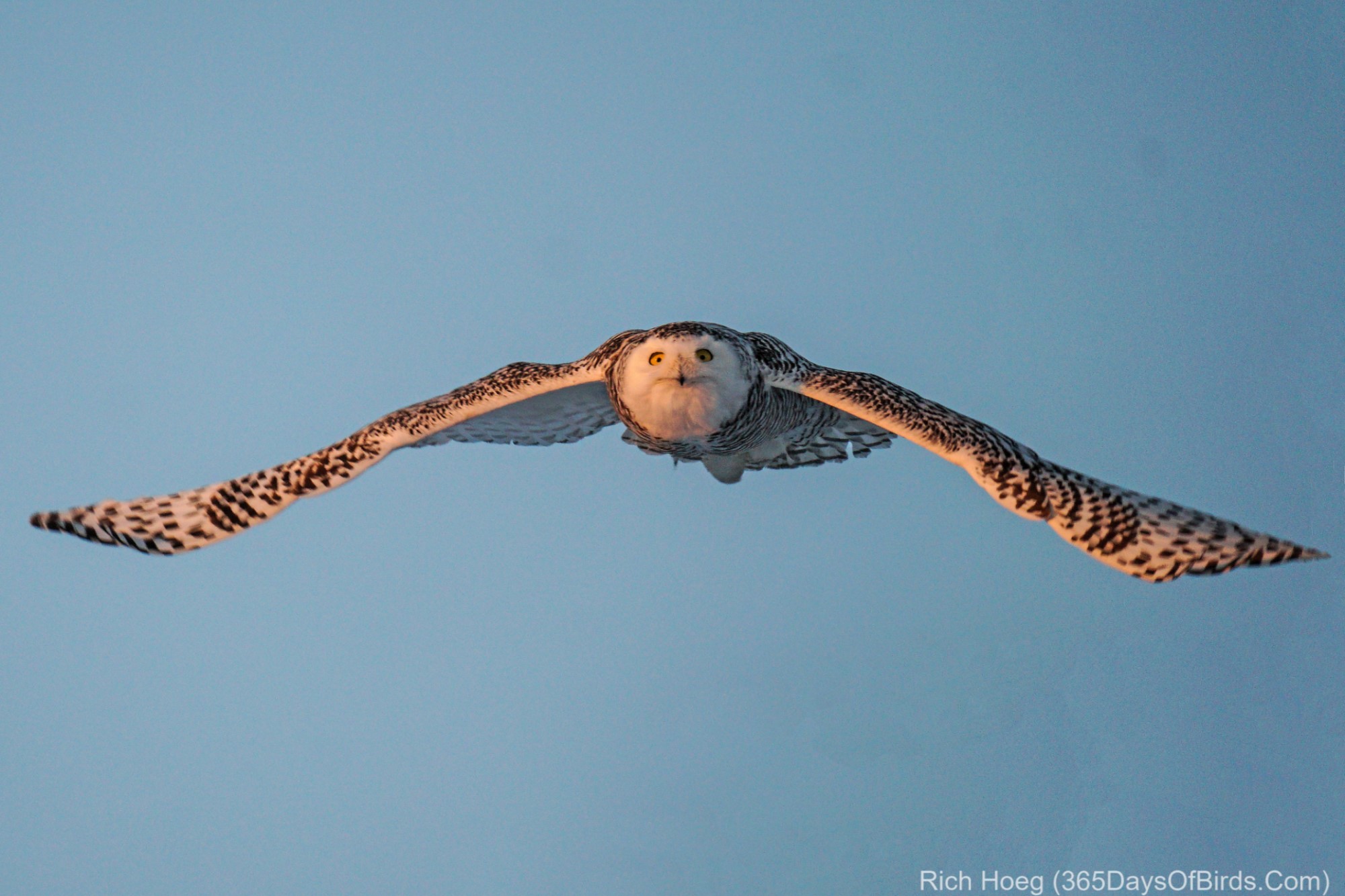
Late yesterday afternoon I decided to look for Snowy Owls. About 30 minutes before sunset I spied the Snowy Owl documented in this post, but with less than ten minutes till sundown, I thought Snowy was not going to grant me anything but “perched images”. I decided to climb atop a nearby snowbank in order to get more on the level with the owl, and I then hoped …

Jackpot! The owl took off right at me and flew directly over my head with only 6 to 8 feet to spare. Wow! Here is one of my favorites of the take-off sequence, but it was hard to choose “a best”. The eight take-off photos took place over a duration under two seconds.

Snowy Owl Sunset Take-Off


For over 20 minutes I first watched a sleepy owl … camera at the ready


Now for the educational part of this post. Someday I hope to travel to the Arctic during the summer and watch snowies as they breed on the tundra. Planning for a trip like this is made difficult because unlike most birds, Snowy Owls do NOT return to the same area each summer. These owls may summer hundreds and hundreds of miles from where they were the previous year. These birds follow their prey which in the warm months means lemmings.

For the migration Snowy Owls follow waterways and their preferred prey south such as flocks of Snow Geese as the geese travel to winter habitat. Many of my friends hunt Snow Geese late each Fall over in North Dakota. They inform me the flocks of Snow Geese always have nearby Snowies.
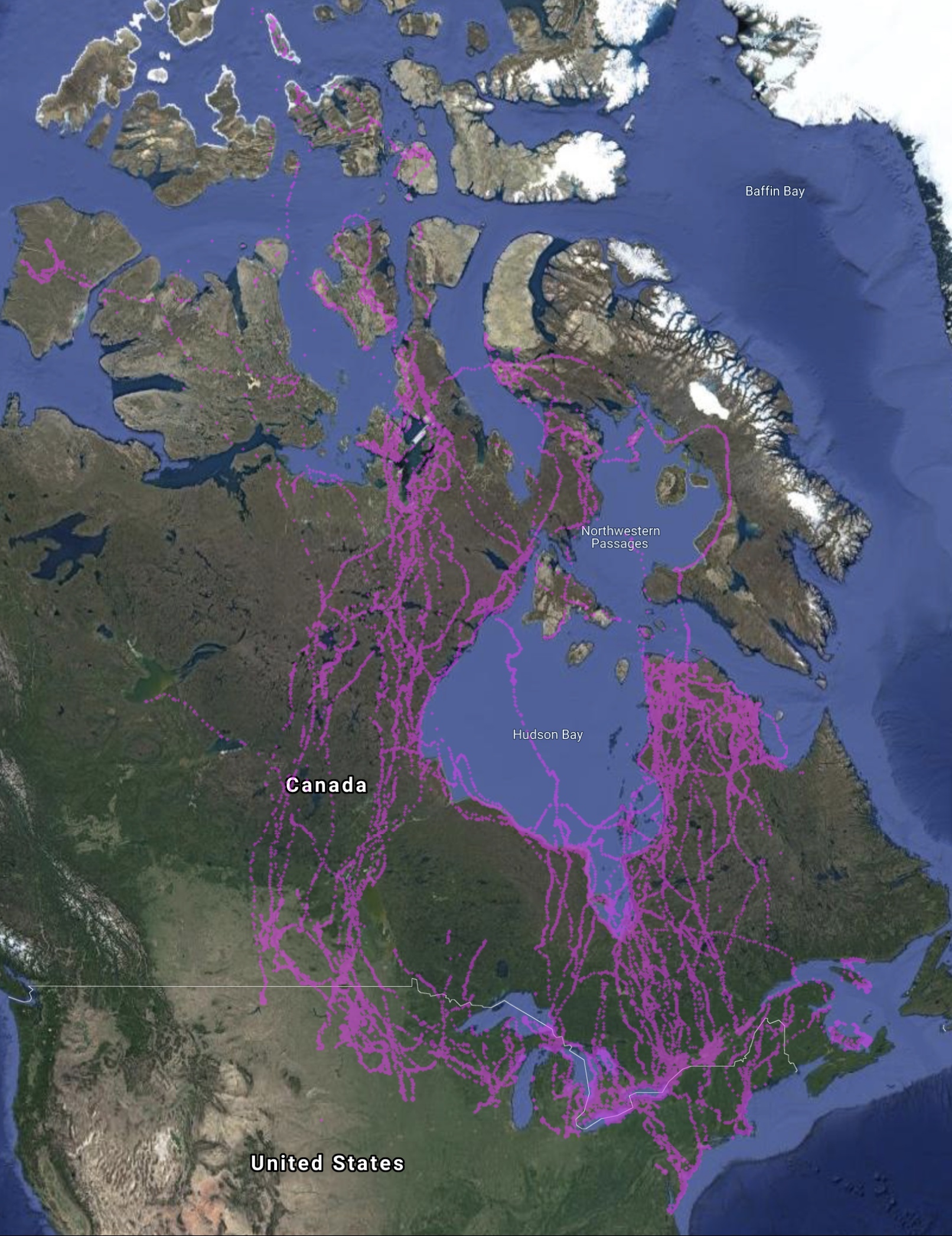
Here is a recent image published by Project Snowstorm of over one million migration points. This wildlife organization tags Snowies with GPS solar array powered bands. The information on the Snowies path is downloaded/uploaded either by  satellite or cellular phone.
While Duluth does not have many Snowy Owl migration paths present, do not read into that fact the lack of Snowy Owls. Rather, we have not yet banded Snowies in this manner. Eventually I hope our local wintering birds will become part of Project Snowstorm. I have personally helped fund, and look forward to help begin a study done in a similar manner of Northern Hawk Owls. Our first GPS / solar array powered bands will be tagged on birds during the summer of 2022.