Nordic Skiing in Sax-Zim Bog

I like to explore Sax-Zim Bog … often by Nordic skiing.

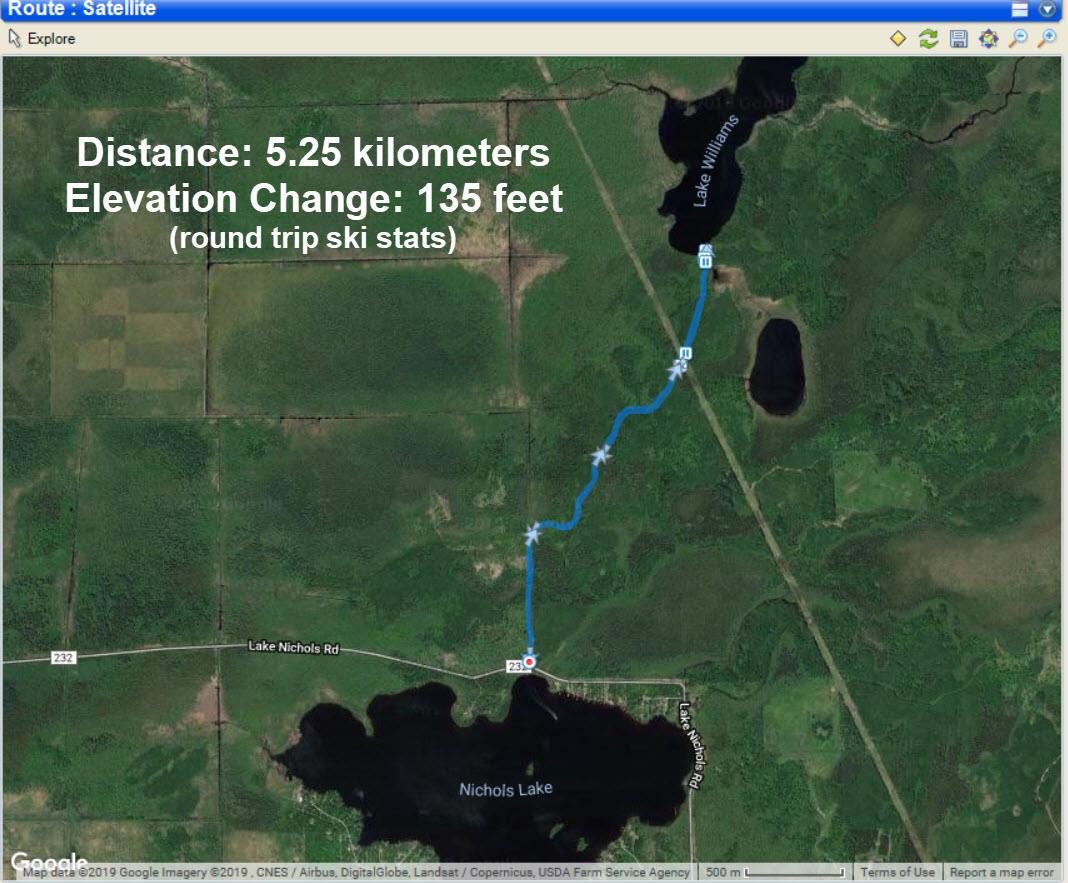
For a number of years, I have wanted to see Lake Williams, which is north of Lake Nichols. I knew there was a snowmobile trail, and yesterday after the freezing rains quite, I skied into the back country. During the week, snowmobile trails are a great way to get around northern Minnesota. On weekends, I tend to stay off the more popular trails. I did not see a single snowmobile during my mid day ski. From experience I know one can hear the sleds from a long distance away which always allows me to get off the trails before the snowmobiles arrive.

The ski was gorgeous. Although I did not see any owls during my ski, the first 1/2 km was prime owl habitat. At one point I crossed the power line cut. I learned that snowmobile distance signs are very inaccurate. Metal signs stated among other things that it was 2 miles back to Lake Nichols. My Garmin had the distance measured at 2 kilometers. The same sign stated Lake Williams was another 1 mile distant. It was only 1/2 km further through the woods.

Lake Williams is everything you could want in a remote lake. I skied out onto the lake ice and enjoyed the silence. I then turned around and skied back to my car at the Lake Nichols boat launch.

As a fyi … I also had a failed cross-country ski jaunt yesterday. I like to ski into the Bog north of Lake Nichols Road using the small streams in the area just east of hwy #7 where folks search for Great Gray Owls. Wrong move, but I suspected that might be the case. This winter has not yet been cold enough, and when I got downstream of my first beaver dam, I could tell the ice was not thick enough. I turned around and skied back to Nichols Lake Road. The heavy snows and mild temperatures this winter just haven’t formed a thick sheet of ice where mild currents are present (like downstream from a beaver dam).

My ski into Williams Lake was 5.25 kilometers round trip with an elevation change in total of 135 feet … quite easy.
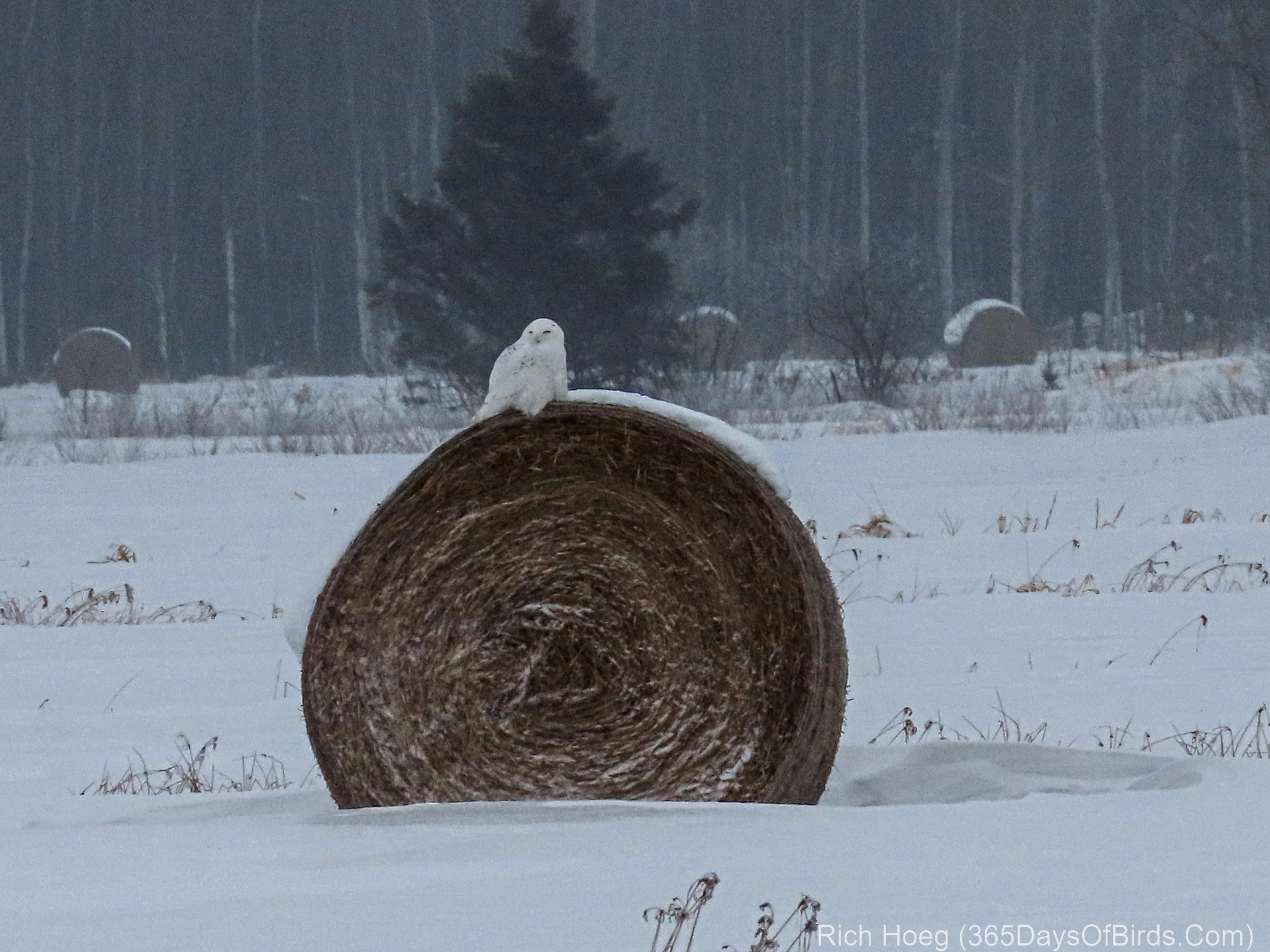
I did take a few bird photographs, but the off and on freezing rain did not inspire me to do much with my camera. However, this image was another Canon SX70 interesting test. While I normally keep digital zoom turned off, and I turned digital zoom on and took this photograph of Snowy a few hundreds yards out in the field. I was not actually at absolute magnification as I wanted the full hay bale and pine tree in the photograph. Thus, I back off the zoom a bit. Digital zoom performed well, but close inspect of the image yields little detail. I guess I prefer to only use optical zoom, and hope my outdoorsman skills can get me closer to my intended subjects. Obviously in a situation like the one presented here, I was as close to the Snowy Owl as possible. I never trespass.
Birding in the Past: Evening Grosbeaks!

The birds one finds in northern Minnesota have definitely changed since my youth (I’m 62 years old). Our family home was only a few miles from where my wife and I live now. We had two huge bird feeders which were always busy, particularly in the winter. Like clockwork, every fall I could count upon the fact that when the Mountain Ash berries ripened in our yard, the Evening Grosbeaks would appear out of the Boreal Forest. When the berries were gone, and the grosbeaks were sufficiently drunk from fermented berries, they would then spend the rest of the winter in our yard … visiting our feeders many times per day. As the snows began to fall, Red Crossbills would join the backyard celebration.

It has been decades since I have had either bird specie in my feeders. However, now each winter sees my flock of Mourning Doves making their daily visits to my feeders, and Mr. and Mrs. Cardinal normally appear. While mourning doves were always present when I was a child, they never braved the northern Minnesota winters. To see a cardinal, one had to travel way south of Duluth. Yes … times and weather have changed.

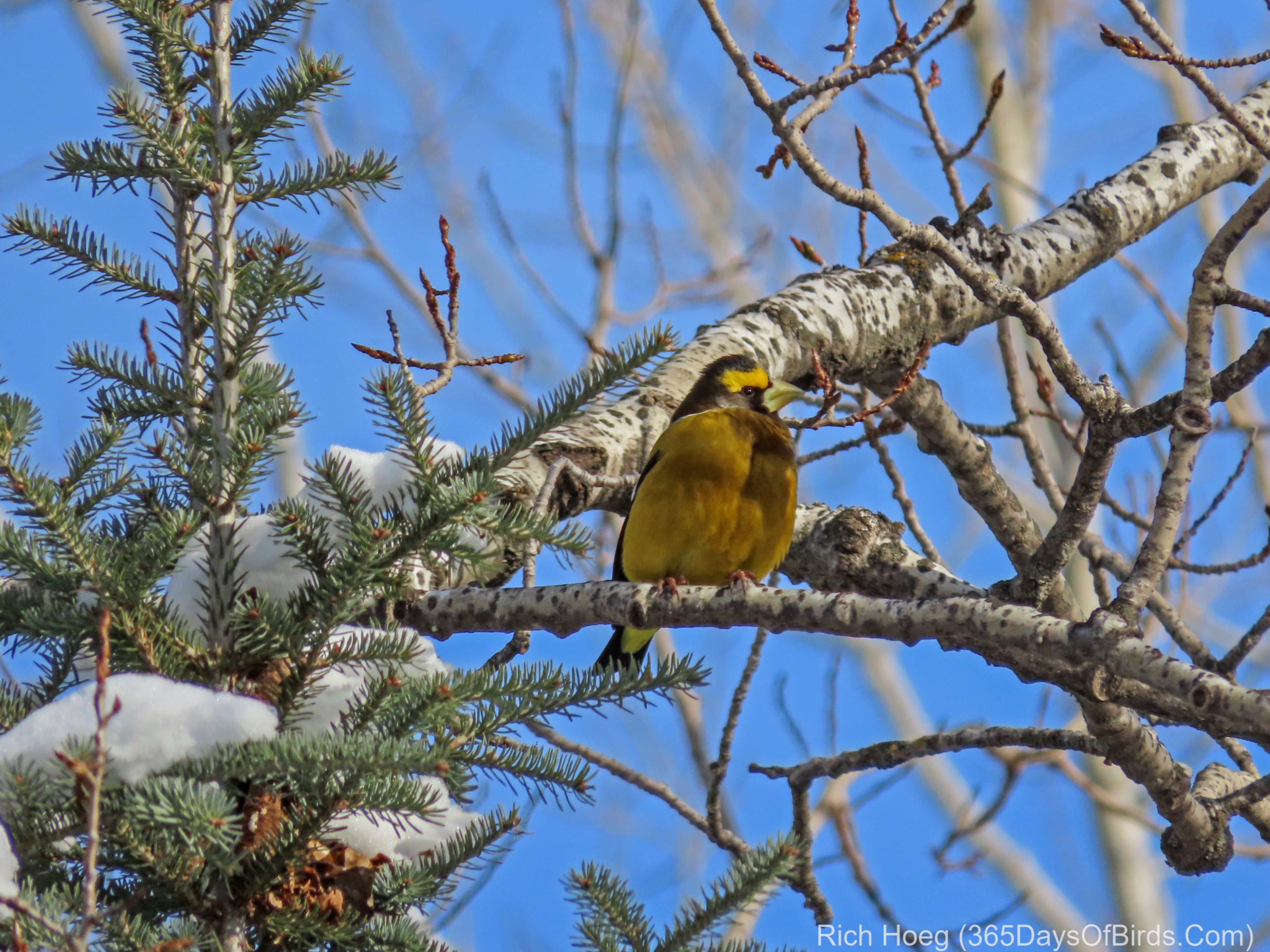
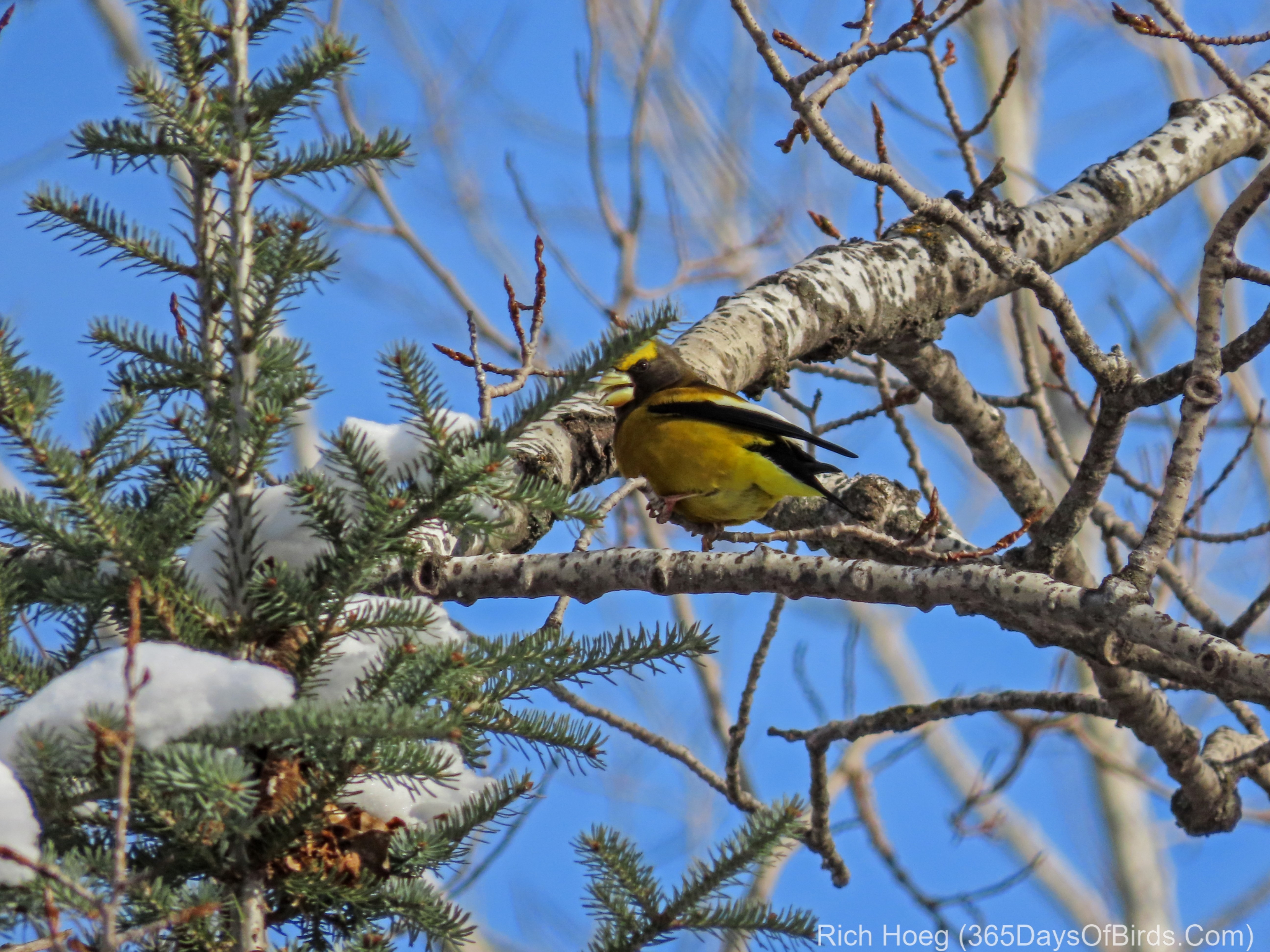
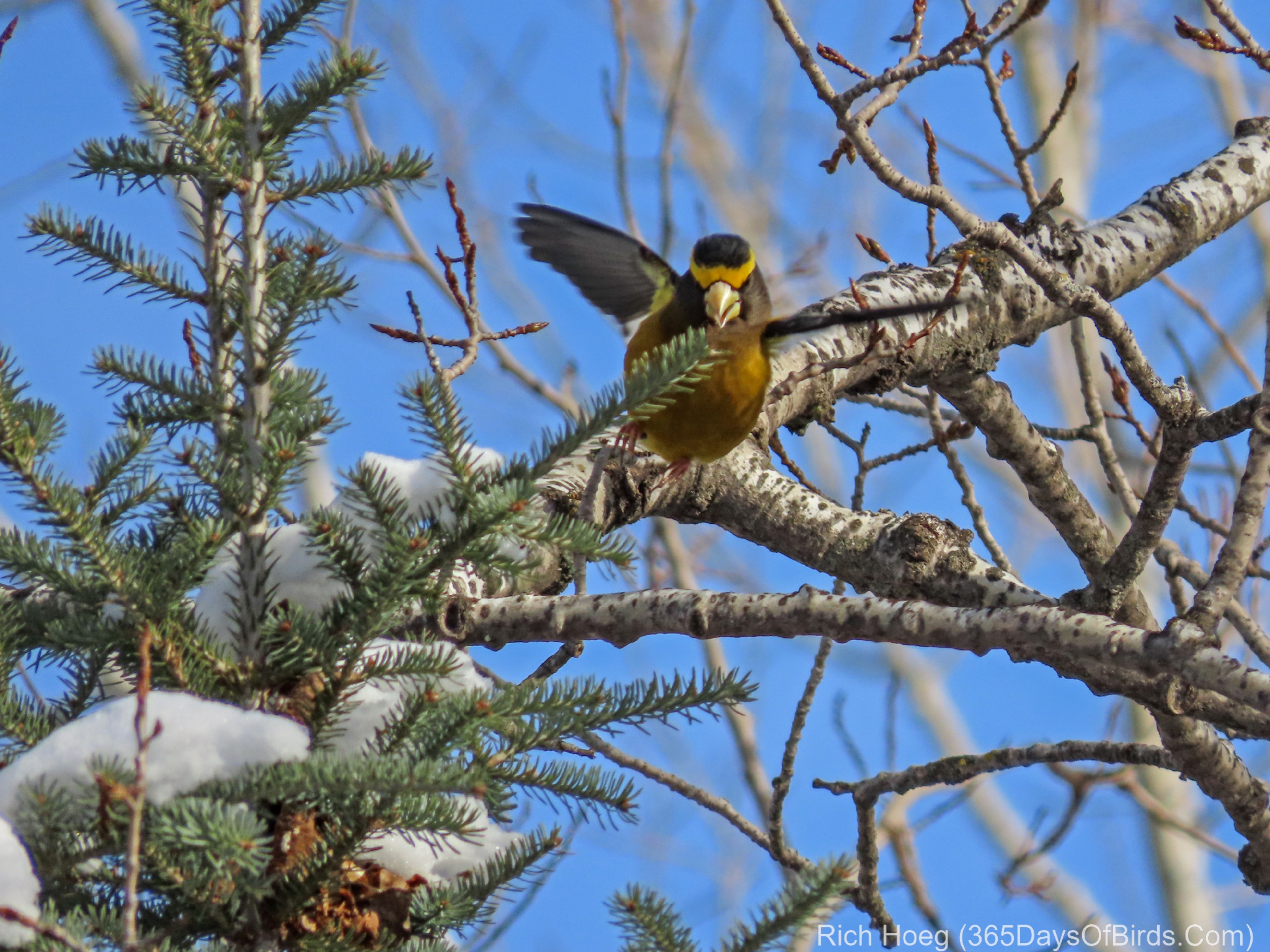
Thus, you can imagine my pleasure when while birding yesterday morning I heard Evening Grosbeaks! Even though I normally only find these birds once or twice per year, their song is etched into my memory. I knew immediately what birds were near by, and looking up to the very tops of some ash and pine trees … there were my yellow friends. Life is good.

Since your own youth, what birds do you now see, or don’t?

Evening Grosbeaks on McDavitt Road in Sax-Zim Bog

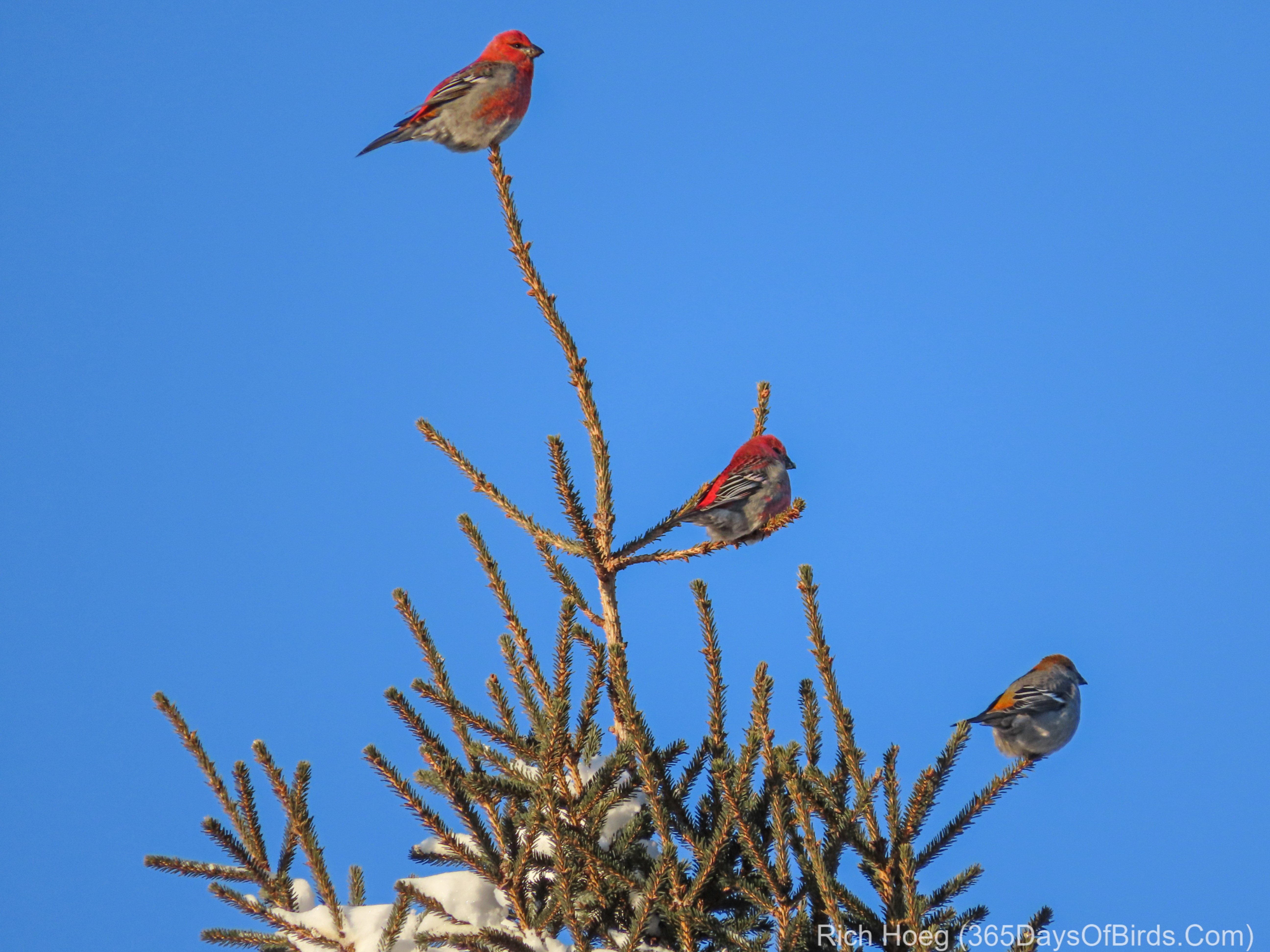
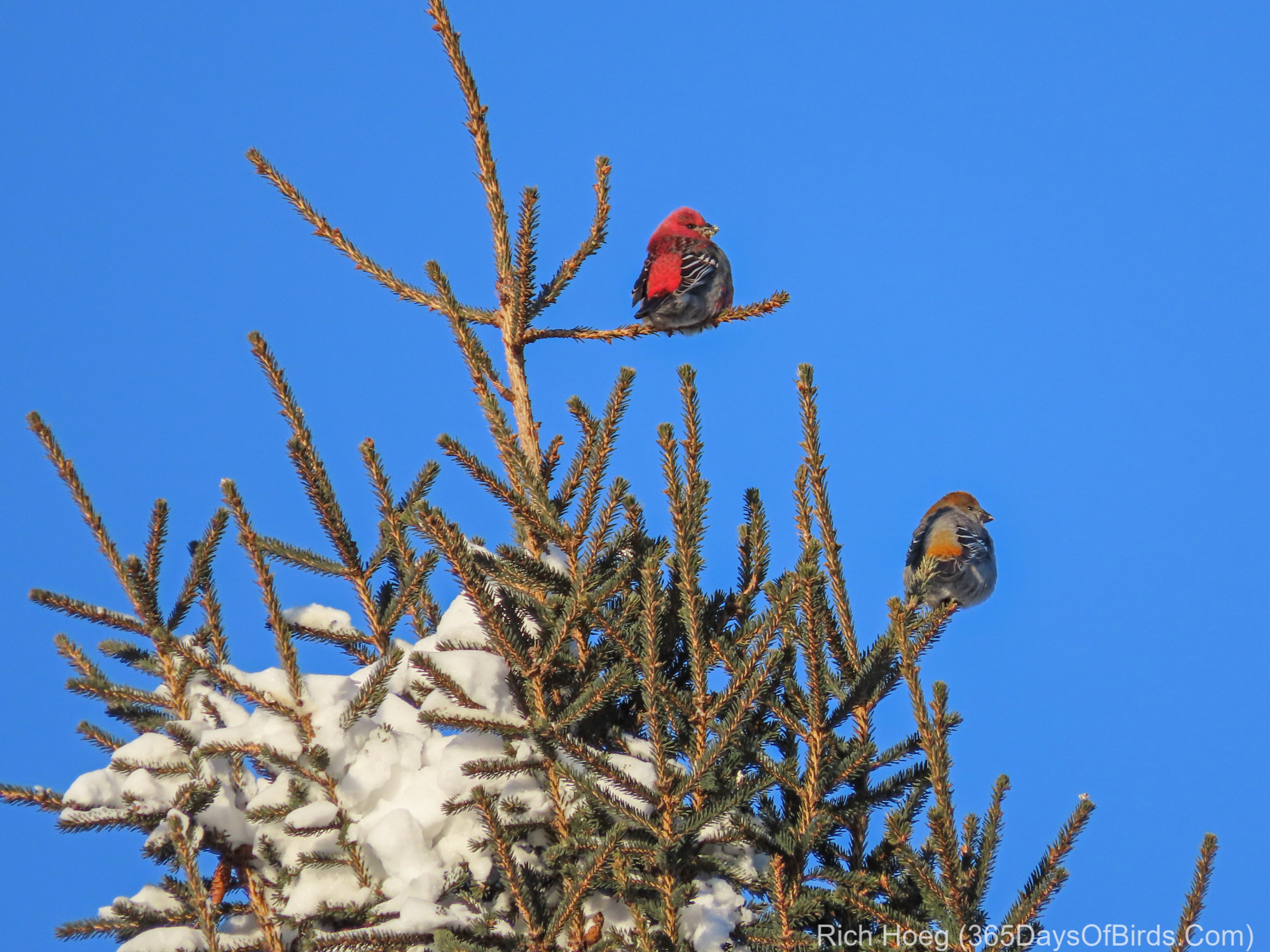
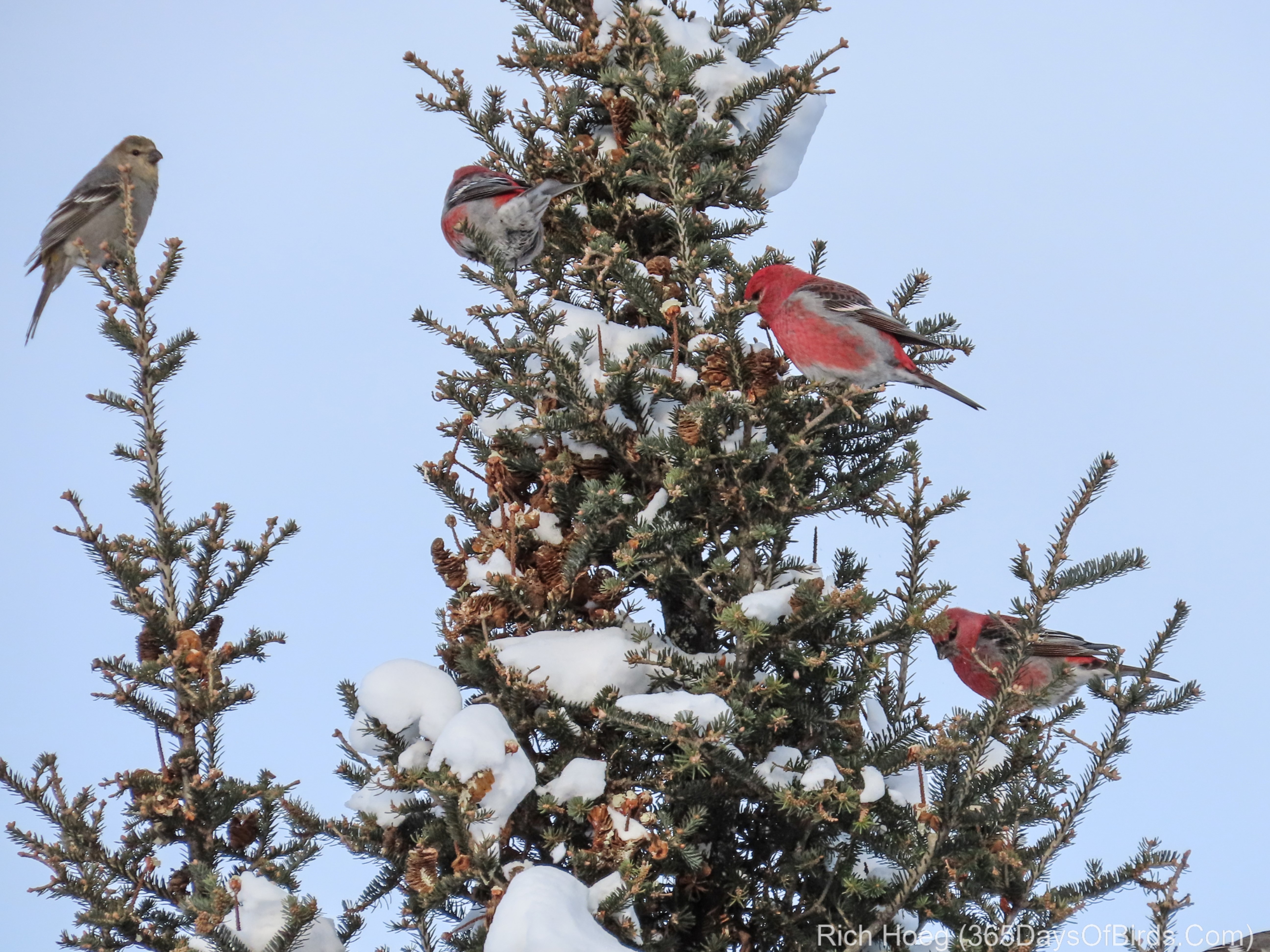
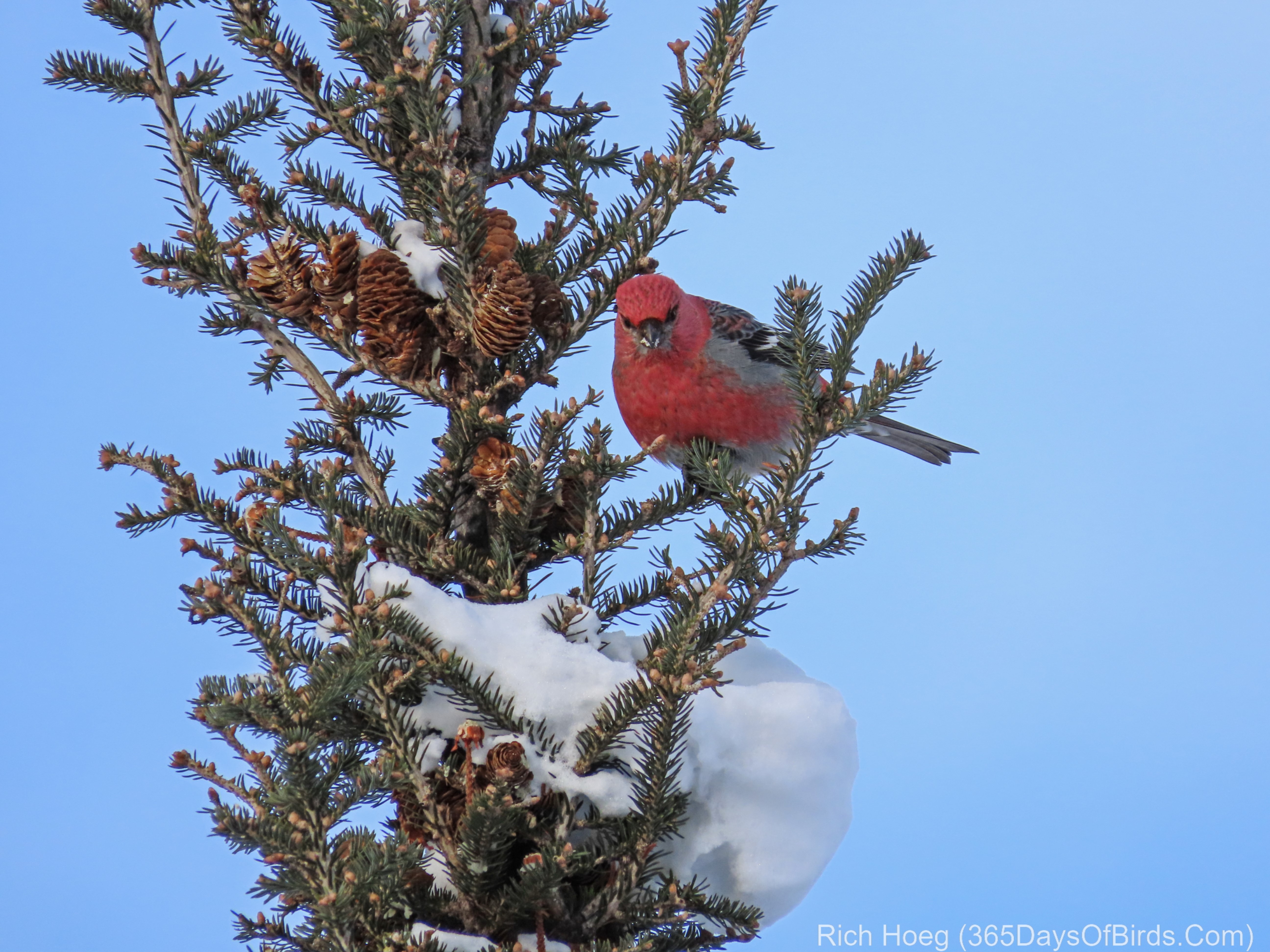
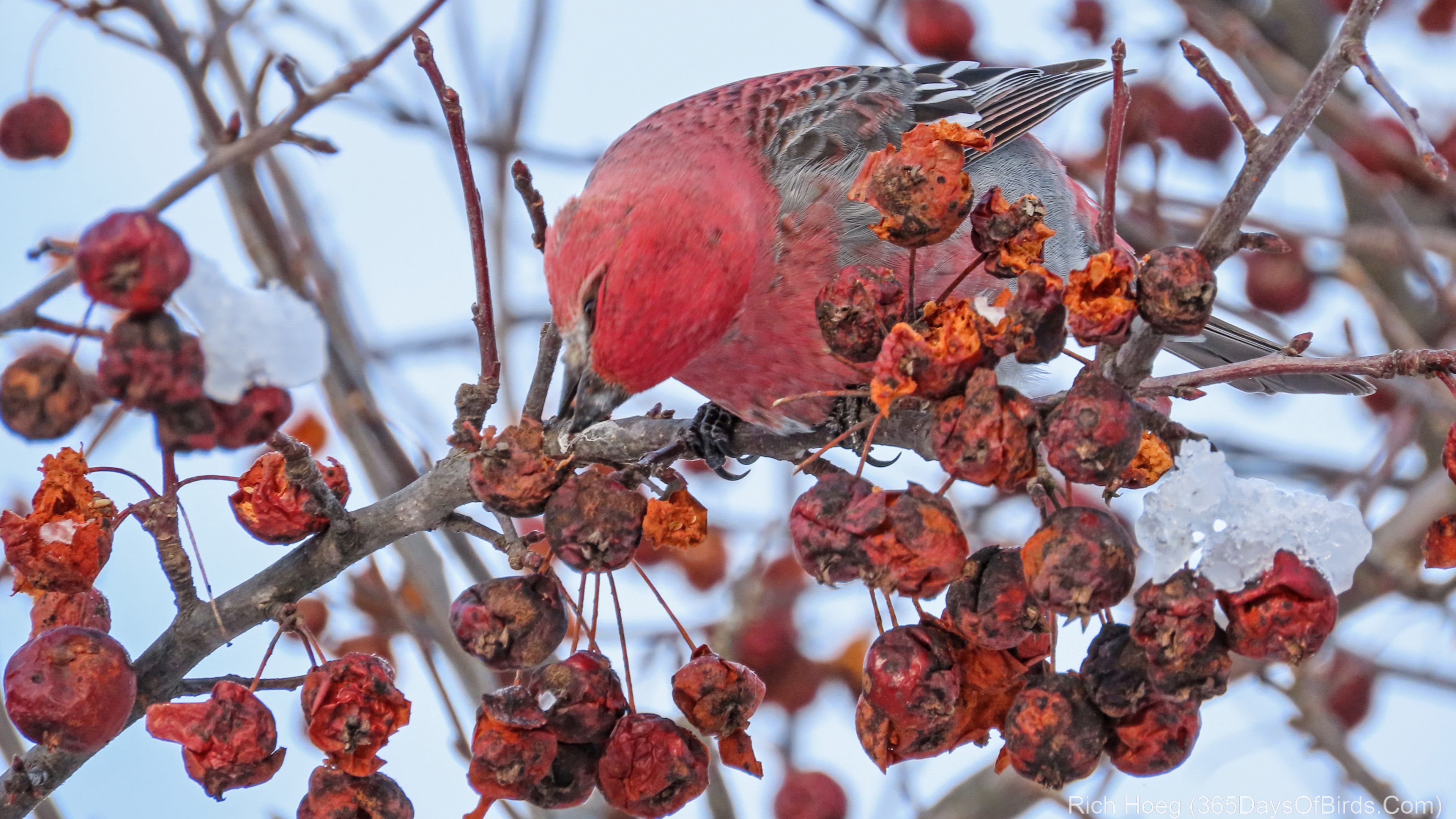
The Other Grosbeaks! (Pine Grosbeaks at an old Berry Farm near Duluth)

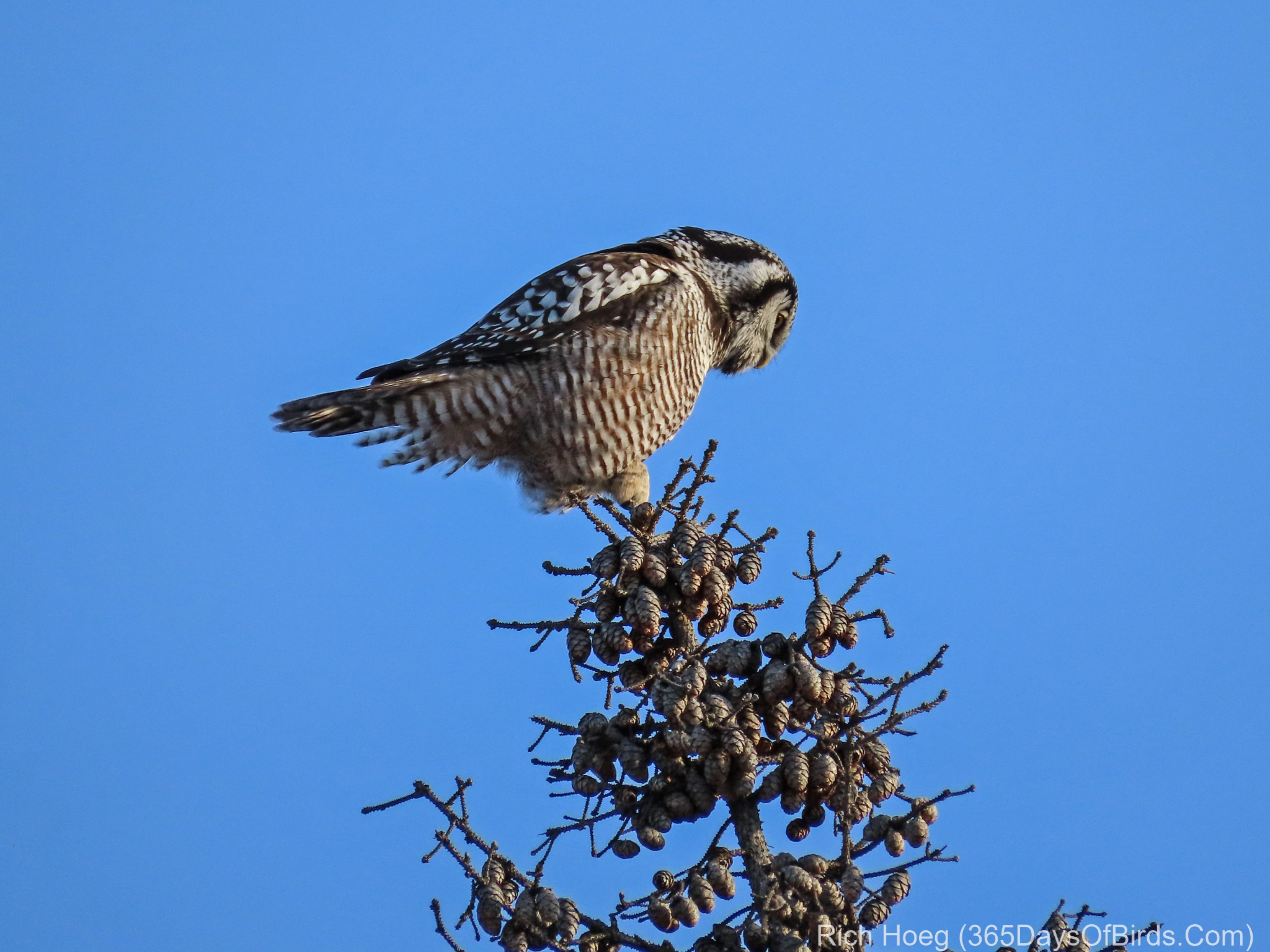
The Daily Northern Hawk Owl Fix (a vole was about to meet its doom)

Eating a vole (earlier in the day before the sun really came out)

Canon SX70 Landscape Test

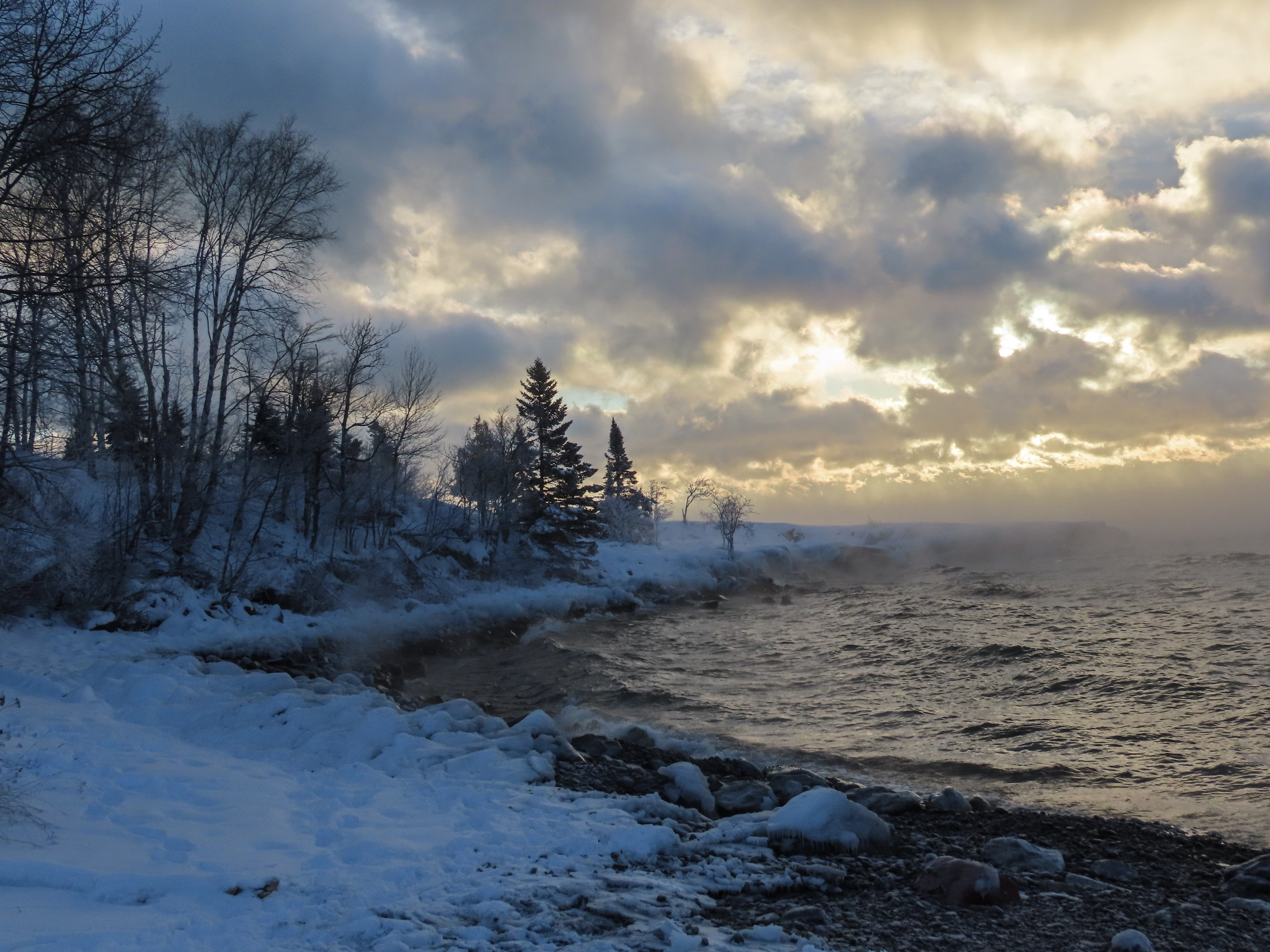
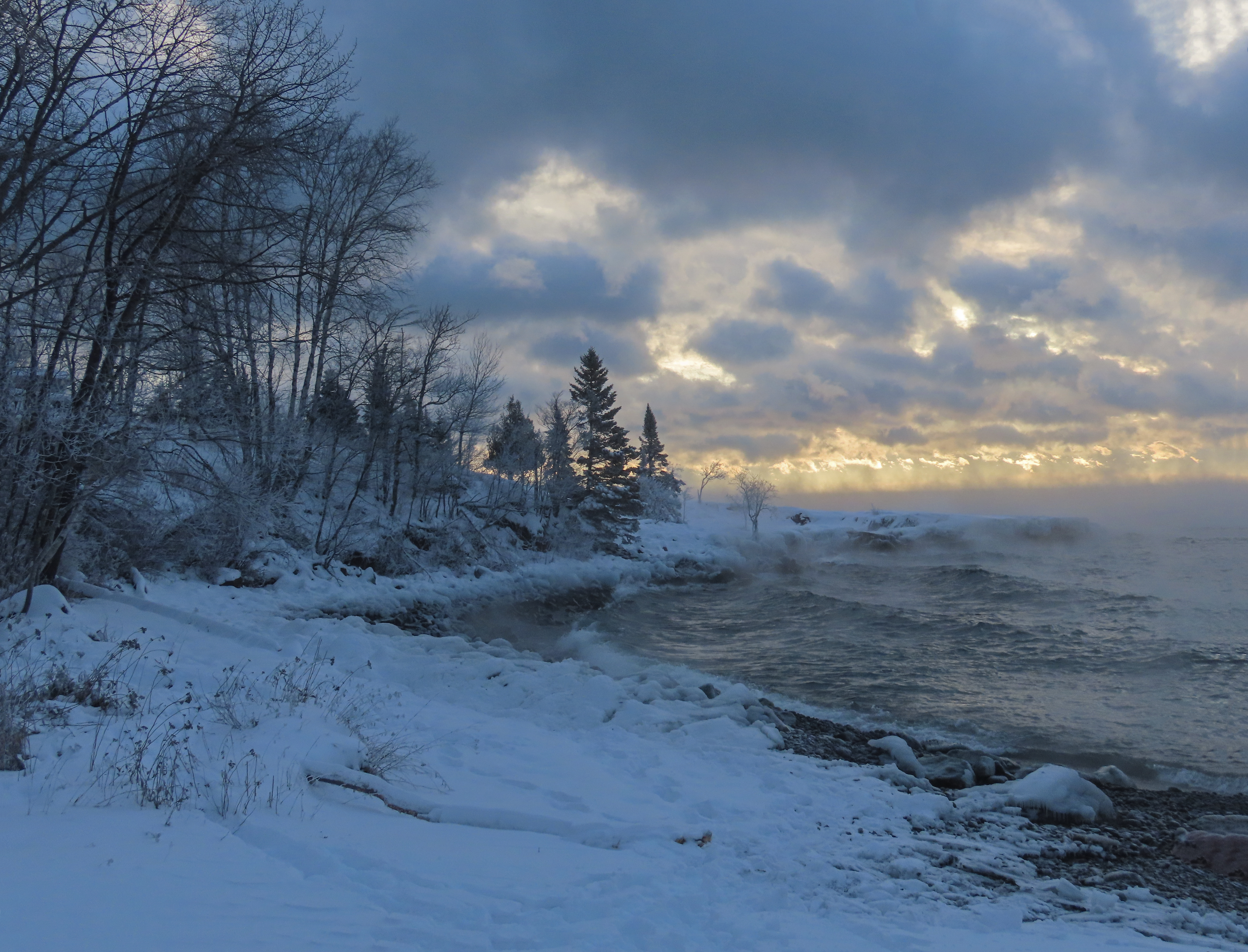
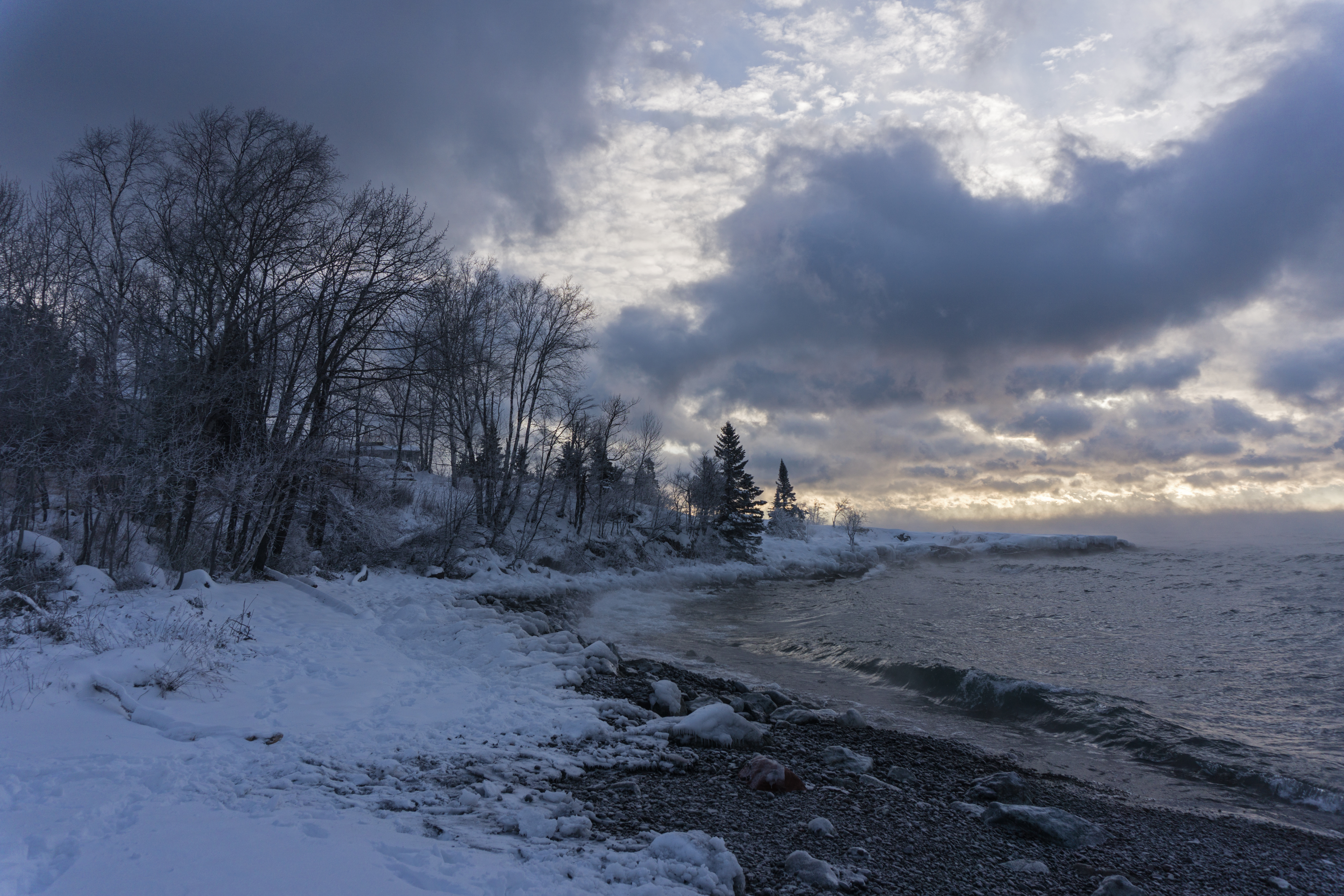
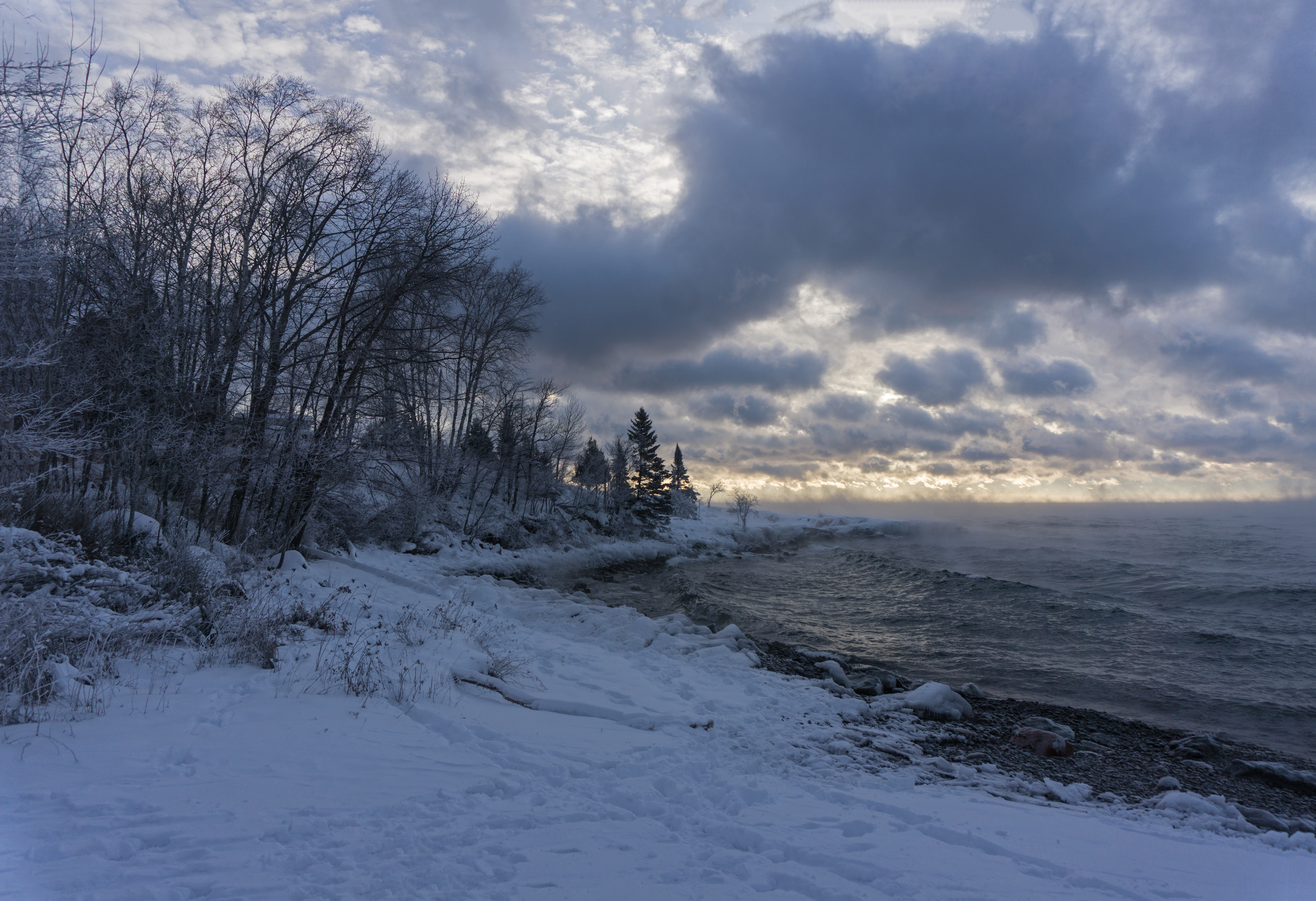
It was -9F (-23C) this morning. In short, a perfect morning for a landscape test. I put on my long johns and drove over to Two Harbors on the shores of Lake Superior. Shortly after dawn, with a crisp wind blowing, I found the perfect opportunity for a landscape photography test. Sea Smoke!

For those of you who live in warmer climates, sea smoke (steam ) forms early in the winter when the air temperature is dramatically colder than the water temperature.  We photographers love the combination of sea smoke, water, ice, and interesting light. This morning qualified on all accounts.

Please note I own both my Canon SX70 which I use primarily for bird photography, and I love its small form factor and zoom when I hike / ski / kayak into the back country. However, I also own a Sony A6000 which I prefer for landscape and astro-photography. Actually it is worth noting the SX70 is not able to be utilized for astro-photography. Canon has limited the ISO to 100 when exposure times exceed 1.3 seconds. Within a year I expect CHDK will be available to overcome this artificial limitation.

I am actually not going to rate the SX70 in terms of landscape photography. It performed well, but I will let my readers be the judge as I will almost always use the Sony A6000 for landscapes. For the purposes of the test, I set up both cameras using similar parameters.

  • Both cameras were set to Aperture Priority. I actually used a setting of 5.6 rather than a traditionally higher setting. I wanted the frozen point to be tack sharp, and given the high wind, I needed a faster shutter speed.
  • Both camera were set to ISO of 100
  • A 2 second shutter delay was used to minimize camera shake
  • A monopod was used to minimize camera shake
  • Each camera set its own exposure times which were plenty fast (1/250th to 1/400th of a second)
  • I tried to take photographs with similar lighting and cloud effects, but conditions change very fast … as in micro-seconds some times.

These are the original, full sized images … non watermarked. See my other SX70 reviews.

Canon SX70 Lake Superior Sea Smoke Photographs

Sony A6000 Lake Superior Sea Smoke Photographs