Tag Archives: Birding Know How

Winter Birding Golf Attire!

Sounds like a crazy post title, doesn’t it?! Has Rich (your host) lost his rocker? Definitely not! As we start the month of March here in the Northland temperatures often soar into the 40’s by afternoon, but crash well below freezing at nice, which means ICE! My yard still has lots of snow, and given Duluth’s location on a hill along Lake Superior, the Forest trails are dangerous. However, at the same time we are experiencing lots of bright, sunny days.

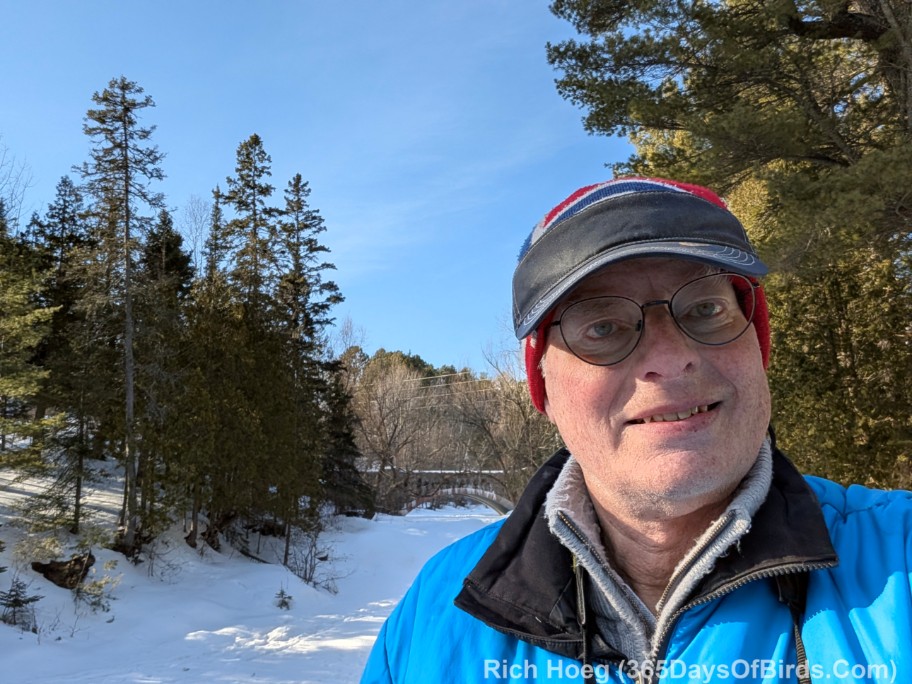
The end result is winter birding golf attire:

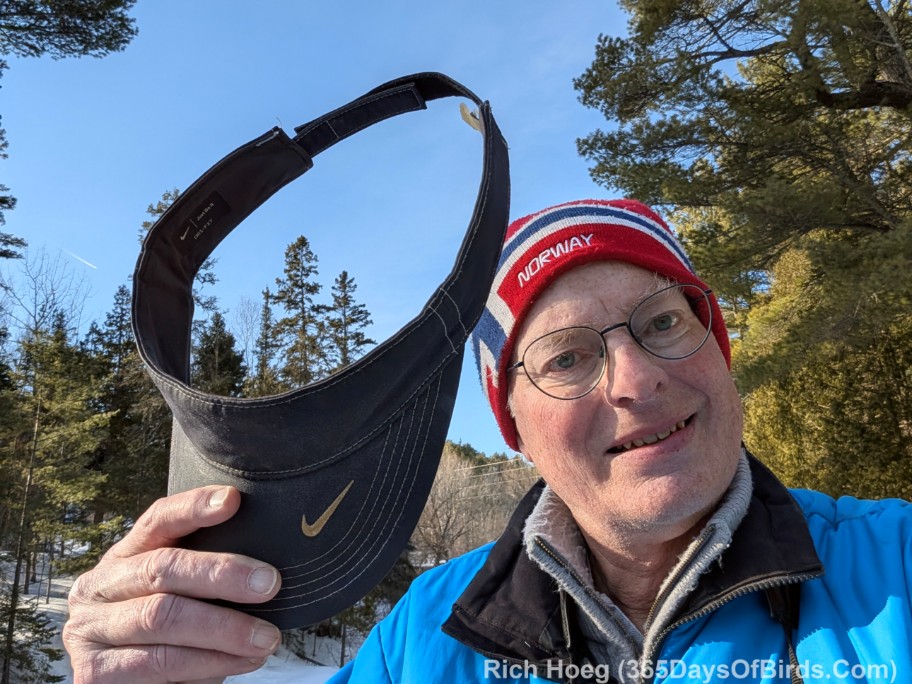
  • A golf visor to protect against the sun’s glare but still allowing a person to wear a stocking cap for warmth. Cold ears are no fun. Please note I do NOT wear sunglasses while birding. The polarizing features of sunglasses make it more difficult to spot and ID birds.
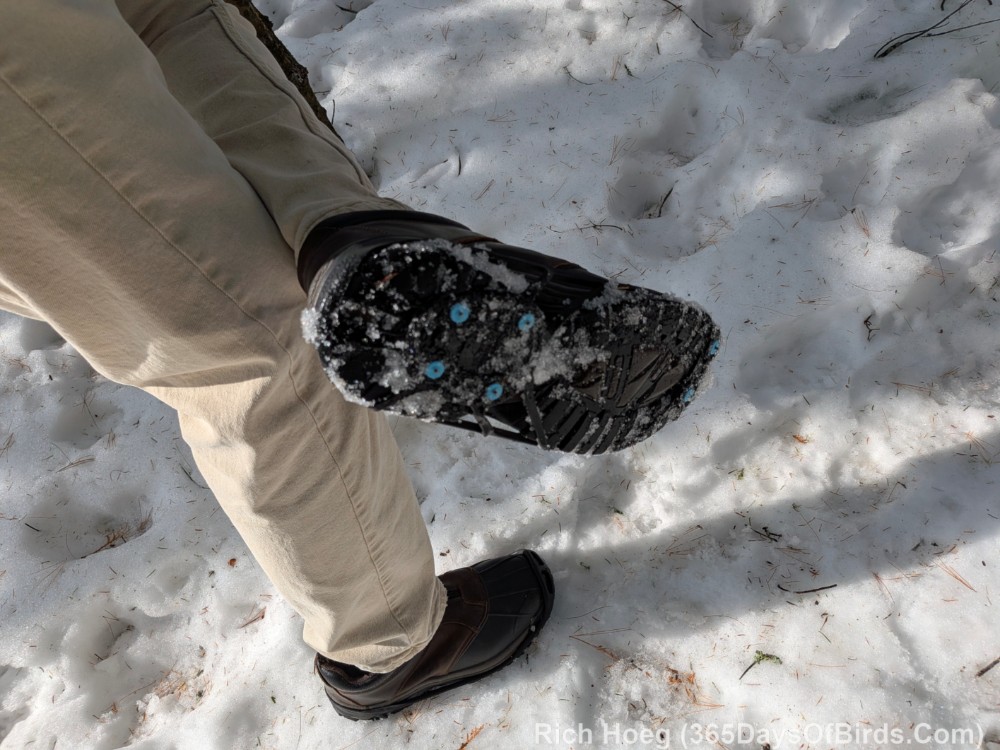
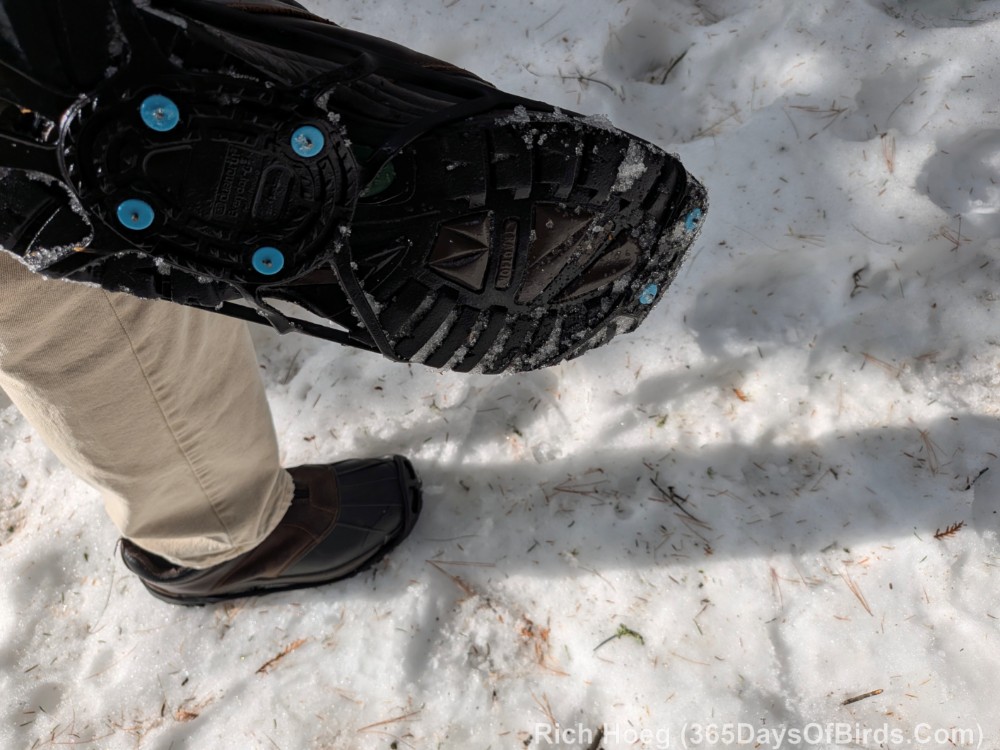
  • Cleats! Golfers wear cleats. Birders who want a grip on icy trails should follow their example. See my photographs, and links. There are cleats that will pull over your trails shoes or boots. Remember to order cleats where the rubber straps are large enough to fit over your winter walking attire.

My Nike Golf Visor! Swoosh. Should I became a paid influencer? Not.

My “cleats” Due North Ice Cleats

While this post’s tone is playful, the ability to see well and avoid slipping during the “ice birding season” is a matter of safety. In addition given the owl courting season is now upon us, I am often hiking at night in the dark. I also wear a headlamp.
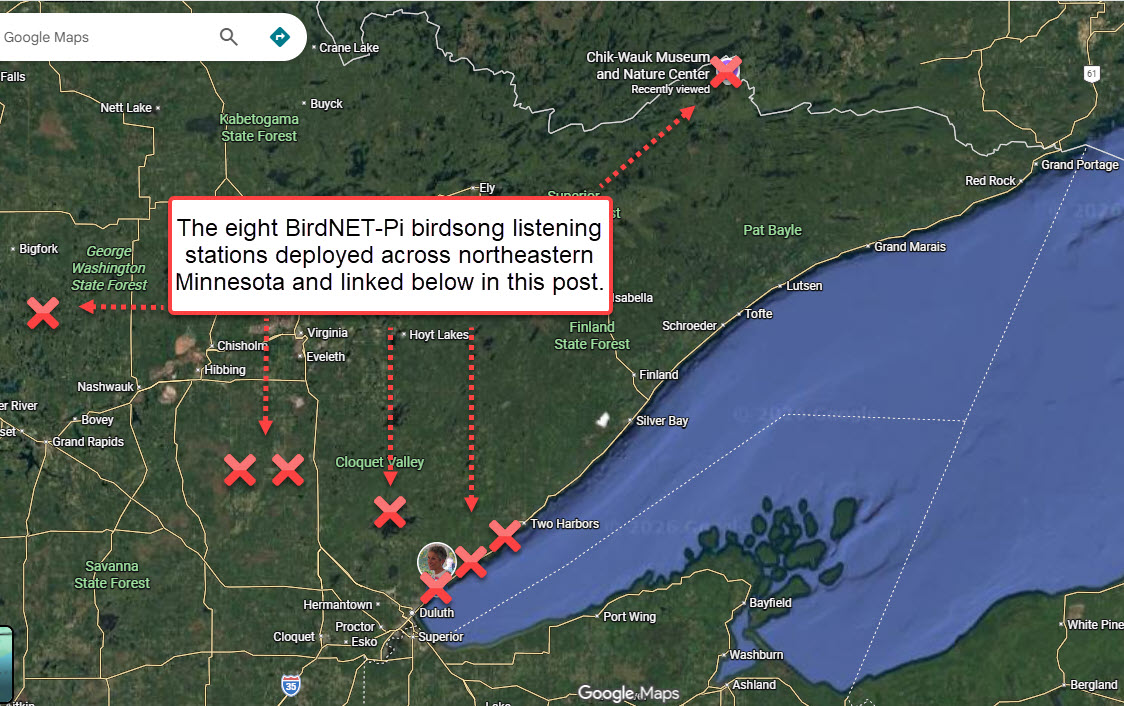
Nature Centers 3! Birdsong Listening Stations in NE Mn

The day prior to the huge blizzard last week I finished up my work building BirdNET-Pi birdsong listening stations for three nature centers located in northeast Minnesota’s Boreal forest wilderness. All three stations are now live and listening, and you may check out and listen to the birds each station heard over the past 24 hours (or pick your own preferred time period). Each nature center is located within microphone listening distance of unique Boreal forest, lake and pond habitat

Select any one of these links to hear what birds are singing: (using a desktop or laptop computer for listening works MUCH better than a mobile device … learn more from a prior post of mine which also links the other listening stations)

I look forward to a continuing relationship as a volunteer for each of these organizations. As the snows melt this spring these stations, including some other stations located right on the North Shore of Lake Superior will provide a unique perspective of the northward bird migration status. I donated my time, knowledge and the entire cost of these Raspberry Pi Computers.

Some of this year’s research includes:

  • Bird Song academic curriculum development for children & teachers
  • Nesting sounds of the Common Loon parents and chicks
  • Identification of Connecticut Warbler habitat
  • ReUse or Not of Great Gray Owl Territory

This work also involves off the grid listening stations.

Locations of the online birdsong listening stations I have built and deployed. Learn more. (including the other listening links)


The graphic is from the other post. The birdsong listening stations are linked above, not below!

Rix Pocket K3 Thermal Monocular Used for Birding / Owling

This is the second in a series of posts about the my new Rix Pocket K3 with a native resolution of 384 x 288 thermal sensor.  This resolution is one step up from the more basic 256 x 192 thermal sensors. All posts will be linked to my initial post. Like all equipment reviews features on my website, I purchase everything with my own money and NEVER accept or seek paid endorsements. (browse to the first post in series/review with subsequent linked posts).

It is too early for me to form an opinion yet about my new thermal monocular. My sole purpose with this post is to provide my first efforts with the monocular taken by a beginner who really has no idea what he is doing.

First Day’s Outing With Thermal … Up at the Greenwood Creek Birdfeeders in northern Minnesota …. habitat is deep wilderness where I maintain trailcams, listening stations and birdfeeders deep in the Boreal Forest. I was using “Red Hot” for this initial test.

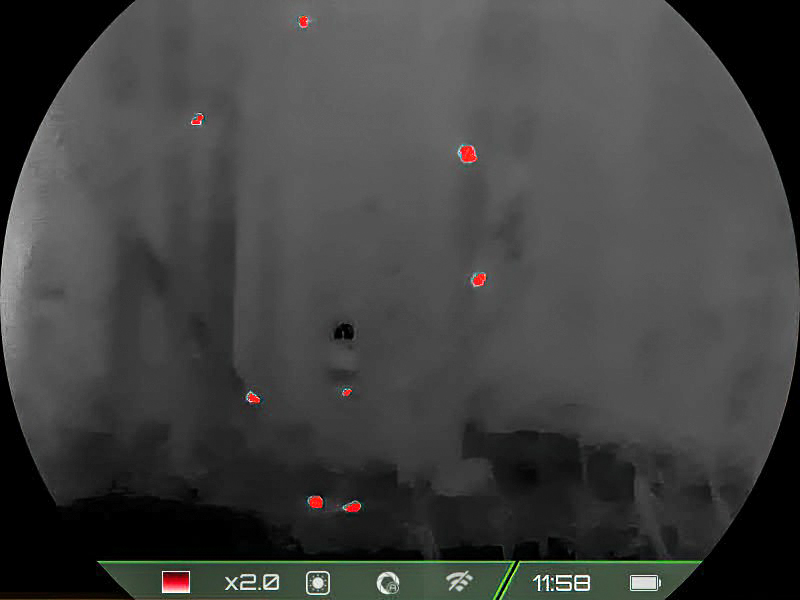
Image (the “red blobs” are chickadees and blue jays. Video was taken from a distance of about 50 yards right before sunrise)

Video (link for blog email subscribers)


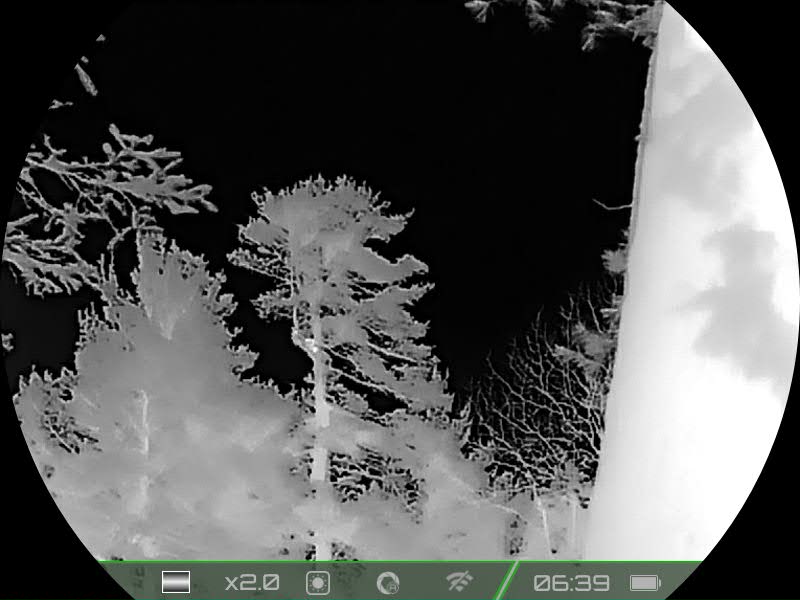
Second Day’s Outing With Thermal … Near my home in northern Minnesota …. habitat is deep white pine forest with a stream that flows down to Lake Superior which is about 1,000 yards distant. I was using “White Hot” for this test. The image and  video were taken 60 minutes before sunrise. It was pitch dark out, and I could not see the owls on my own. The temperature outside was 28F.

Image (The owl was behind the white pine’s trunk, and I could not pick it up with my new thermal. The only reason I figured out the owl was behind the trunk was because moments later it hopped out onto the branch … the movement was extremely obvious. See the video.)

Video (link for blog email subscribers)(The Great Horned Owl may be seen towards the middle bottom of the video. I believe it is the female who I named Amy many years ago. I have the monocular on its lowest, basic magnification (2x optical). I rarely zoom while scanning for two reasons: 1) I want as wide a field of view as possible for trying to locate birds. 2) Digital zoom on any device degrades the optical quality in my opinion)