Yesterday afternoon I spent some time down on the Duluth waterfront. Although the number of shorebirds was not huge, the mud flats produced in species number what they did not produce in sheer numbers. However, I continue to have difficulty identifying shorebirds which I only see every year or so during their migration from the Arctic down to the Caribbean or South America.
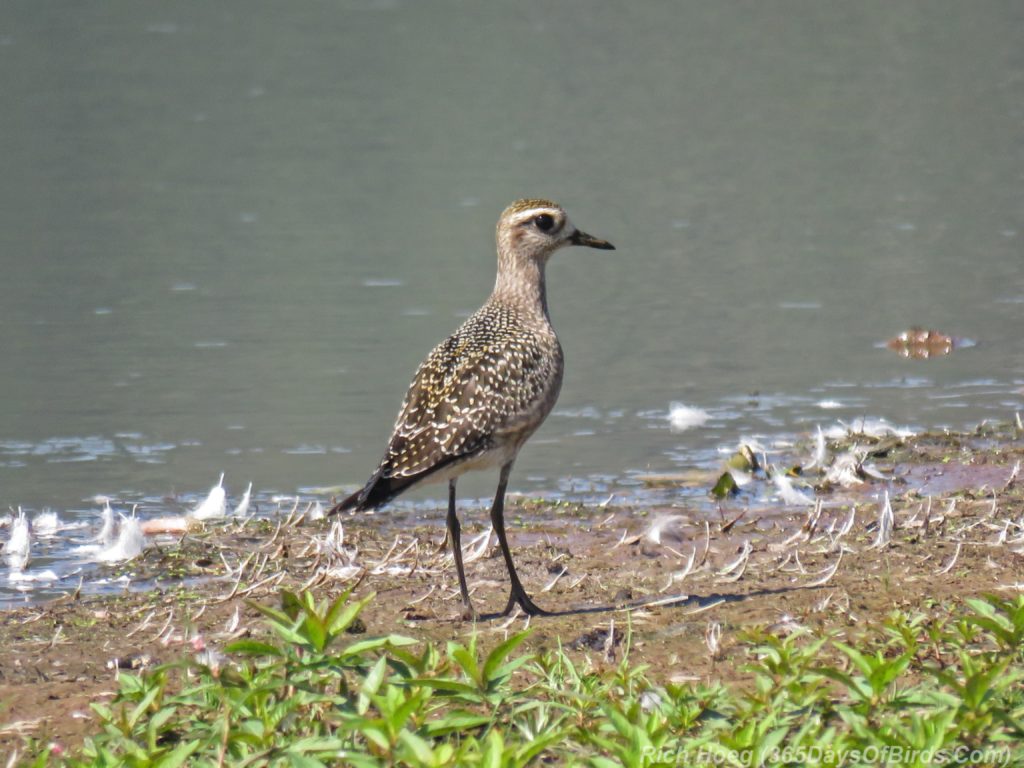
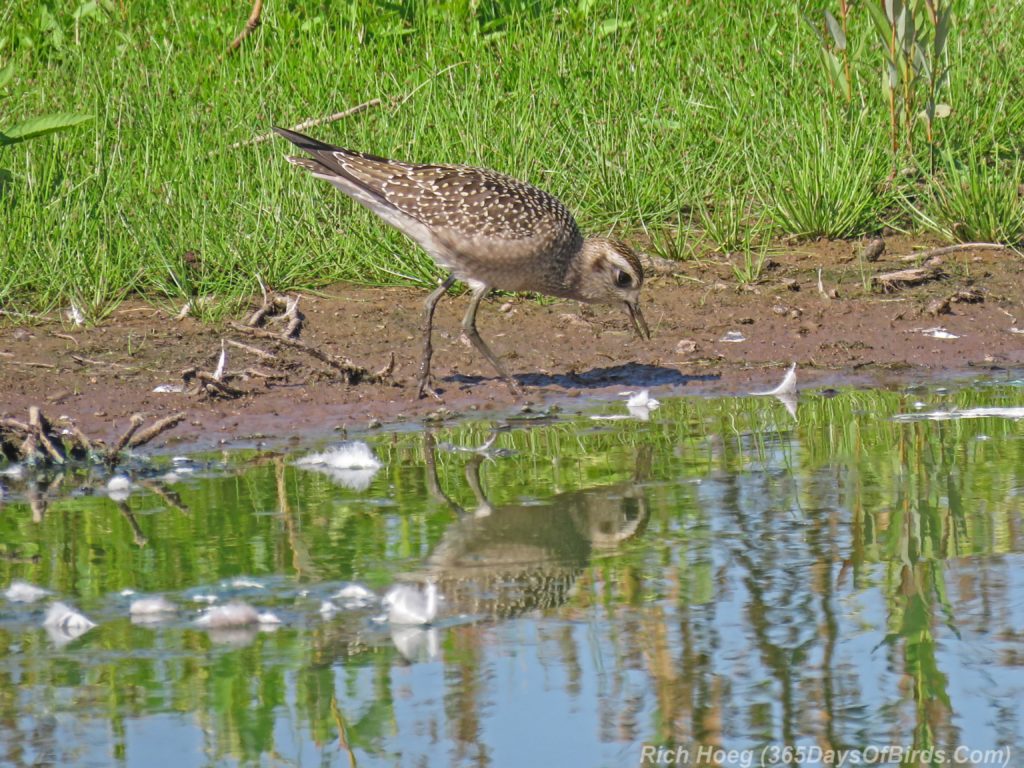
Thankfully some friends were over for dinner, and Pastor Greg helped me with my American Golden Plover ID. Shorebirds, like many bird species, are difficult to identify. During the fall migration these birds are often not in their breeding plumage, and the female and juveniles are sporting feathers that never look like the males. In short, it’s difficult. Greg used his Sibley App on his iPhone. Although I had spent significant time on my own app, iBird, I had not been able to make a certain identification.
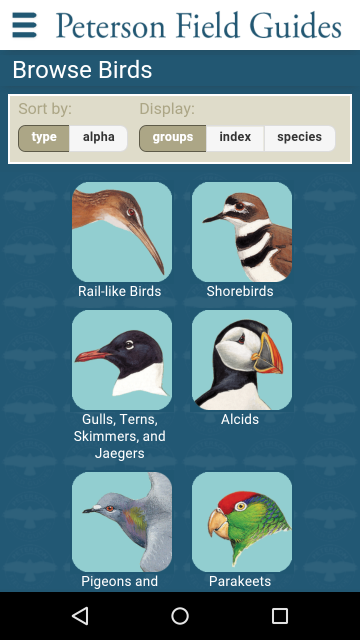
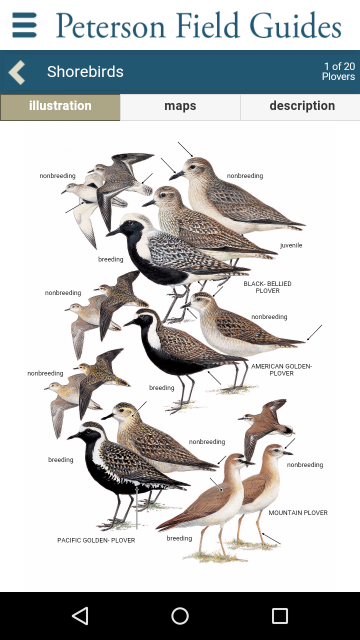
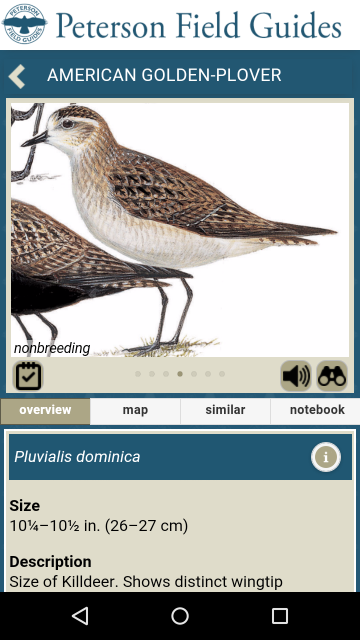
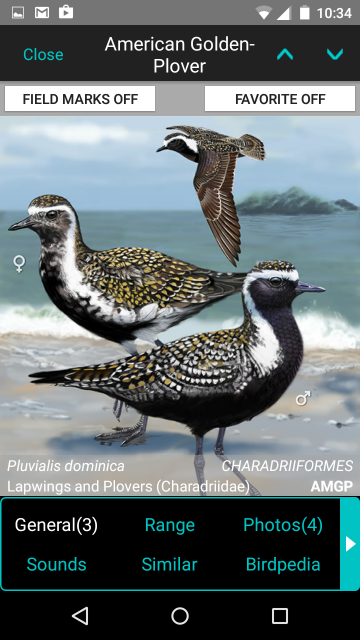
My frustration led me to spend time this morning in reevaluating bird apps. While I like iBird for its excellent photos, bird facts and recorded songs, if the bird I am seeking to identify is not a male in breeding plumage, iBird falls short. For the present I hae started using Peterson’s Field Guide. As of this morning, this app is an addition to my smartphone and tablet. While its photographs and facts are not as extensive at iBird’s, in terms of making initial ID’s this app works well. Peterson’s allows one to easily page between screens of similar birds (like shorebirds), and view drawings with key features pointed out not only of males in breeding plumage, but also of females and juveniles with their unique feather schemes.
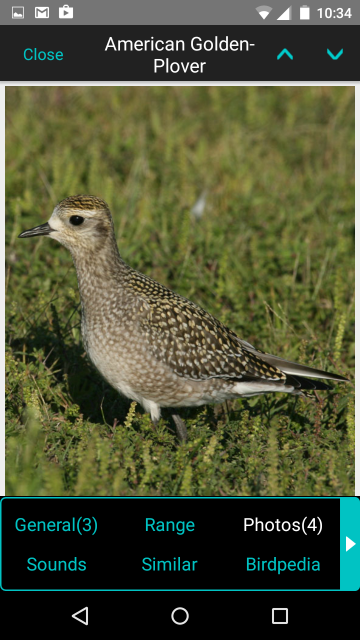
I have included three screenshots from each app in the order I found and moved to information on the American Golden Plover. I used the same process later to ID a Red Knot in winter plumage and a Stilt Sandpiper. The combination of using both apps in tandem is working very well for me.
Peterson’s Field Guide (Android App): Notice how birds are not only grouped together, but more than just the male in breeding plumage is included.
——————————
——————————
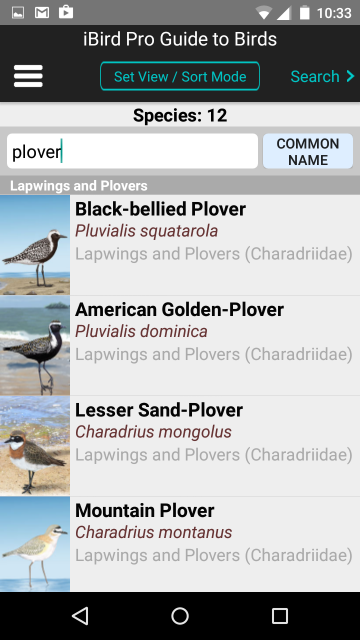
iBird (Android App): The app only showed my the male bird in breeding plumage until I selected the American Golden Plover. Thus, I needed to have some inkling at what I was viewing, even though feather patterns were very different. Once I made the bird selection, the photographs, facts and sounds far exceed Peterson’s.
——————————
——————————
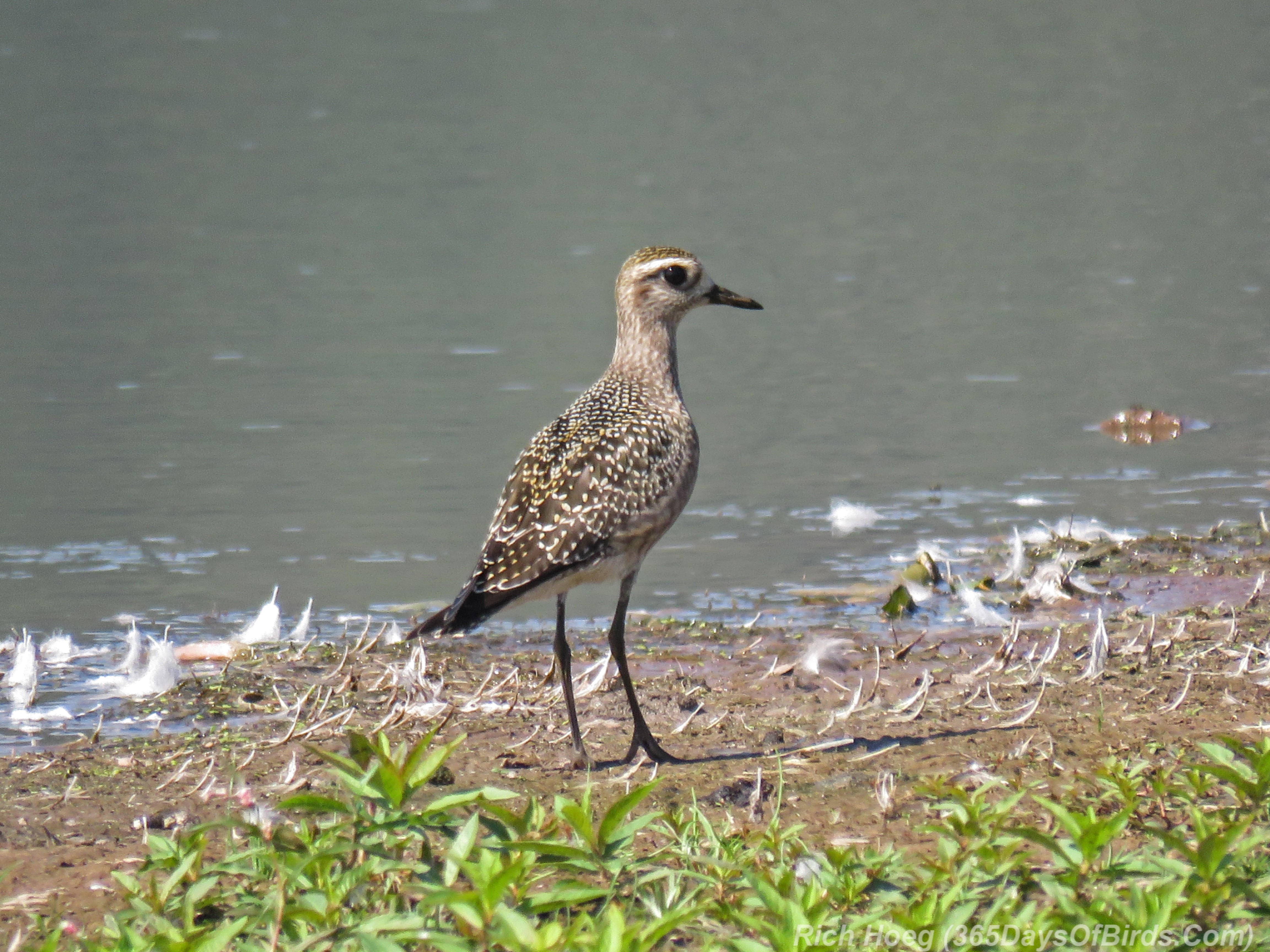
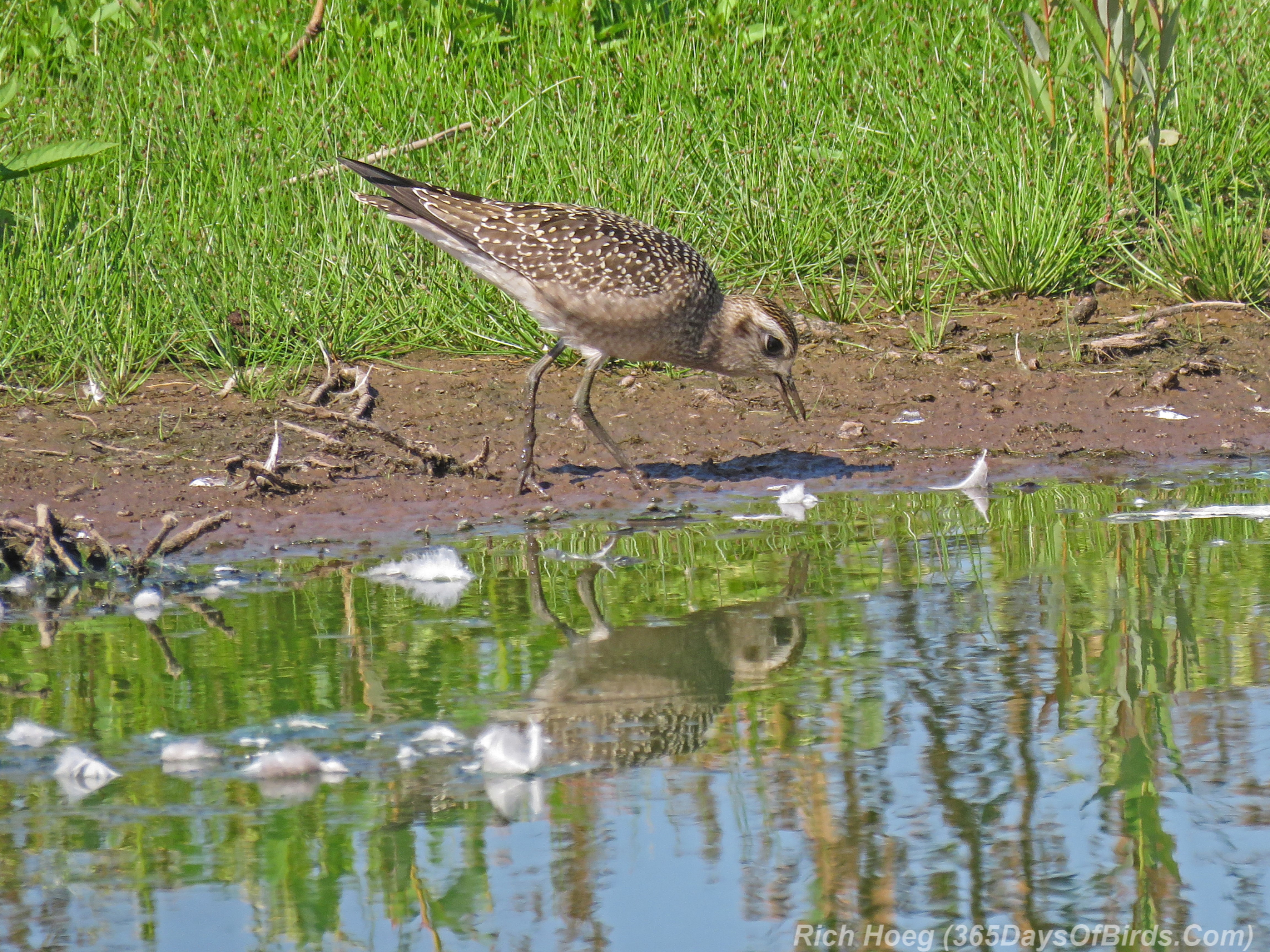
American Golden Plover
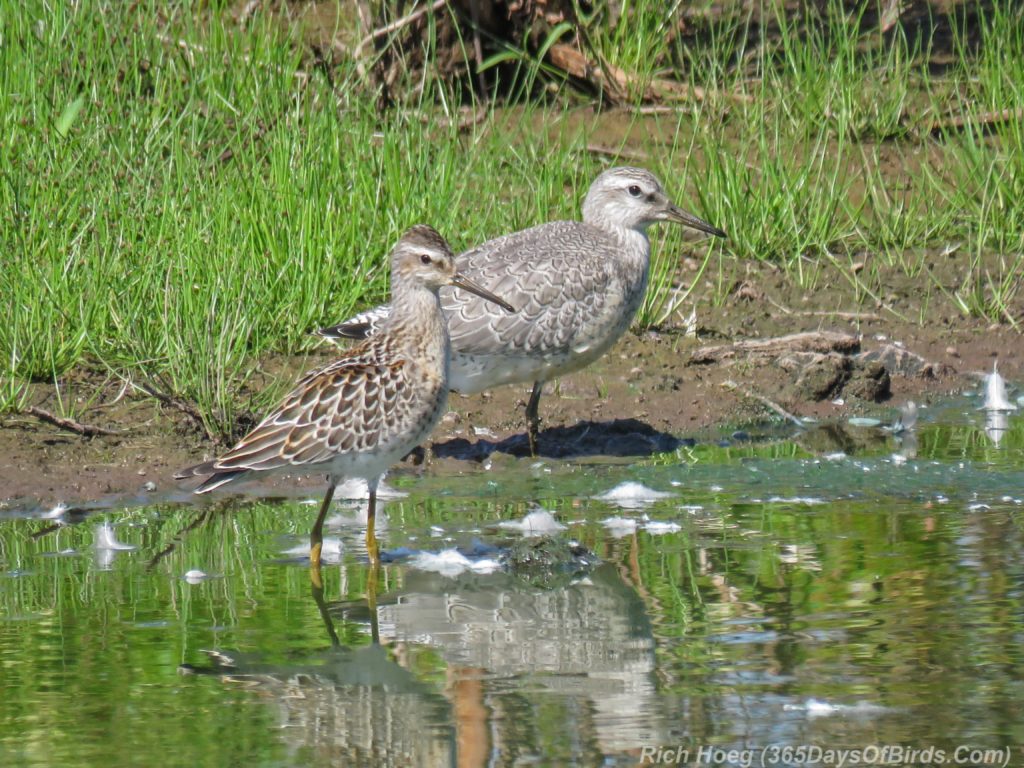
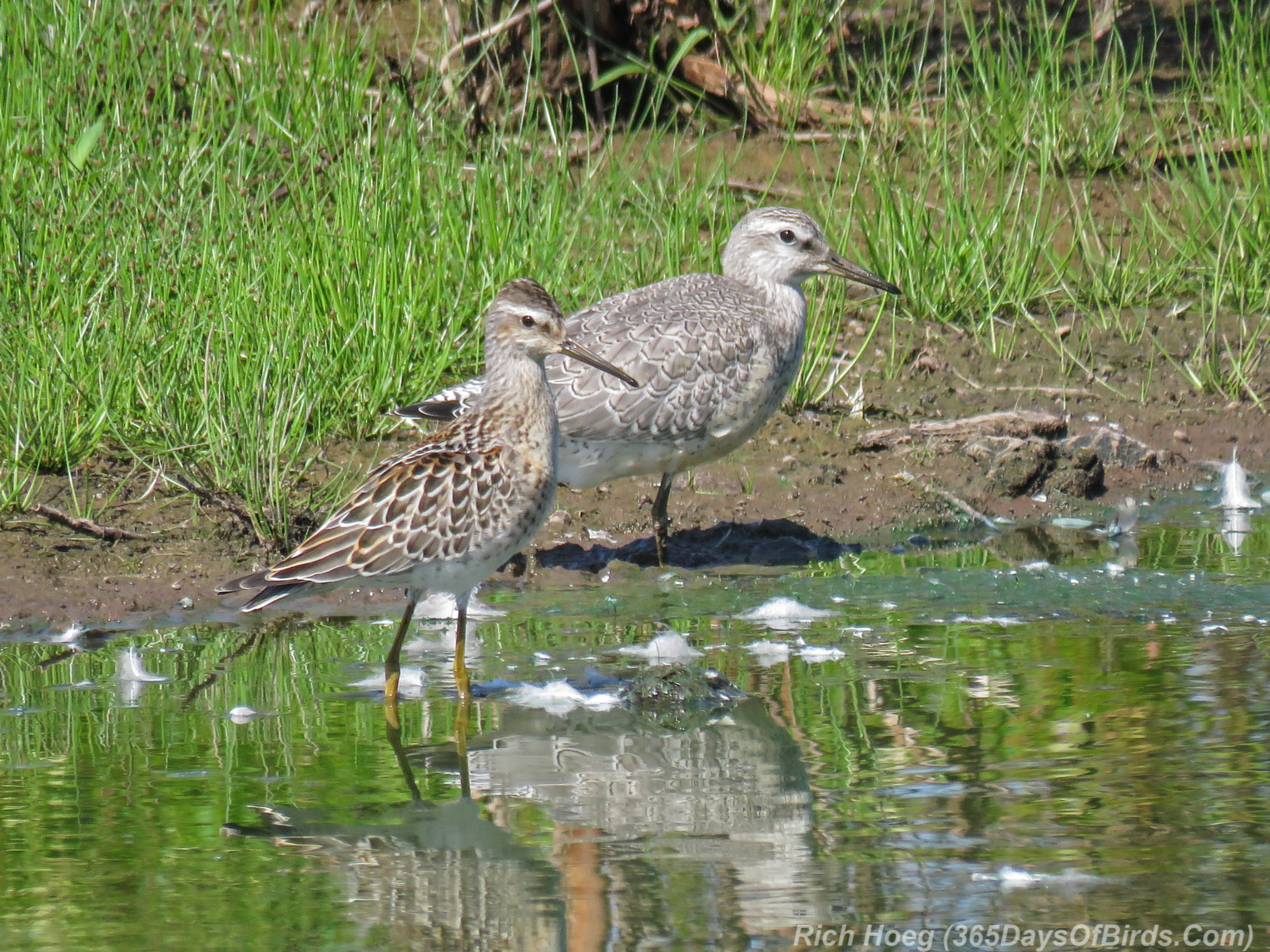
Red Knot (backgound) and Stilt Sandpiper (foregound)