Tag Archives: MN North: Two Harbors Highlands

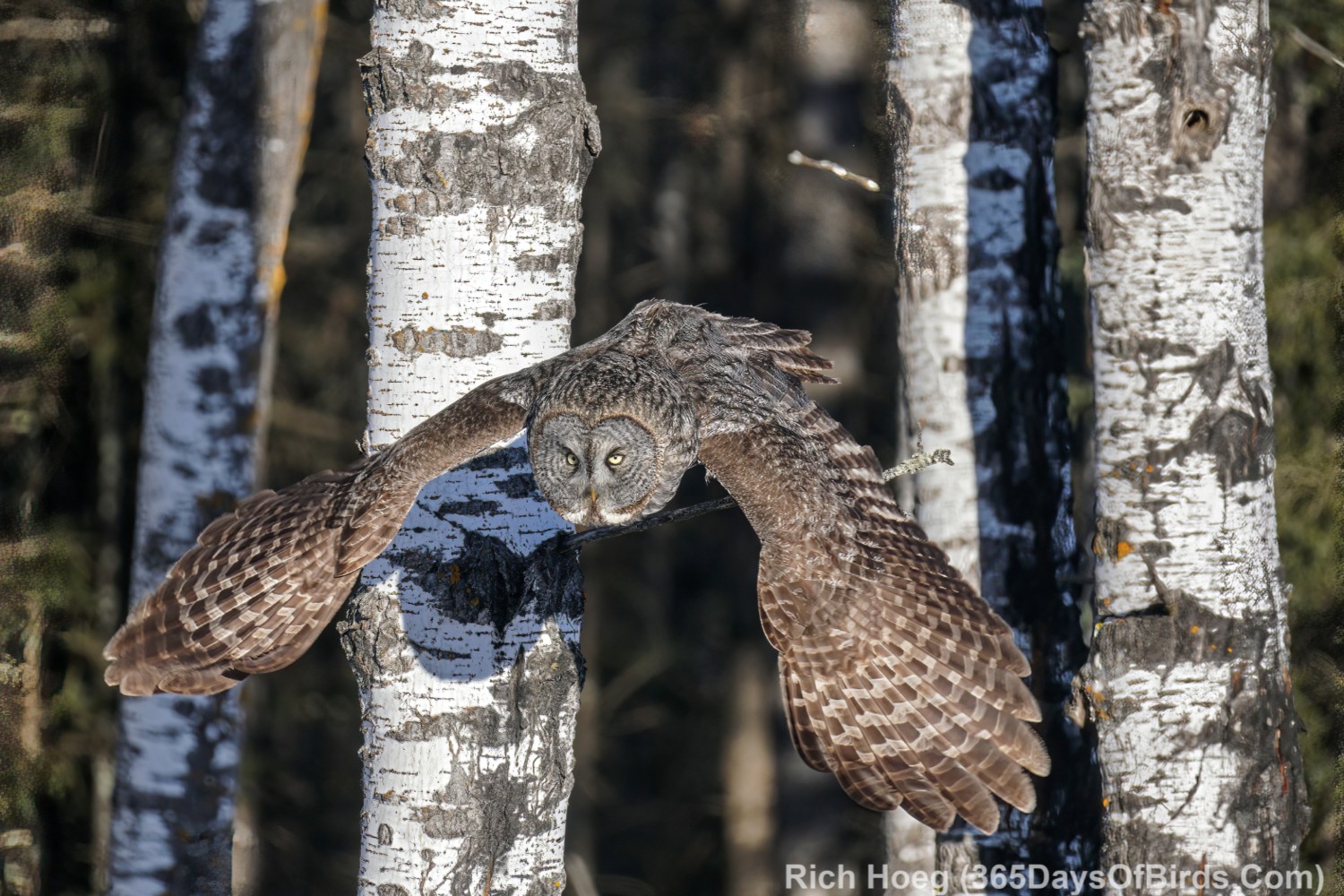
Great Gray Owl Irruption Winter 2024/2025

By the 1st of December I will likely know whether a smaller owl irruption will follow last winter’s great event. Bird statistics show that it is not unusual for a smaller irruption to follow a big event (like last winter).

Last November, I was actually one of the first individuals who realized that a magical winter of owls was in the offing.  Given all the hikes that I take up in the Greenwood Boreal Forest Bog Region, I knew the number of owls I was seeing was most unusual. I kept my mouth shut about sightings with the exception of a few very trusted friends. Eventually the owls would move down to more populated and birded areas near Lake Superior, and we wanted to enjoy the experience before the word got out across America’s birding community (and it did).

Yes, last winter was special. For the first time ever I had a “Great Gray Owl” yard bird, and the owls were easily found within ten minutes to twenty minutes of my house from the latter part of December through mid February. I have a HUGE number of images of last year’s irruption. This is a small subset of photos which I am thinking of entering in a contest.

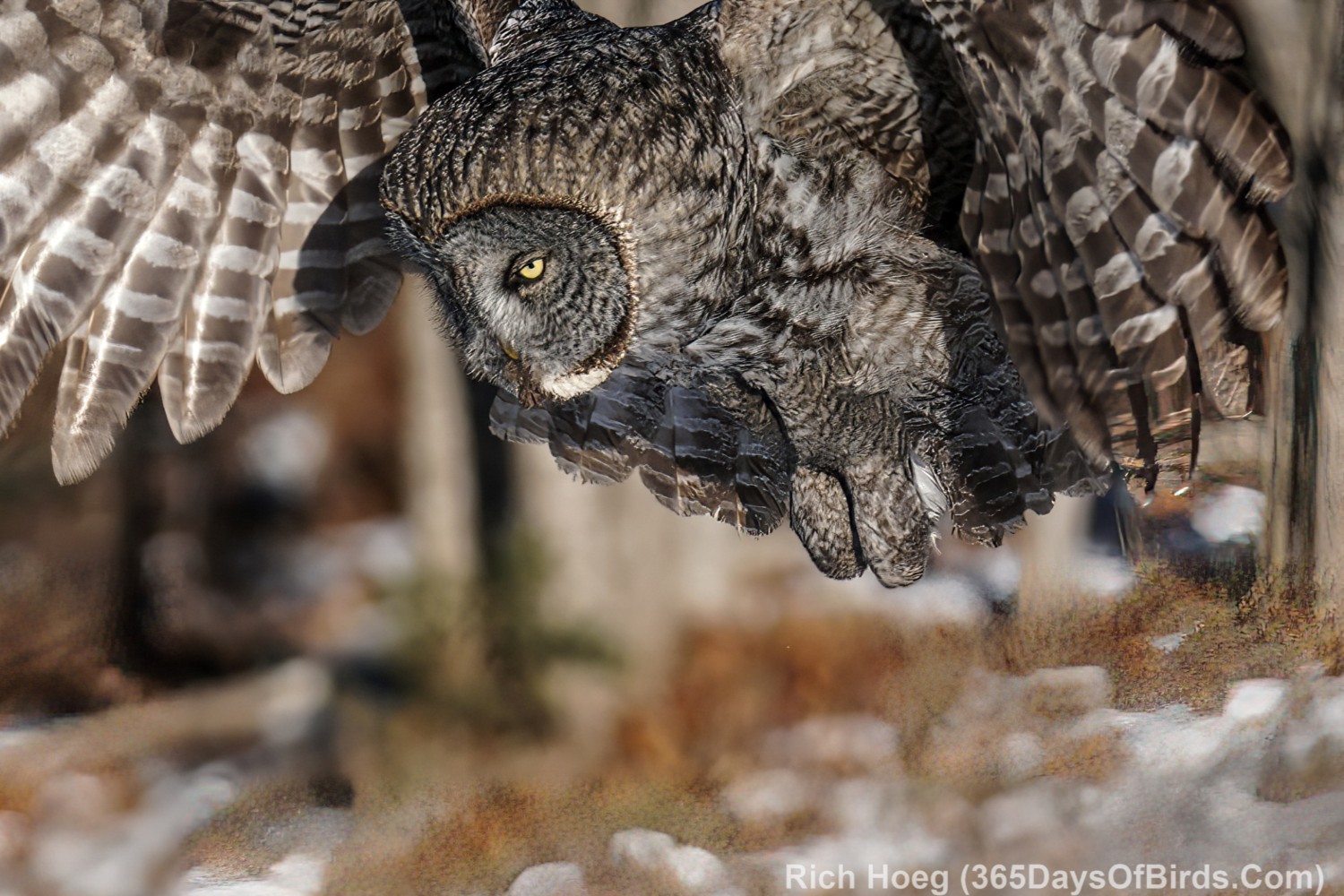
Great Gray Owl Irruption … The Hunt

I learned from a friend who is a scientist with the Superior National Forest, that during the owl irruption almost nary a bird was a first year owl, a juvenile. Apparently Great Gray Owl reproduction had been good over the past few years, but now their primary prey, the forest vole, was in short supply. Although Great Gray Owls are not a bird which normally migrates, the lack of food forced the owls to move south. We also have native Great Gray Owls which live year round in northern Minnesota, including Greenwood.
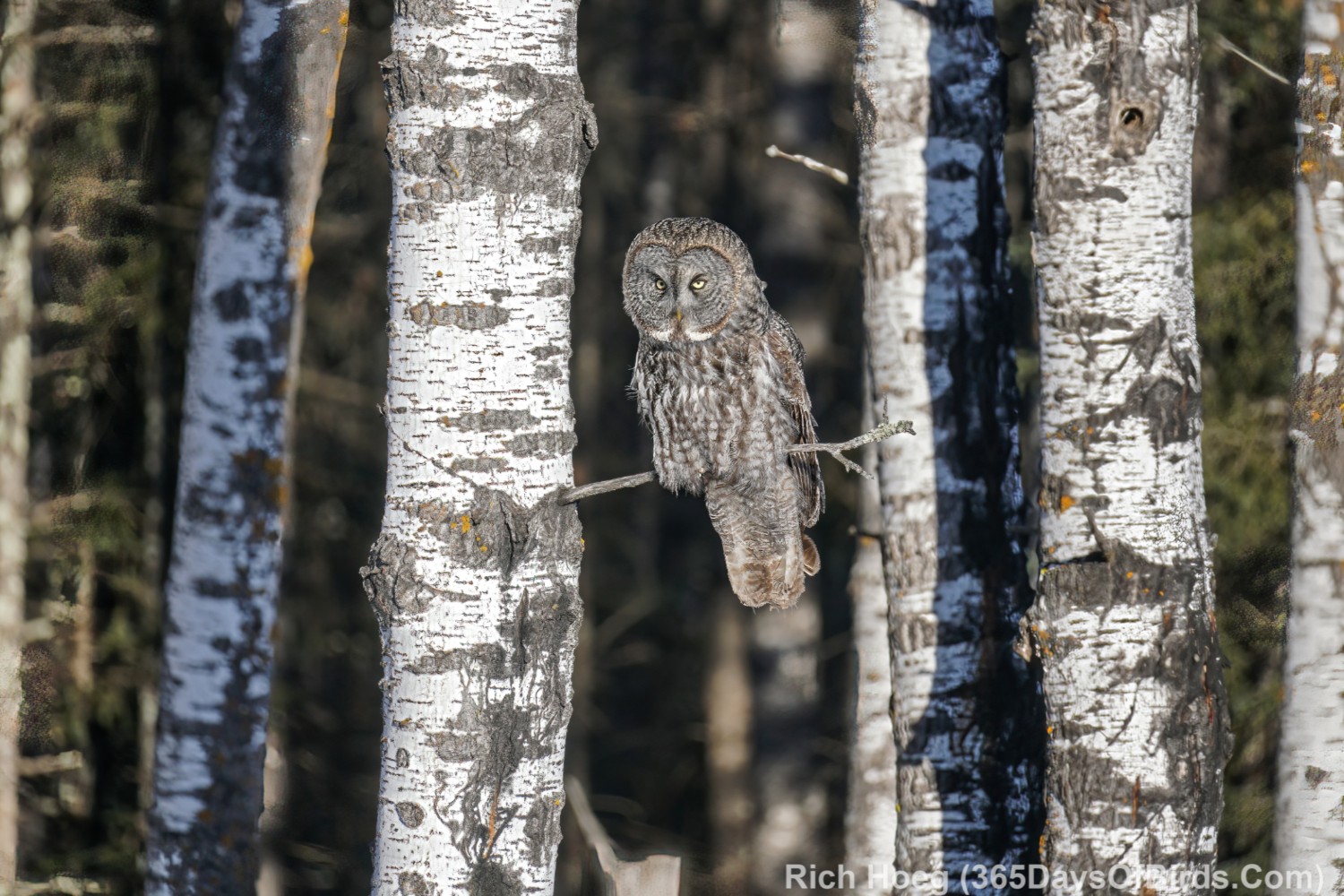
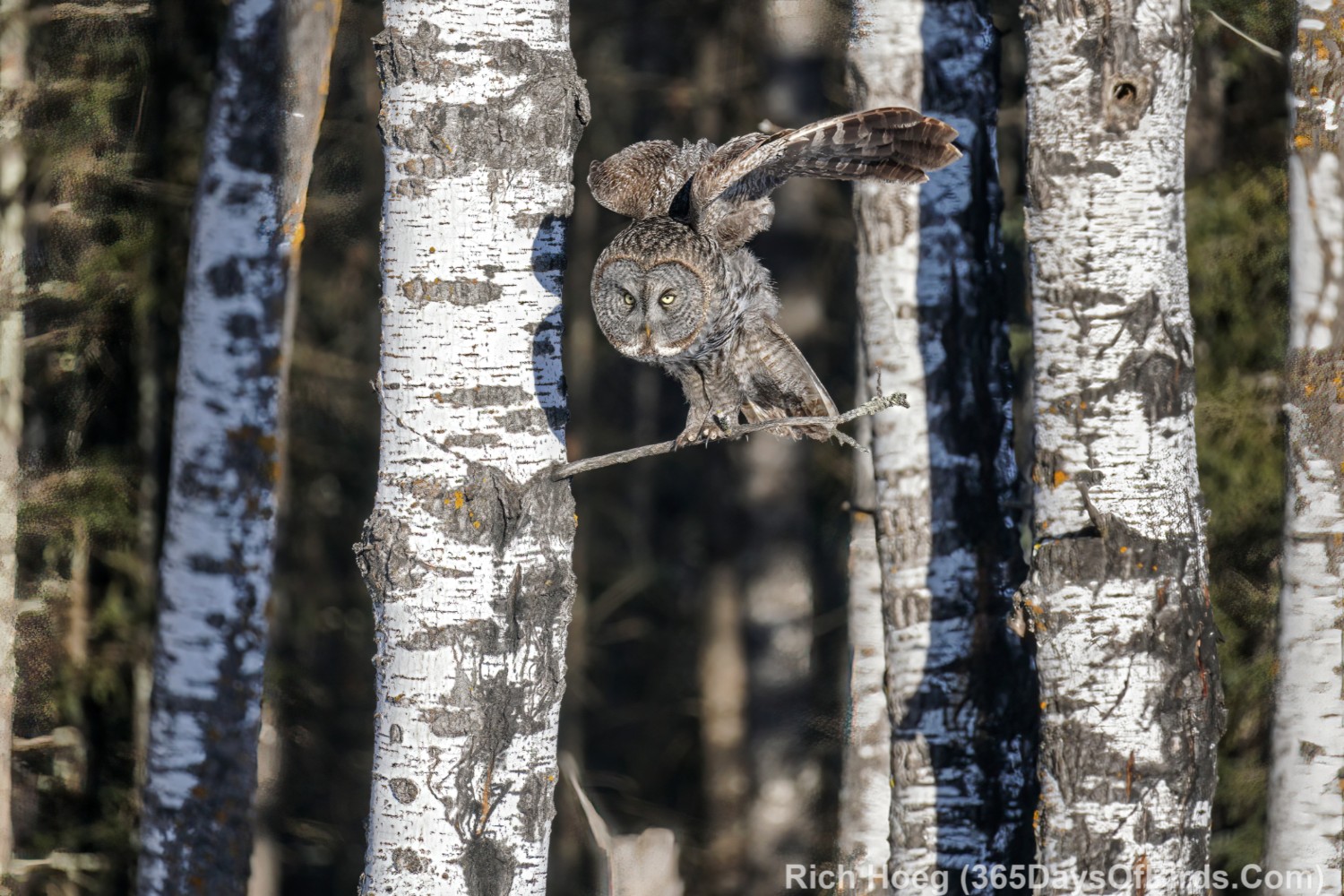
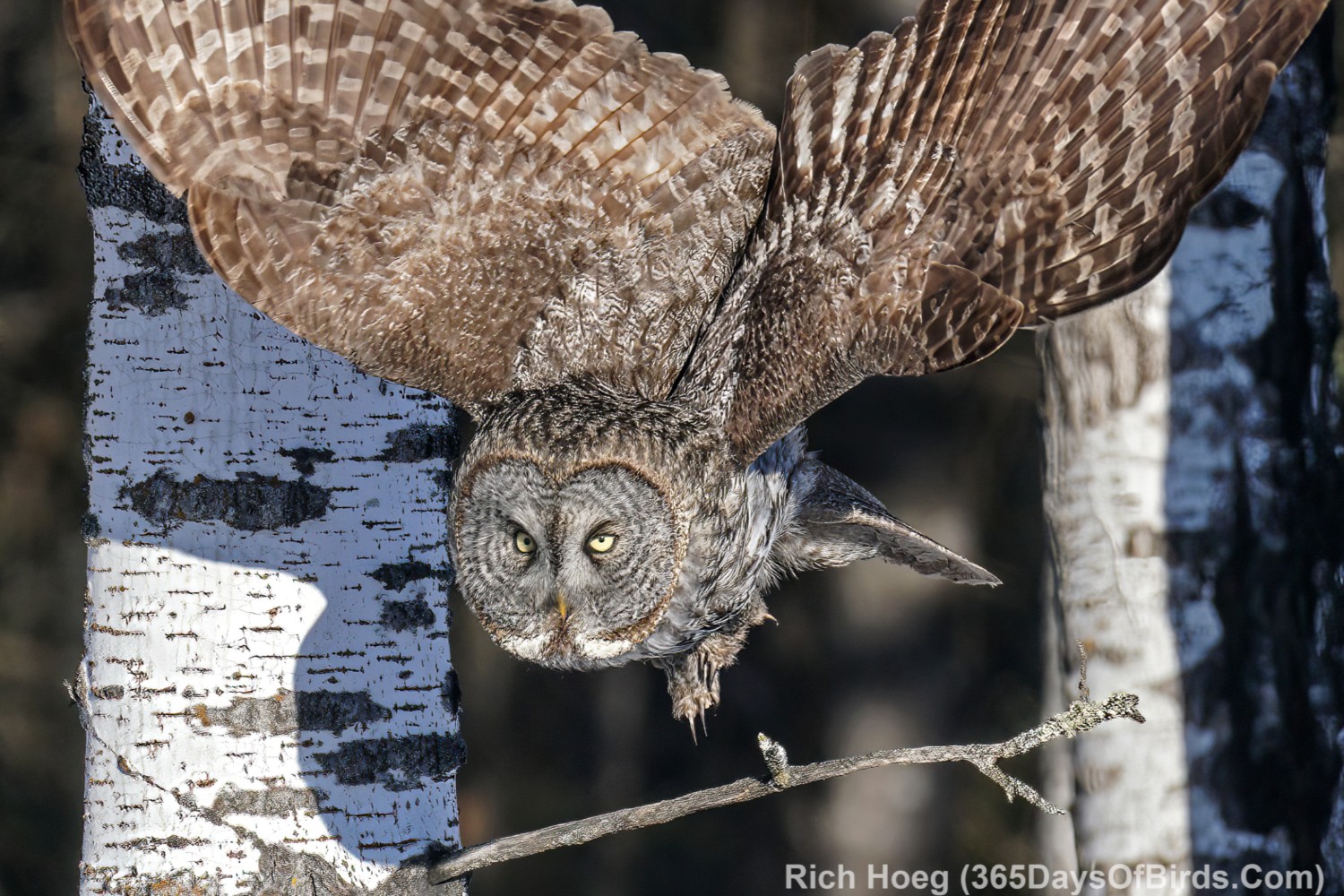
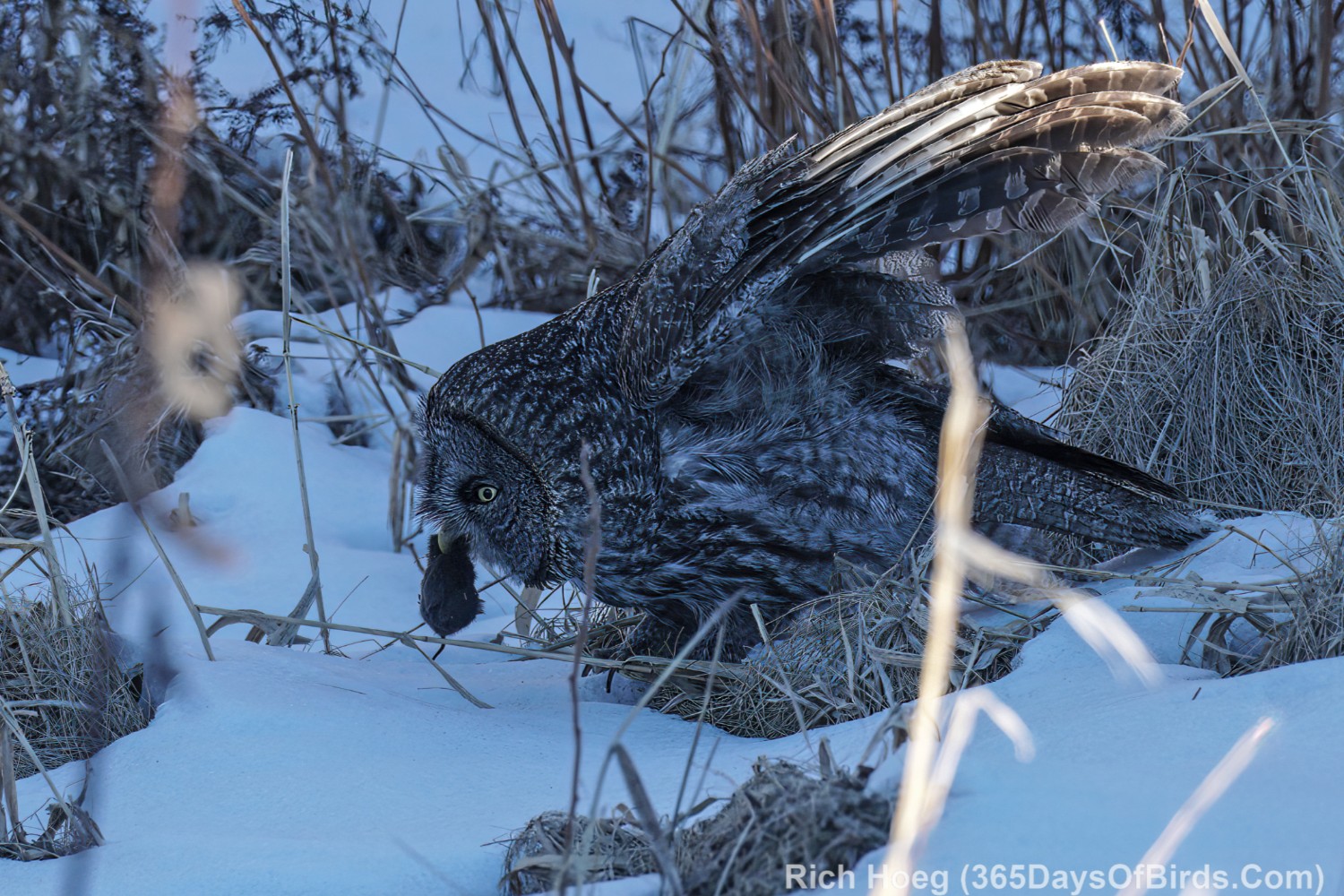
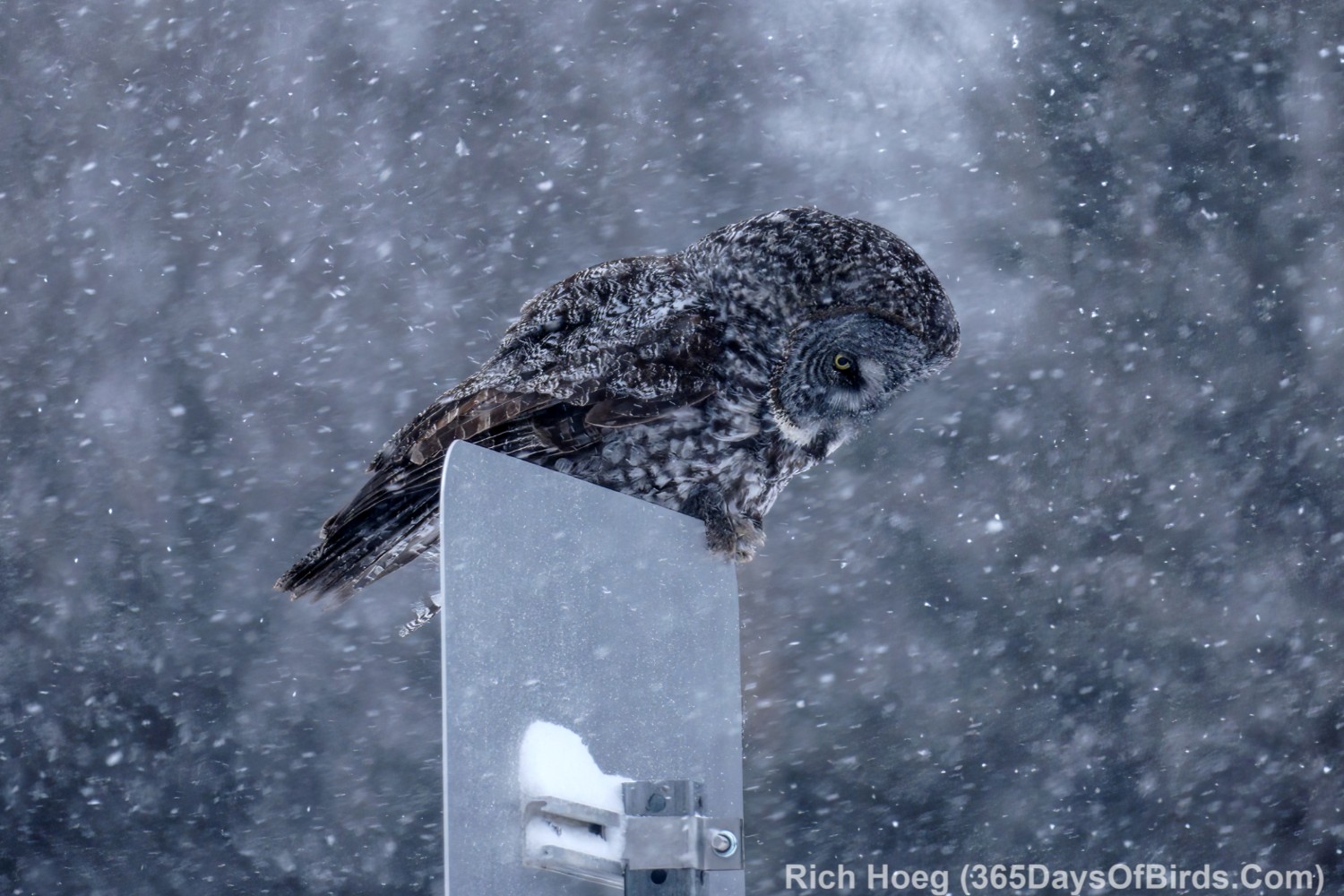
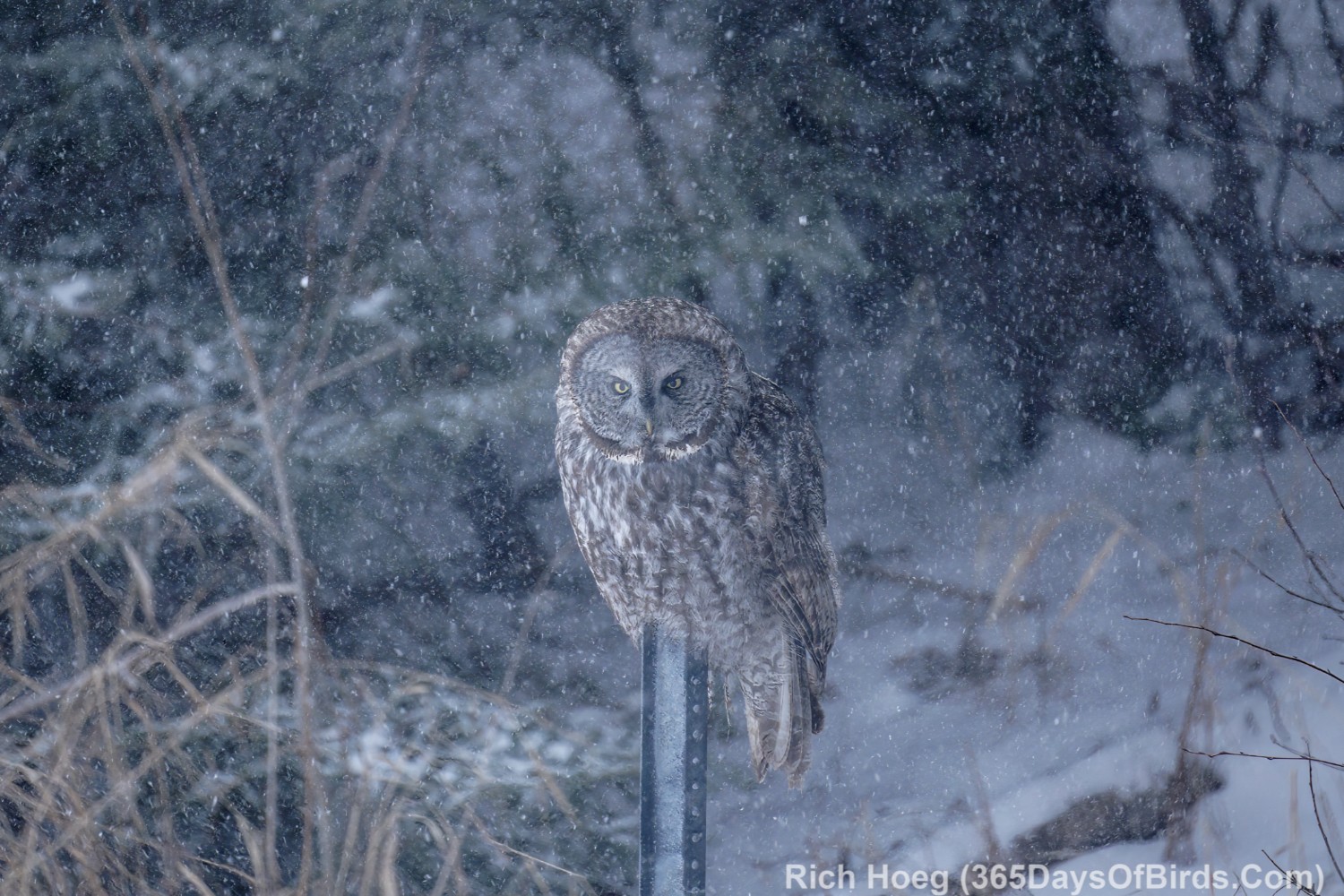
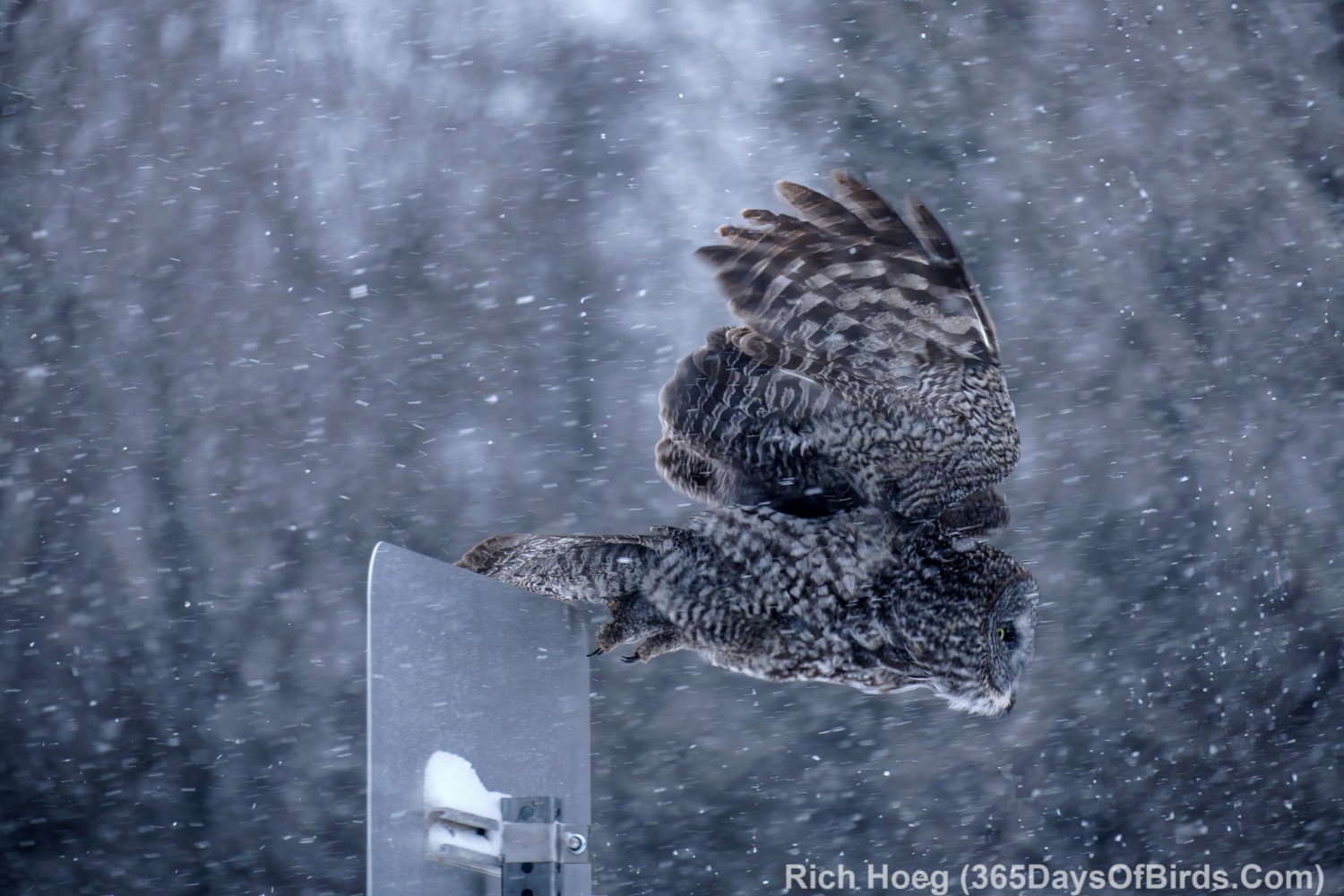
Gray Gray Owl Irruption … Hunting During an Intense Snowstorm

This was one of the more crazy birding adventures I ever took. I was sitting at home on Groundhog’s Day, and Punxsutawney Phil definitely was NOT seeing its shadow in northeastern Minnesota. Instead we had almost blizzard like conditions with HUGE winds off Lake Superior. Who would go birding during such kind of weather? Me! Only 8 miles from my house on the Two Harbors Expressway, during the middle of the storm, I found many owls hunting from sign posts. Only starvation would make an owl hunt during the day AND a horrible snow storm.
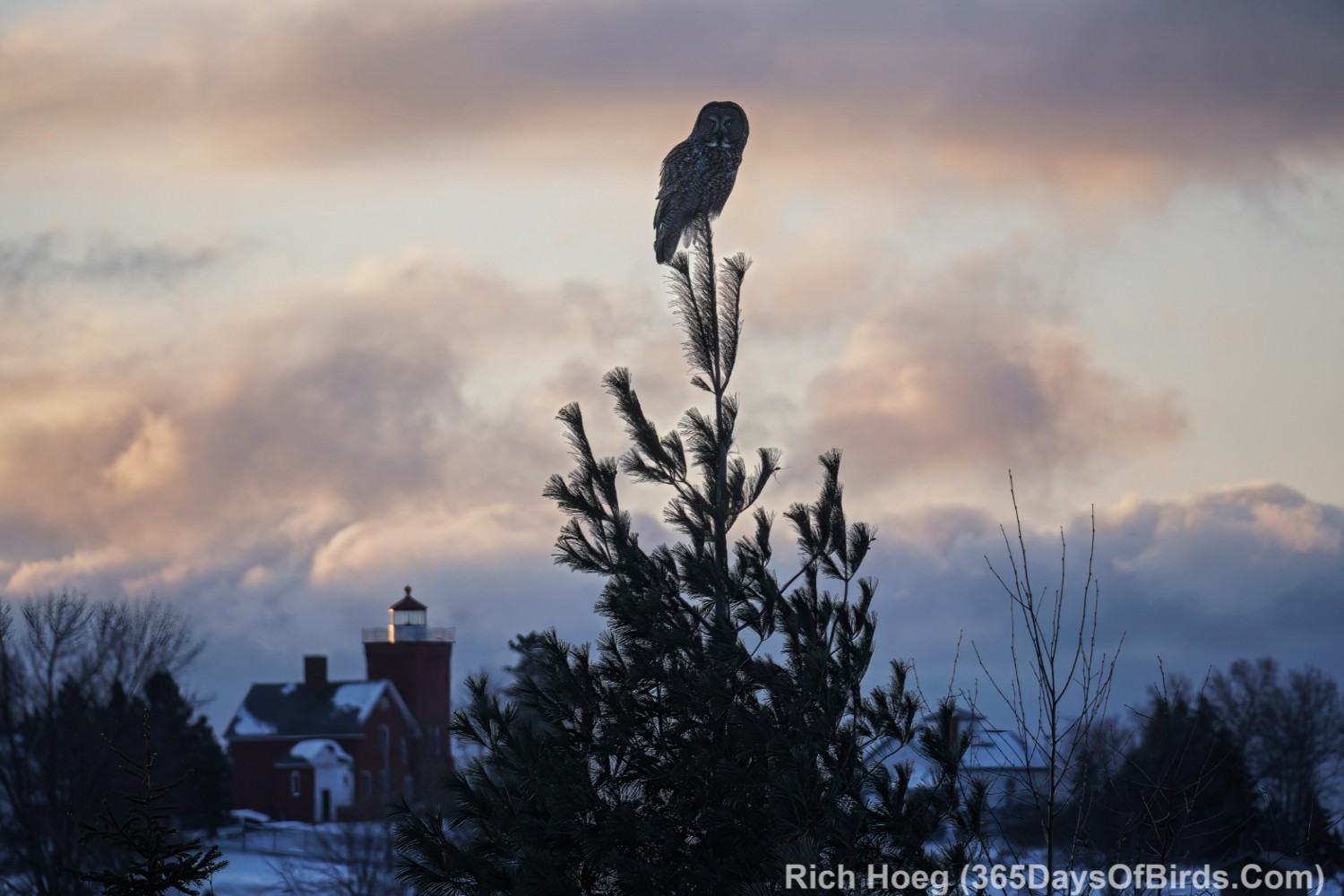
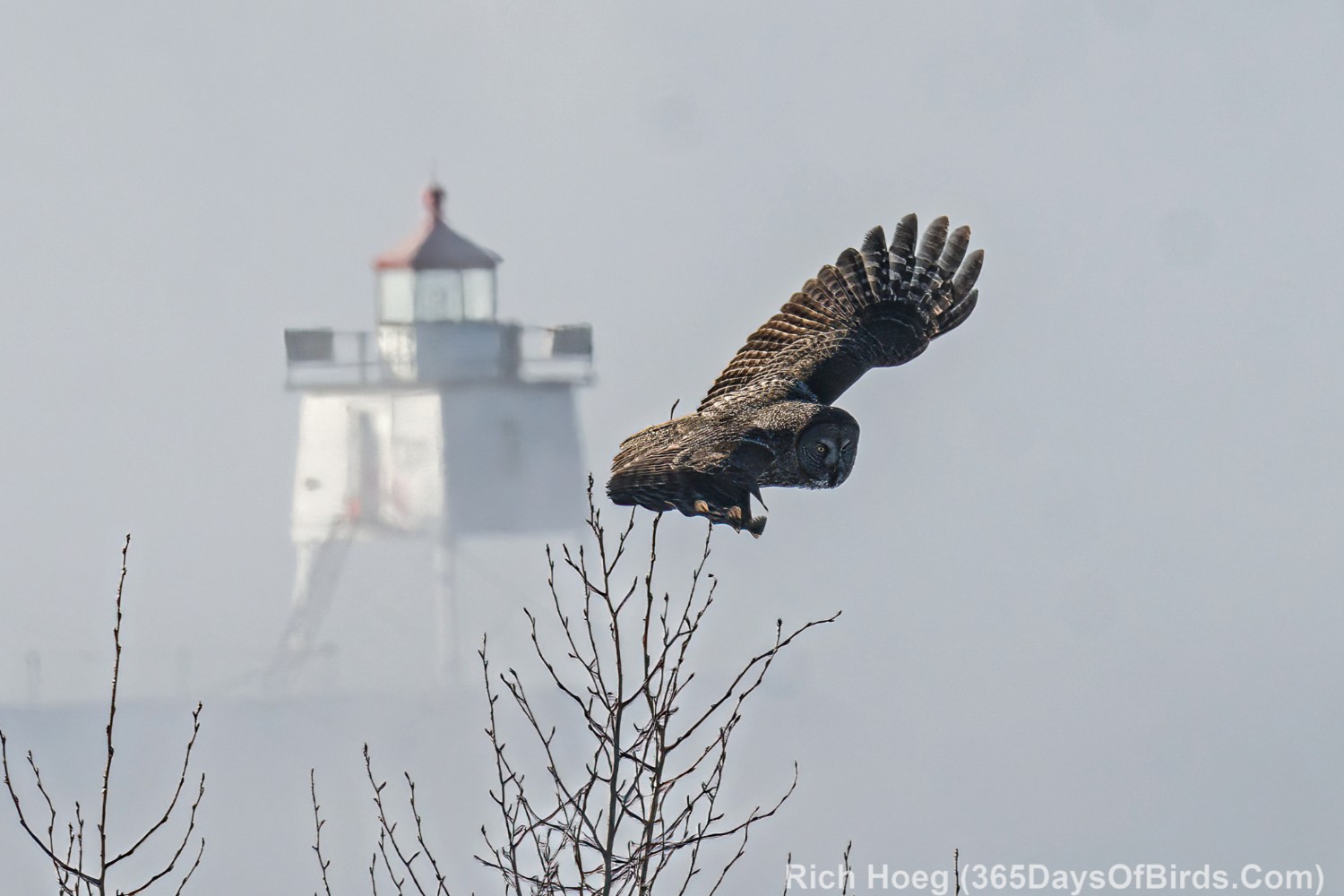
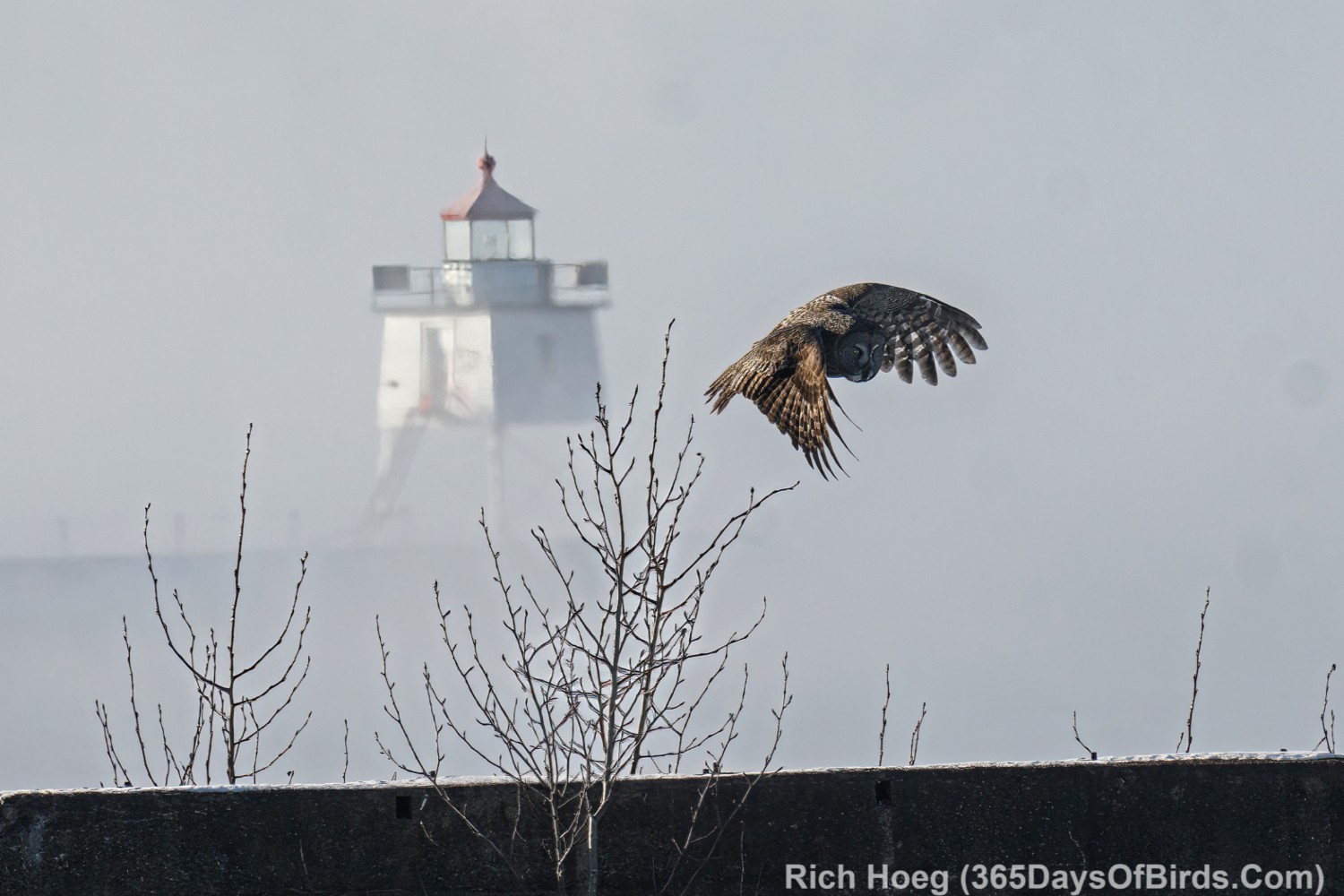
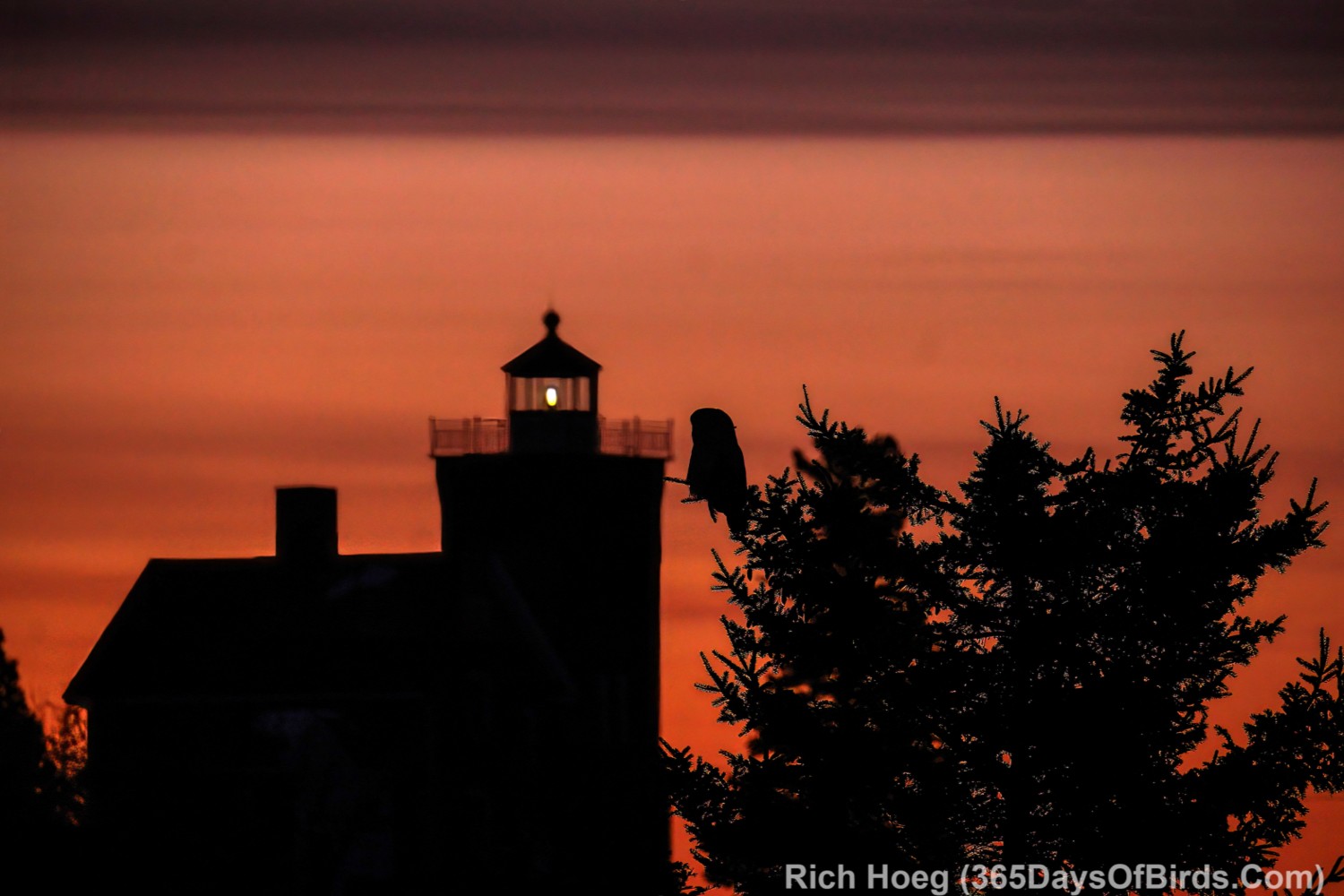
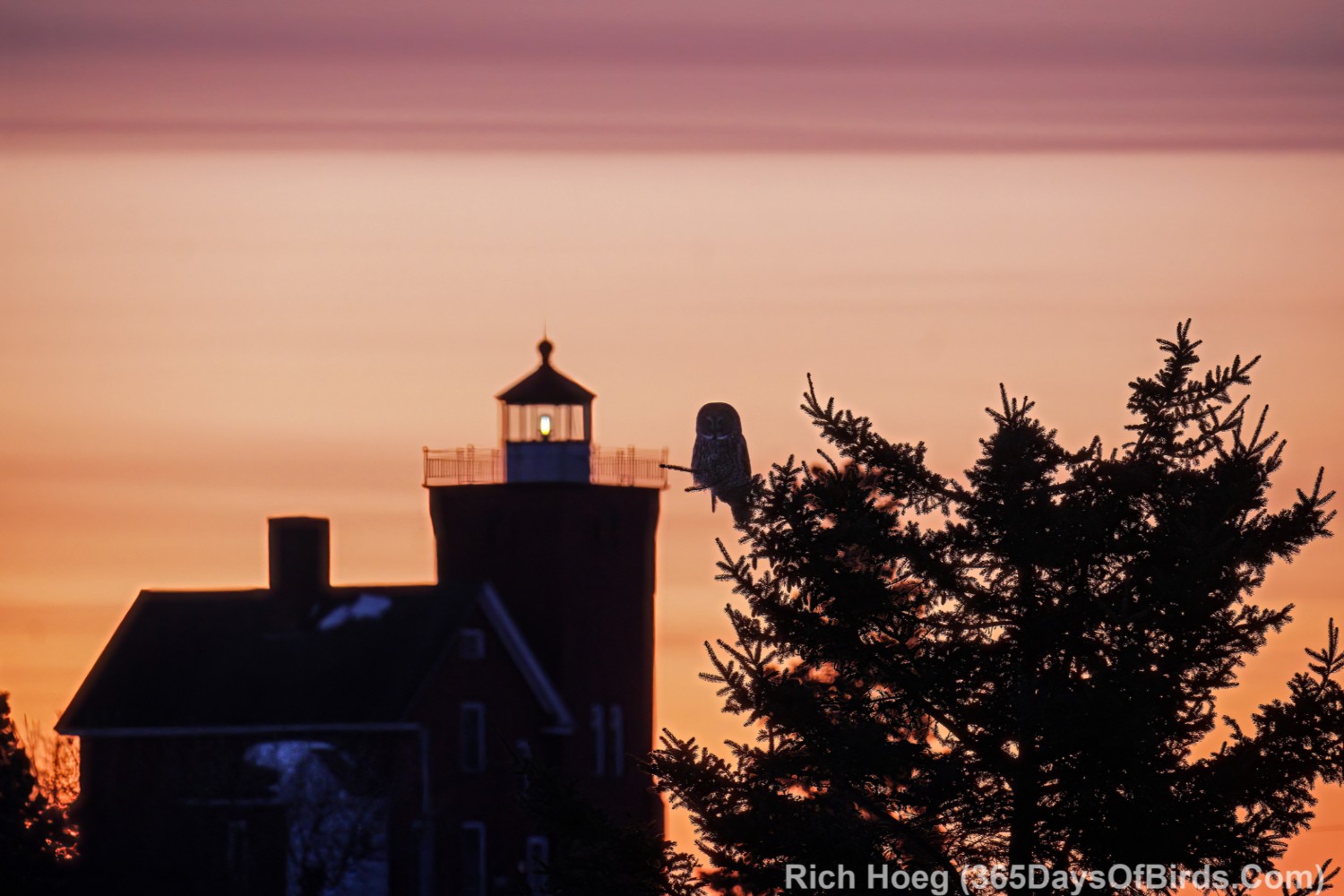
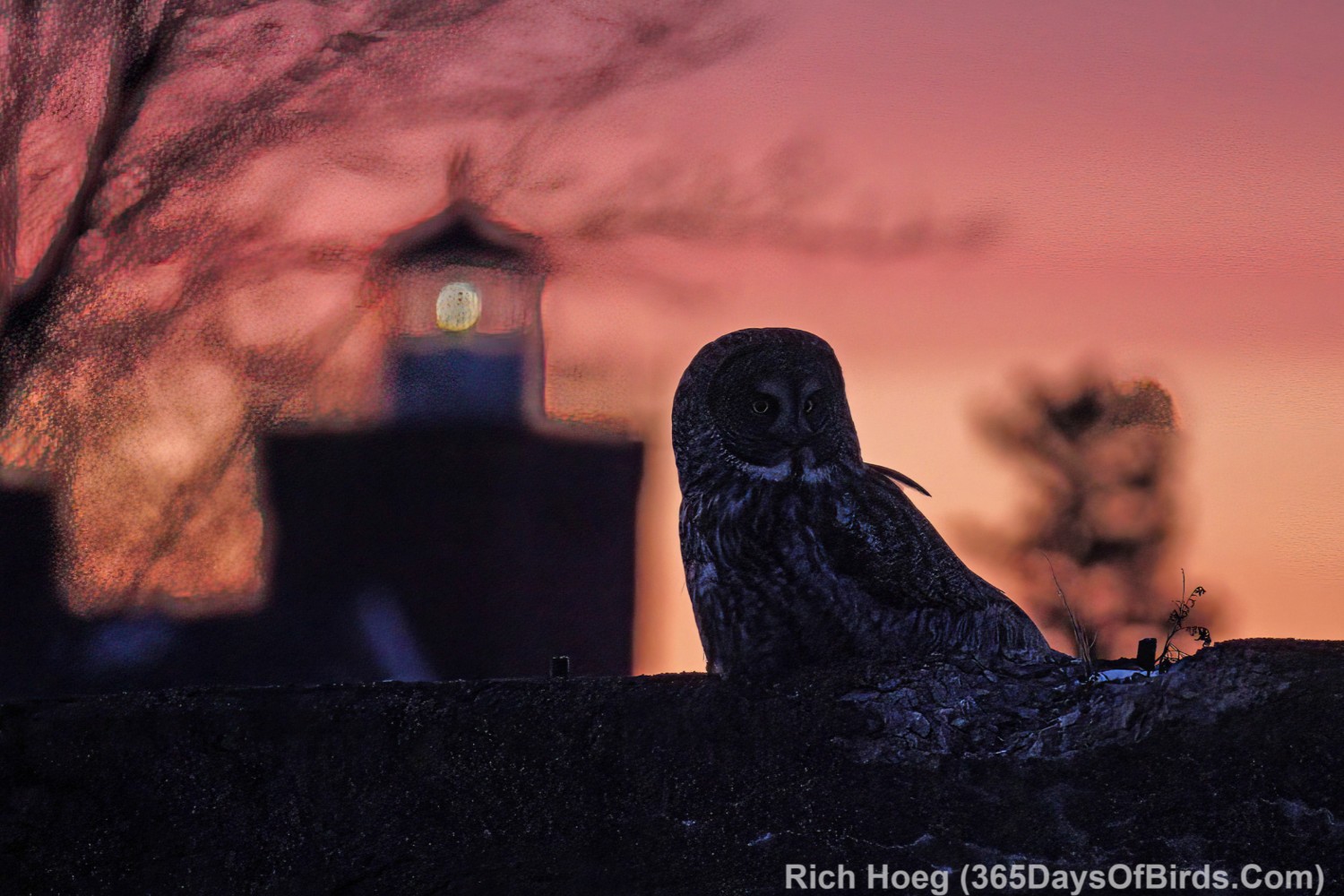
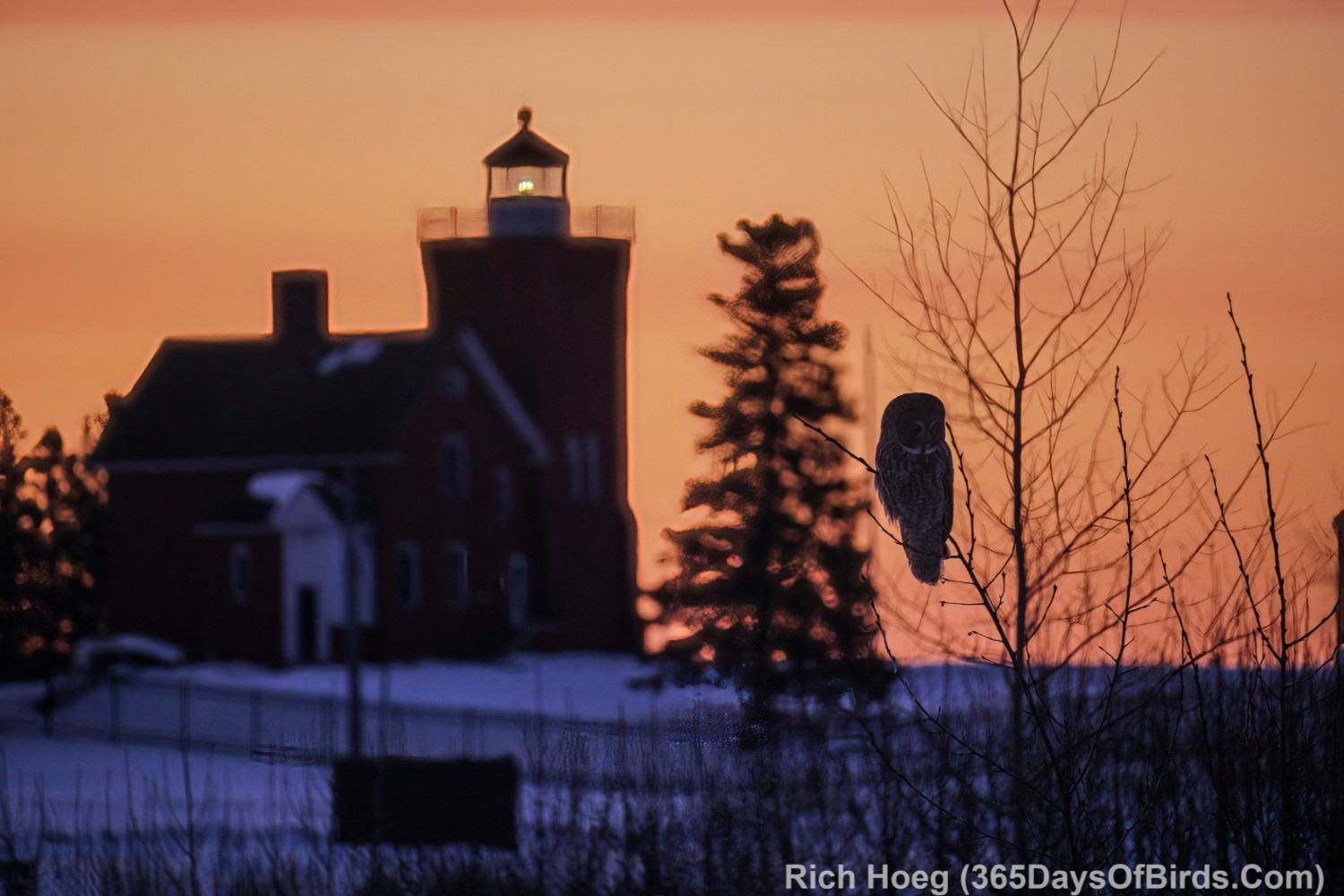
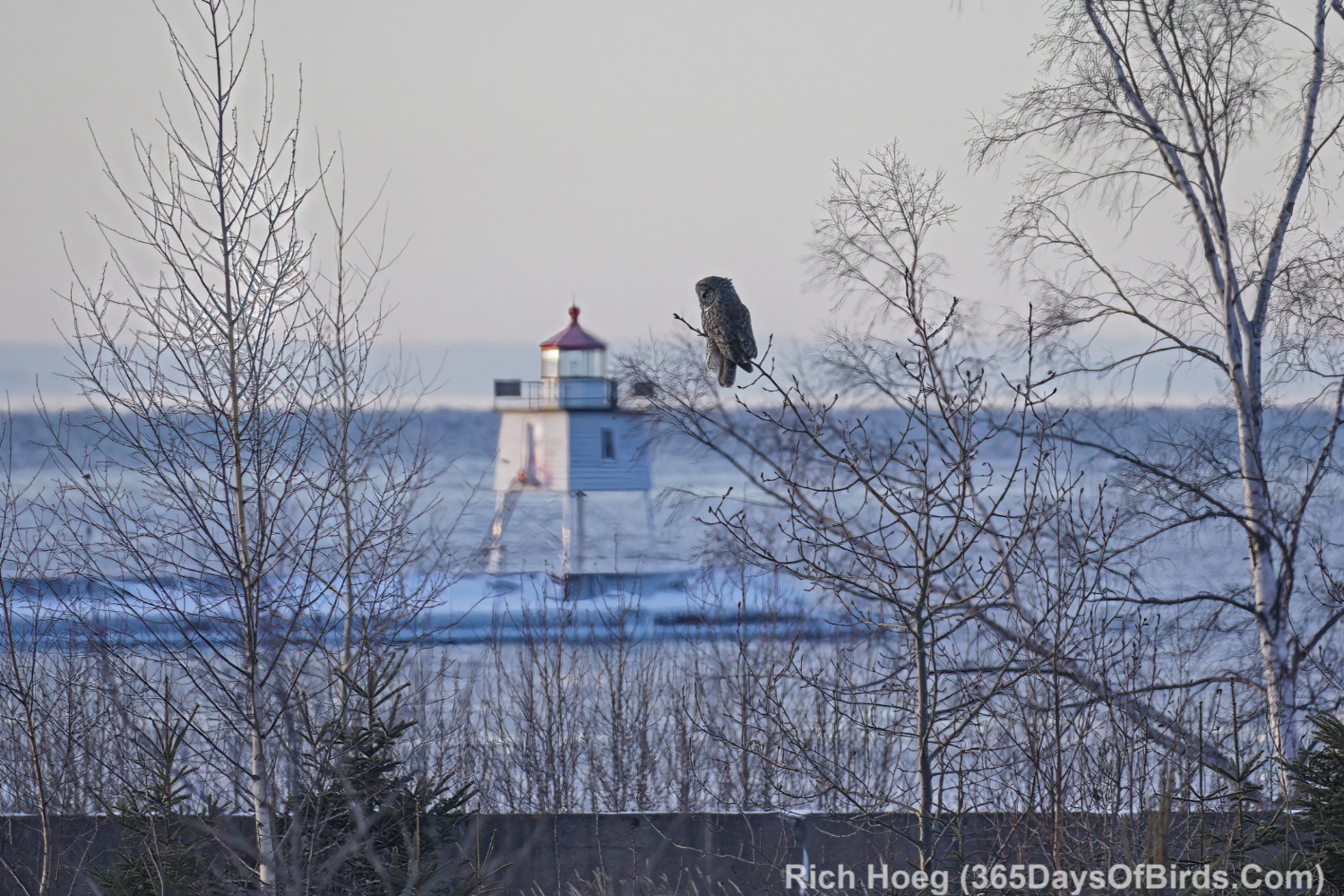
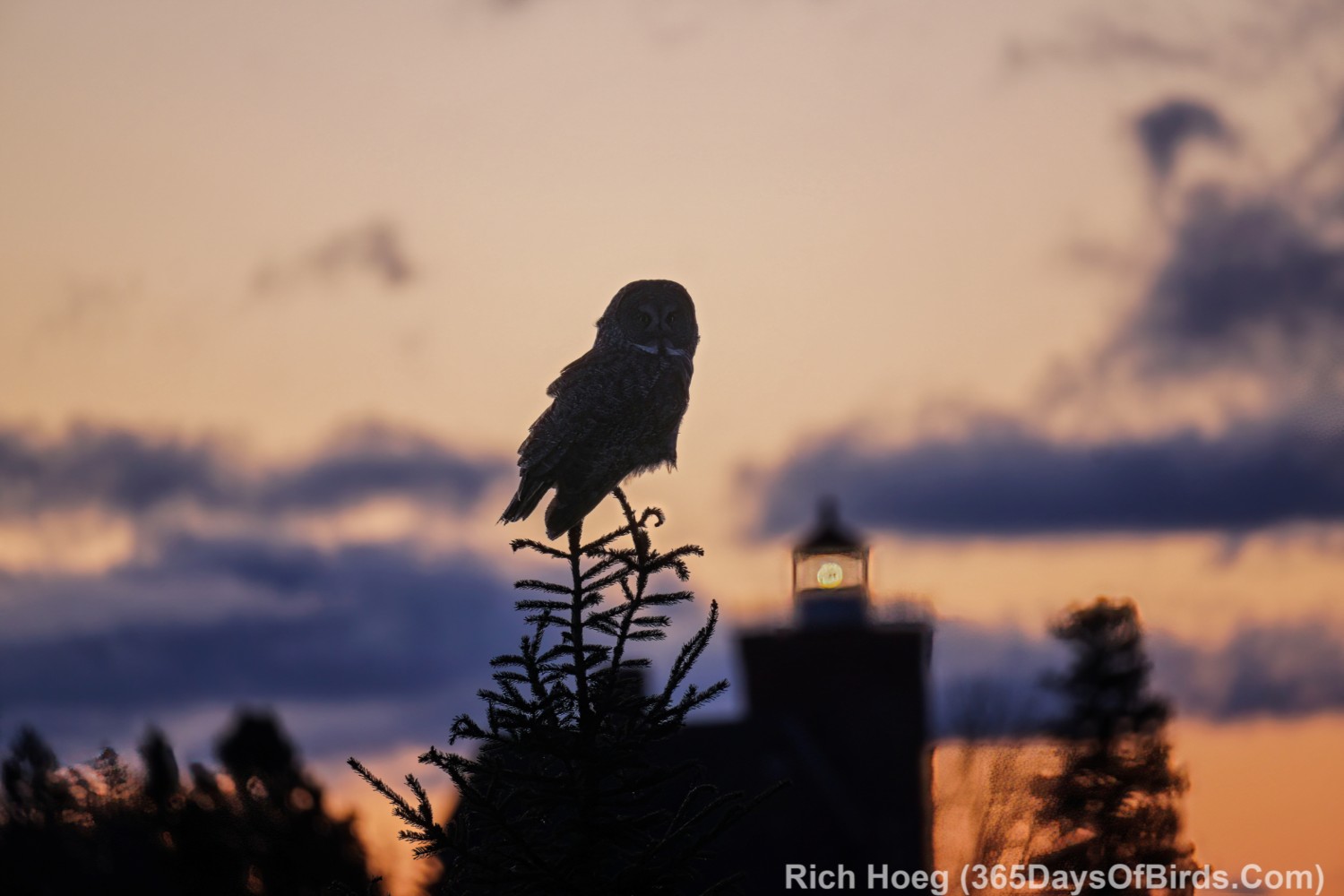
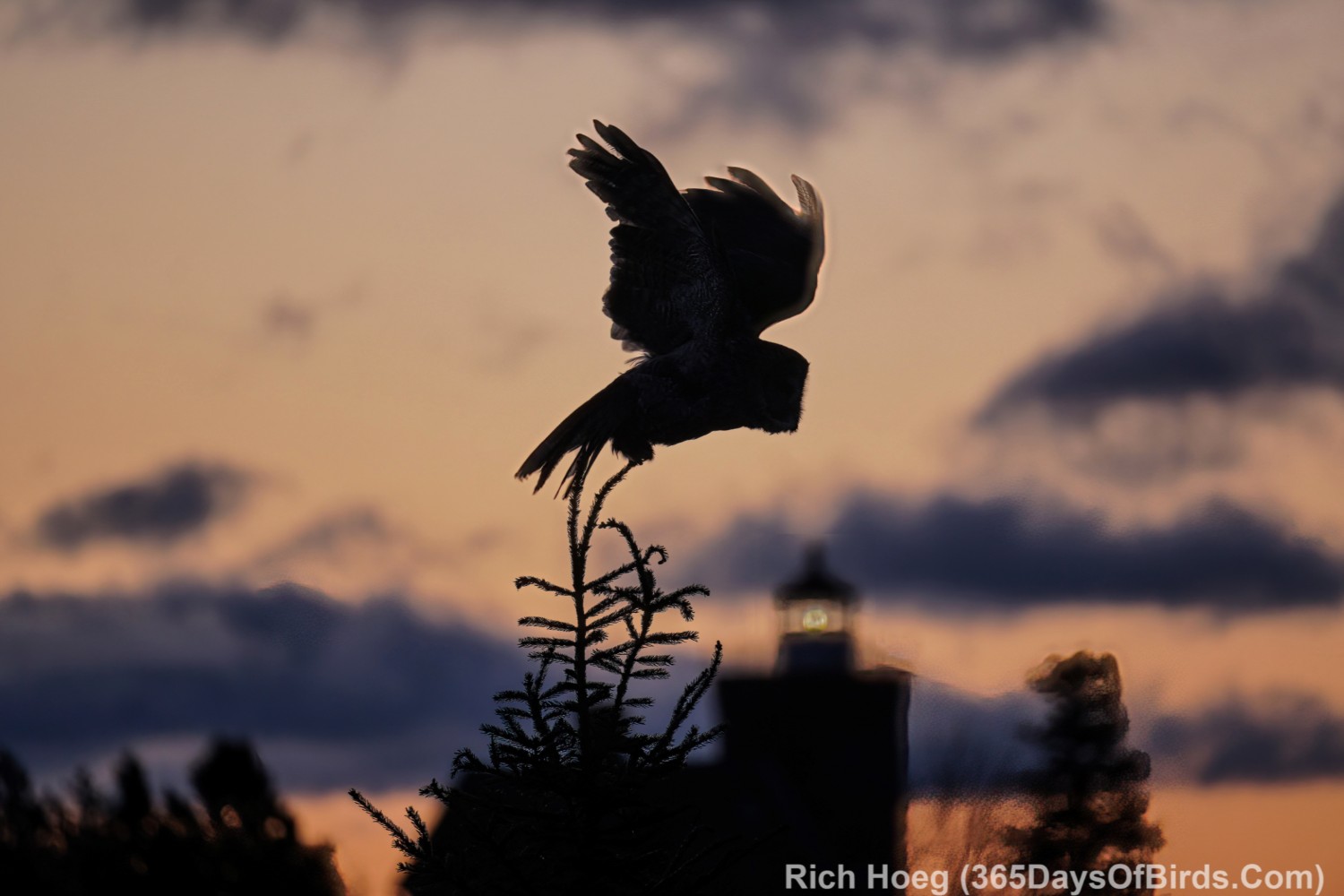
Great Gray Owl Irruption … Two Harbors Lighthouse Scenes

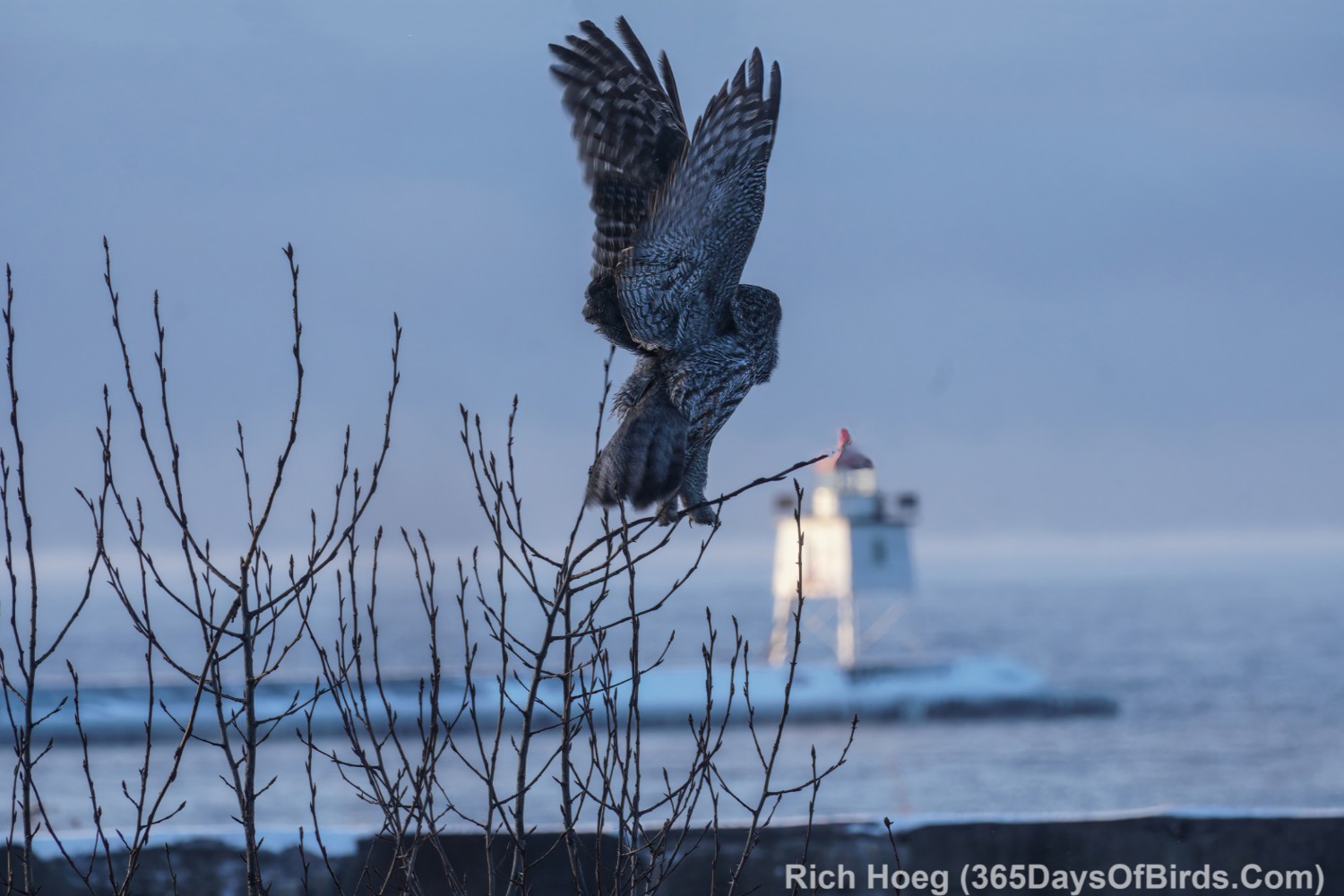
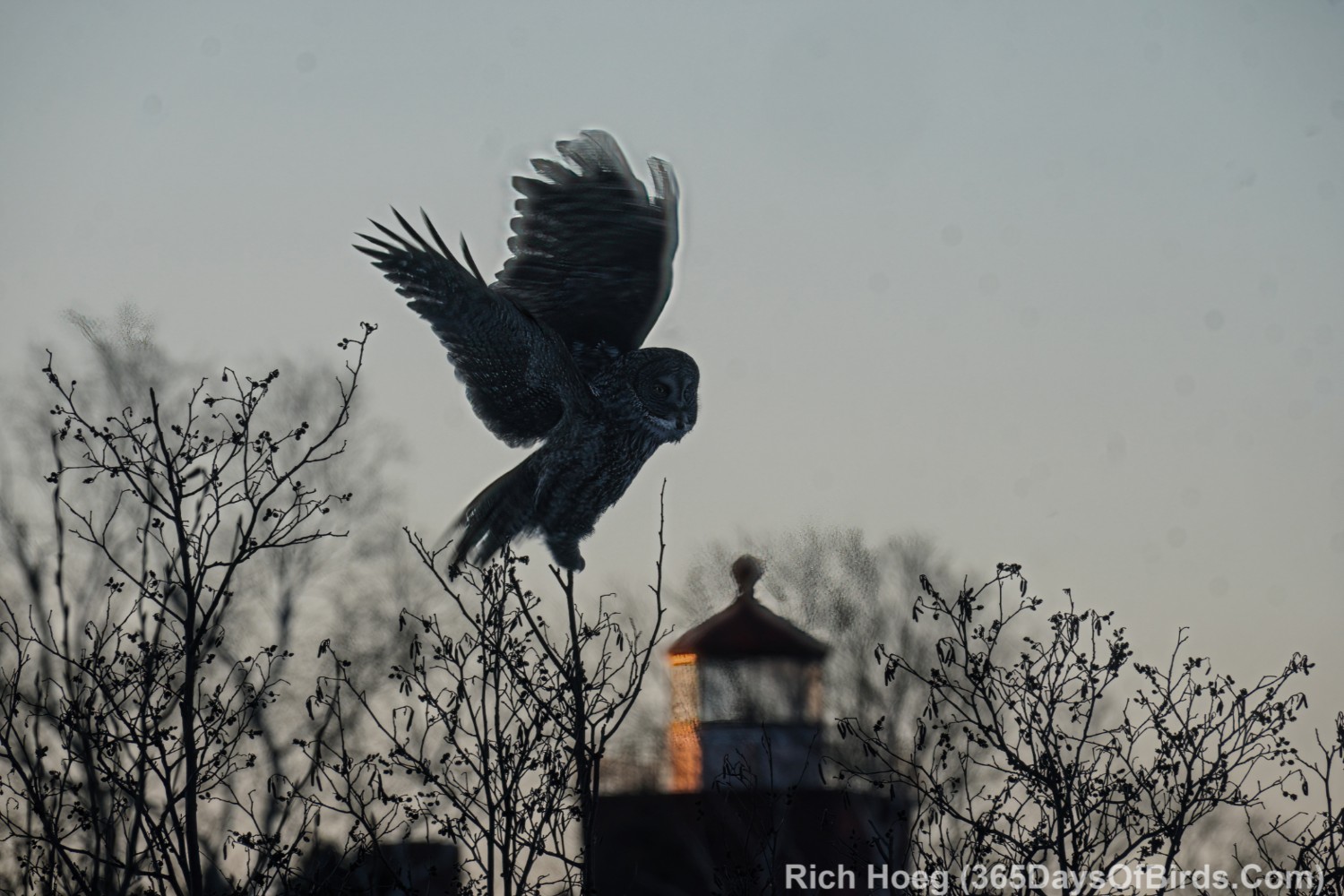
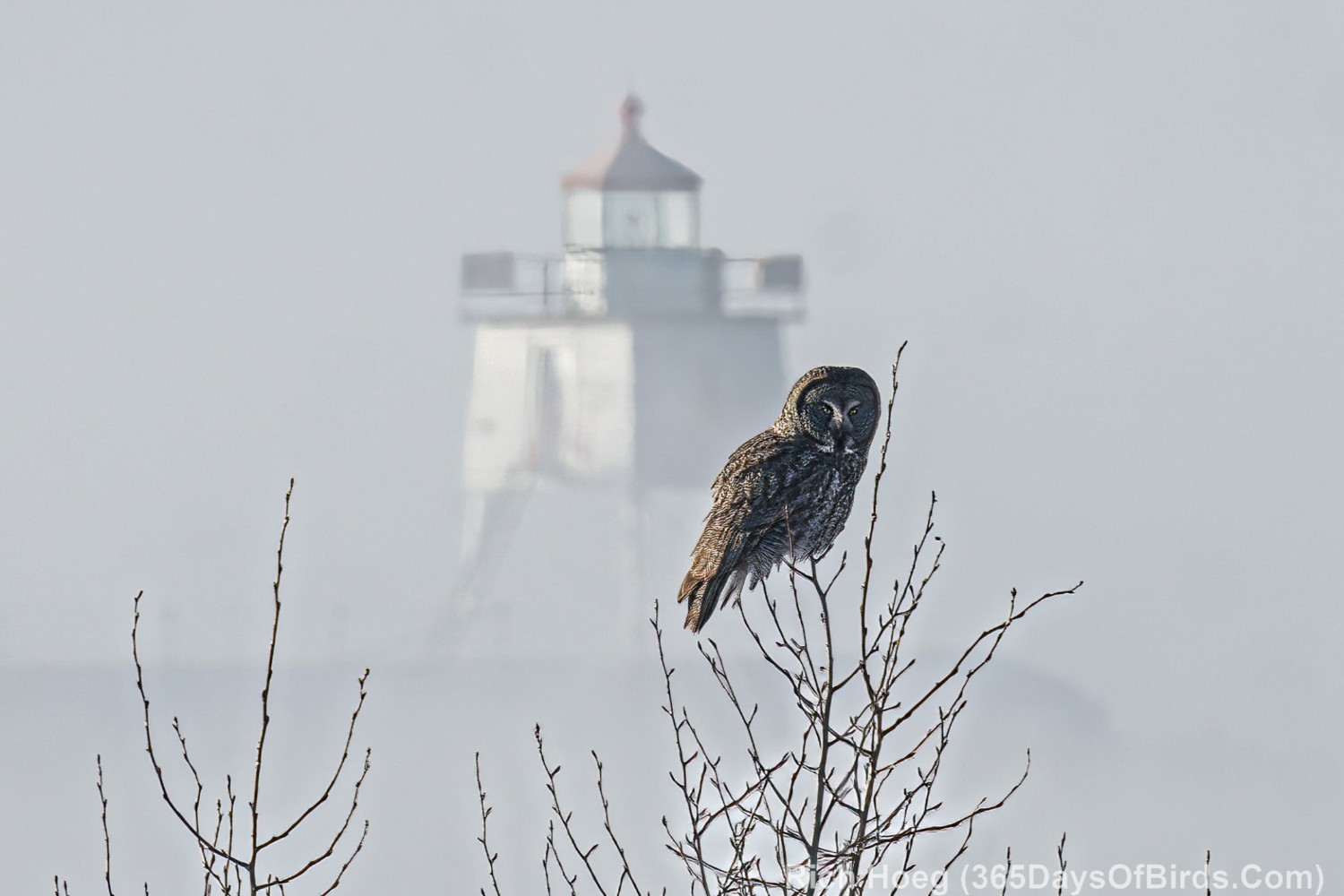
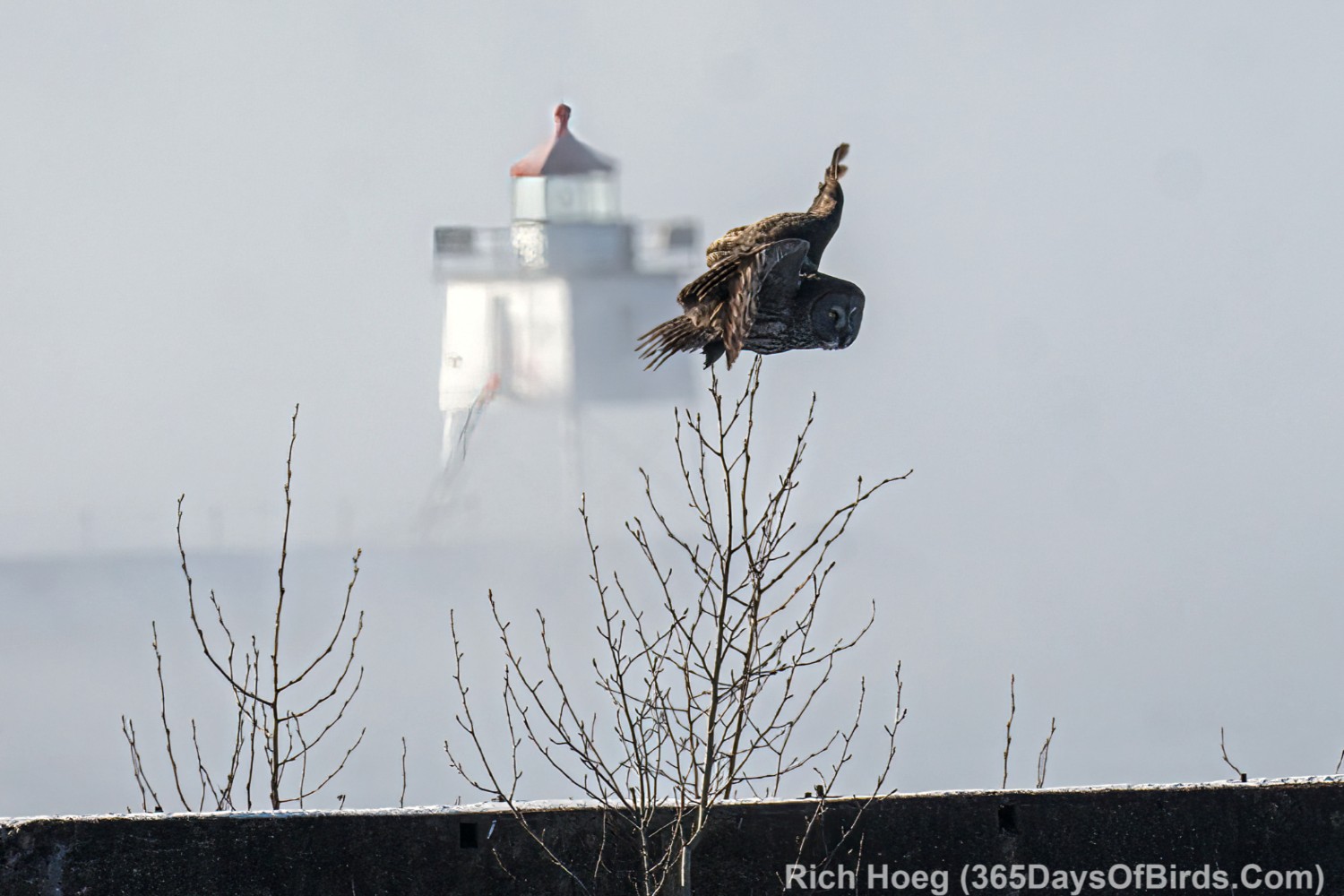
For almost one month up to four Great Gray Owls would hunt at the Two Harbors waterfront. Eventually the word got out, and later in the day the crowds would get crazy. If I decided to visit Two Harbors (20 minutes from my home), I would normally arrive about 40 minutes before sunrise, and leave shortly after sunup. In this way I felt I captured the most dramatic light from pre-dawn to the 20 minutes post sunrise. Most people arrived a bit after sunrise or later. Thus, my experiences were mainly crowd free!
Sounds of the Minnesota Moose Rut (recorded by Trailcams)

Although we have not reached October, which I personally think of as being the period of the prime moose rut, my local moose appear to think otherwise! Last night, three trailcams I have deep in the Superior National Forest recorded both a huge bull moose, and a cow. At times the moose were only inches from my cameras making visuals impossible. However, the close proximity made hearing the moose very easy. Pay attention … you will hear both the cow and bull in the various videos.

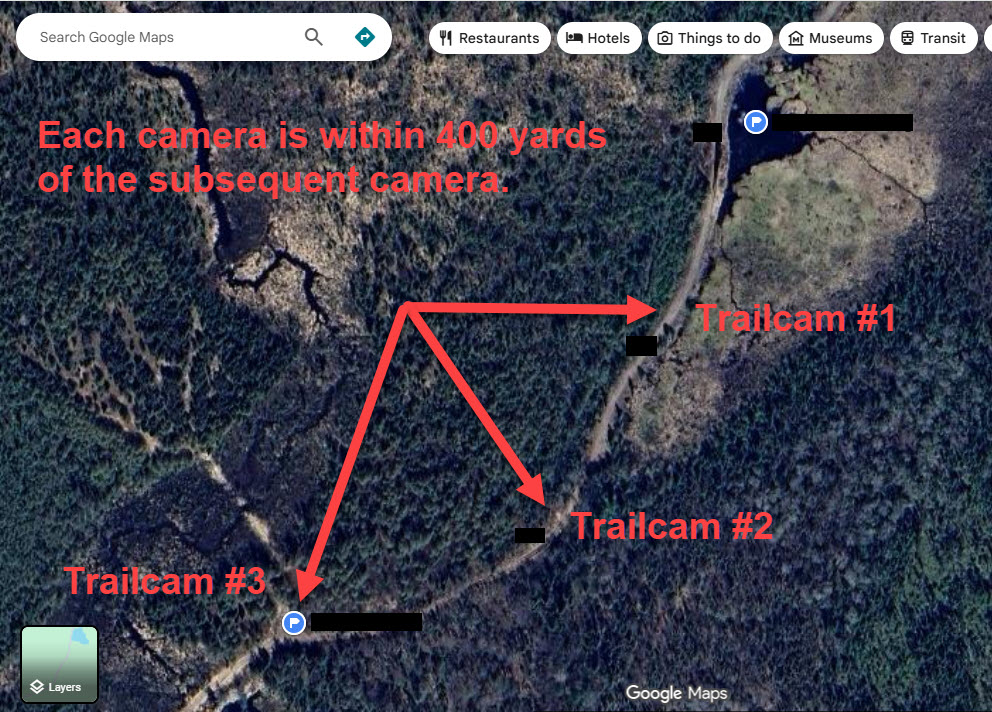
Here is a screenshot from Google Maps which gives you an idea of camera positioning. As noted each camera is within 400 yards of the subsequent camera. I have noted in this blog post’s text if the relevant video snippet includes moose sounds. However, I thought it was worth including all the videos that were recorded over the wee hours of the morning on September 19th from 12:23 am to 1:32 am … regardless of the amount of sound. Each video is 30 seconds in length.

Even non blog subscribers may wish to note the short comments about the sounds one may hear in each video … next to blog subscriber links.

Trailcam #2

  • Video link 1 for blog email subscribers
    • Just breathing sounds
  • Video link 2 for blog email subscribers
    • Cow makes sounds starting at 18 seconds
  • Video link 3 for blog email subscribers
    • Bull makes sounds starting at 4 seconds
    • Other sounds may be from the cow, but she can not be seen
  • Video link 4 for blog email subscribers
    • Just breathing sounds
    • Bull’s beard is within inches of the camera

Trailcam #3

  • Video link 5 for blog email subscribers
    • Bull walking through the bog … water sounds

Trailcam #2

  • Video link 6 for blog email subscribers
    • Isolated grunts from the bull
  • Video link 7 for blog email subscribers
    • Isolated grunts from the bull
  • Video link 8 for blog email subscribers
    • Isolated grunts from the bull

Trailcam #1

  • Video link 9 for blog email subscribers
    • Silence … bull walking through bog
  • Video link 10 for blog email subscribers
    • Mostly silent … some breathing sounds from the bull


For me, this sequence of videos which took place over one hour are amazing. The locations of the trailcams represent years of my learning about forest habitat, and specifically two years of my learning this particular area of the Superior National Forest.  The exact location of each camera is not “dumb luck”. I have been observing the wildlife in this region for a long time, and hiking various trails, including game trails, while paying attention to signs of wildlife. Since June I have seen eight moose with my own eyes, not just via trailcams.

Two Harbors Highlands Birding Drive

The wind is blowing strongly out of the northwest, which means fall migration is upon us. Actually, birds have been migrating south since July, but strong NW winds in September and October mean birds being pushed against Lake Superior on their southward journey. As most birds don’t want to head out over the lake, birding near the lakeshore can bee excellent. Remember … think migration highways!

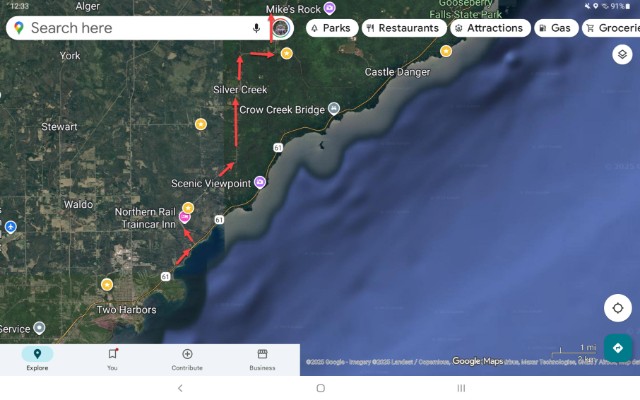
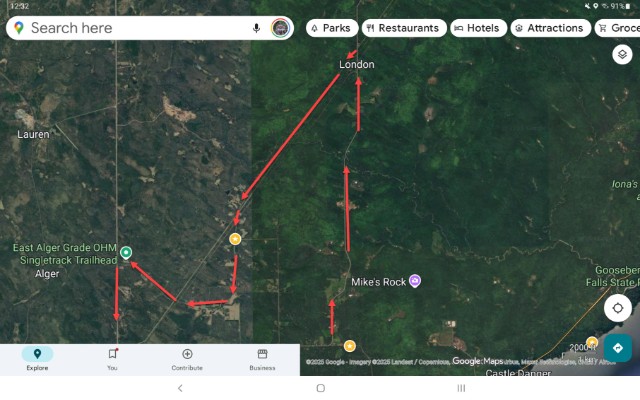
This morning I took one of my favorite autumn birding drives, which I document here for you. This route is excellent because of the birds, natural beauty, and low traffic volumes. In late September one gets to add Autumn colors into the equation. Here are two screenshots of my route, and  GPS way points:

All links in these directions are Google Maps waypoints. Make CERTAIN you take this birding drive IN THIS DIRECTION! The sun will be behind you in the early morning.

As I drive back to Duluth, I like to drive past Stony Point (exit Two Harbors Expressway at Alseth Road), and then I take Scenic 61 back to Duluth. Get onto Stoney Point Drive at its northern end. Drive the short distance back to Alseth Road. Turn back (uphill) towards Scenic 61. With the right wave conditions, watch for surfers at Stoney Point.

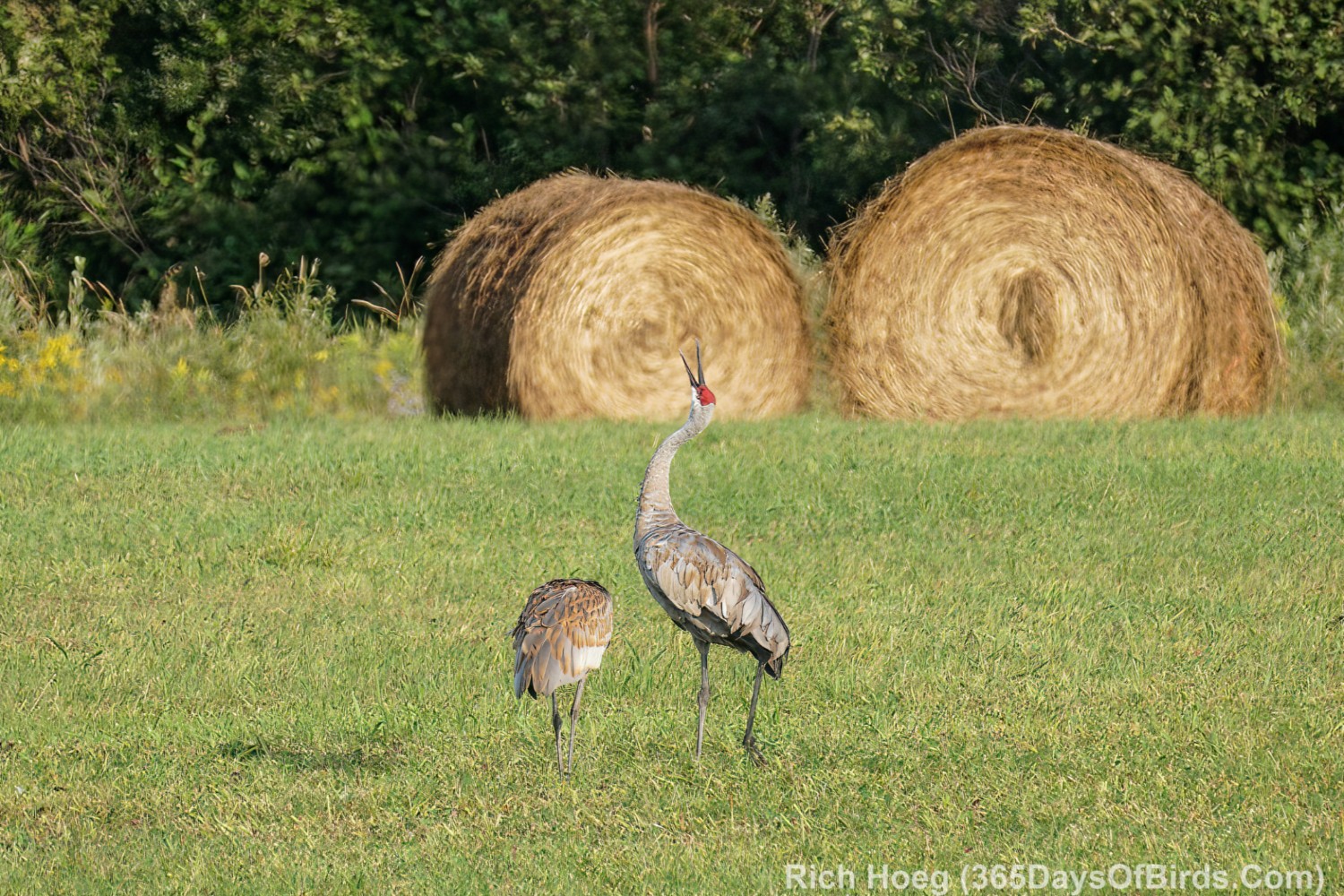
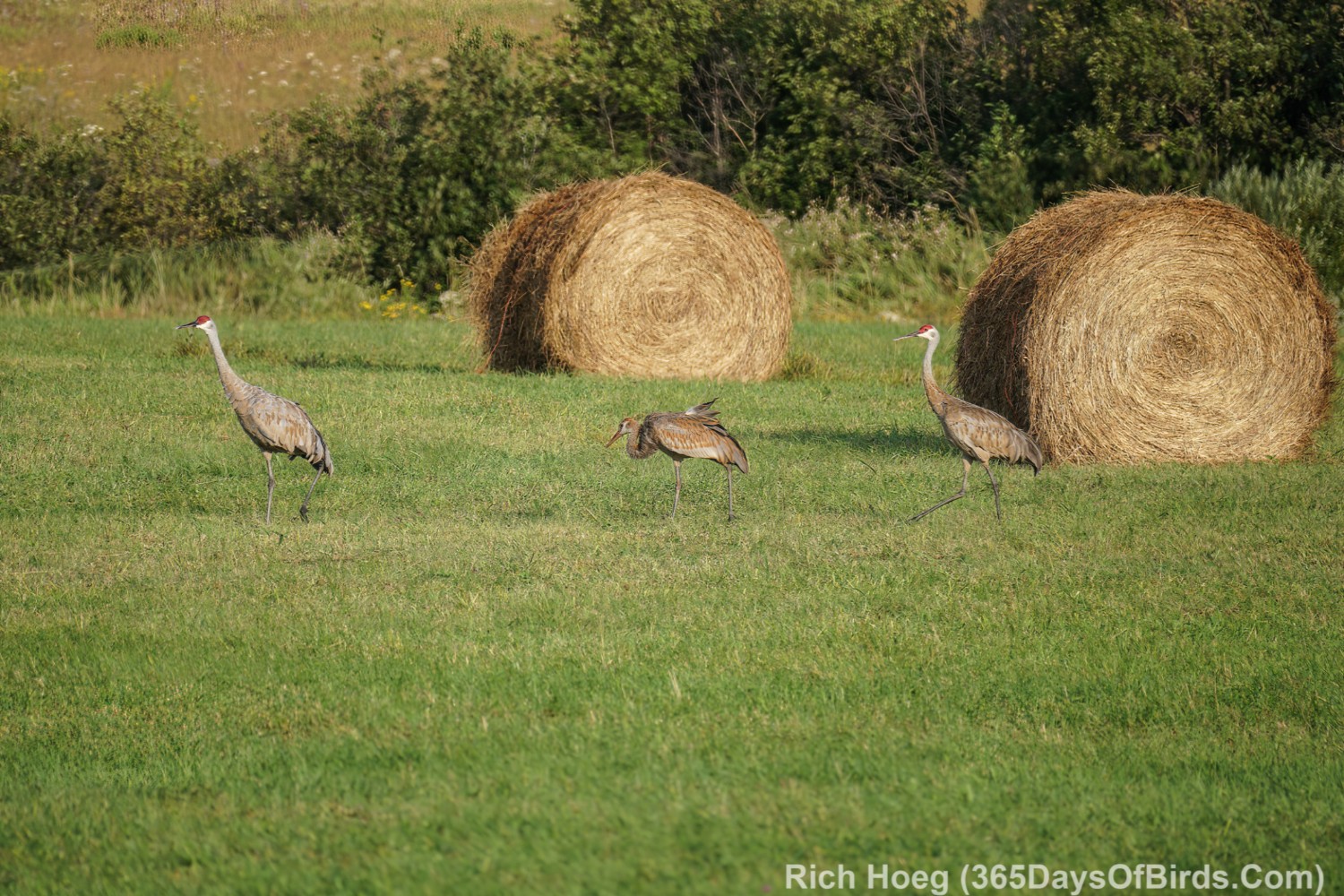
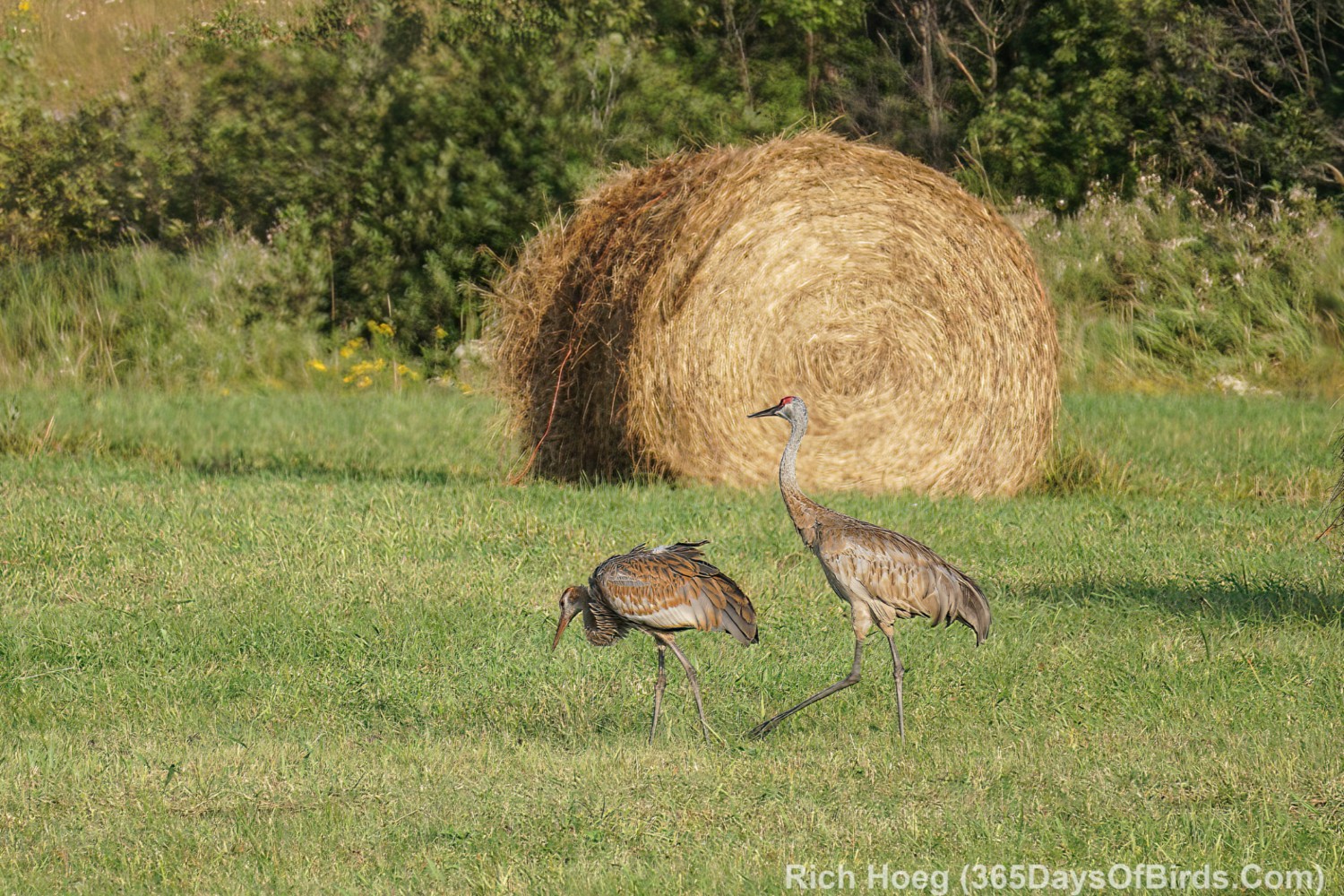
This morning, I found this Sandhill Crane family on Lake County 3. I ALWAYS love birding freshly mowed hay fields in the fall. There was also a huge flock of Canada Geese feeding in the same field, but with no unusual additions to the flock (i.e. snow geese, etc.)