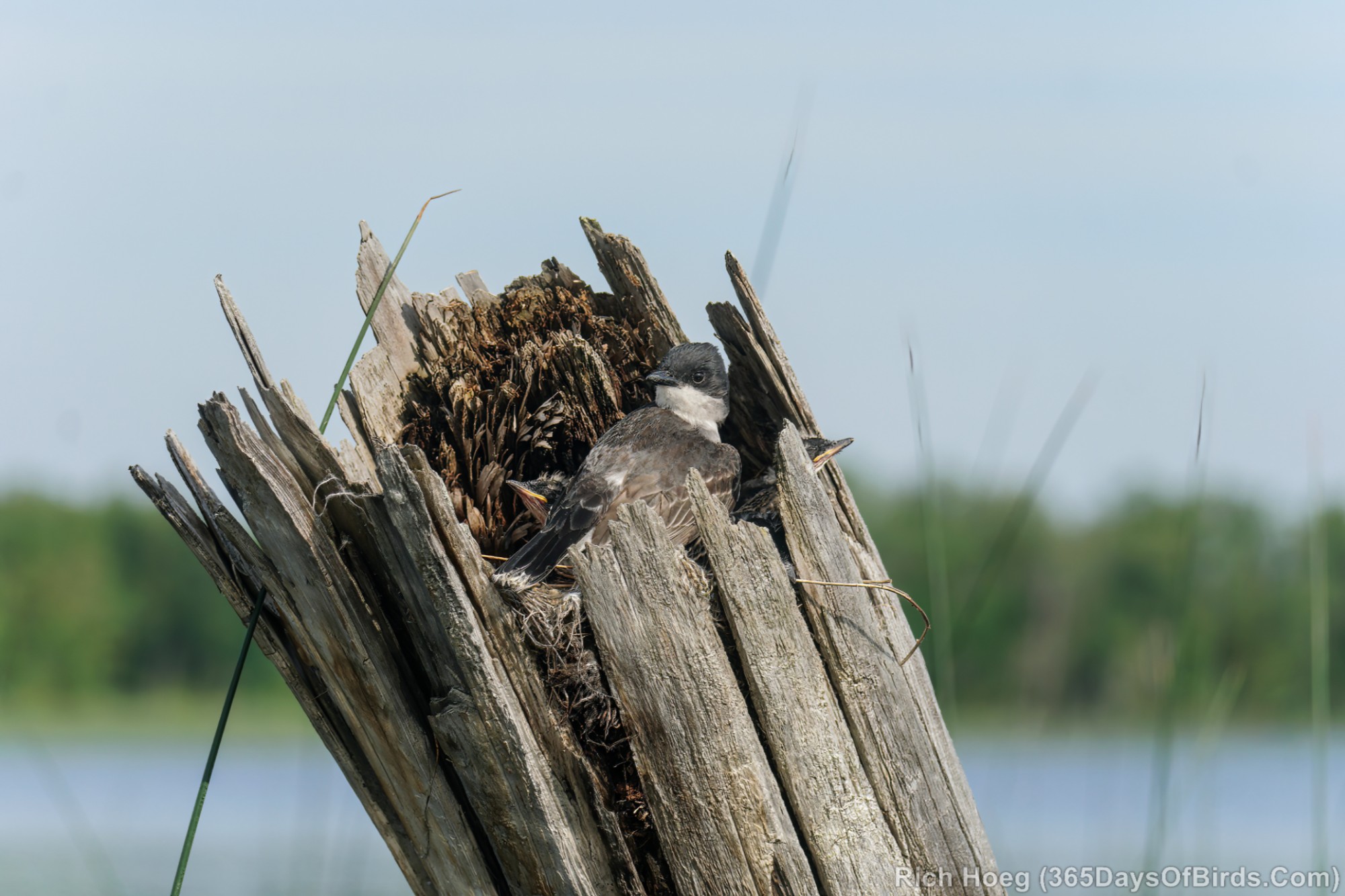
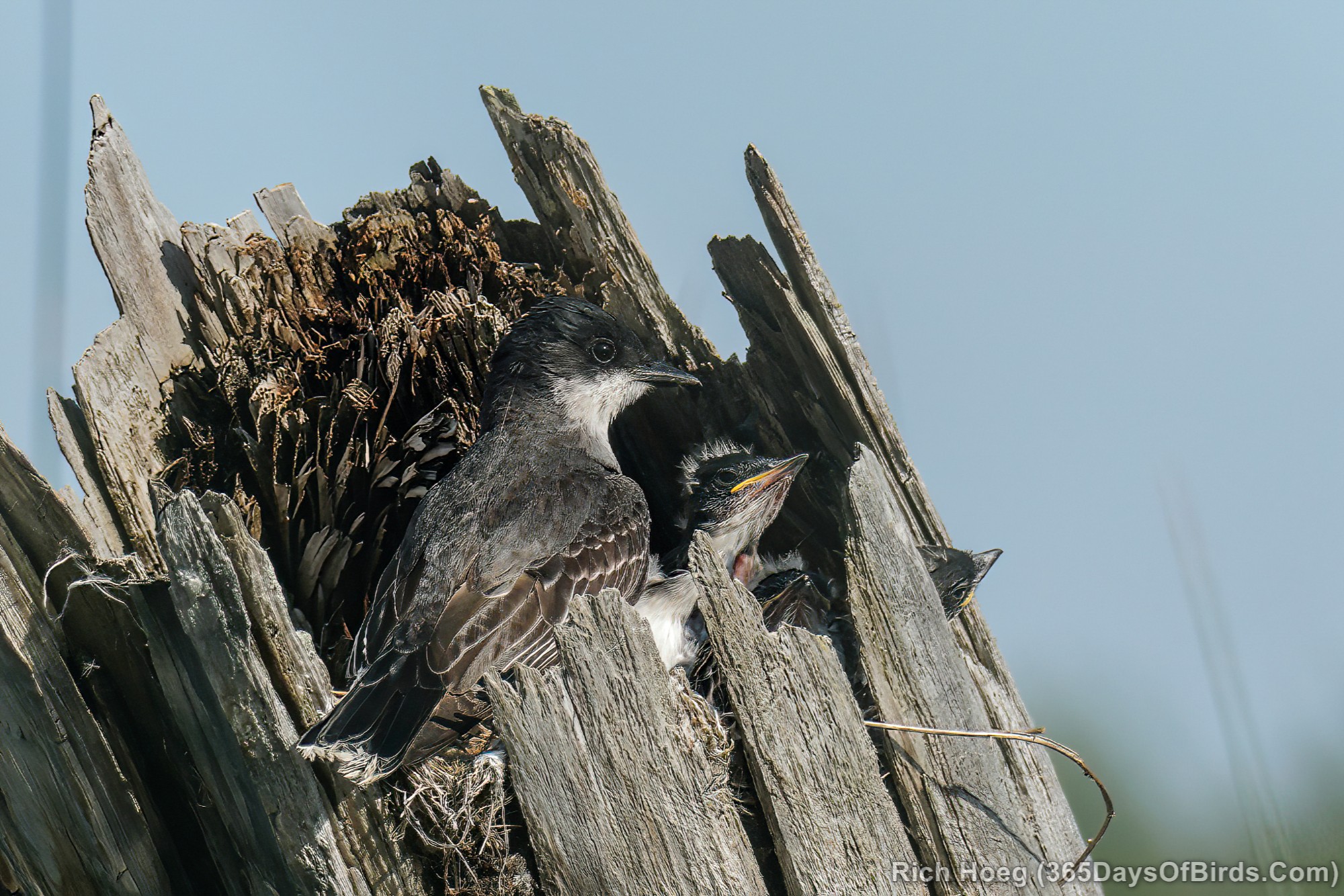
Over the past few days I have been birding MInnesota’s past … Logging Railroads. Two days ago I was up on Toomey-Williams Forest Road which actually is an old logging railroad that was turned into a forest road. As you drive a similar road you will often find ancient railroad ties breaking through the gravel. Well today I kayaked over to Trestle Landing near my cabin on Northstar Lake. I know from experience that Eastern Kingbirds will often nest in the old railroad trestles. This year was no different. Thus, meet the kingbird family of Northstar Lake! Judging by the images and the size of the chicks, these youngsters are quite new to the world.
The Logging Railroad Trestle Habitat
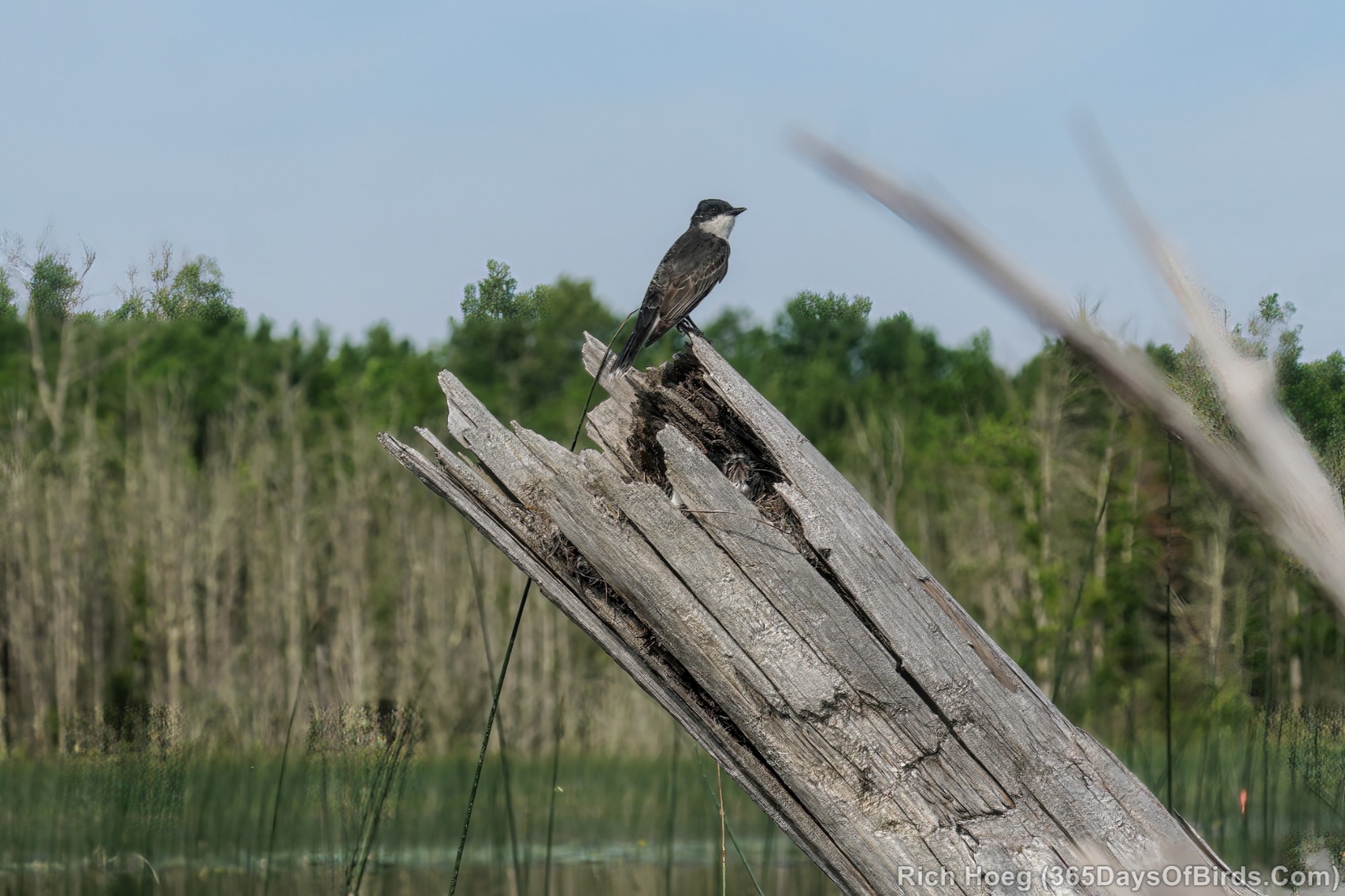
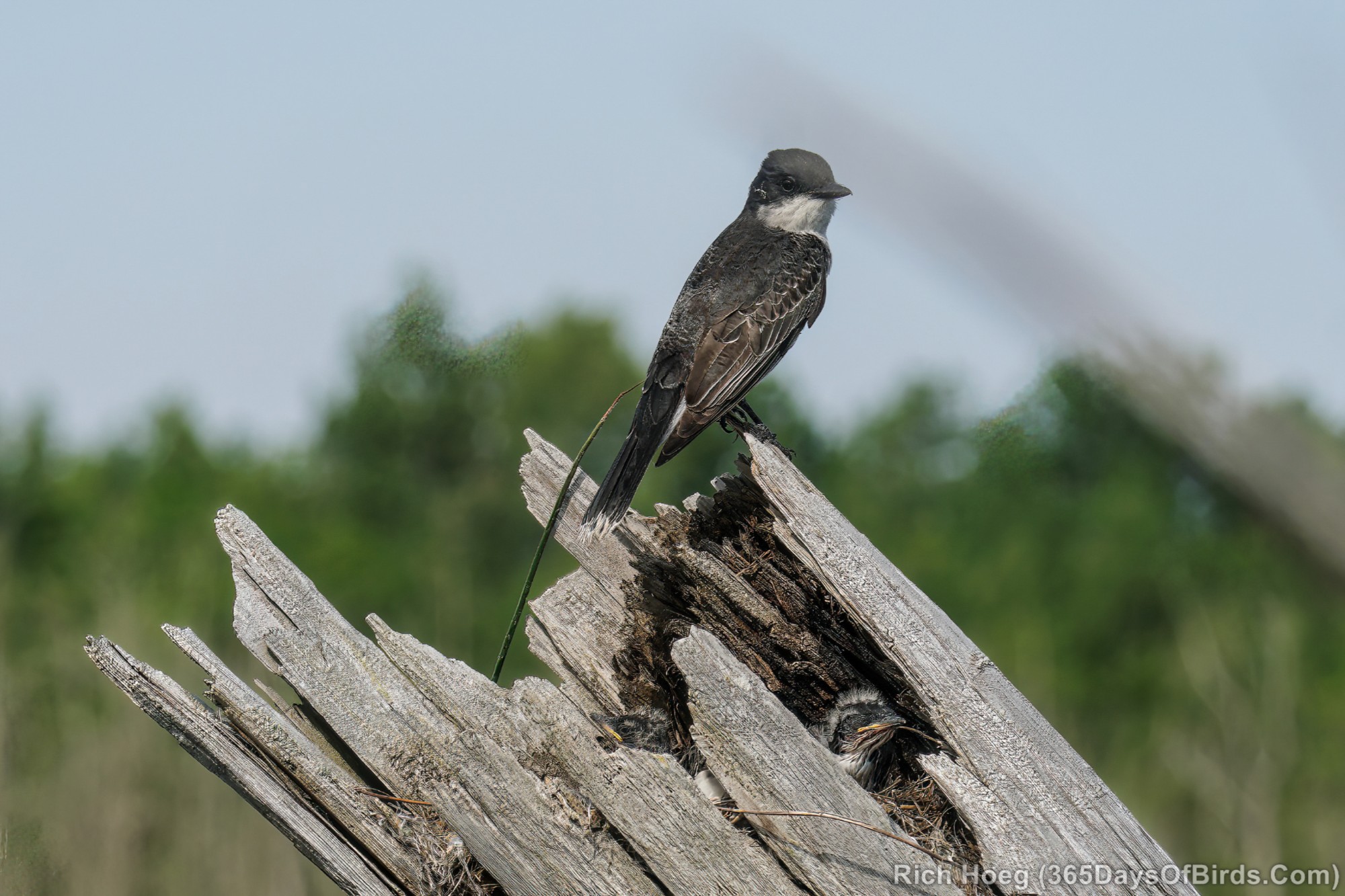
The Eastern Kingbird Nest
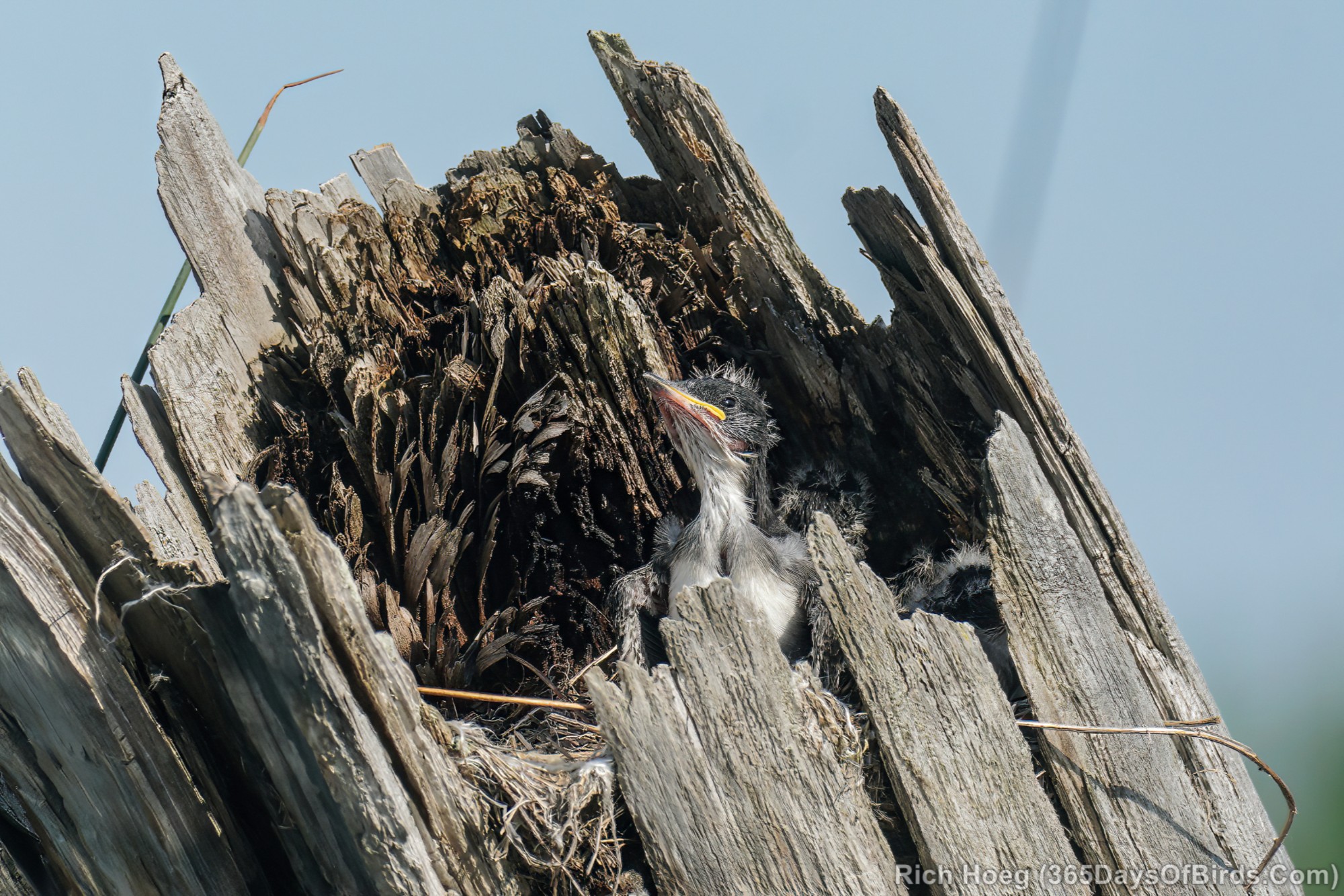
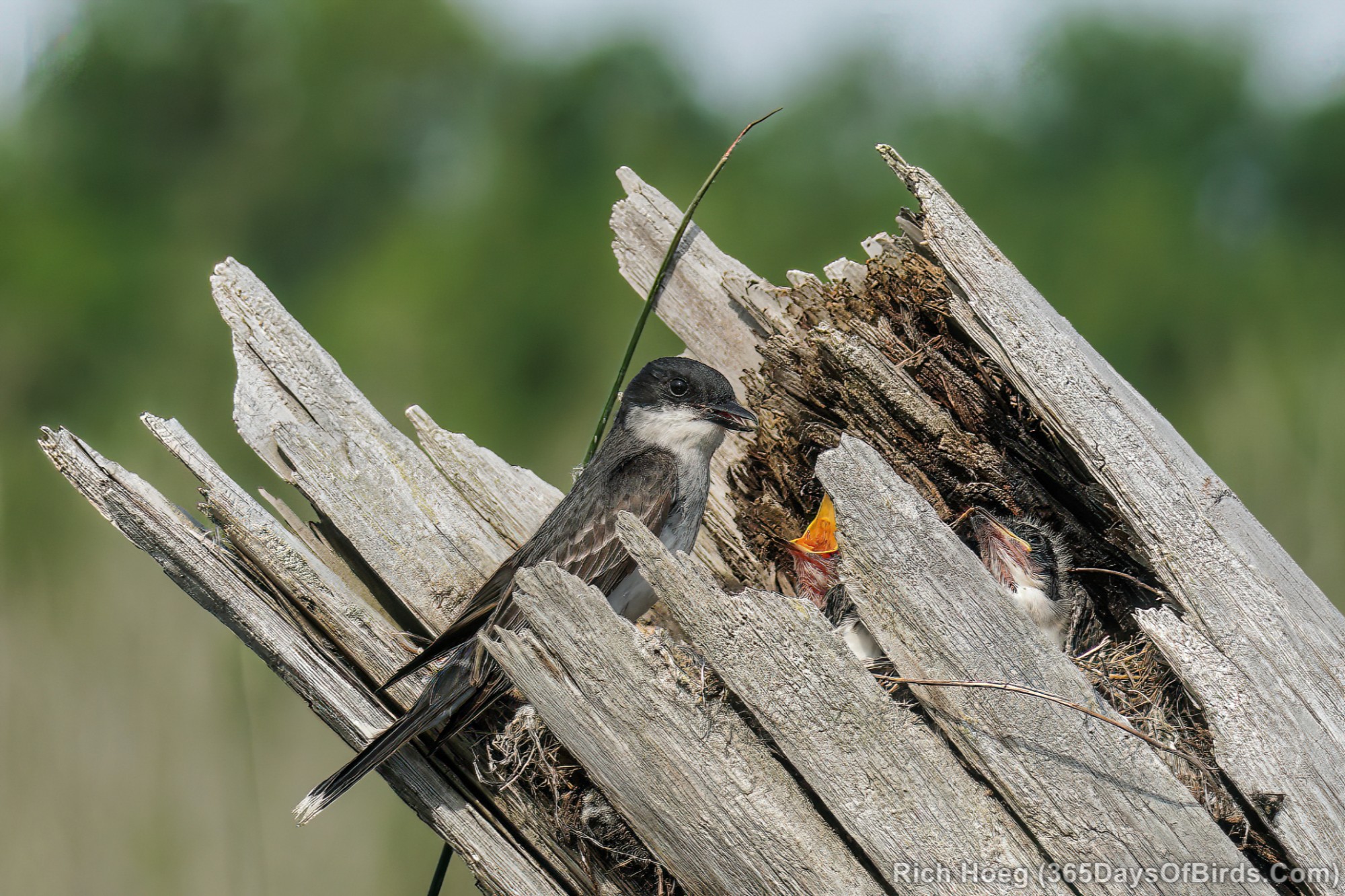
Eastern Kingbirds … the Movie! (video link for email subscribers)
It is worth watching one more super cool video … From stump to ship: A 1930 Logging Film (video link for subscribers). While this video documents the logging industry in the State of Maine, the Minnesota Historical Society and the Forest History Center in Grand Rapids have a short video of the last log drive in Minnesota …. on the LIttlefork River. Worth a watch. The Minnesota log drive took place in 1937 not to far from Northstar Lake and shows the unique history of northern Minnesota logging
Discover more from 365 Days of Birds
Subscribe to get the latest posts sent to your email.
Dear 365: Old NE Mn logging railroad lines? Franklin A. King’s “Logging Railroads of Northern Minnesota” book and map. In particular the map — see 1955 article of same name https://archive.org/details/sim_railroad-history_1955-10_93/page/n123/mode/2up. There are still trestle remains, ties, spikes, and even some rails along 19th-to-20th turn-of-century abandoned lines. Some are county and township roads still in use. Easier to explore in Fall after leaves have dropped and bugs have dropped off.
Very cool. I also found this via Google Gemini …
The railroad trestle at Trestle Landing on North Star Lake was owned by the Minneapolis & Rainy River Railway.The line was widely known by its local nickname, the “Gut & Liver Line”. It operated as a short-line logging railroad under the ownership of the Itasca Lumber Company.Historical Context
The Route: The railway originally expanded north out of Deer River, Minnesota. It branched into several spurs throughout the Marcell and Suomi areas to extract virgin white and red pine during the peak logging boom of the early 1900s.
The Trestle: The wooden trestle across the northern bays of North Star Lake allowed trains to cross the water to reach active timber stands. The remaining timbers are still visible underwater and coming out of the lakebed, creating a historical landmark and an excellent structural fish habitat.
Abandonment: As the area’s timber resources were completely exhausted, the railroad became unprofitable. The “Gut & Liver Line” officially ceased operations and abandoned its tracks in 1932
Since you brought up the subject of logging railroads, here’s a history question for you.
What famous Minnesota landmark was built very near a logging railroad camp that housed 400 loggers, had its own post office and disappeared before construction of the landmark was completed?
Hint: The logs were transported by a 115-foot tug to the company mill.
I am thinking you must be referring to Splitrock Lighthouse?? I know there were log drives that went across Lake Superior to the Ashland area, and about 15 years ago a company was formed to “mine” the bottom of the bay near Ashland for virgin white pine that had sunk. Those logs were worth big money and were worth recovering.
Am I correct? If so if you have a link from one of the historical societies, please add it here!
Rich
It was indeed the Split Rock Lumber Co. that operated the railroad. The founding family, the Merrills, were Huguenots who escaped the blood letting in France, cut their way through Maine, Michigan, Wisconsin and the Split Rock River watershed before moving on to the Pacific Northwest. (They finally learned to plant trees out there.) They owned the second largest lumber mill in Duluth when Duluth led the nation in lumber milling.
I’ve pieced the history together from many sources, as part of my (so far unrequited) plan to construct a diorama depicting the operation. Here’s a brief historical account that only hints at the story:
https://www.facebook.com/splitrocklighthouse/posts/logging-at-the-split-rock-riverif-youve-ever-driven-on-highway-61-over-the-split/1314247847417253/
Superb! Thanks for the information, your work and links!