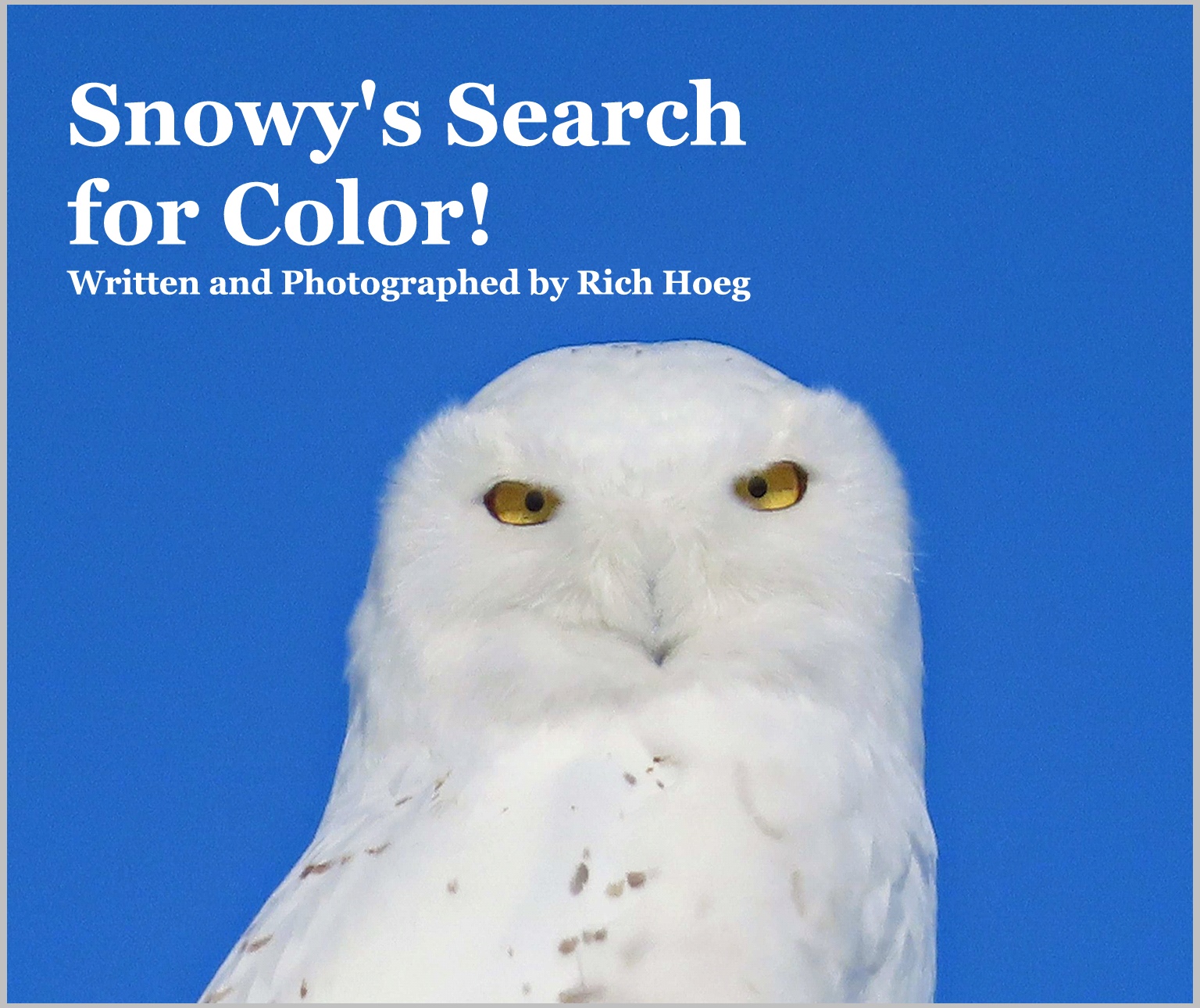
My goal in writing about birds and photographing them for children’s books has always been to increase the joy and enjoyment of nature for families. It has never been to make money. This morning I paid the sales tax bill for last year, and closed the account on last year’s sales. While certainly not required, I wanted to update folks on my children’s book sales financial results.
.
Net financial gain over the past two years … 2019 and 2020 (Snowy’s Search for Color and Do You Hoot?): $180.
.
I have taken ZERO money out of my book account for myself. All proceeds have been used to pay for publishing, shipping and taxes. I am certain the $180 gain will be put towards future book expenses.
Books Given Away at no charge (PDF copies): 633 copies
Printed versions of books sold: 366 copies
Total books sold or given away: 999 copies
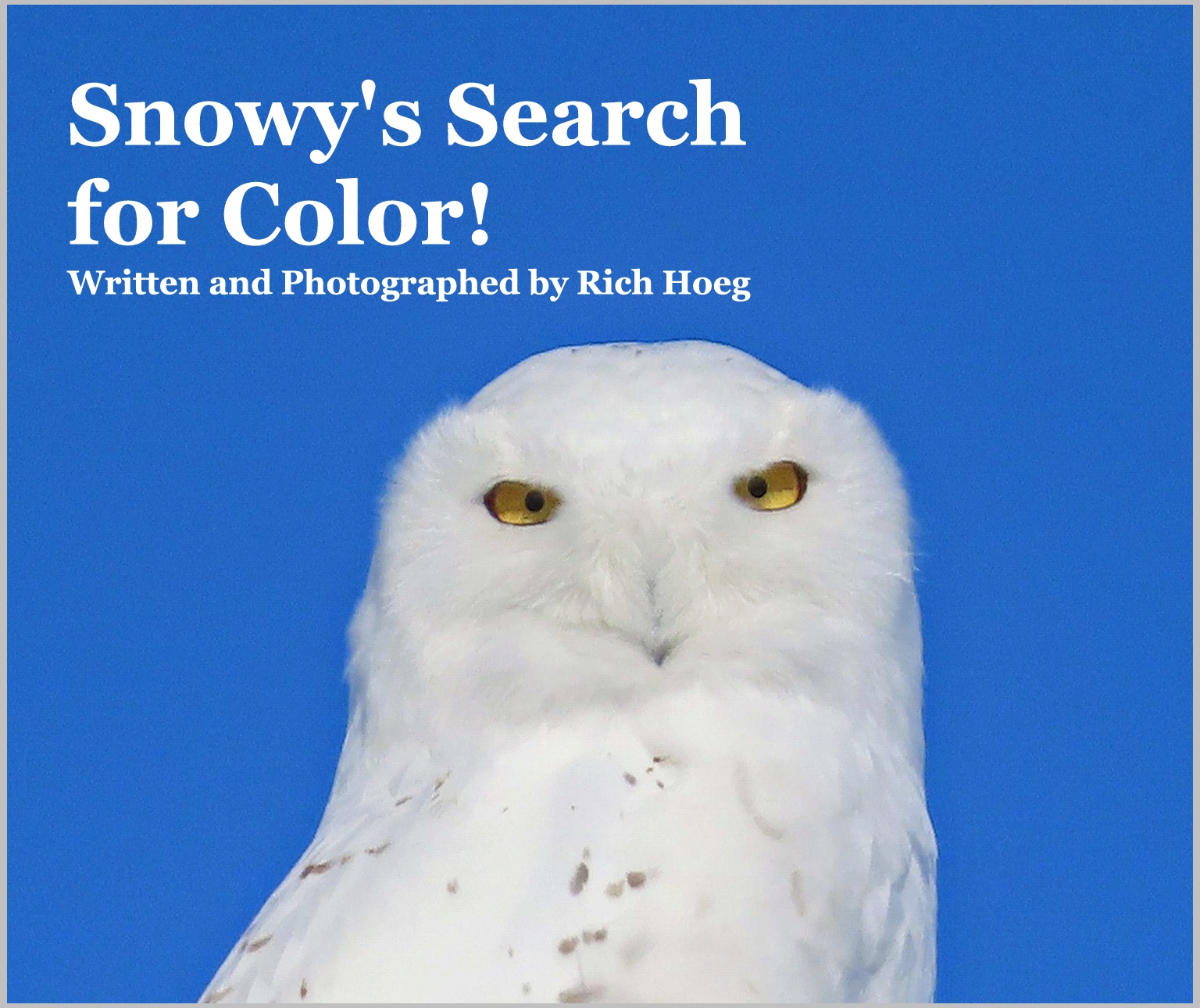
Thus, you can see this effort is not a “get rich scheme”. If you would like to download a free PDF copy of any of my birding children’s books and perhaps obtain the 1,000th copy, please follow this url. Thank you. (direct link: Snowy’s Search for Color)
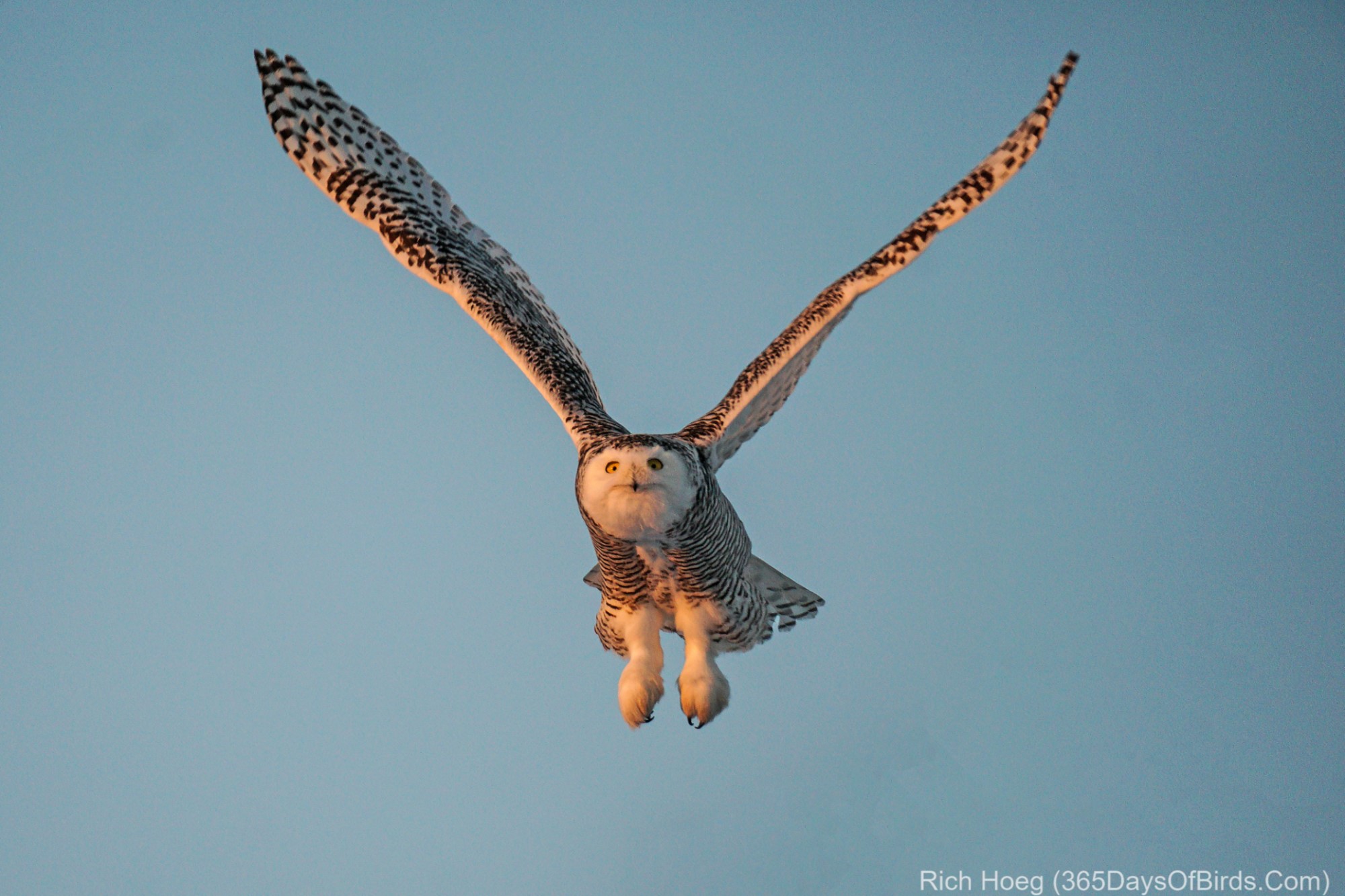
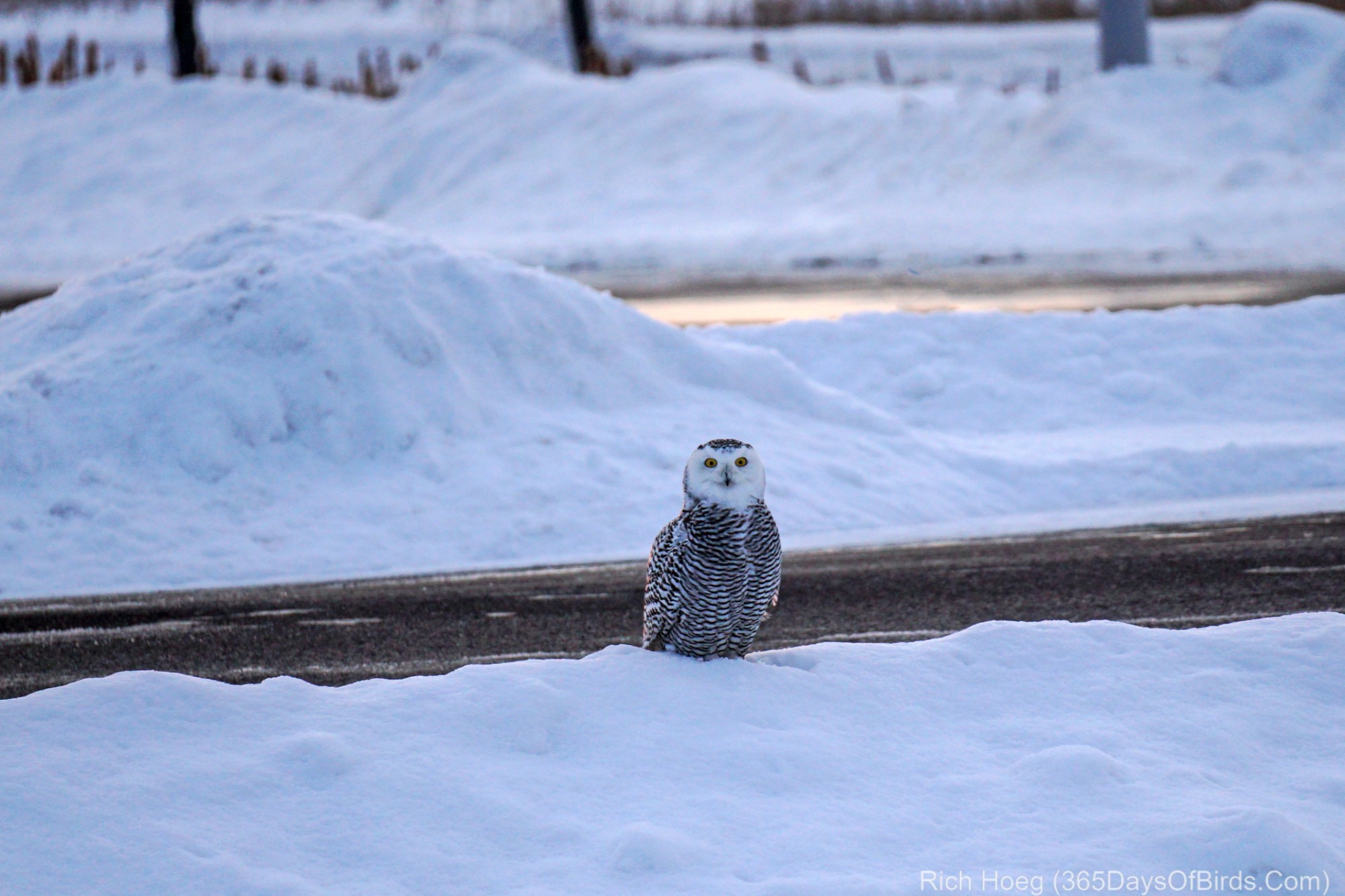
It was a great early evening for education! Classes are back in session at the Superior Middle School, and one of our winter visitors, a female Snowy Owl, decided to put on an educational show at sunset. It was fun talking to various teaches, explaining facts about Snowys, as the owl began its evening hunt. This post is not only for my regular readers, but also for the kids at Superior Middle School. Enjoy!
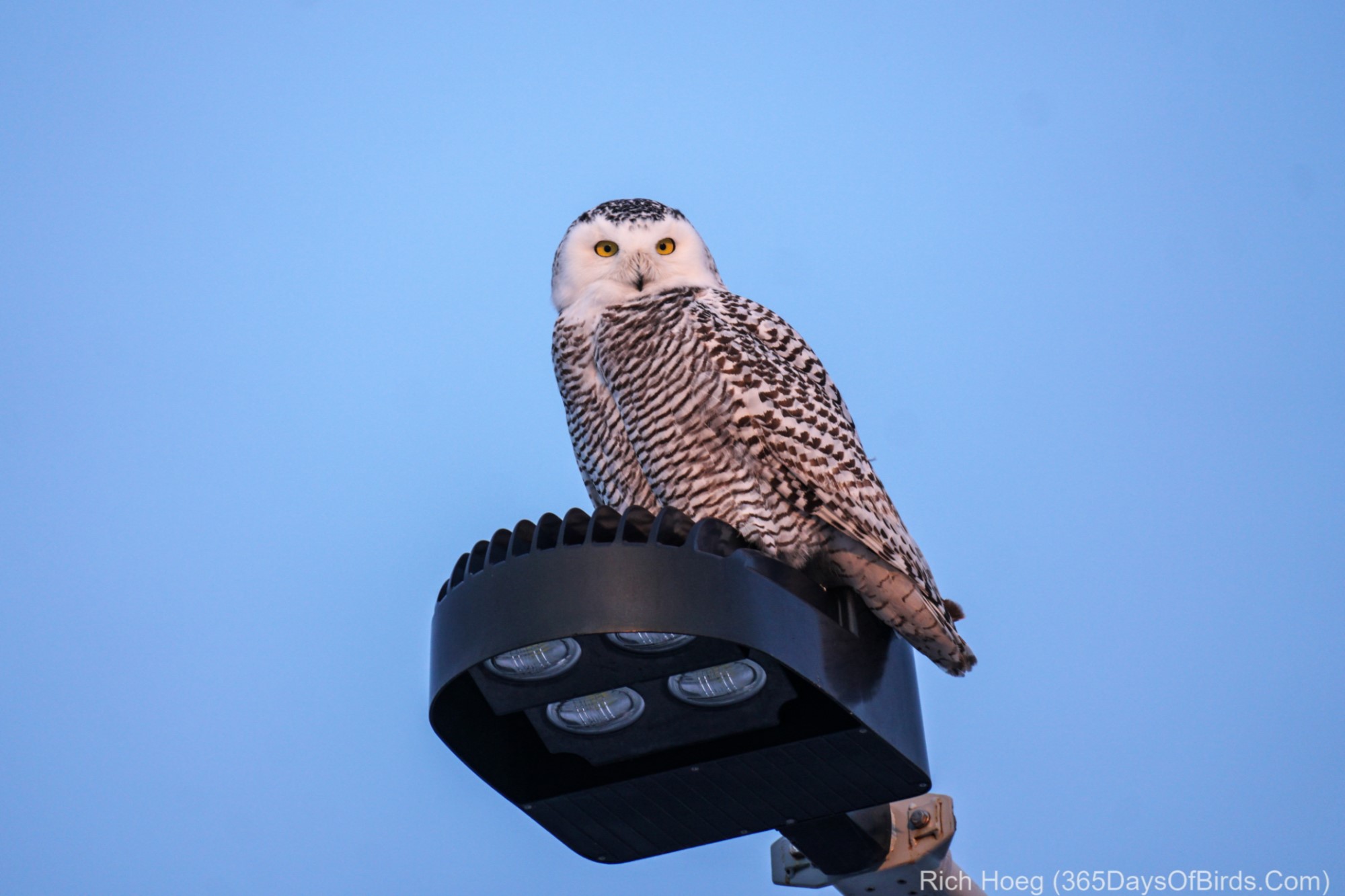
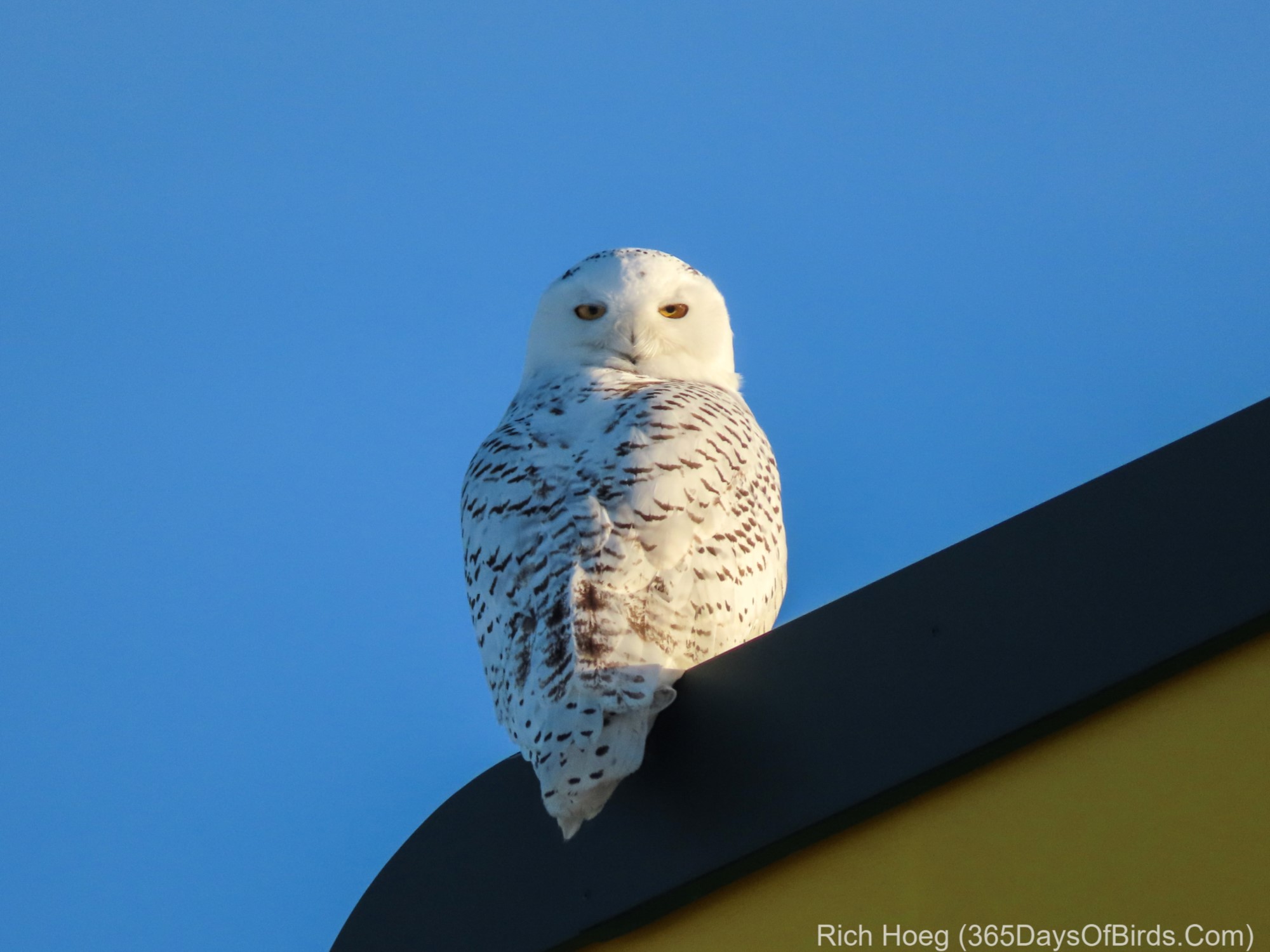
Last night’s owl on a light pole near the front door of the school.
Every winter the Duluth / Superior area is visited by Snowy Owls. These birds migrate down from their summer breeding grounds on the tundra near the Arctic Ocean. Most of the birds that winter on the Arctic Riviera (i.e. here!) are immature birds three years old or younger. These owls are not yet proficient hunters, and our “mild winters” are easier than up north in the Arctic! Mature Snowys actually stay north, through the long 2 month long period when the sun never rises, hunting in the dark (primarily sea ducks and lemmings). In fact Snowy Owls are known to enjoy ice rafts (miniature ice bergs). They will spend days hanging out, drifting on the ice, with short flights to catch unsuspecting sea ducks.
Snowy Owls arrive at the Head of the Lakes normally between December 1st and the first week of January. During “irruption” years Snowys arrive as early as November 1st. The Snowys stick around till early March. From this time forward the owls make “short flights” (50 to 100 miles per night) around the region as they strengthen their wing muscles for the upcoming trek north. By the 1st of April most Snowys are migrating north.
During January and February Snowys establish winter hunting territories, and will defend that area from other raptors, including Snowys. The Middle School bird has chosen your building as a good hunting spot. Its proximity to the airport, fairgrounds, industrial area, and train yards make for good hunting. In fact, all this open land (fewer trees) reminds the owls of the tundra. The Duluth / Superior Area is one of the first regions these Snowys reach during their southern migration through the Boreal Forest. Snowy Owls hunt by sight, and prefer wide open spaces like the tundra (no trees). They will not survive as hunters in the forest.
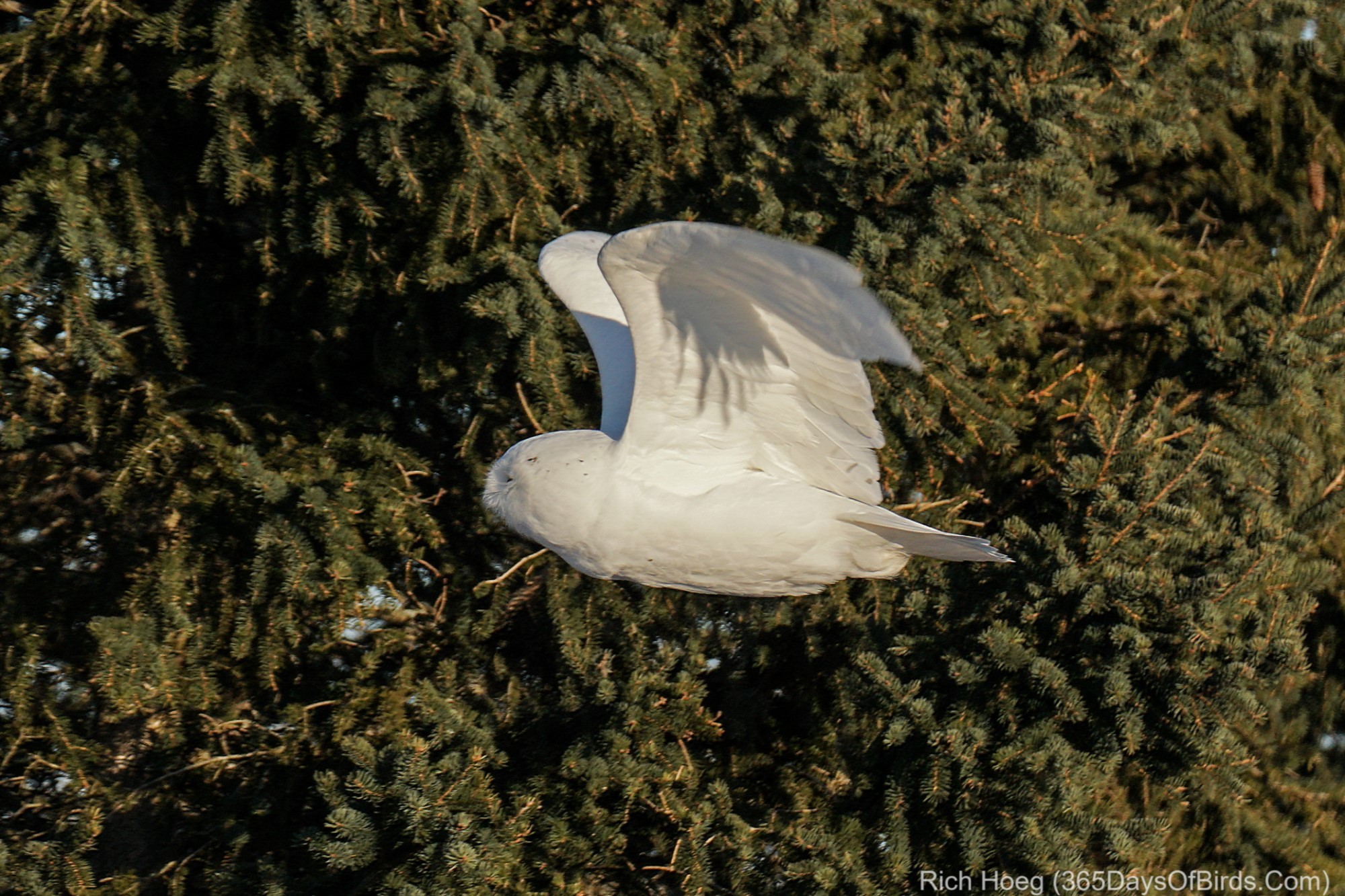
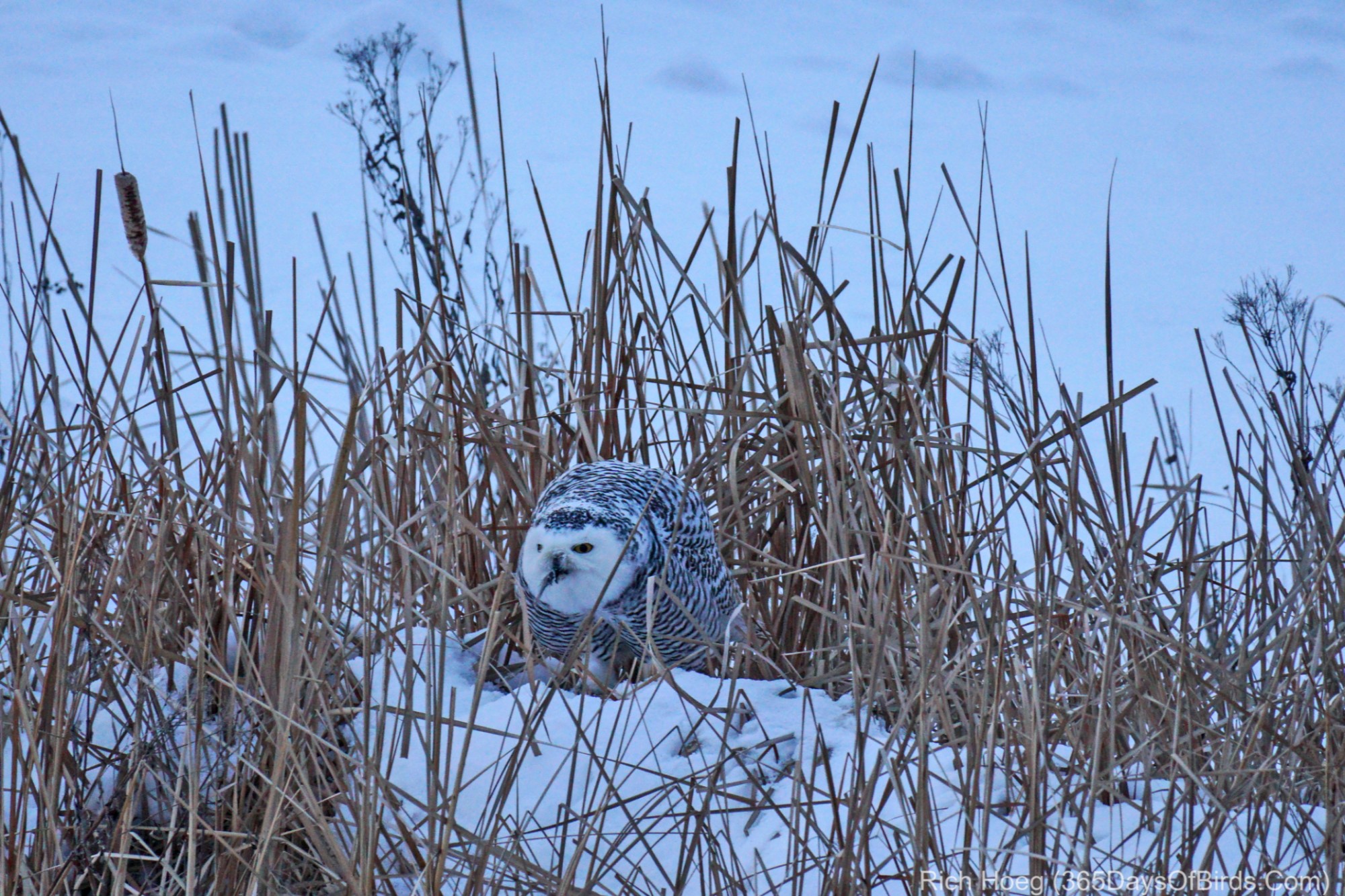
Female and immature males, which spend more time of the ground than mature males, have black feather bands. This camouflage feature allows them to better blend in against the tundra. During the nesting season females do all the incubating / brooding, and males do all the hunting till the young are able to walk around a bit on their own. Mature males are almost pure white which helps them blend in against the snow and clouds, a useful feature when hunting. A few weeks ago I watched a mature male near Sax-Zim Bog. Browse to this post to see more images of a male. You will be able to compare against this female.
Here is a photo I took of the Middle School Snowy about one week ago. Compare the differences (see the blog post with more flight images)
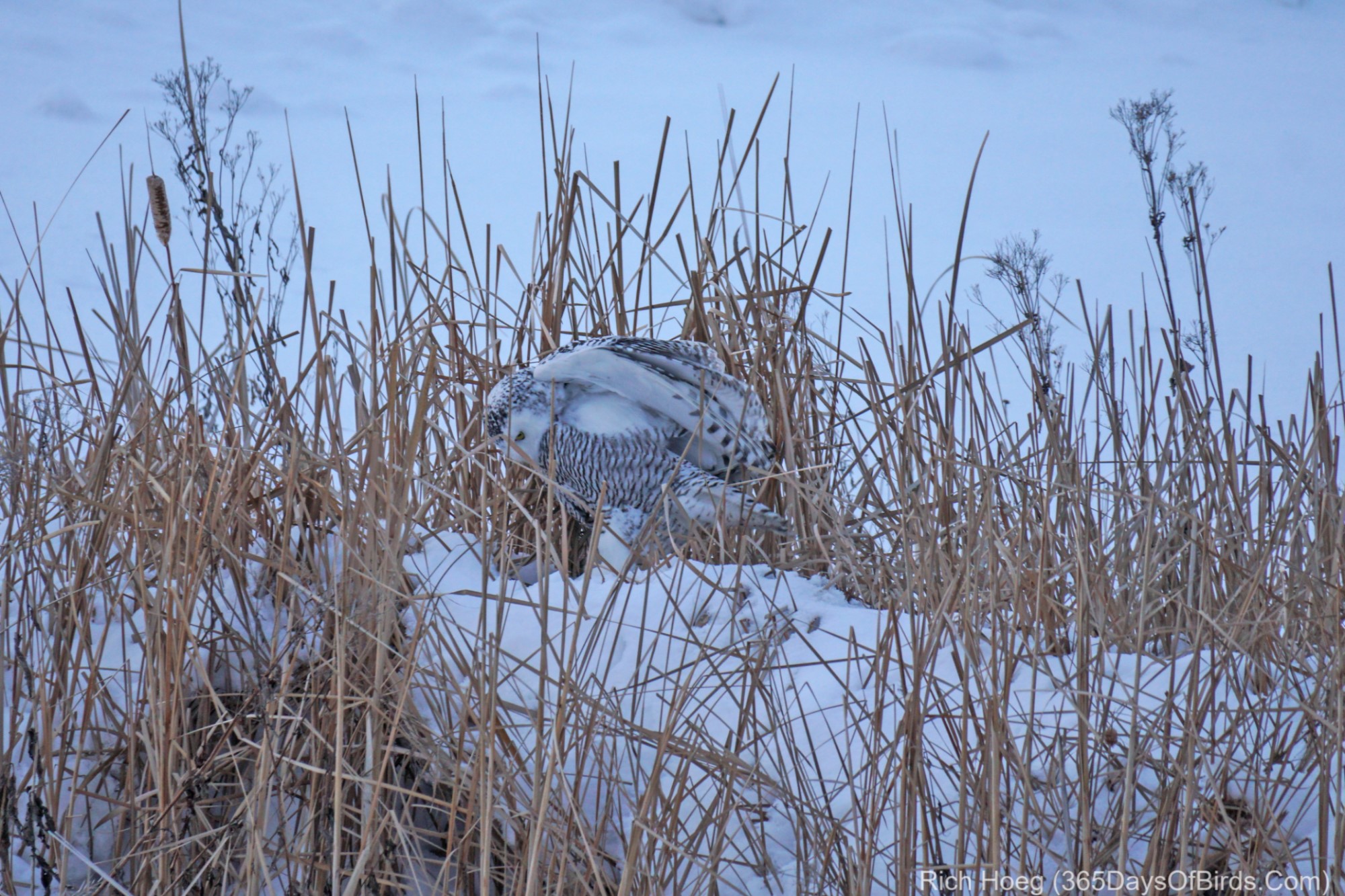
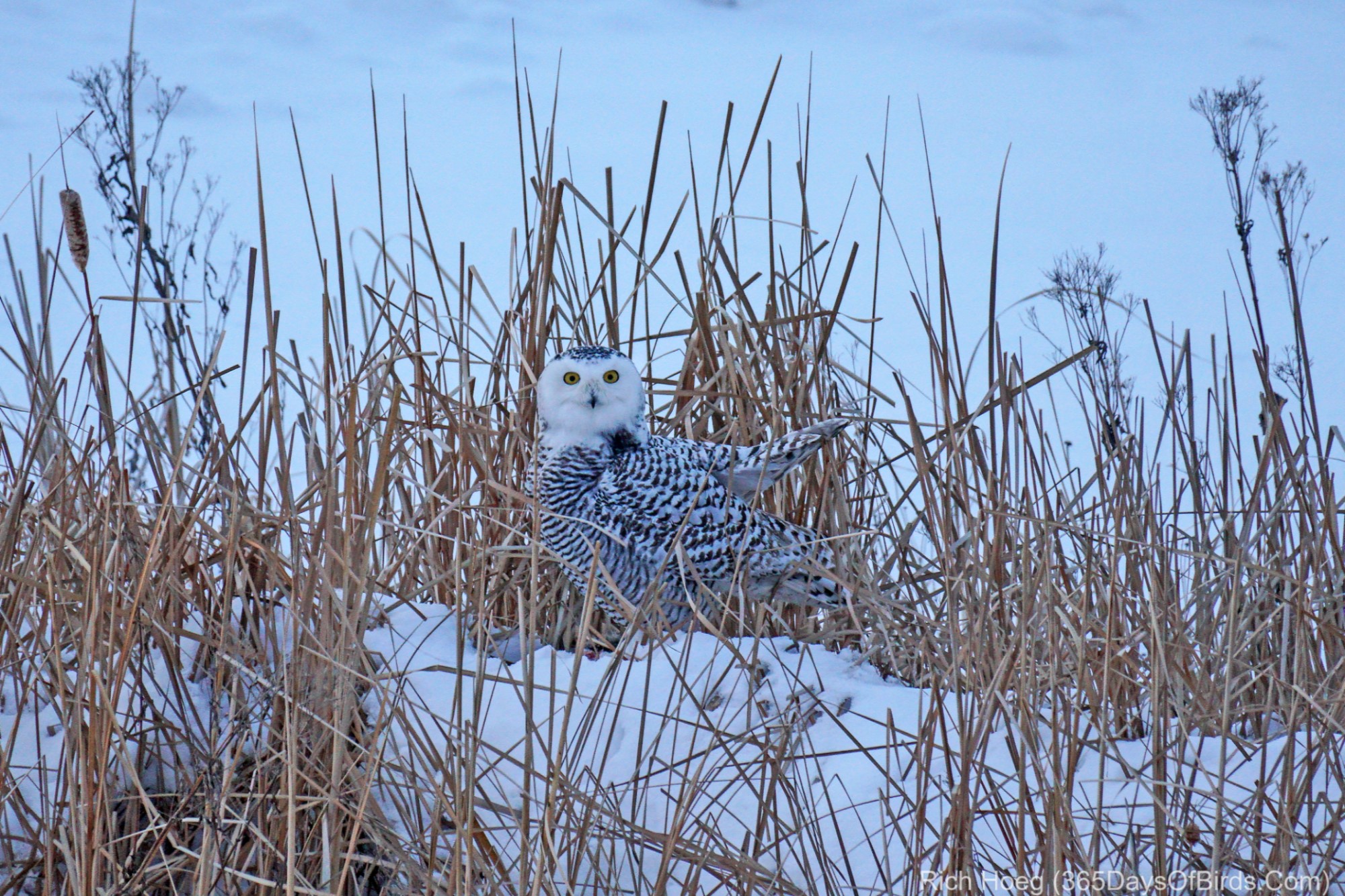
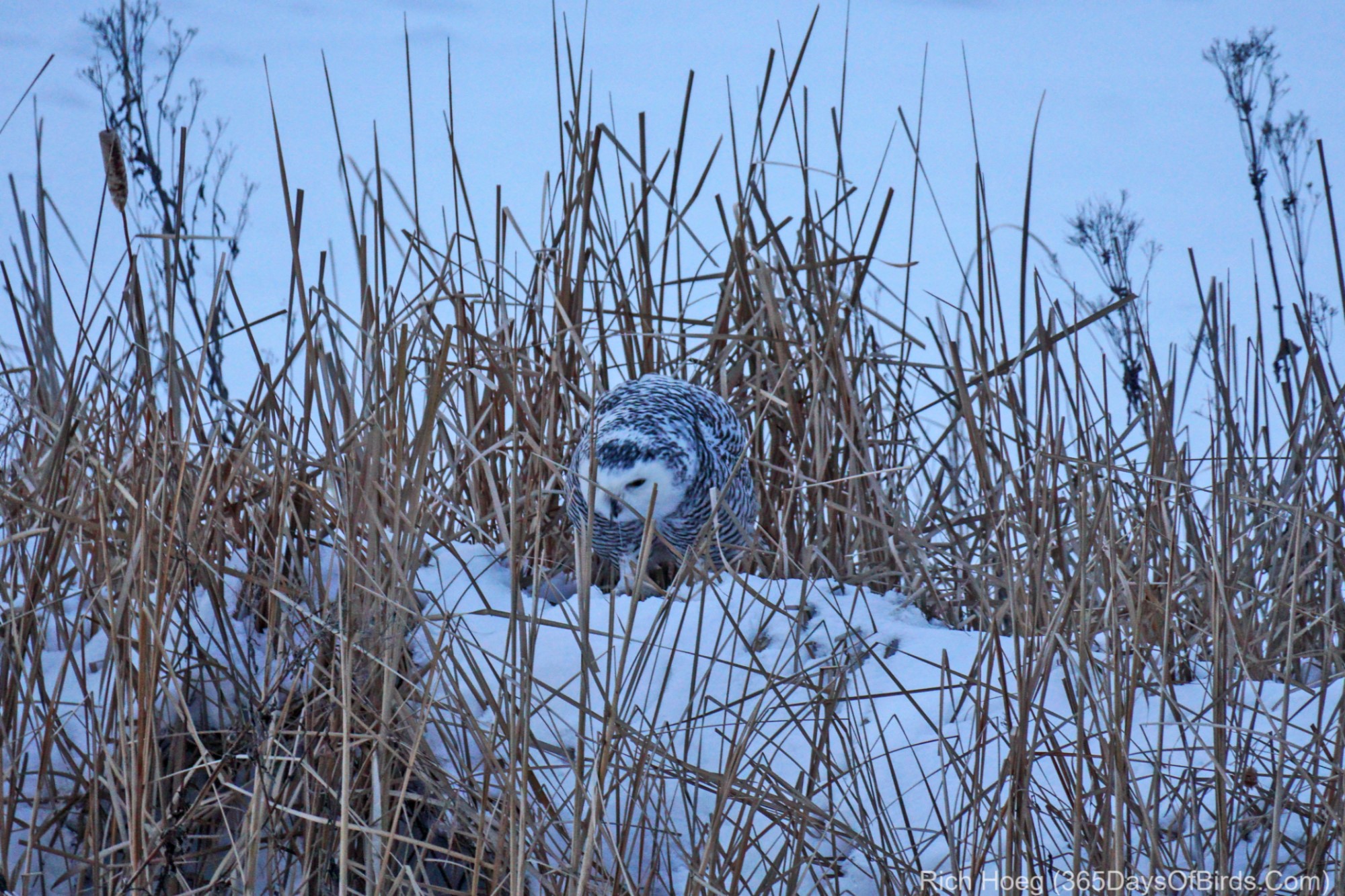
One of yesterday’s highlights was seeing your Snowy make a successful kill in the small wetland just in front of the school. I hope you enjoy the pictures of Snowy having its supper. I’m not certain what it caught, but definitely something larger than a mouse or vole.
Snowy Owls will prey upon ducks and mammals as large as rabbits. By weight Snowy Owls are one of the largest owls in the world. Many owls are native to our region. Just north of Duluth Great Gray Owls roam the forest bogs (learn more via an earlier post). I am actually a volunteer naturalist at Sax-Zim Bog 40 miles north of Duluth. Via this post I grant the staff and students of the Superior Middle School a non commercial license to use any content (writings, images, and / or videos) found on my blog without charge, but credit is required back to me and my web site in the following manner: Rich Hoeg (365DaysofBirds.Com) (must include my name and an active link when online and include my name and web address as text when offline).
In summation, here are two of my favorite Snowy Owl research organizations. I am also a donor to these organizations:
Finally, I am also an children’s book author! Would you like a free full version PDF download of my book: Snowy’s Search for Color? Follow this link. This book was a finalist for the University of Minnesota’s Northeastern Minnesota Book Award. All the Snowy Owls featured in this book were photographed in Superior or NE Minnesota.
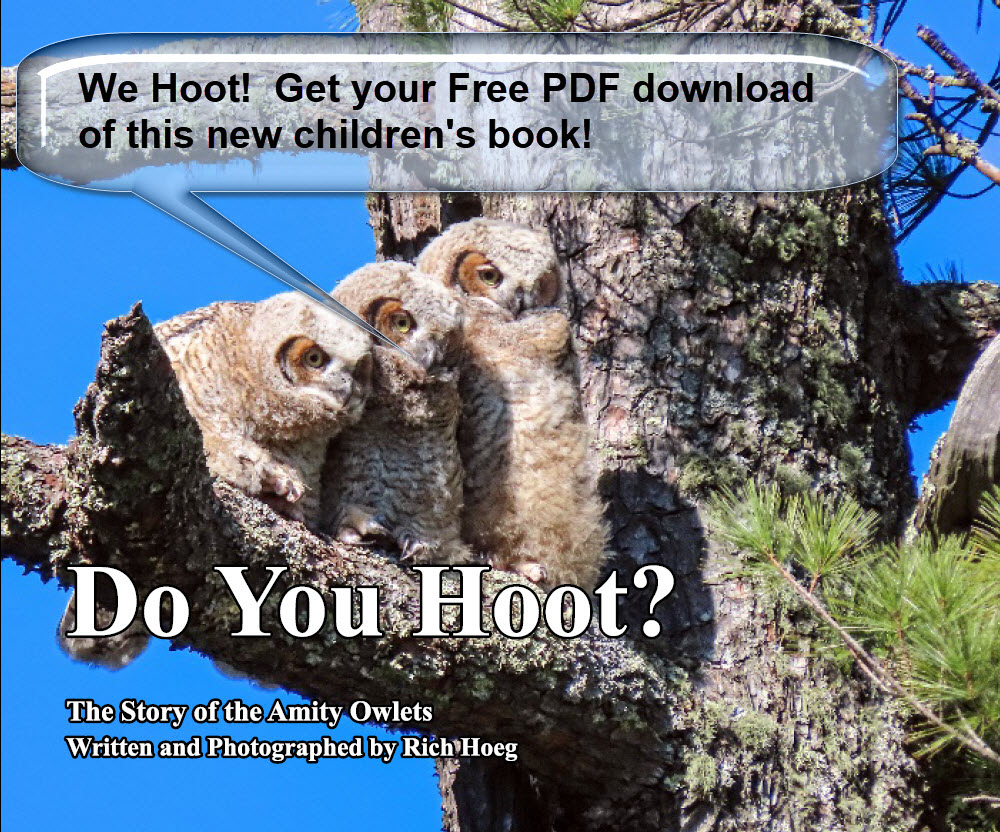
My latest book, Do You Hoot?, follow the early lives of thee Great Horned Owlets which grew up near my house at the northern edge of Duluth last Winter / Spring / Summer. A free PDF download is also available. Use this link.
I’ve been spending a lot of time up in the Superior National Forest for many reasons. The Hoar Frost has been dumbfoundingly beautiful for over a week, and there are quite a few Gray Gray Owls. Unfortunately for the first time since well before Christmas the temperature rose above freezing … melting hoar frost and snow off pine trees. The artist in me was in love with the conditions. However all good things must end.
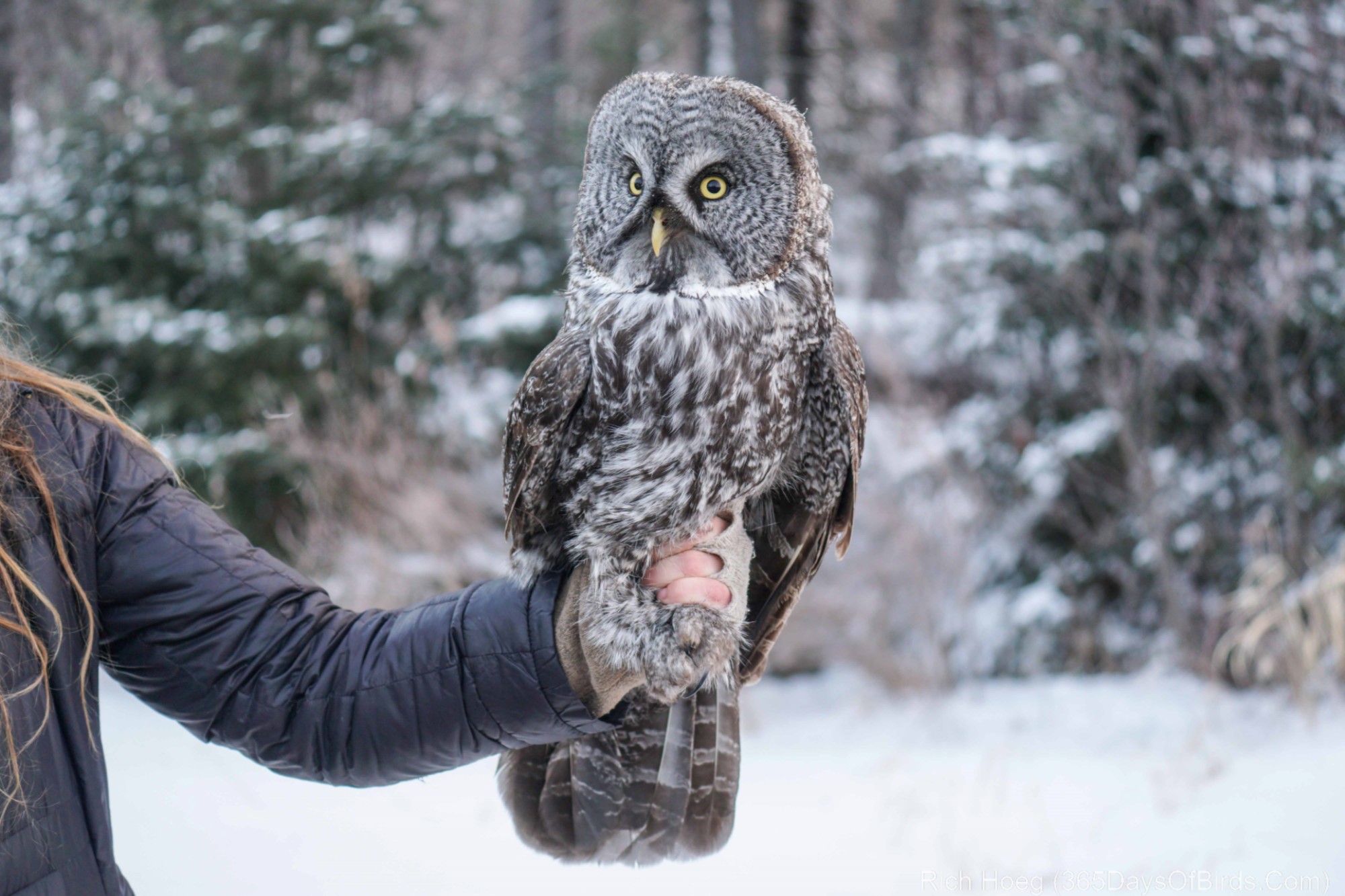
Early yesterday morning I came across some friends who were banding a Great Gray Owl. I appreciate their research. It was fun to touch the owl … look at its ears … and count wing bands to determine age. The owl was also checked for general health (good) and many other items which were all recorded. A Great Gray Owl has an amazing amount of down, which is required to survive our northern winters where temperatures may fall below -20F.
Here is the subject of the banding effort … a 3rd year female.
You might also enjoy this video (link for email subscribers) of Denver Holt from the Owl Institute as he bands a Great Gray Owl family in much warmer conditions. The Owl Institute does great research and I am personally a donor.
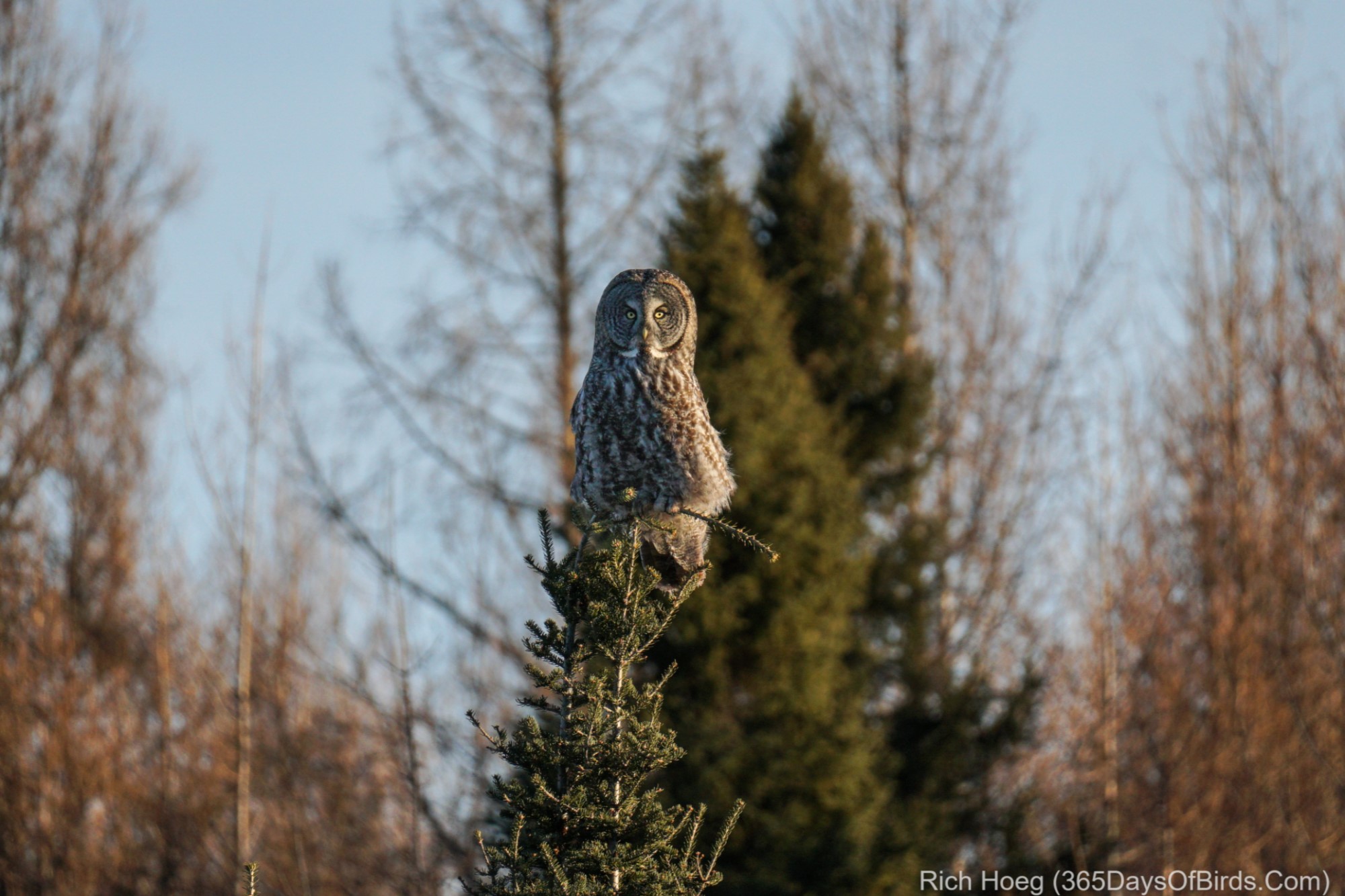
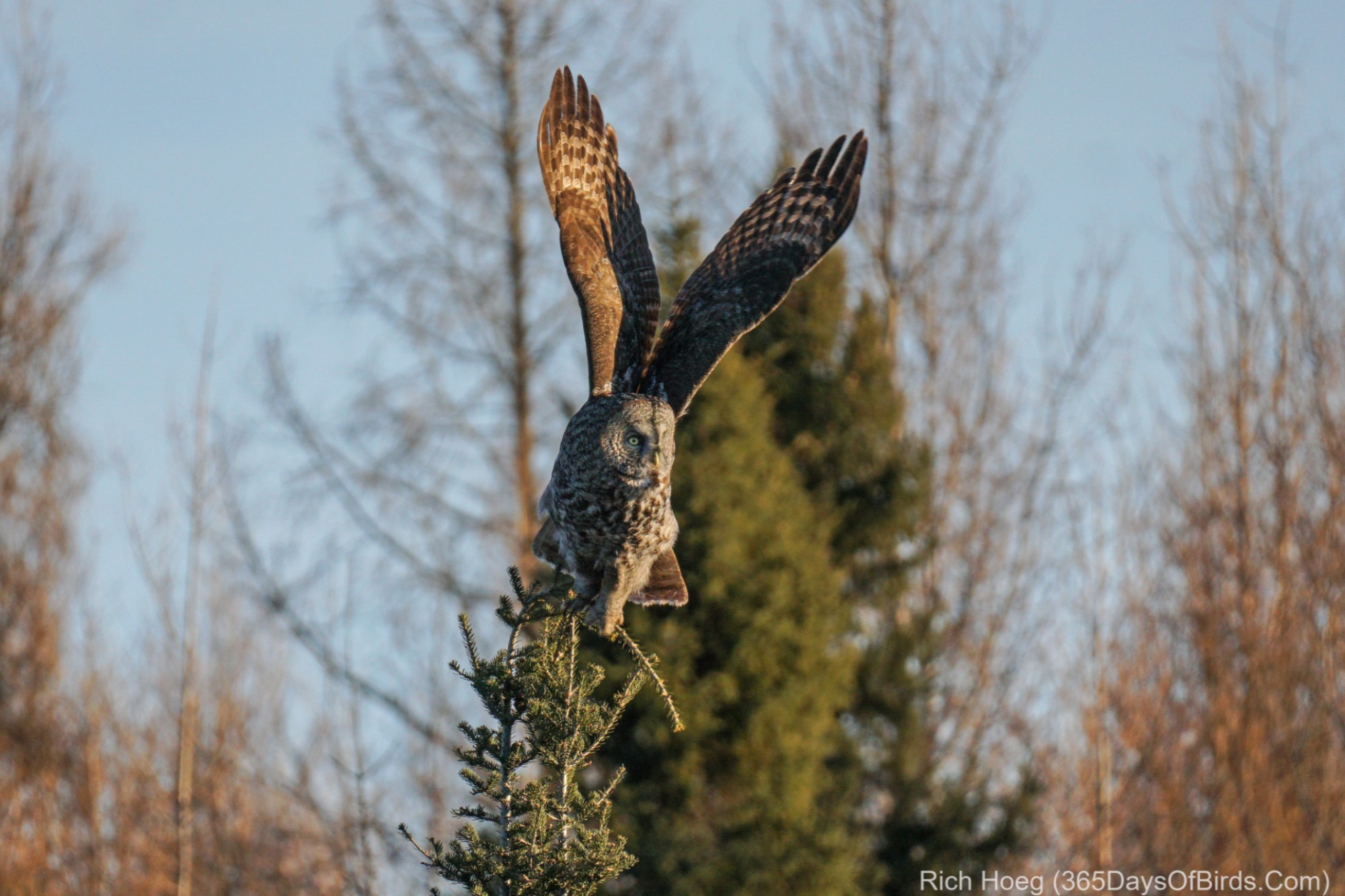
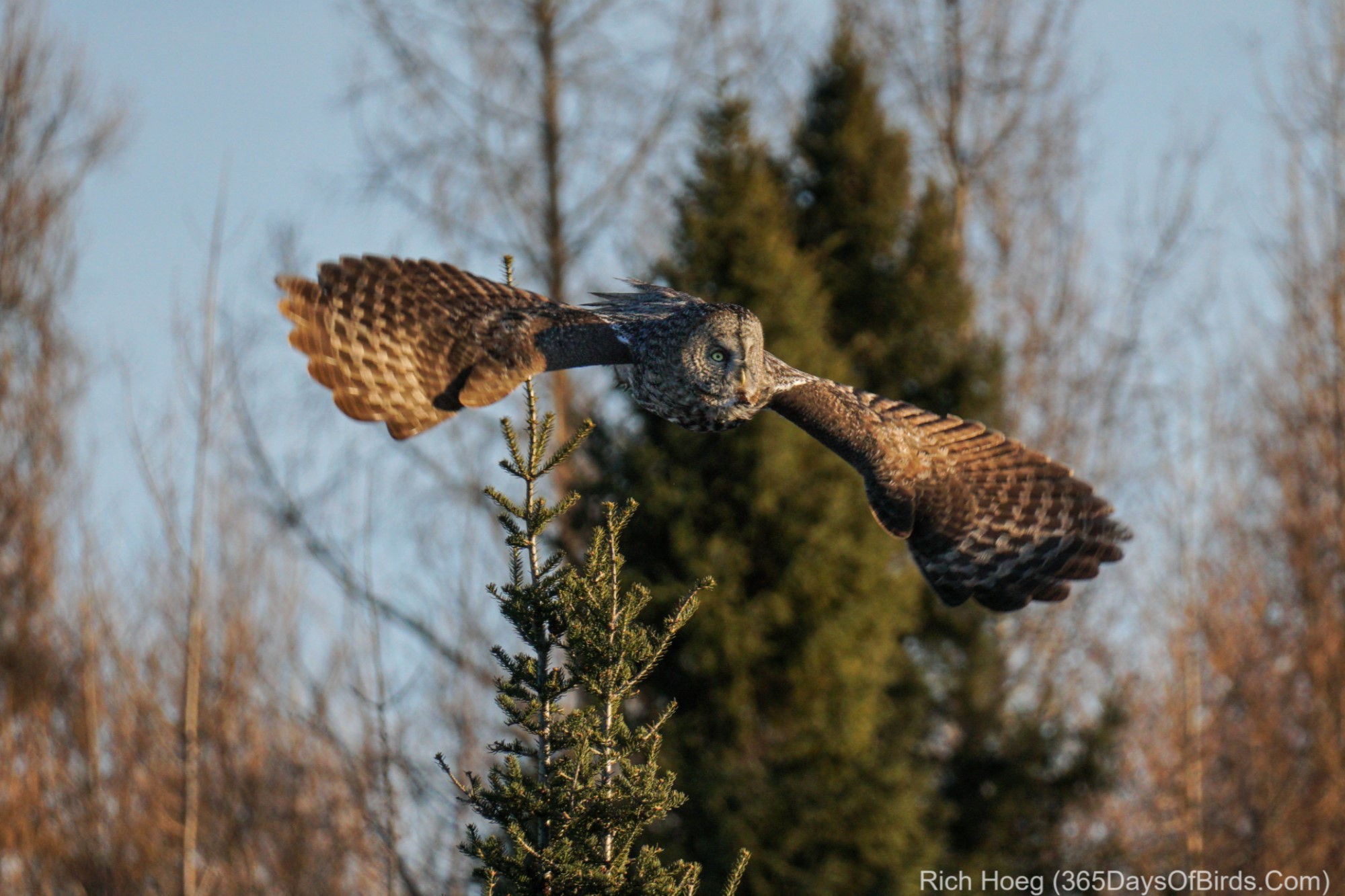
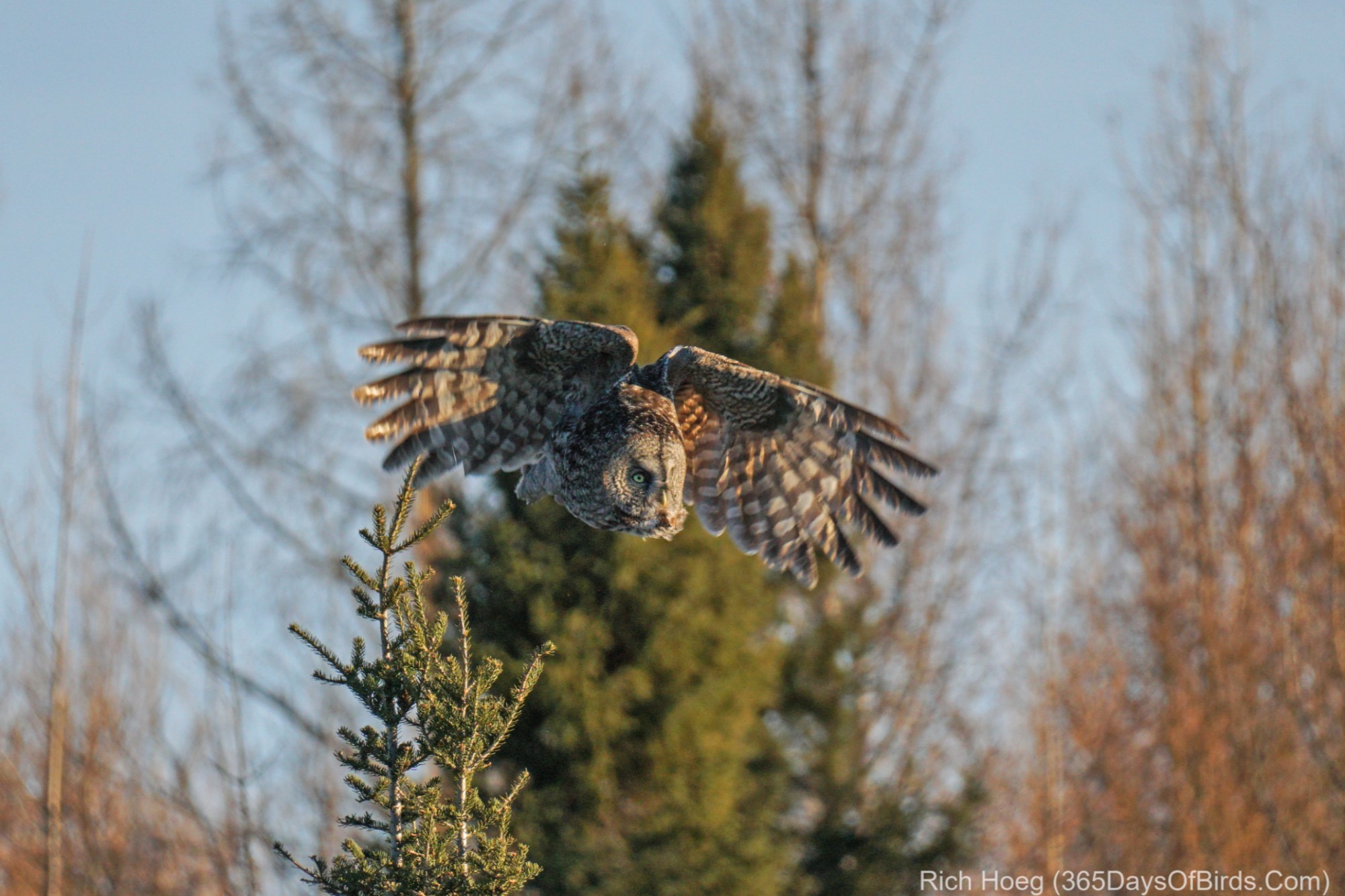
In total over the past two days, I have seen 10 unique owls … 8 Great Gray Owls and 2 Snowy Owls. The images below unfortunately were taken without hoar frost. Either the birds were not cooperative with their perches, or it was in the afternoon after the frost had melted. Still a great time!
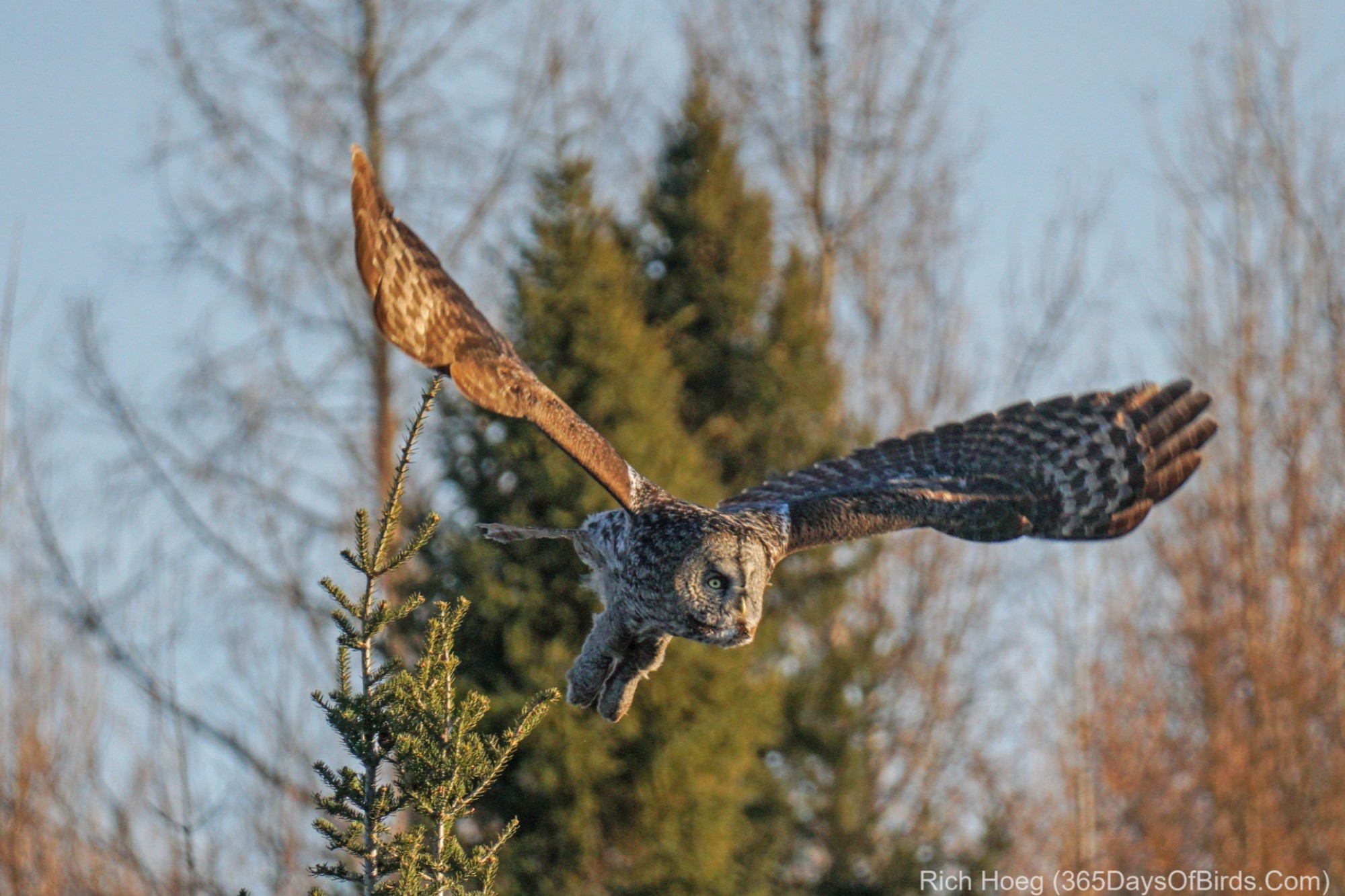
Hunt #1: Great Gray Owl Sunset Hunt
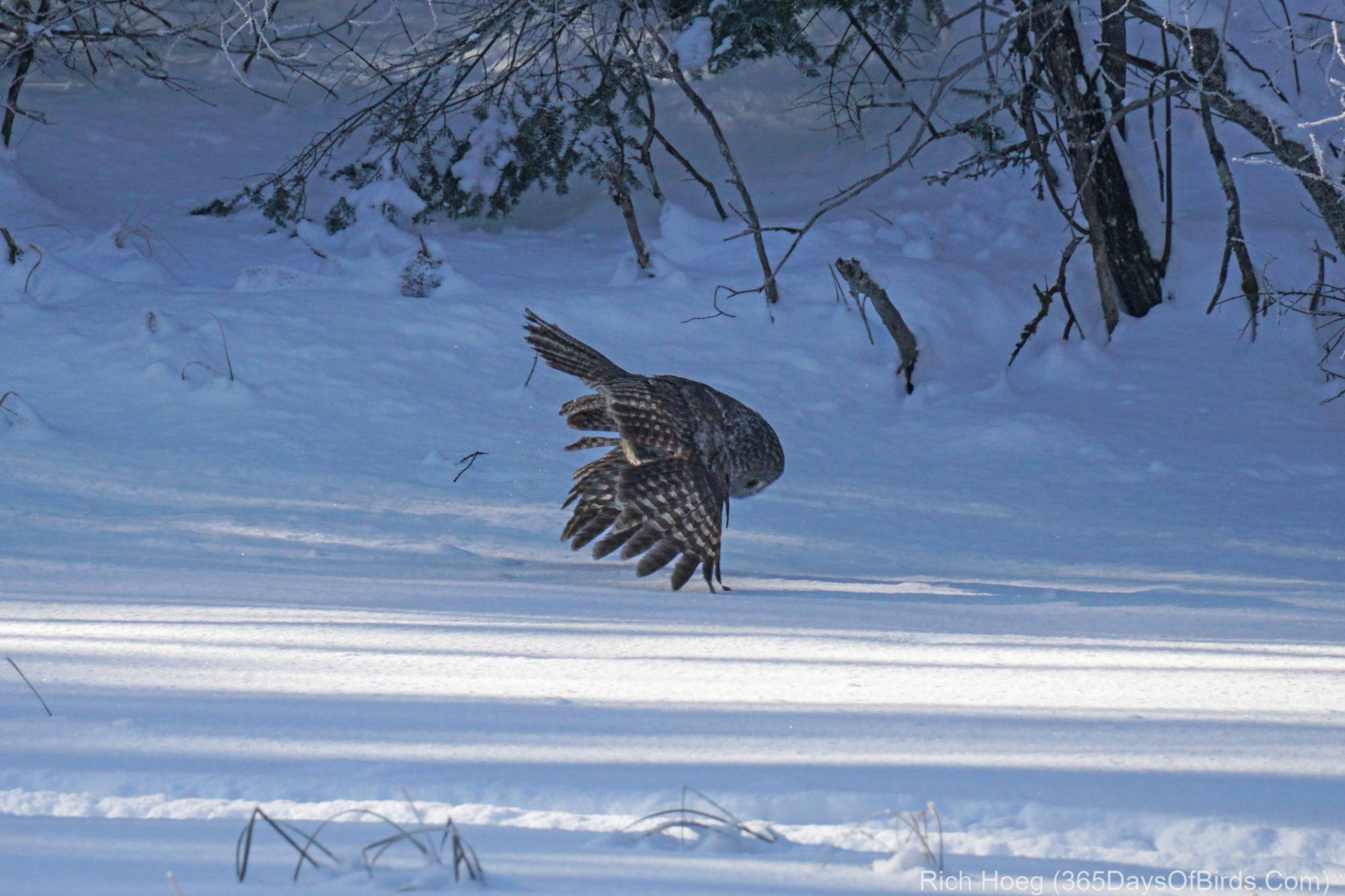
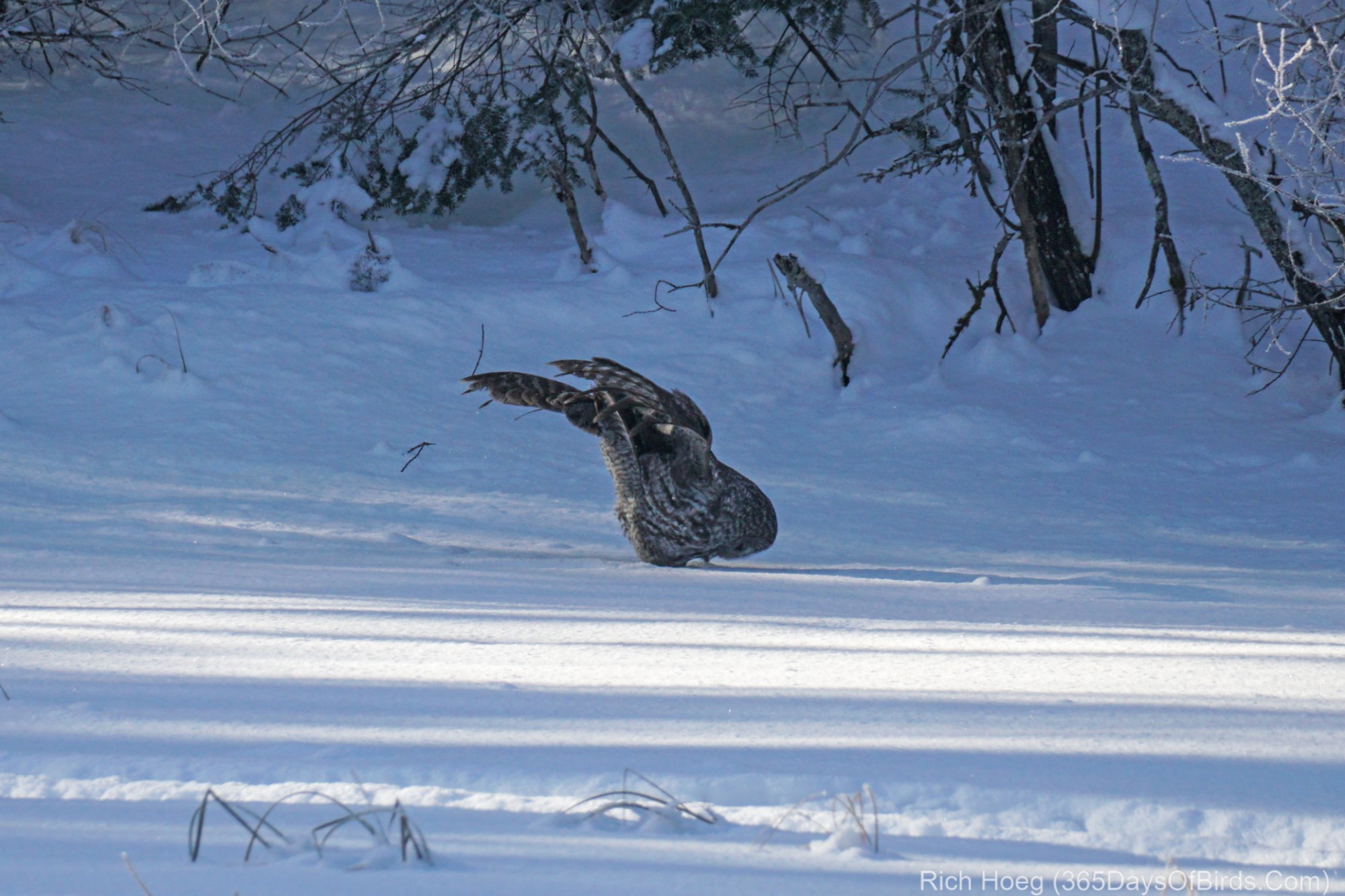
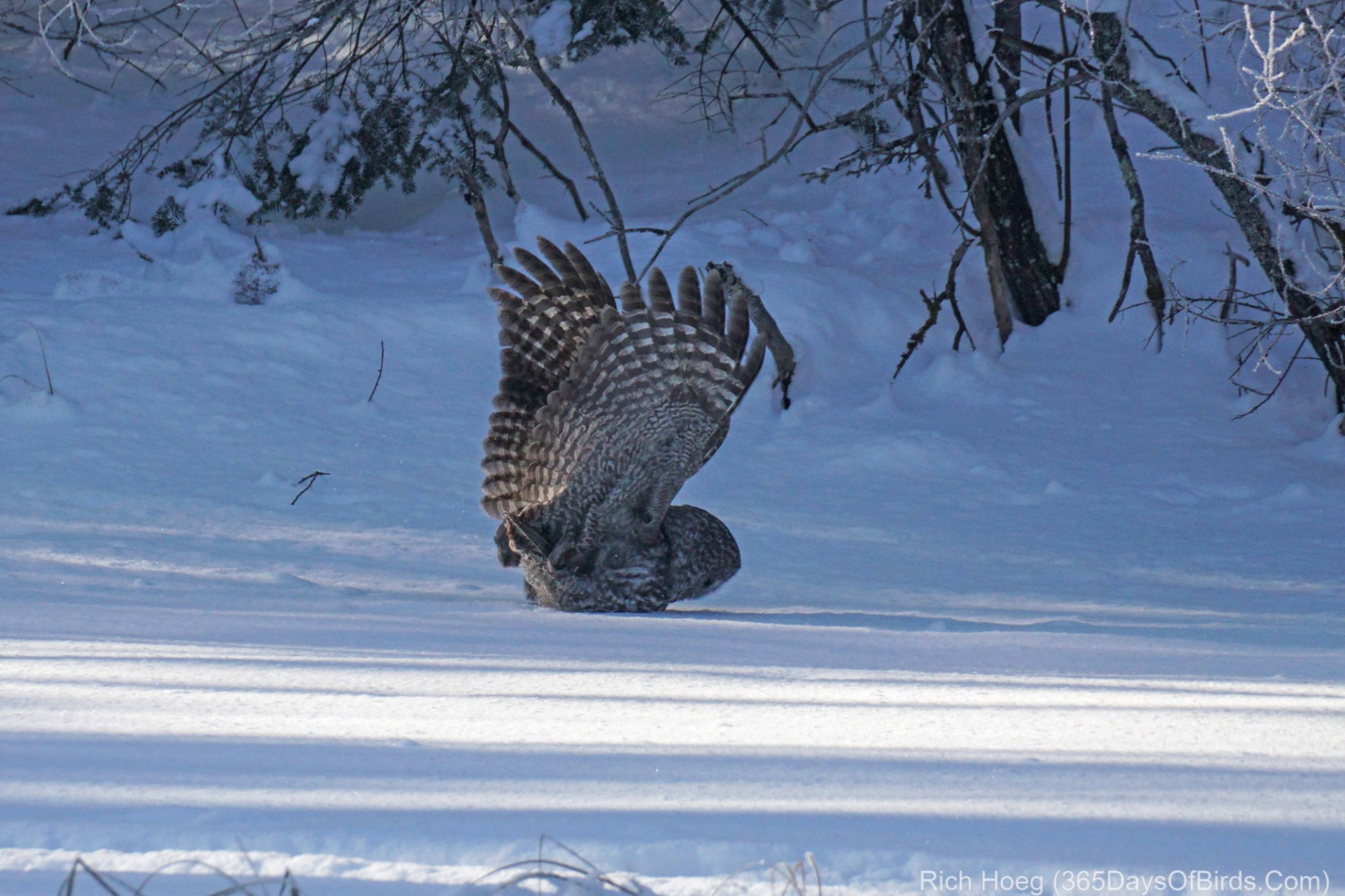
Hunt #2: The Strike! (Notice how the owl is striking the snow with its talens. It uses its offset ear and trigonometry to triangulate a mouse or vole running beneath the snow. Thus, death smashes through the snow from above.)
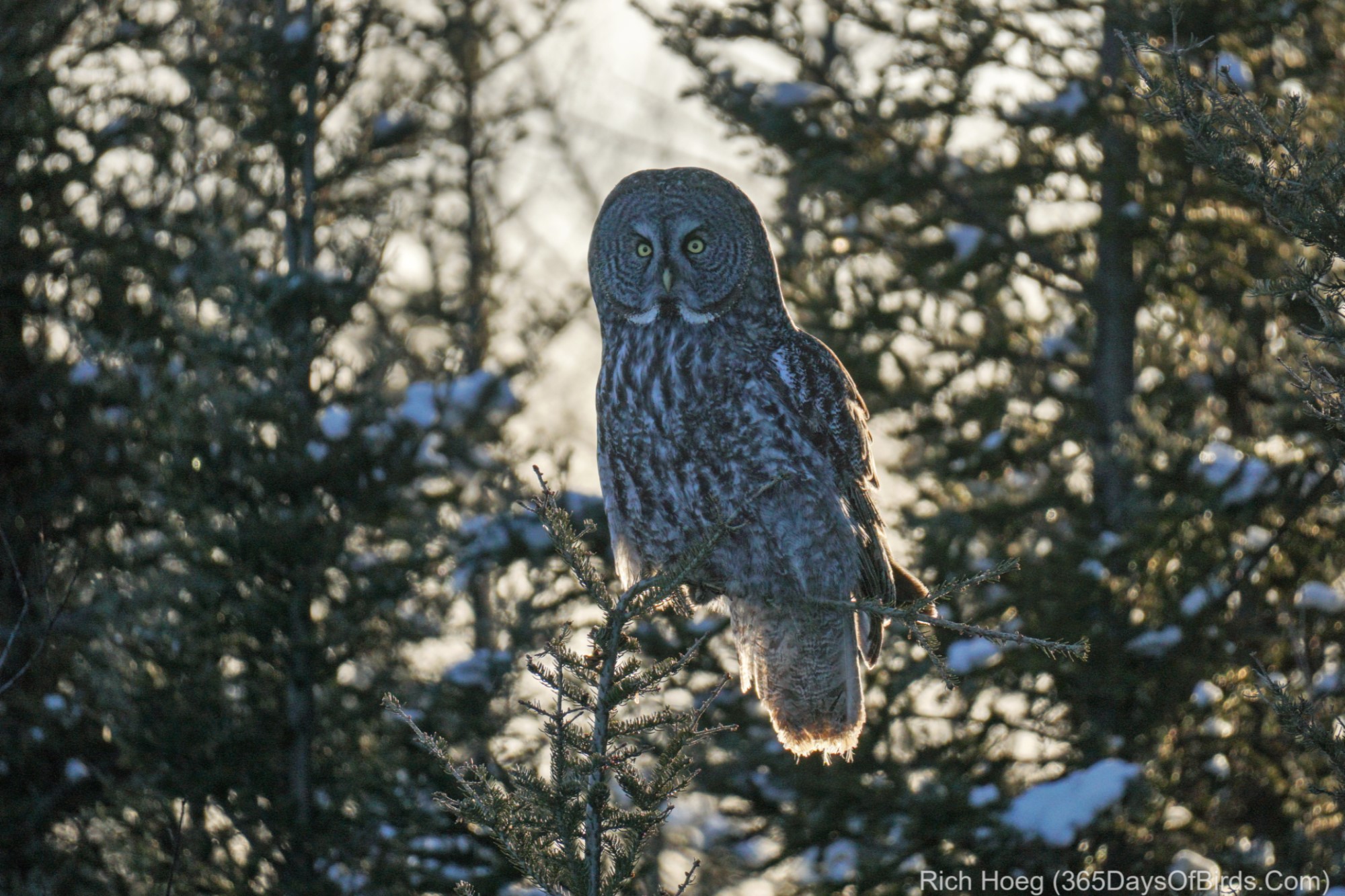
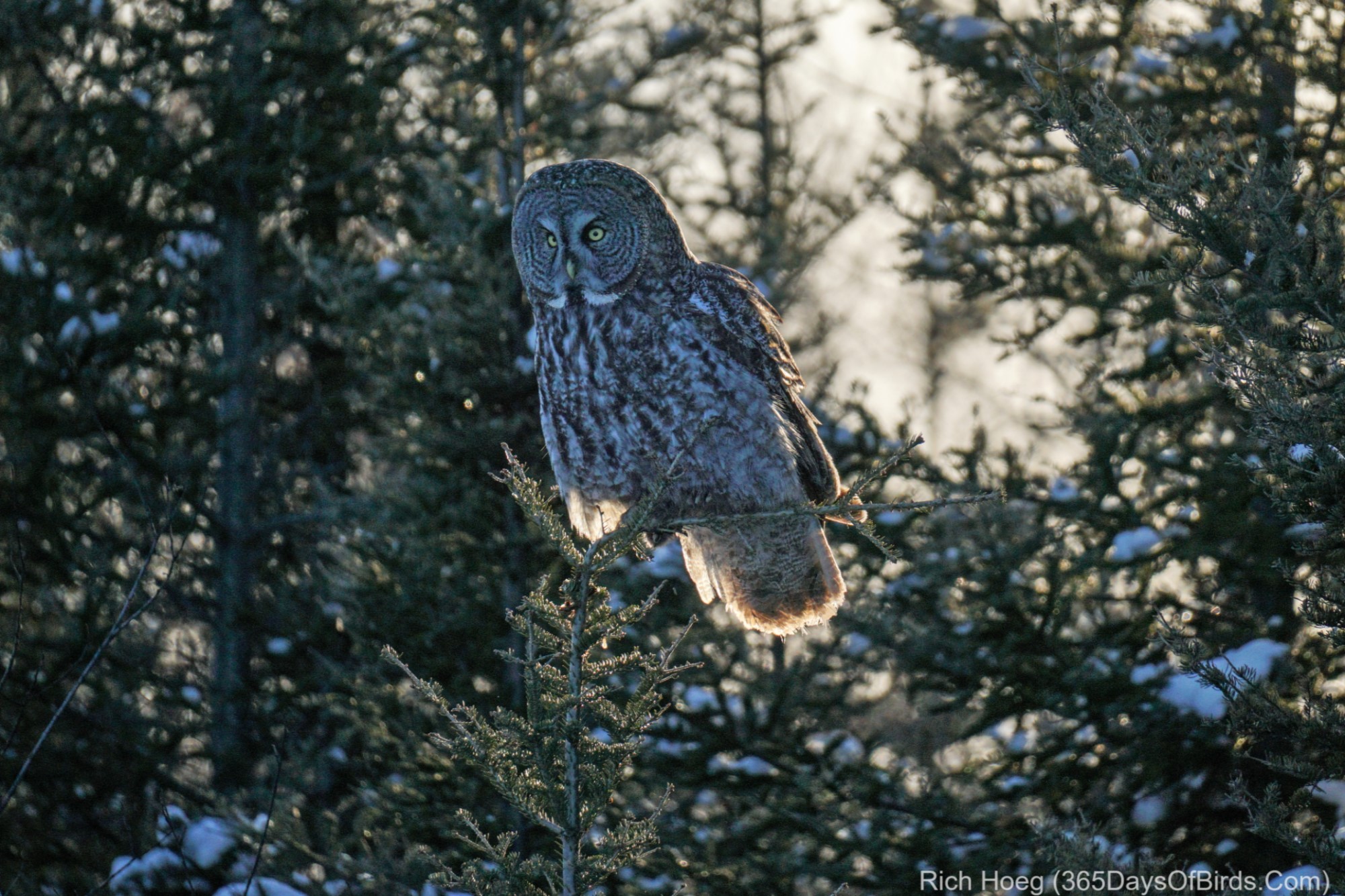
Backlit! (taking images directly into the setting sun can be rewarding)
A Snowy Owl (immature male shopping at Menards!)(LOL … its perch)