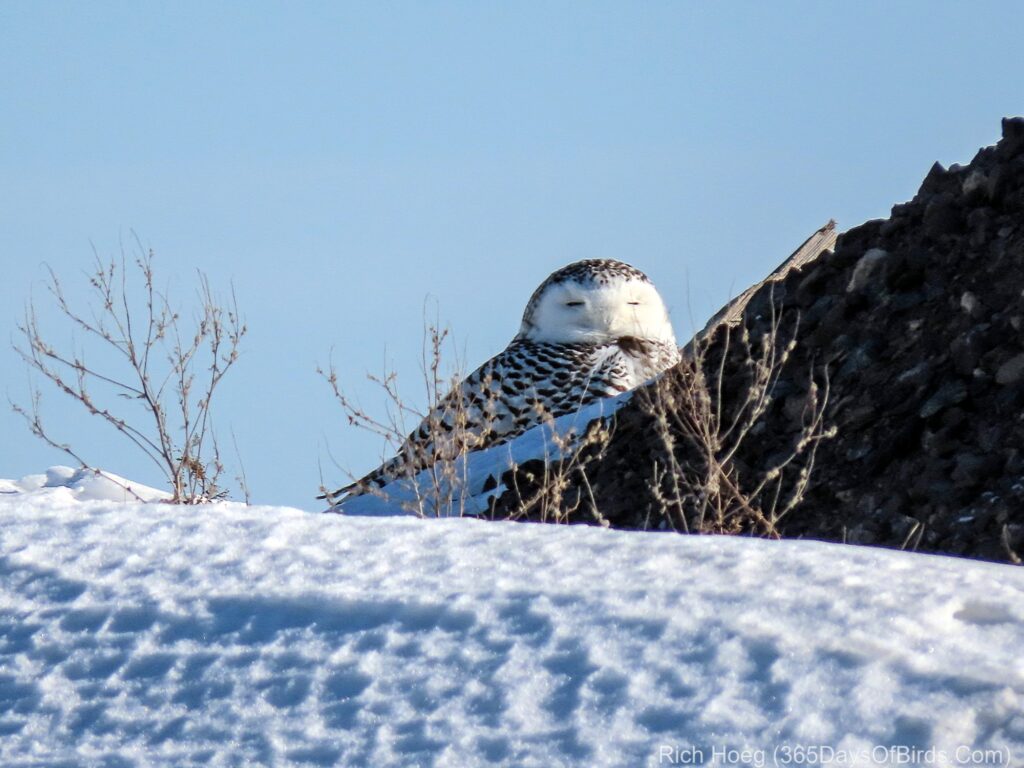
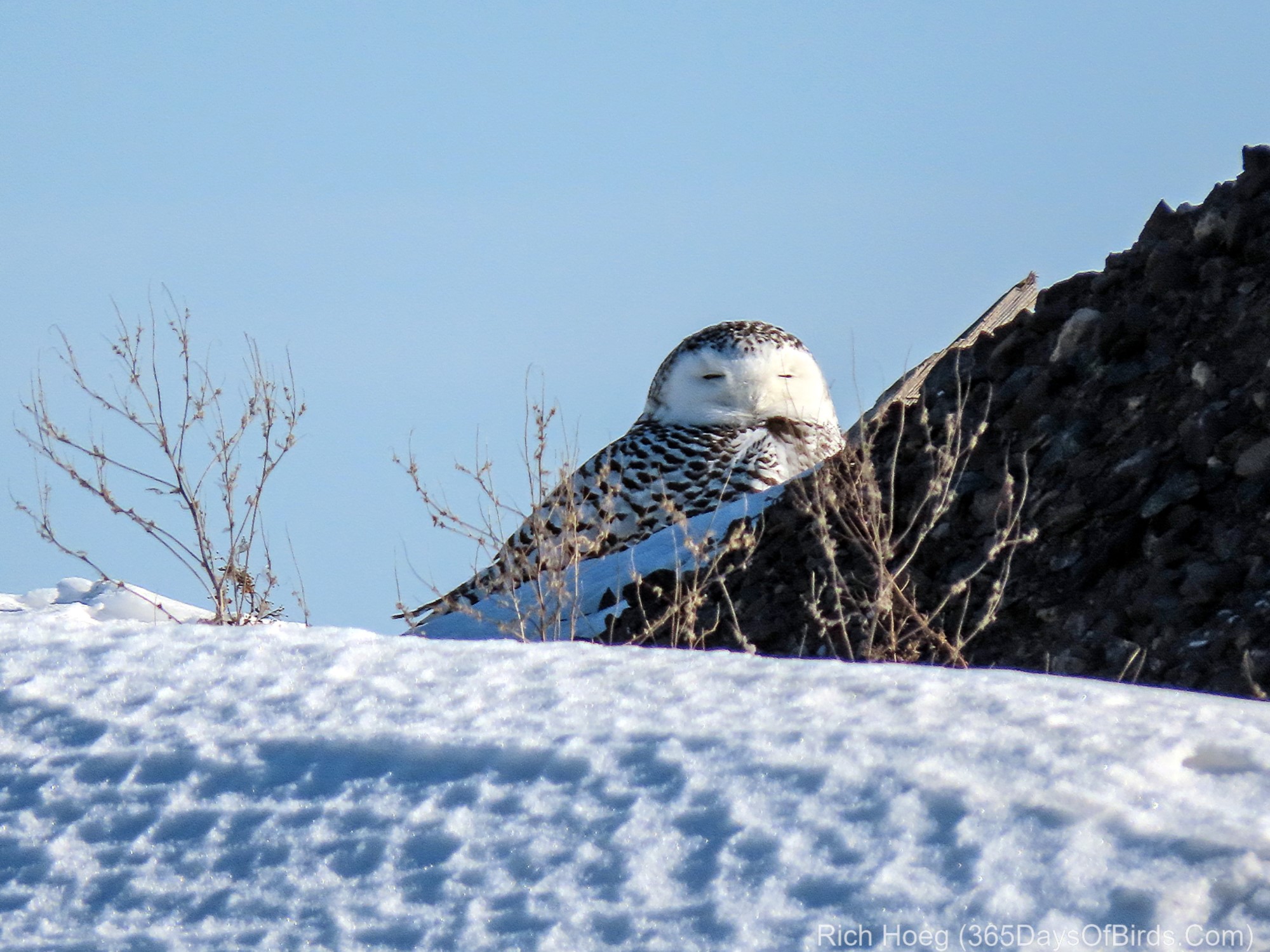
I have much, much better photographs of this owl, but when the mercury finally warms to 0F at 3 pm, and the wind is still fierce, smart Snowy Owls hide where they can feel the warmth of the sun’s rays, and avoid the wind! (Duluth area this afternoon) We are all sick of the cold.
I broke most of my birding rules this morning, but still used common sense. Yup, I drove over to Sax-Zim Bog even though the winds were already gusting to 35 mph, and were due to increase upwards of 50 mph in the afternoon. Normally, winds like today make for horrible birding. However, I used some common sense. While most folks visit the Bog to hopefully see our Great Gray Owls, I knew that quest would be hopeless given the wind. Great Grays hunt by hearing voles run beneath the snow. Strong winds make hearing very difficult.
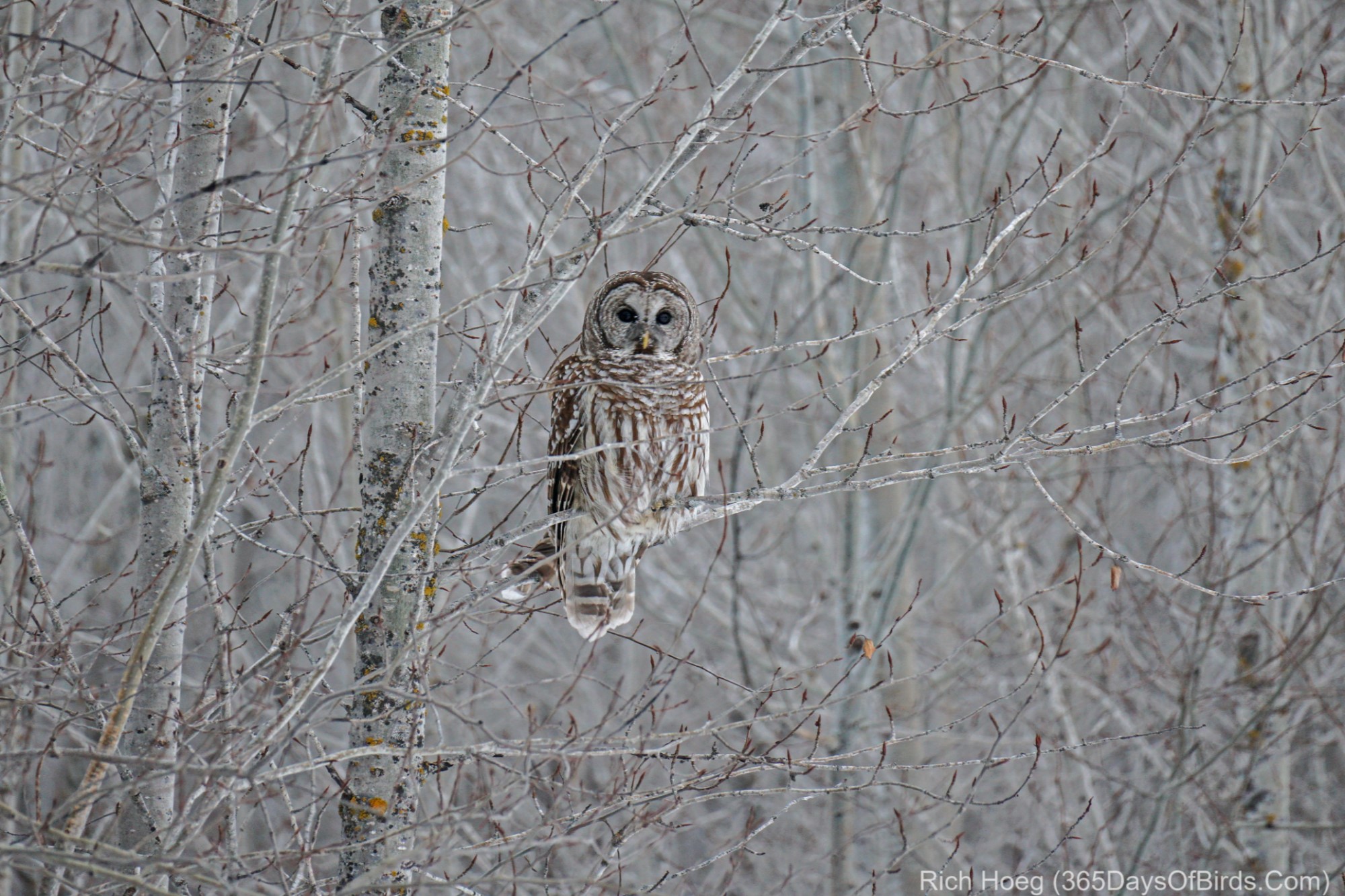
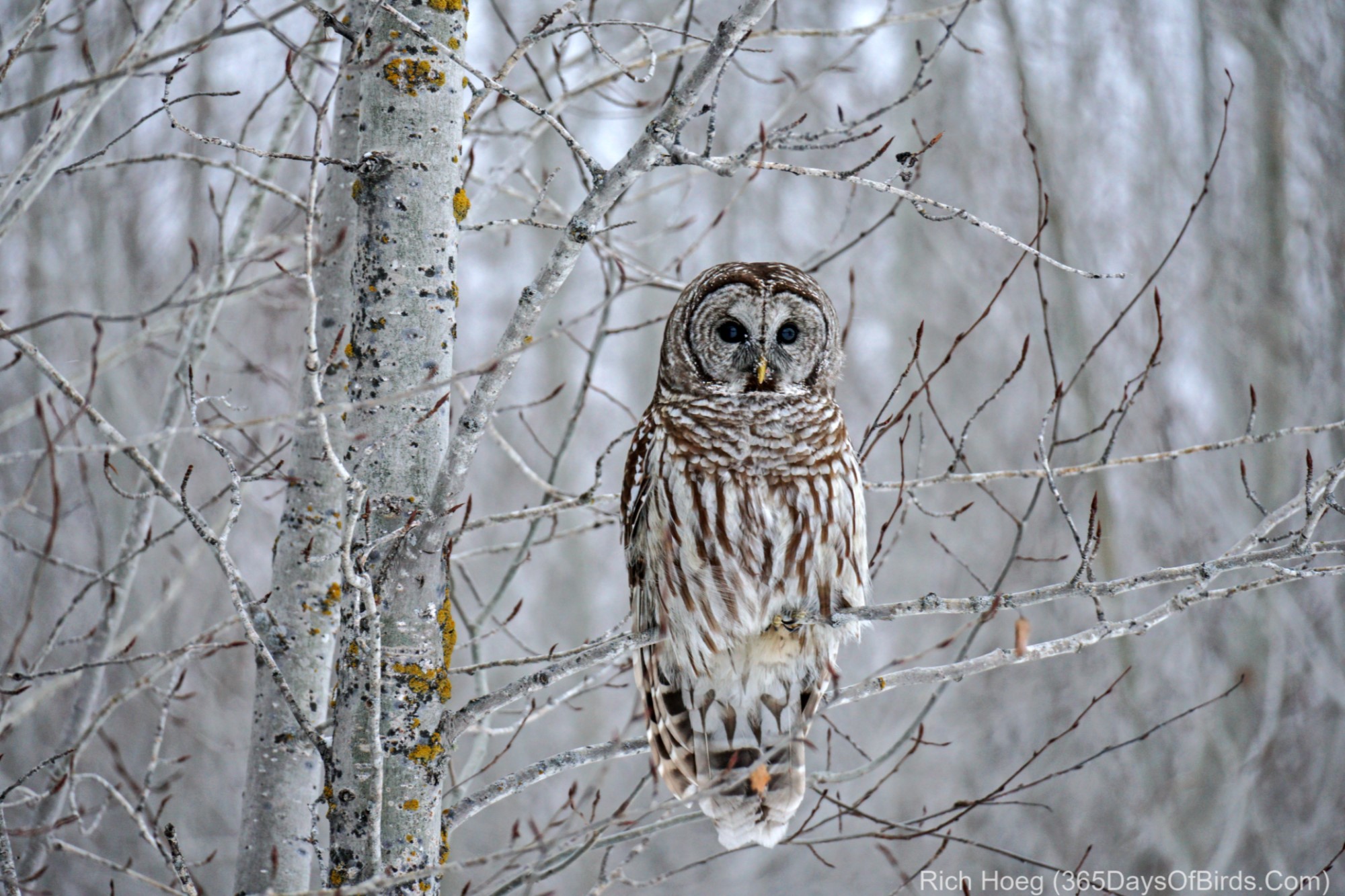
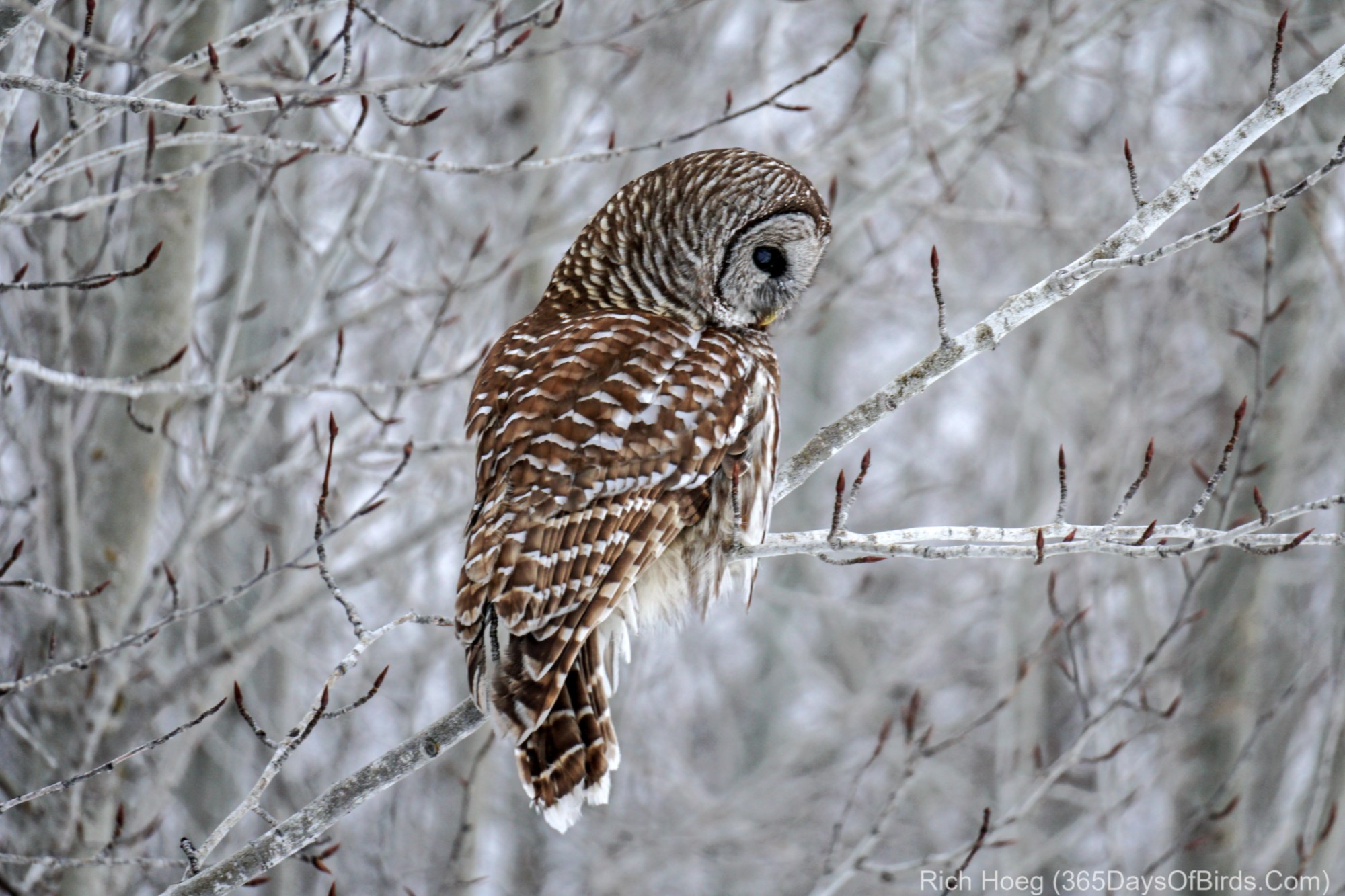
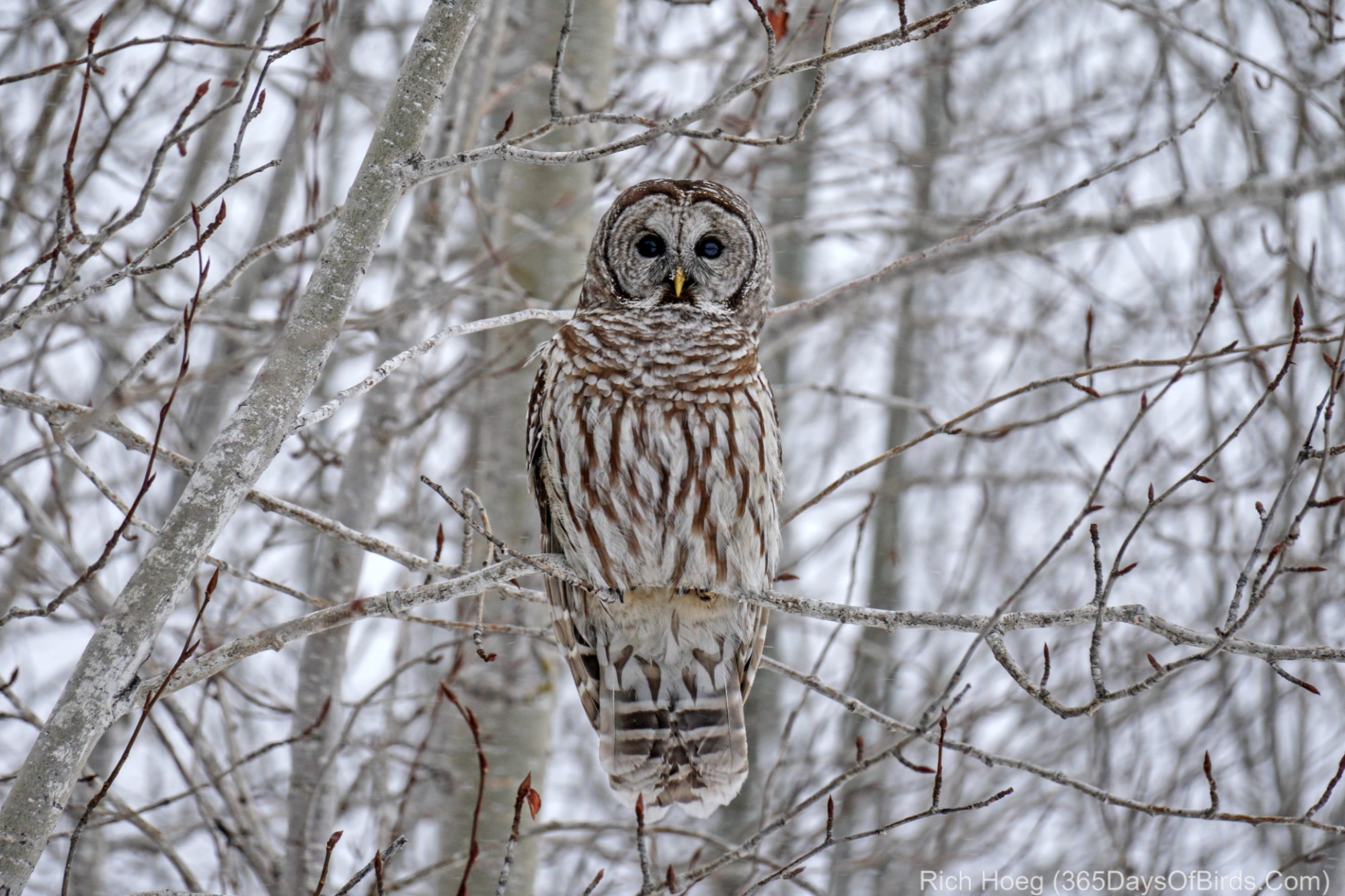
Instead I focused my birding on areas that were somewhat wind protected, and also looked for “sight based hunters”. While Barred Owls definitely use their hearing to hunt, these owls also hunt by sight. I found this individual in a protected area. Both the owl and I could feel the wind, but were somewhat protected. It was a fun morning, and given the temperatures will be dropping and winds will be increasing through the day … getting out seemed like a good idea.
One more fact, when I first saw the Barred Owl it was about 150 yards distant from me. Even though there was a well packed path through the snow, I hiked off trail through snow up to my thighs. This allowed me to obliquely approach the bird, stopping frequently to allow the owl to accept my presence. Ultimately I approached to within 60 yards. Walking directly towards the owl would have definitely spooked the bird.
The images are in the sequence as I approached closer to the owl.
Barred Owl Hunting (video link for email subscribers)
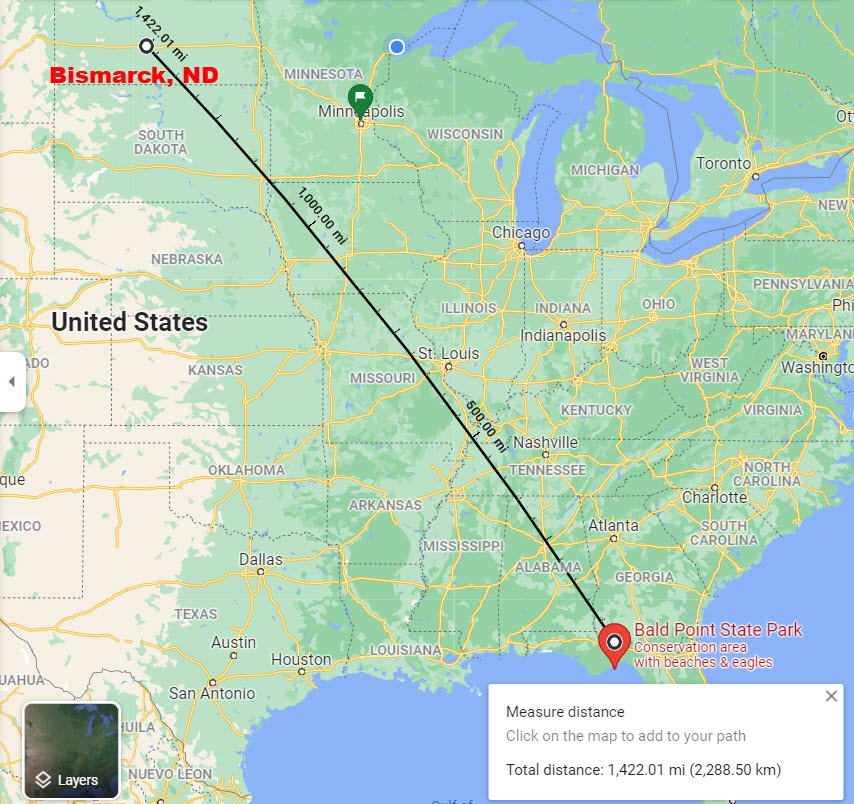
How does 1,422 miles sound for a migration distance? Of course this assumes this specific individual bird in question flies in a straight line between Bismarck, North Dakota and Bald Point State Park on the Gulf Coast in Florida (doubtful).
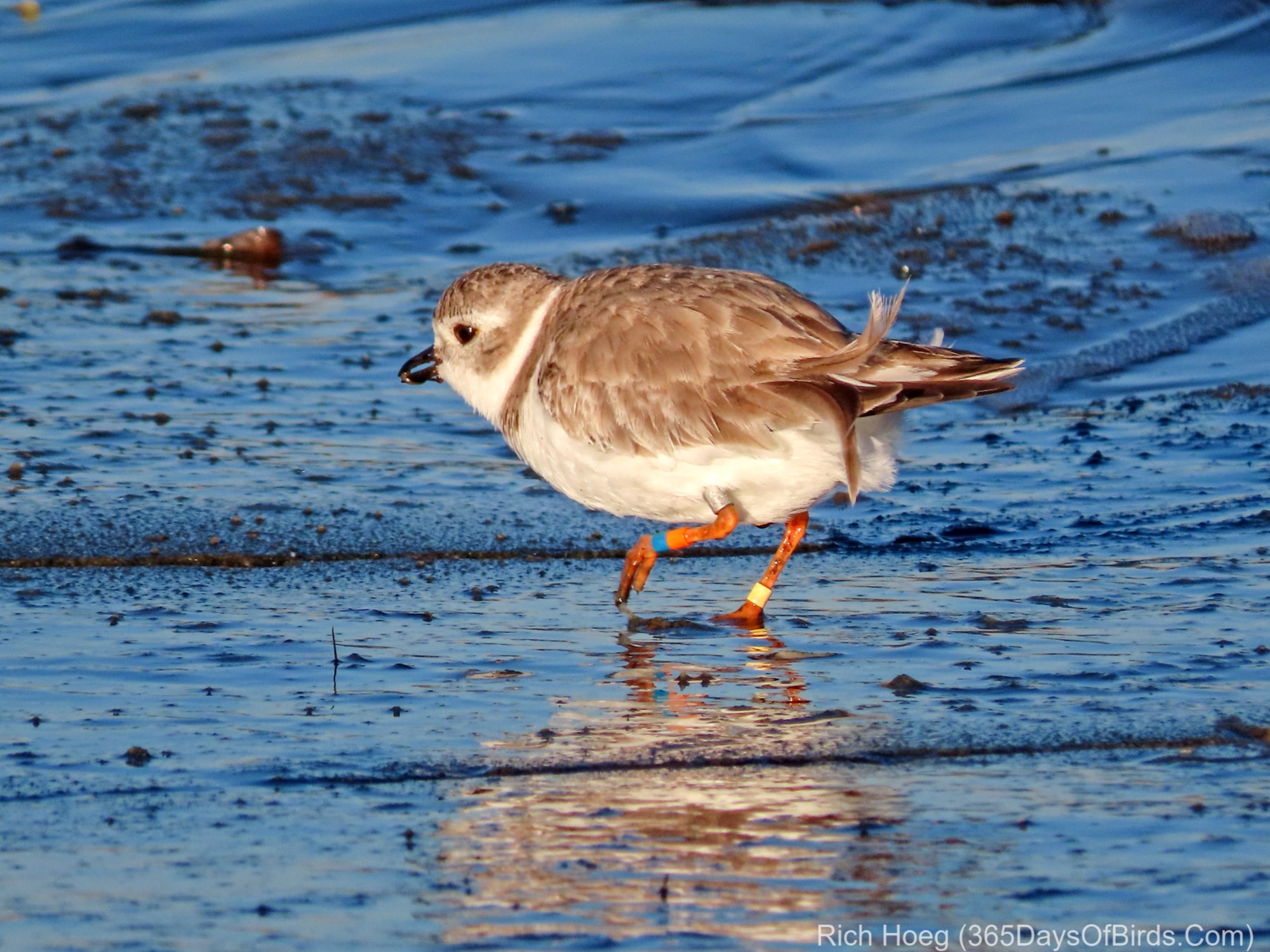
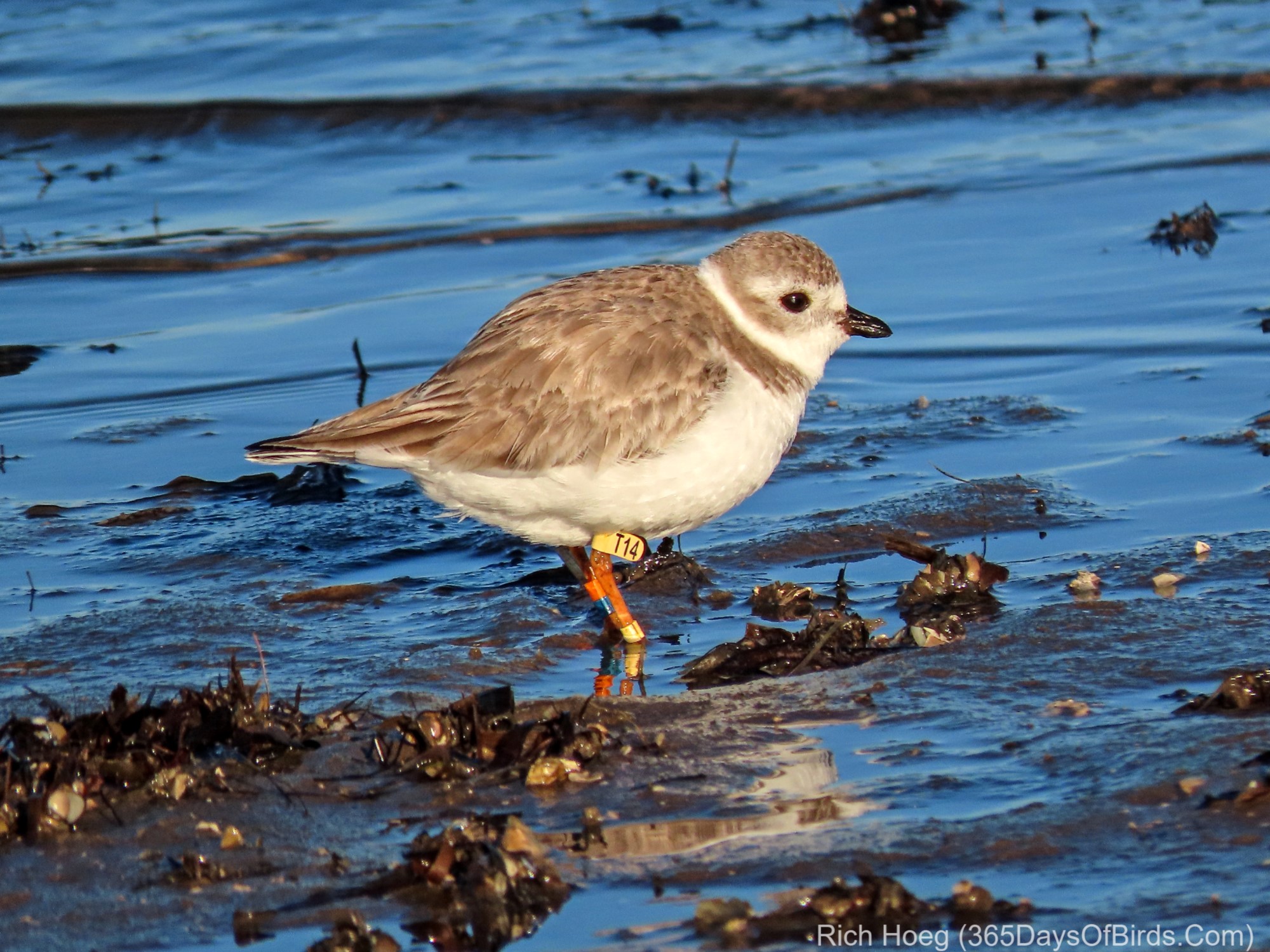
Yesterday I heard from the US Fish and Wildlife Service. The Piping Plover I photographed two weeks ago on that Florida beach is at least eight years old! Given very few Piping Plovers survive past five years, this bird is a senior citizen just like me. Remember, the Piping Plover is a “threatened and endangered” bird species. (my original post)
Here is some text from the email sent to me by the US Fish and Wildlife Service:
“Thank you for reporting the banded piping plover! T14 was banded as an adult on the Missouri River near Bismarck, ND June 2014. We observed it on the breeding grounds through 2018 in a similar area. It was first observed at Bald Point State Park in Florida its first winter after banding.”
And two more photographs of this individual Piping Plover … one new, and one showing the band. Hearing from the US Fish and Wildlife Service made my day. Even Molly who is not a birder was impressed with both the age of this little guy, and the length of its trips.
 We are all sick of the cold.
 We are all sick of the cold.