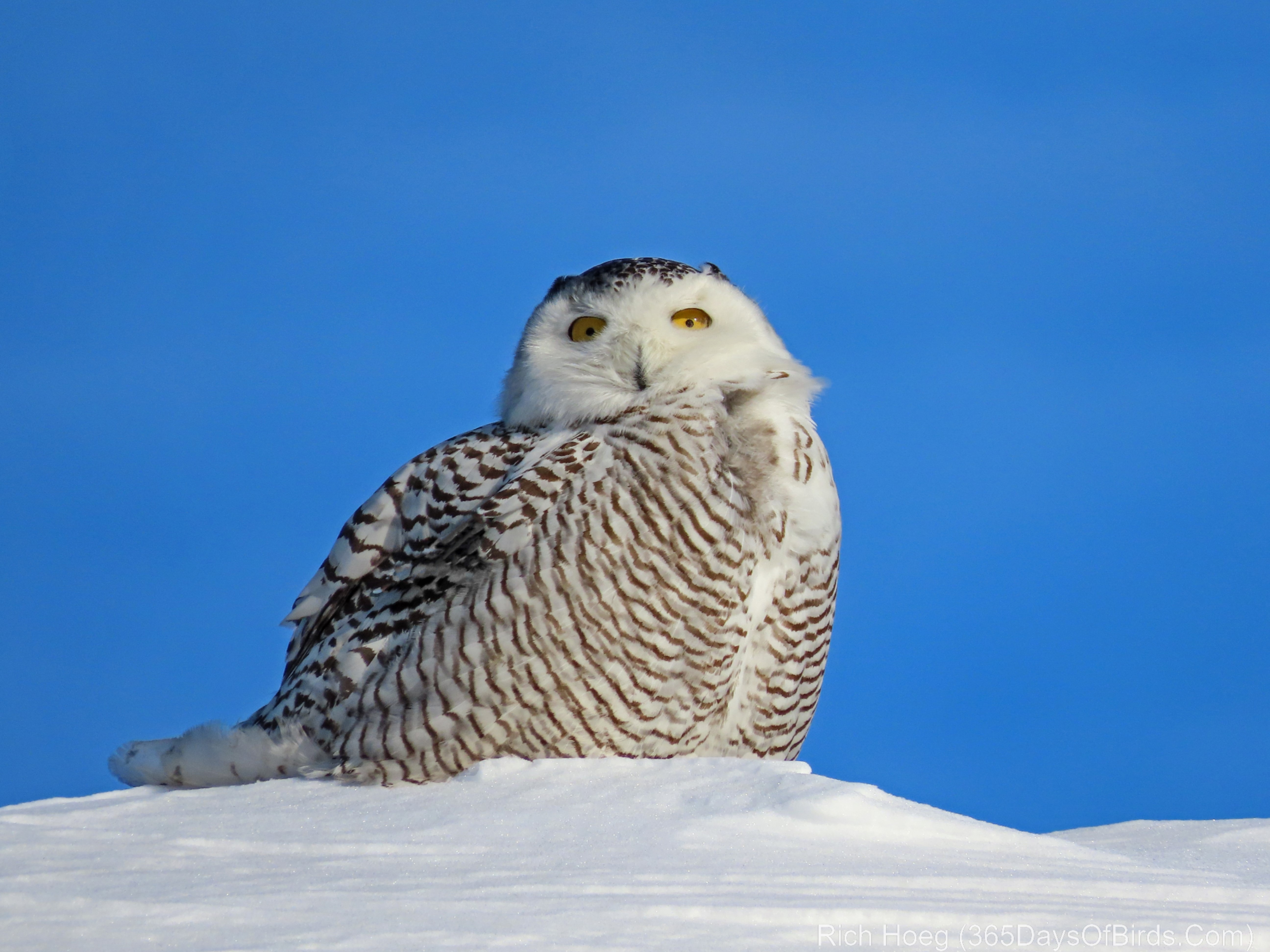
Over the course of this winter, I have had the pleasure to observe many owls. Yesterday evening was no different with four different Snowy Owls hanging out for my viewing pleasure before sunset. I had a staring match for over 70 minutes with this particular owl. The Snowy won. You would think it would have been willing to take off at least once and be featured in a flight photograph but nooooo!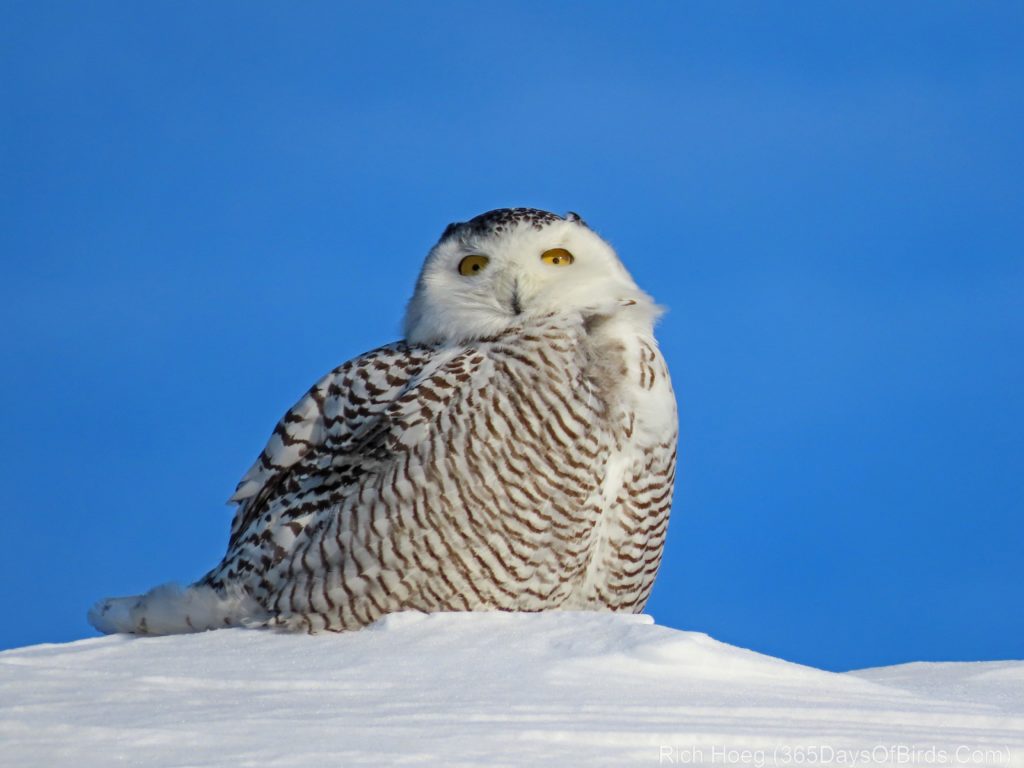
What I have really learned about these cools raptors over the past several winters is just how little I know when it comes to owls, and other birds of prey. However, my lack of knowledge is not unusual amongst my birding friends. Normally by the 1st of March (today) I would be preparing myself to say “good-bye” to my snowy friends. My expectations were:
- Over the first few weeks of March …
- Snowy Owls would return to the Arctic
- Northern Hawk Owls in Sax-Zim Bog would head a bit further north
- Great Gray Owls would leave the roadsides and retreat deep into the Bog
Research now shows me (and others) how little I know about these birds. In the past, owls might be banded and if the birding community was lucky, that bird would be recovered when it perished years hence. However, Project Snowstorm now uses GPS tracking devices which “phone home” whenever in reach of a cell tower. Even in the remote reaches of the Arctic there are now cell towers at mining outposts or Native American villages which come into contact with our newly banded owls and deliver the data. Snowies are phoning home and we are learning their nomadic ways. Even if the owls don’t come within reach of a cell tower during the summer, the tracking devices which are solar powered store data till the owls return south the following winter.
Over the past month I have had several conversations with Sparky Stensaas who is the director of the Friends of Sax-Zim Bog. We have discussed how valuable it would be if some of our Minnesota owls … Northern Hawk Owls and Great Gray Owls could be banded with these GPS devices. Now we would begin to be able to understand how these birds live throughout their lifetime … perhaps answering questions such as:
- Do Northern Hawk Owls hunt at night?
- Are there Northern Hawk Owls nesting in Sax-Zim Bog
- What are Great Gray Owls summer patterns?
- How big are individual Great Gray Owl’s summer territories?
- And the big question … how is climate affecting these birds?
A number of folks, including me, have pledged money to help fund the purchase of the GPS tracking devices. Sparky is working with his contacts at the National Resources Research Institute (NRRI) in the hopes they would be interested in collaborating upon such a research project. While I am not asking my blog readers to help out at this time with project contributions, expect that ask in the future. A few of us needed to come forward first with commitments of both time and money in order to demonstrate to NRRI about our serious interest.
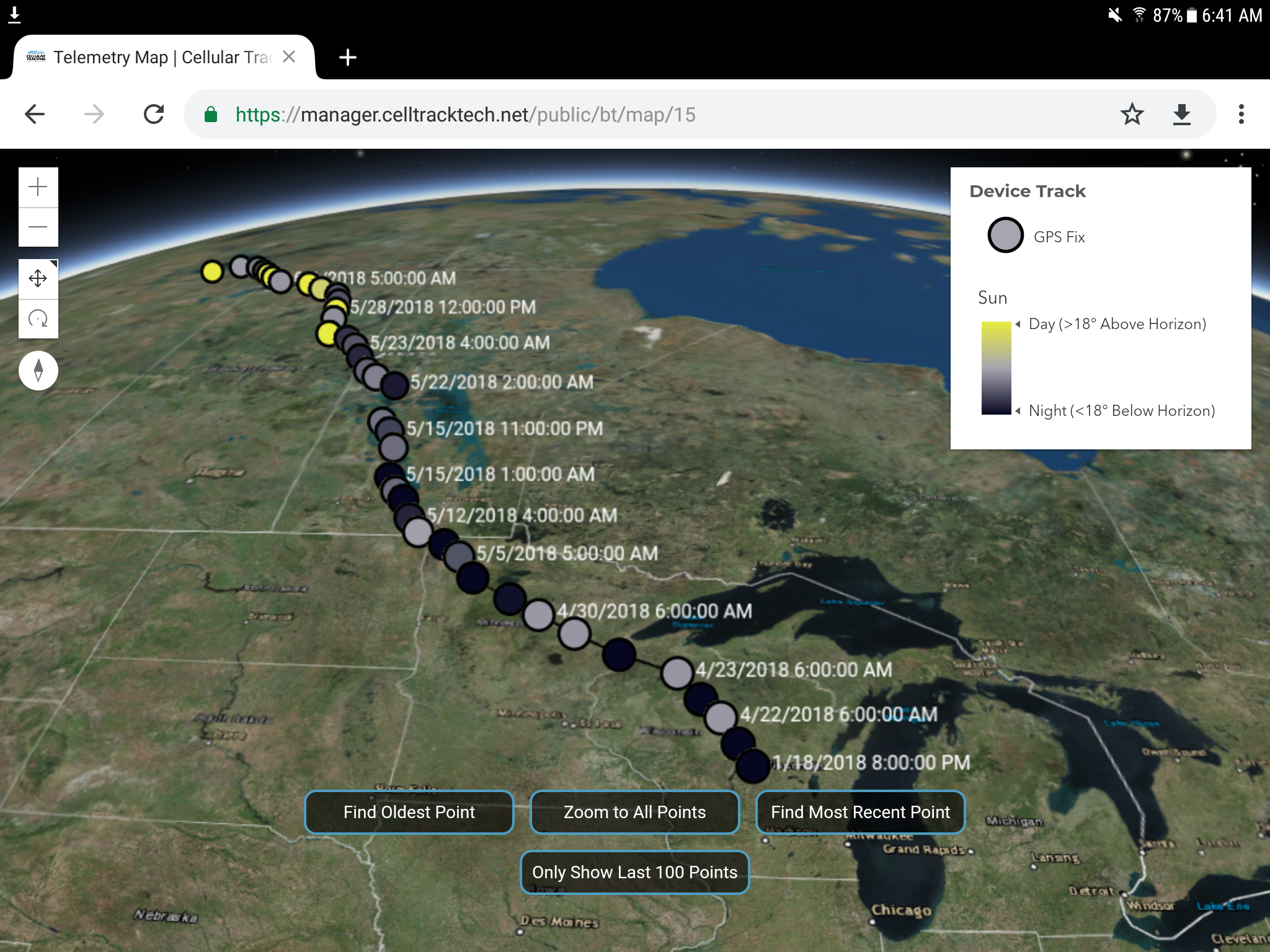
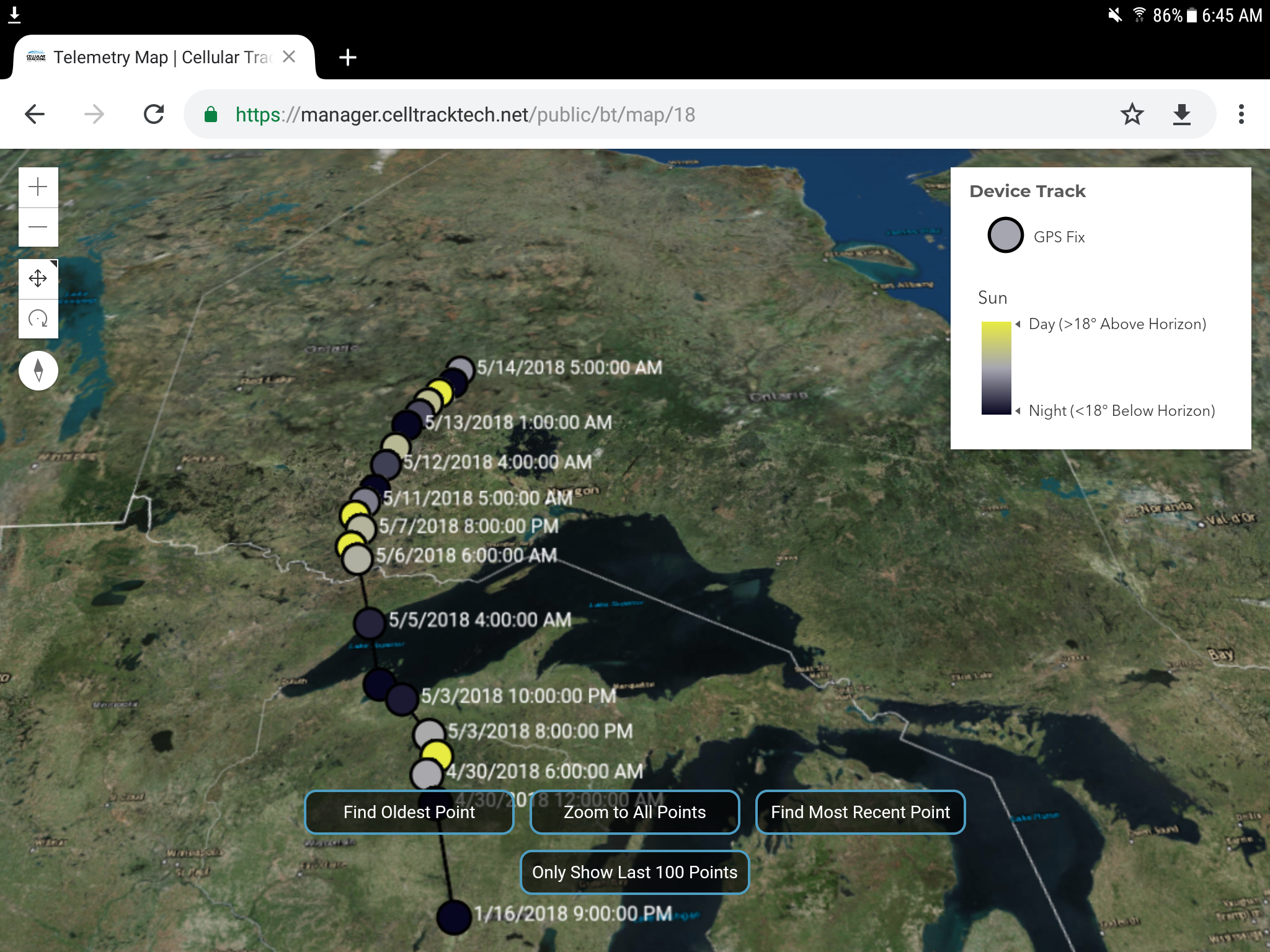
As previously noted in this post, I thought Snowy Owls started their migration north by the middle of March. Project Snowstorm data seems to indicate otherwise. Most of the birds are actually hanging around the Continental USA till into April, but the owls are moving around quite a bit compared to their earlier winter hunting territories. Here are a few examples of the kind of “day by day” (even hour by hour) data Project Snowstorm is capturing. Remember, the project goal would be to track Great Gray Owls and Northern Hawk Owls, not just Snowies.
{Note for the owl’s safety: Current year’s tracking data would not be released. It is important to insure that the birds would not get harassed. As with Project Snowstorm, map data would be at least one year old when made available to the general public.}
Interactive Snowy Owl Tracking Maps: Read this Project Snowstorm blog post and review its examples to obtain a better sense of understanding of these linked maps.
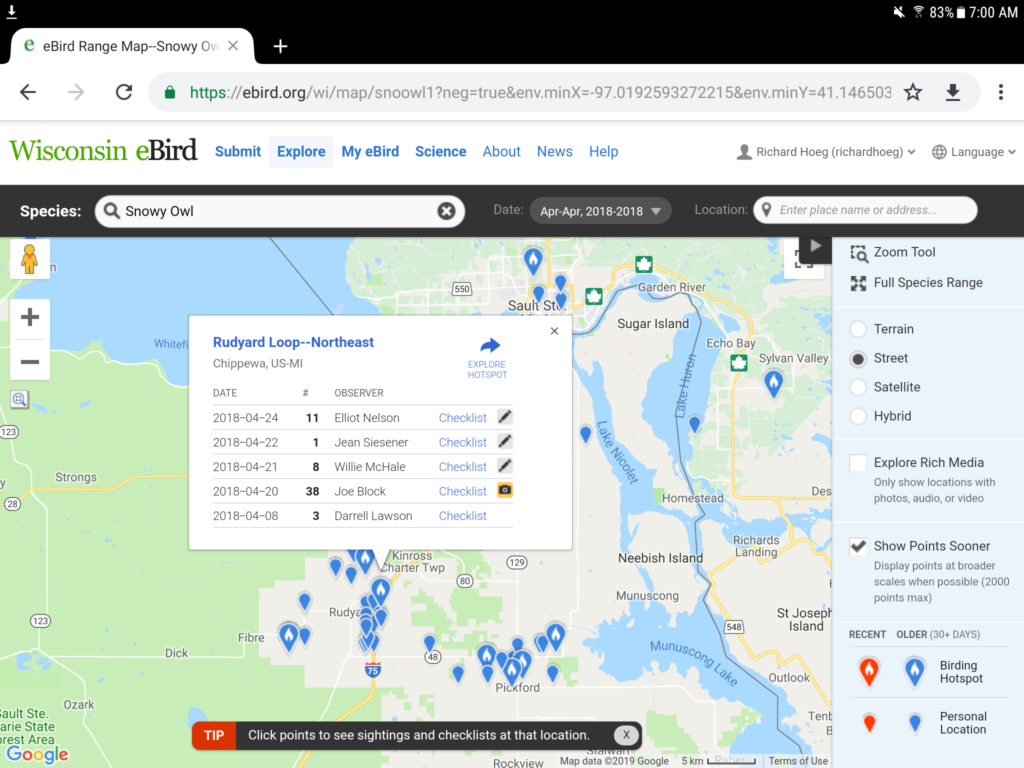
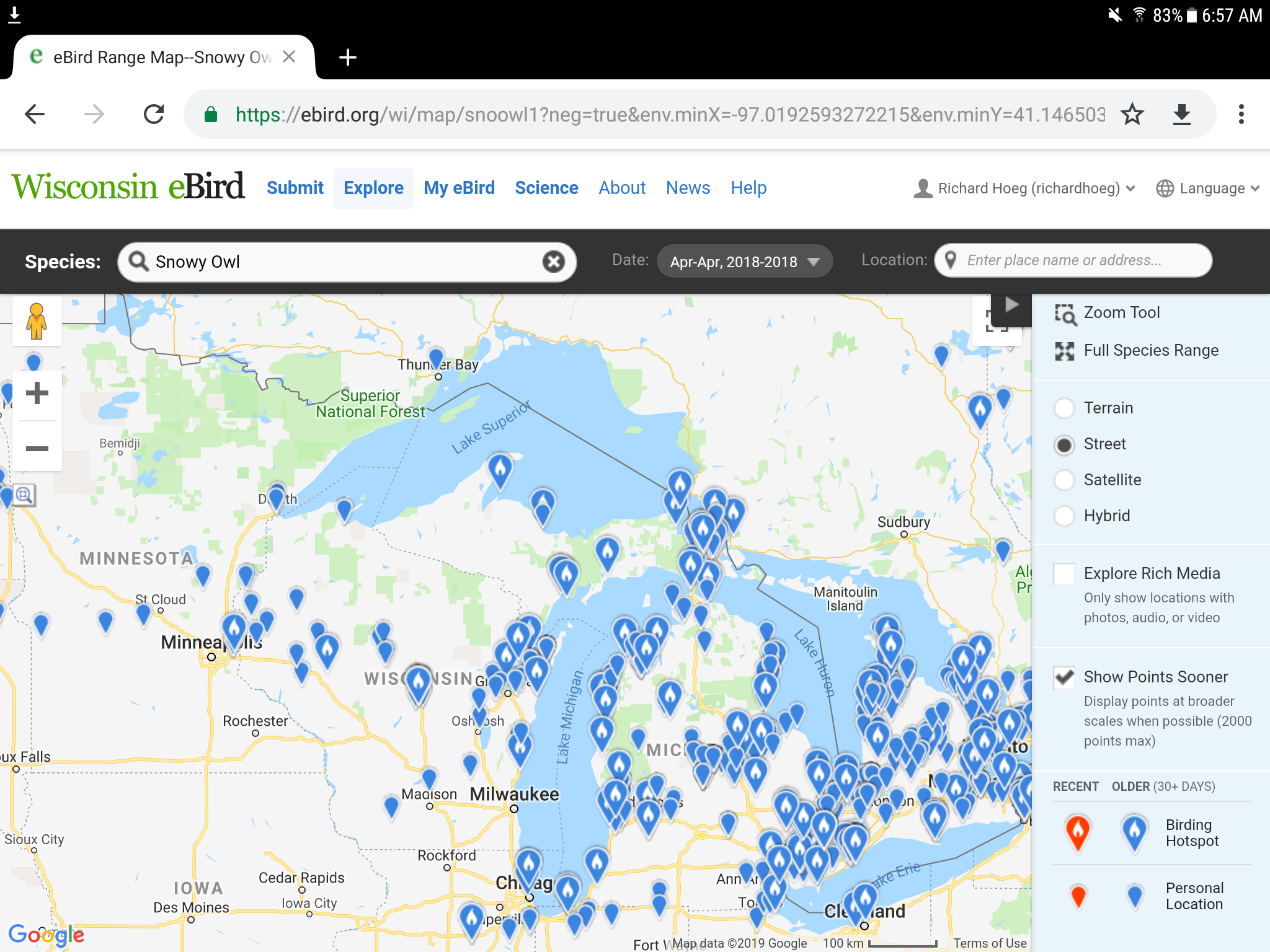
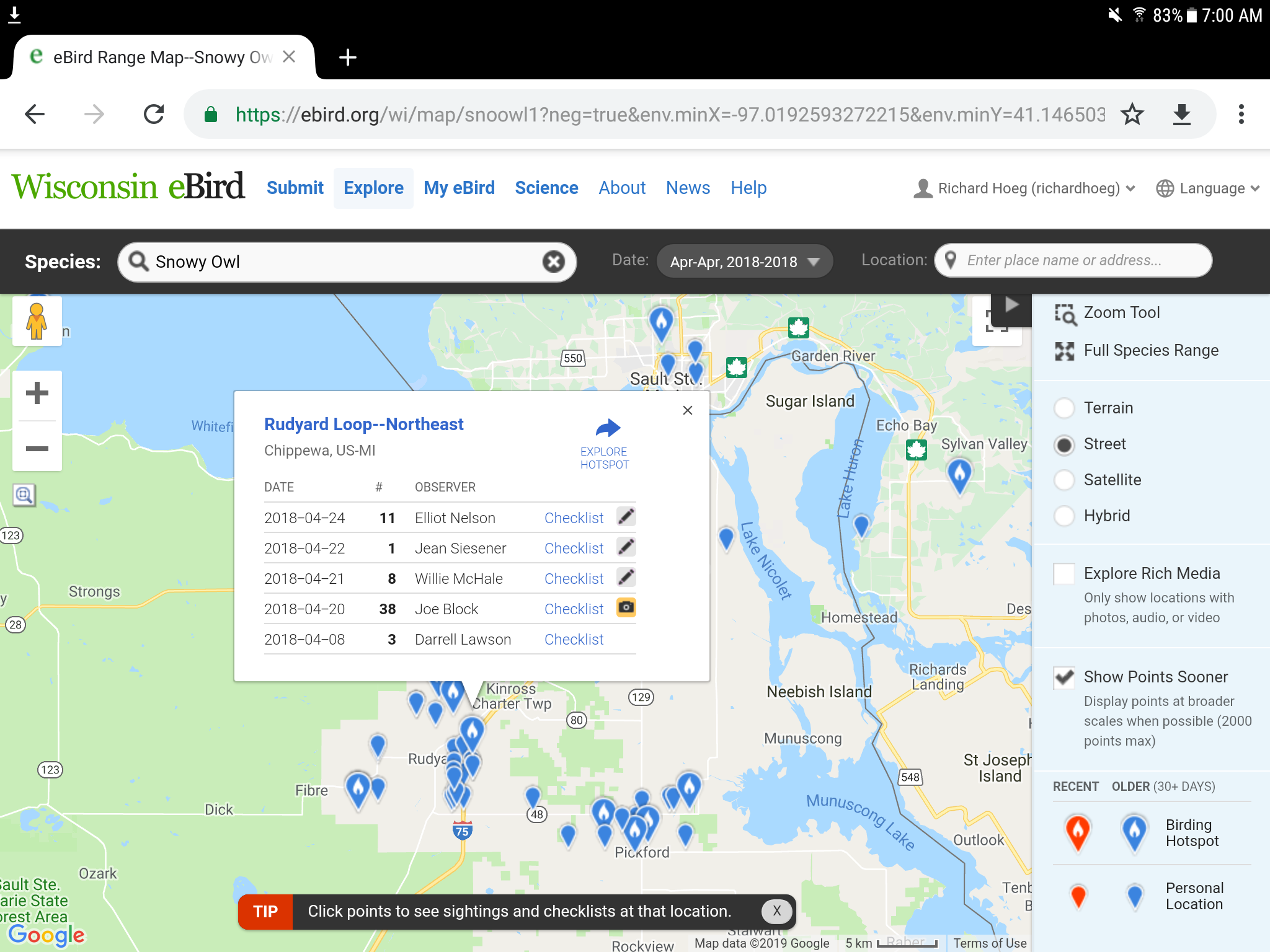
If you actually desire to bird Snowy Owls from March to even as late as early May, remember unlike in the deep of winter, these birds are moving around quite a bit. My own guess is that their movement is for at least two reasons … both a need to strengthen flight muscles in preparation for the upcoming northward migration, and the likelihood that their winter hunting territory may now not support their needs (i.e. it has been hunted out). However, the Snowies still will prefer habitat like the Rudyard Loop at the east end of Lake Superior. This farmland is some of the first (or last depending on the migration direction) open meadows before the Boreal Forest begins just a bit north. Snowy Owls are not a forest bird.
Sample Screenshots
Snowy Owl #15 … a Duluth visitor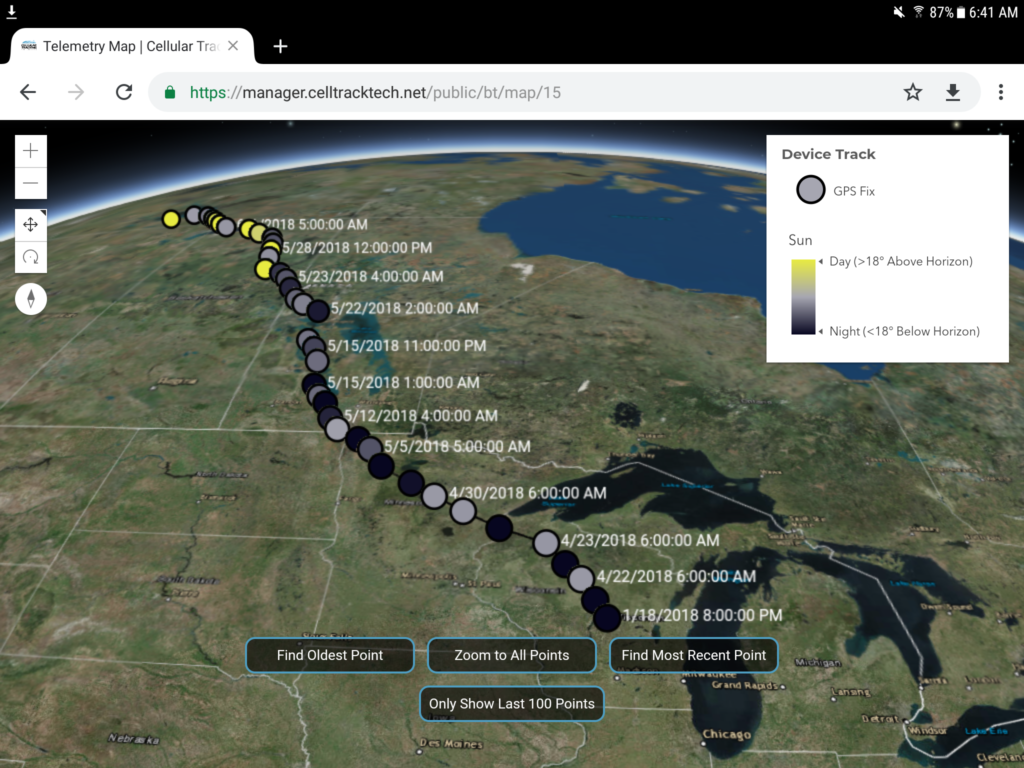
Snowy Owl #18 … an Apostle Islands visitor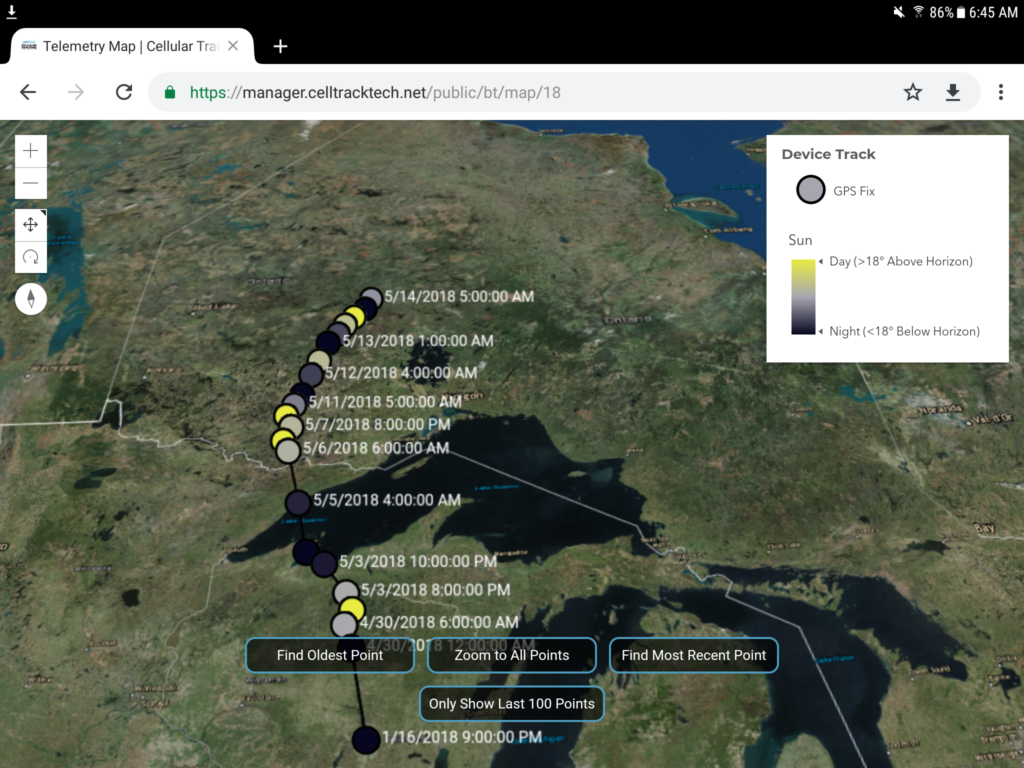
eBird April 2018 Snowy Owl Sightings (caution … an irruption year)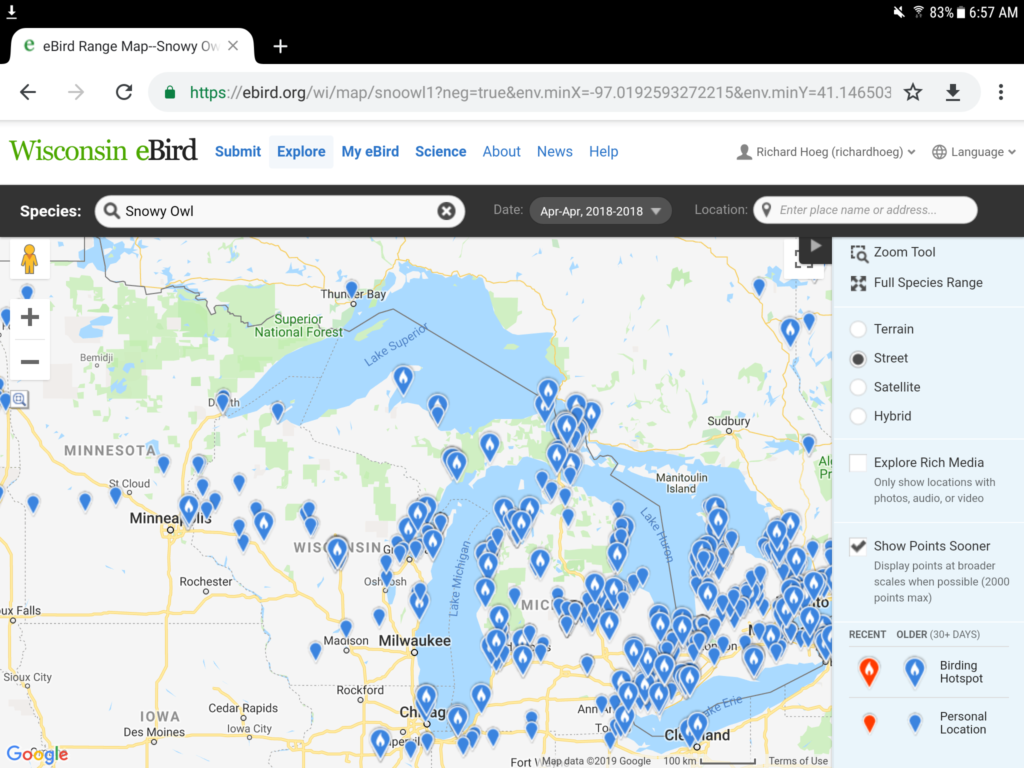
eBird Rudyard Loop April 2018 Snowy Owl Sightings (caution … an irruption year)