Category Archives: Background

Power to the Pileateds!

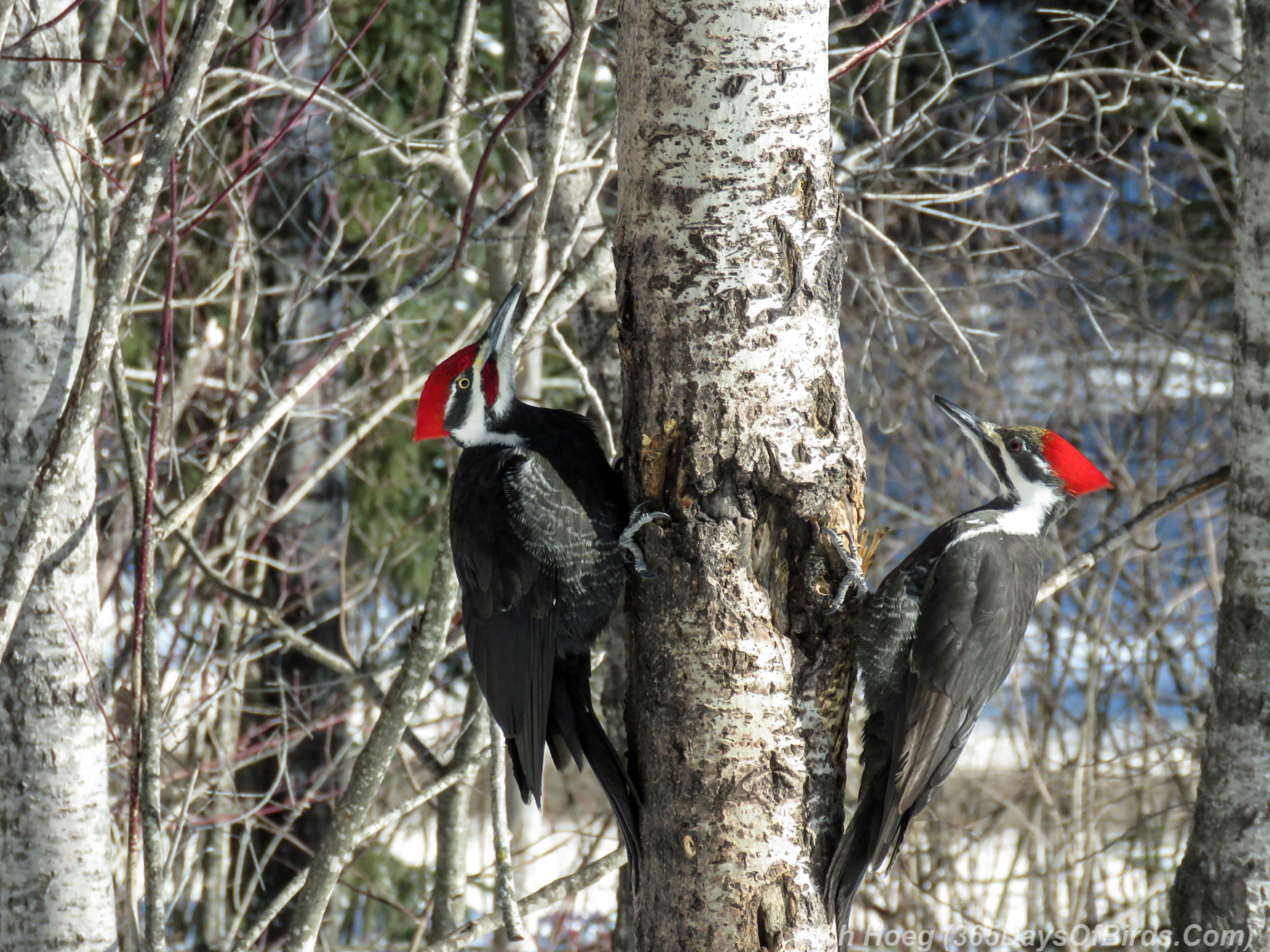
While skill is important in birding photography, lucks doesn’t also hurt! We have a pair of Pileated Woodpeckers which have taken up residence in our wooded yard next to Amity Creek. This pair has been fun to watch over the winter. Here’s to hoping they set up house in our yard. Regardless, I should be able to find their hole/nest this June.

Power to the Pileateds

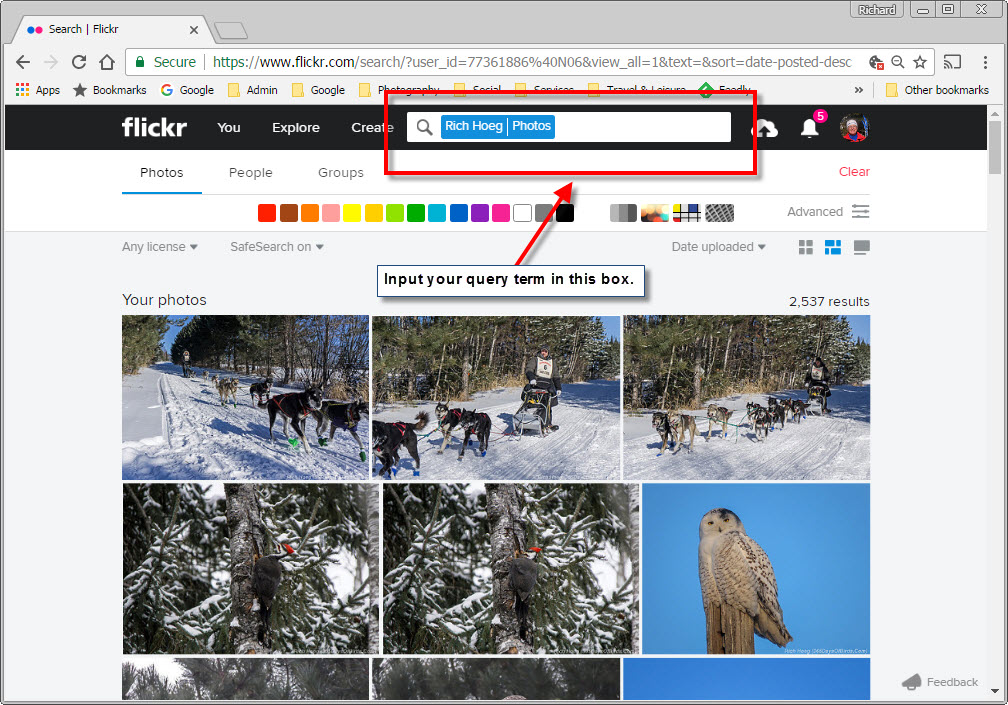
On another subject, I have set up a new image search for my photographs. The database is taken from my Flickr account and includes not only my better bird images, but also my northern Minnesota landscapes and night time photographs including the Northern Lights.

Use this Flickr web link and enter your query term as indicated. You may also change the sort sequence in addition to selecting other options.

Extending the Telephoto Reach of your Sony A6000 / A6300 / A6500

Post Update on April 20, 2021: Towards the end of last year I purchased the Sony 70 – 350 mm lens. This lens did not exist when I first wrote this post. Here is a review of the lens.


As noted previously in this blog, for my birding photography I use a Canon Sx-60 super zoom / bridge camera (now an Sx-70), but for my landscape and night photography I shoot with a Sony mirrorless camera, now the A6000 (previously a NEX-5t). This choice suits me well as the bridge camera gives me lots of zoom for a modest price in a package that allows one to easily hike into the back country. I picked Sony aps-c mirrorless cameras for my night photography because Sony is known as the top sensor manufacturer leading to optimized cameras for low light picture taking (Sony makes sensors for a HUGE number of other manufacturers). The mirrorless system is also a good choice due to performance, size and it will not break the bank.

Now the point of this post. For some time I have thought it would be nice if I could extend the reach of my Sony A6000 telephoto lens. The longest “e mount” lens is a manual zoom 55 to 210 mm (82 mm to 315 mm equivalent). Having a longer lens would be nice for night time moon photography, some occasional bird photographs in low light (bridge cameras due to their very small sensors are limited in low light photography). However, my research into telephoto options yielded no results … only cheap lenses that would be 100% manual. While I am not opposed to manual lenses, birds tend to move quickly and therefore I wanted to be able to still utilize autofocus and all the other native capabilities built into my camera.

After hours of research via Google, I stumbled upon the Olympus Teleconverter TCON-17X. If this system worked, I would now be able to attach the teleconverter onto the end of my Sony 55-210 mm zoom lens and create a a 35 mm equivalent of a 535 mm lens given my aps-c sensor. I also needed to purchase a seven dollar step-up ring from 49 to 55 mm (an adapter that will allow you to mount the Olympus teleconvertor on the Sony lens). Here is the YouTube video of this combination which convinced me to make the purchase. (If the Olympus Teleconverter shows “not available” via Amazon, research on the product name on Amazon. Multiple vendors sometimes sell the product.)

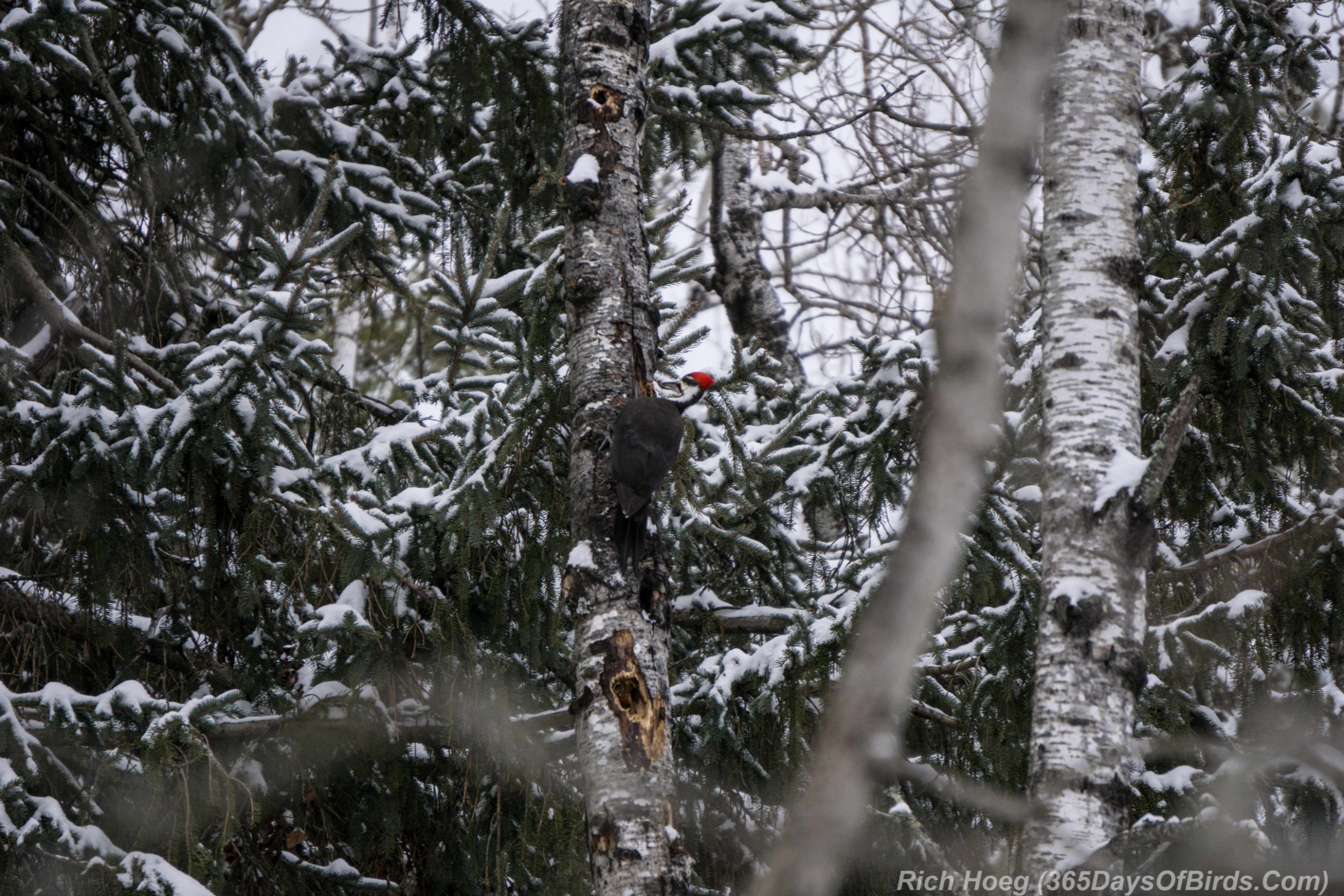
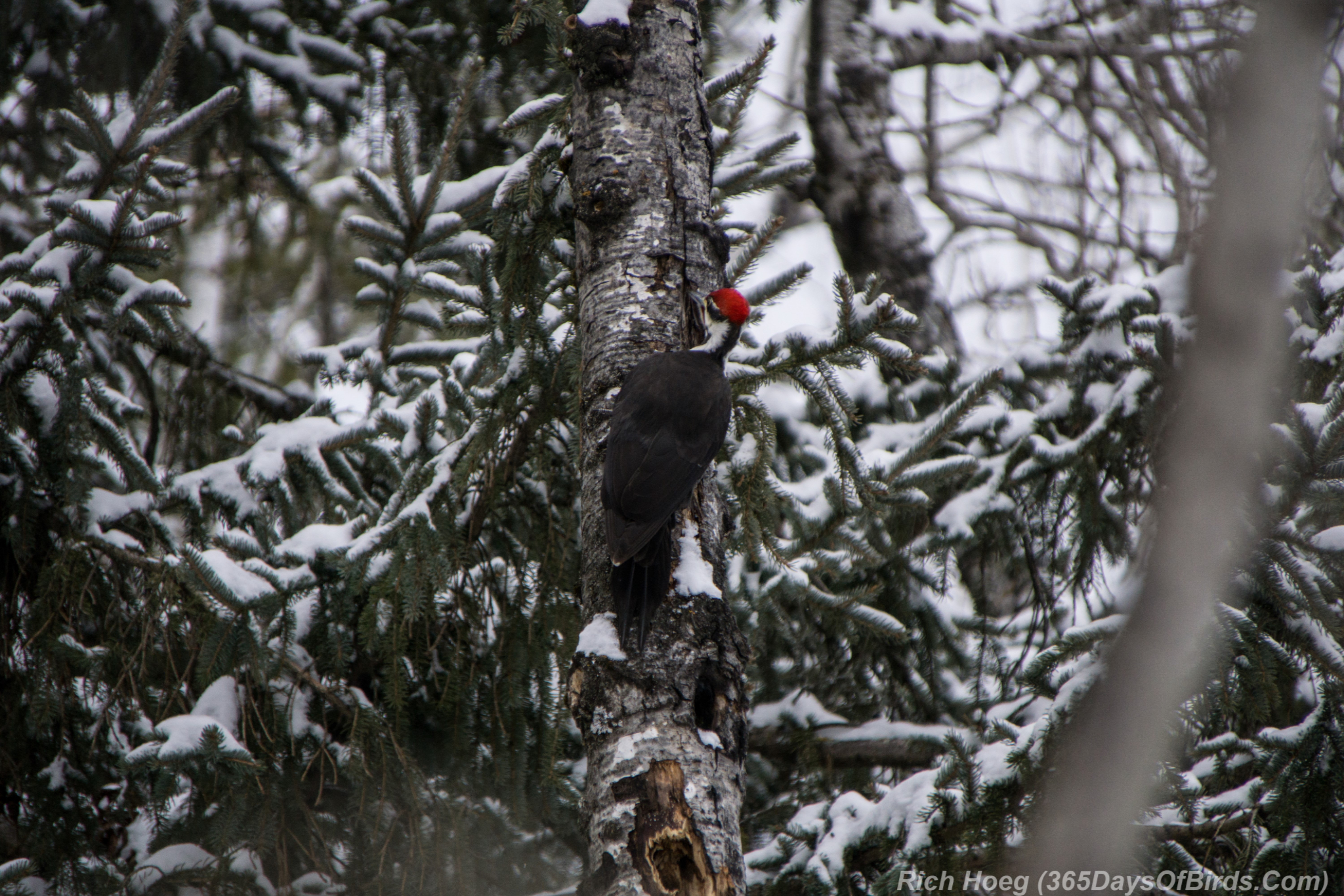
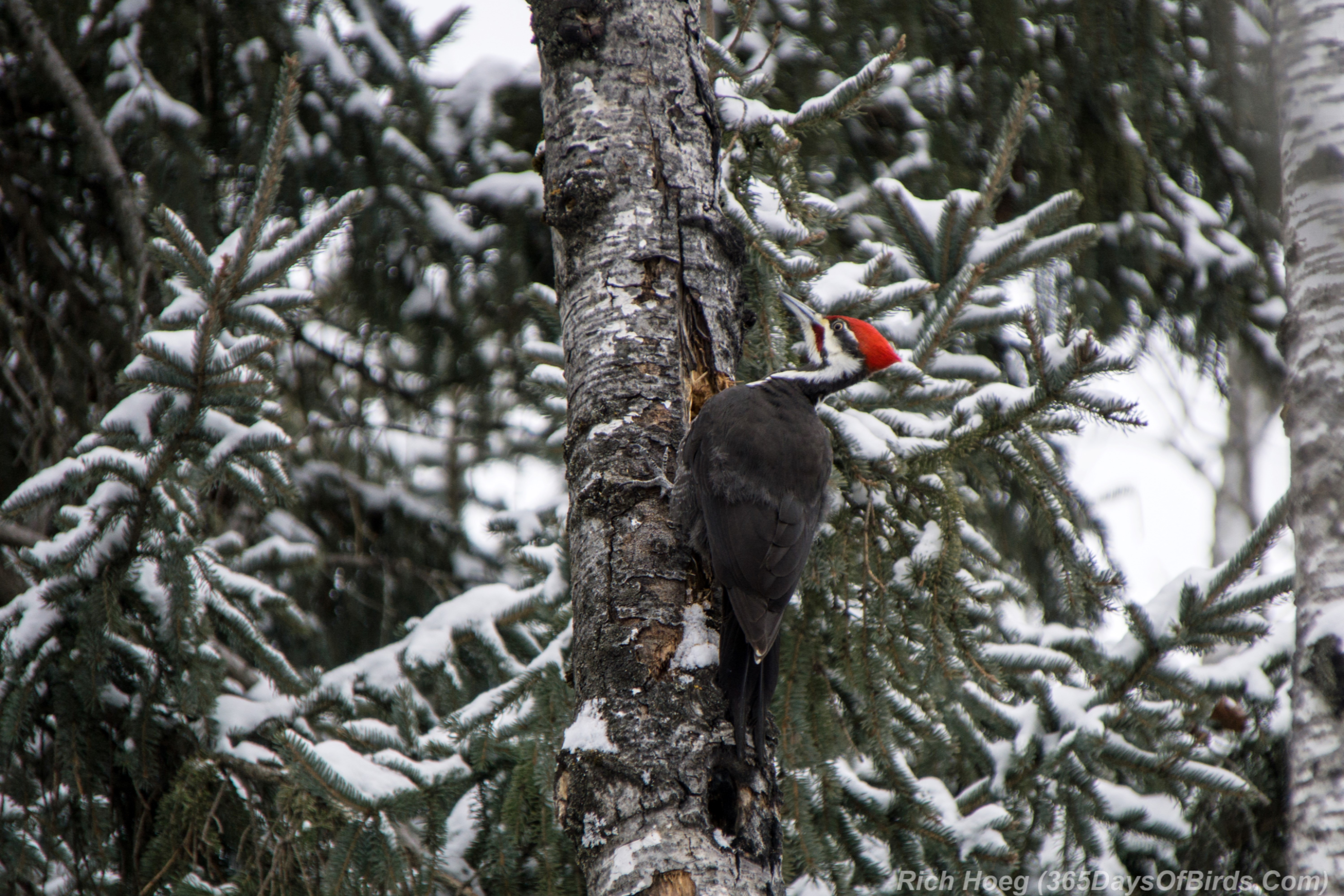
As they say … the proof is in the pudding. Here are two photographs of a Pileated Woodpecker taken two days ago after a snow storm in some very low light (i.e. thick clouds). The images are straight out of the camera with no lighting / shading adjustments, etc.  I was approximately 30 yards away from the woodpecker, and the bird was about 40 feet up in the tree. The final two photographs of this woodpecker are two images on which I took some time, and processed with minor lighting adjustments.

Amity Creek Pileated Woodpecker without teleconveter

  • 210 mm zoom (315 mm equivalent for a 35 mm system)
  • A6.3, 1/400th of a second, ISO 640

Amity Creek Pileated Woodpecker with 1.7 OlympusTteleconveter

  • 315 mm zoom (535 mm equivalent for a 35 mm system)
  • A6.3, 1/400th of a second, ISO 800

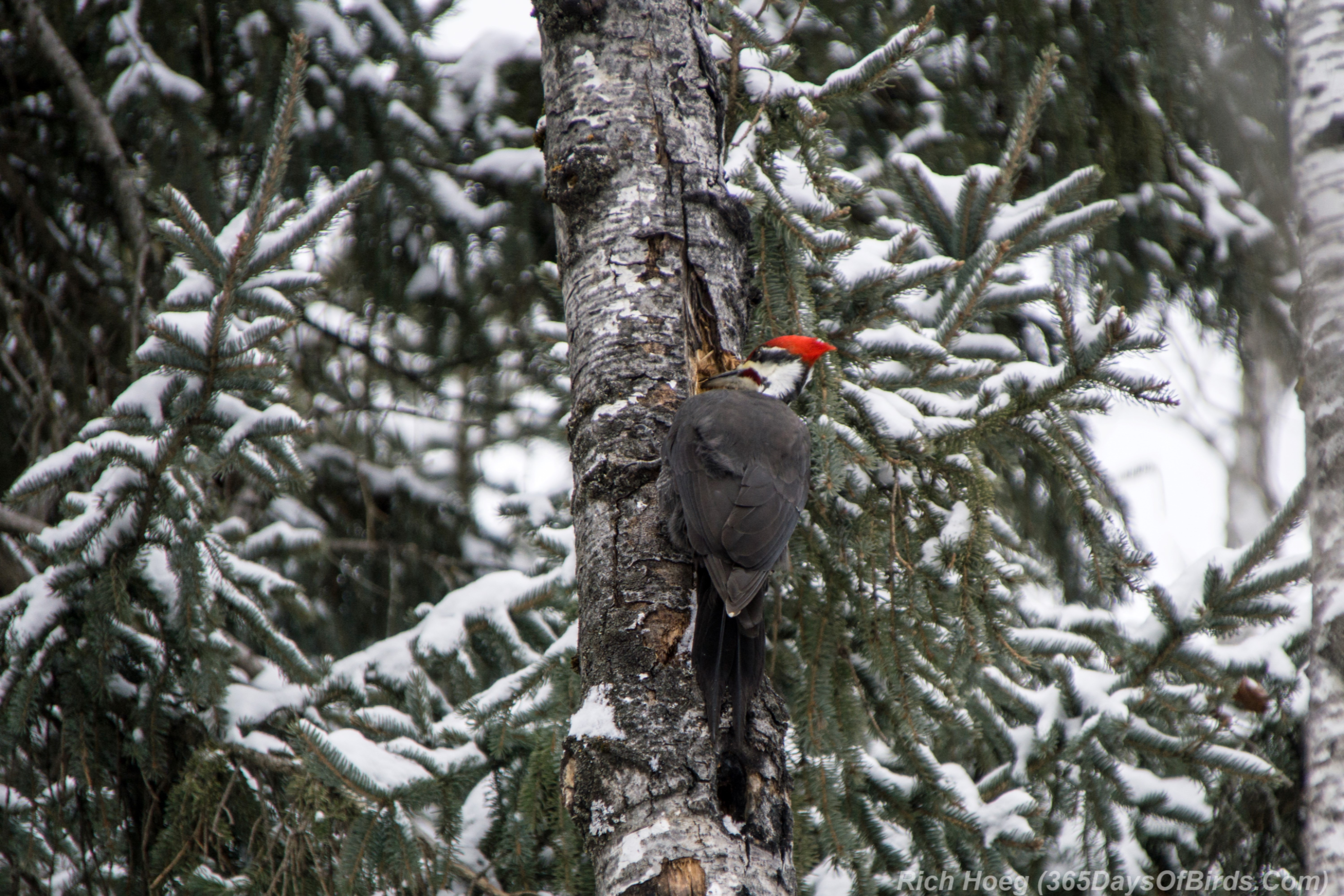
Amity Creek Pileated Woodpecker with 1.7 OlympusTteleconveter

  • These two photos were NOT part of my test. They are from a slightly different location, and have been processed for minor lighting / shading adjustments. Finally, some cropping of the photos was performed.


Follow me, Rich Hoeg, on Instagram.

Planning your Winter Minnesota Northern Lights Trip

While most folks dream of a trip to Iceland or Norway to view the Northern Lights, here in northern Minnesota we are able to frequently view the Aurora Borealis. This fact is not due to luck, but rather due to our closer proximity to the magnetic north pole than any other location in the continental United States. Thus, the question arises how is a person able to maximize their probability of seeing the Aurora in Minnesota? This post gives detailed instructions; however please understand that Lady Aurora is a fickle woman and even when predicted she may not dance across the sky. Thankfully here in northern Minnesota with our gorgeous wilderness including thousands of crystal clear lakes and huge forests, we are a dream location for the person who enjoys the outdoors.  Duluth was recently voted top outdoor city in America by Outside Magazine.

Why Northern Minnesota?

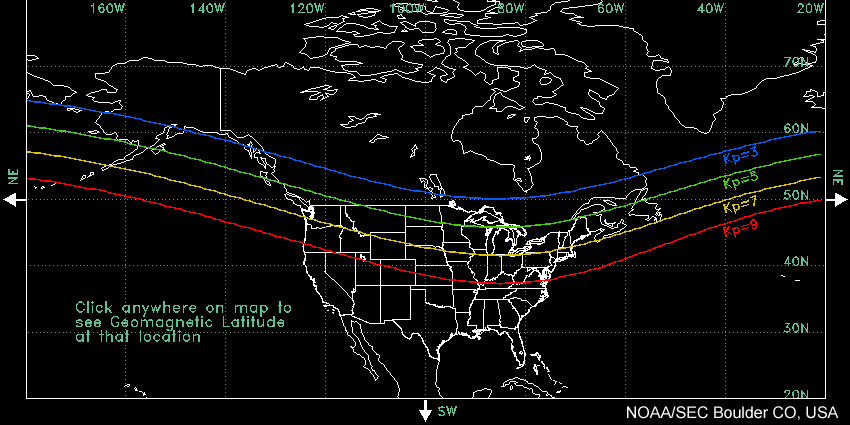
Simply put, because you can see the Northern Lights. Take a look at the two charts given immediately below. The Aurora is caused by the earth’s magnetic field, which is centered around the magnetic north pole which is located a bit north of Hudson’s Bay. Based upon past Auroras, scientists measure the intensity of the Northern Lights using a term called “Kp”. You are likely to see the Aurora Borealis in northern Minnesota near the Canadian border if the Kp is 4 or greater.

Aurora Borealis Viewing Oval
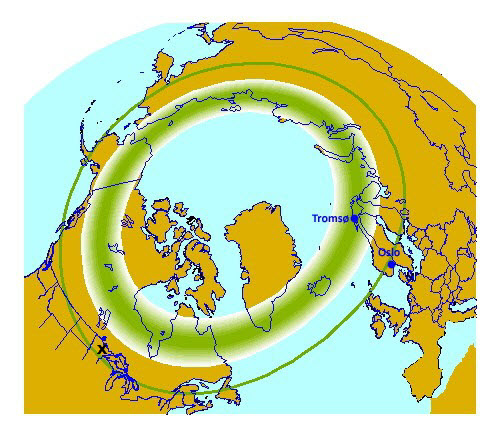
North America Kp Viewing Chart
Predicting When the Aurora will Dance

Aurora Borealis forecasts make weather forecasts appear “extremely reliable”. How many times have you been outside on what was forecast to be a sunny day only to get rained upon. Northern Lights forecasts are based upon the Solunar cycle and trying to measure the effect of sunspot activity directed towards earth. If the direction a sunspot shoots its power changes just a fraction of a degree differently than expected, the effect misses earth. It’s a big universe, and we don’t have anyone of the surface of the sun measuring sunspot outputs and direction.

  • Use the date sensitive tools on my main Northern Lights Viewing web page to plan ahead for your trip … from 28 days in advance to the current conditions.

My Two Favorite Winter Viewing Locations

Viewing the Aurora is fun, but temperatures in northern Minnesota often plunge to dangerously low levels. These two locations are within an hour’s drive of the northern edge of Duluth, and have very dark skies where you may watch the Northern Lights from inside your heated car. (in the Summer … mosquito free!).

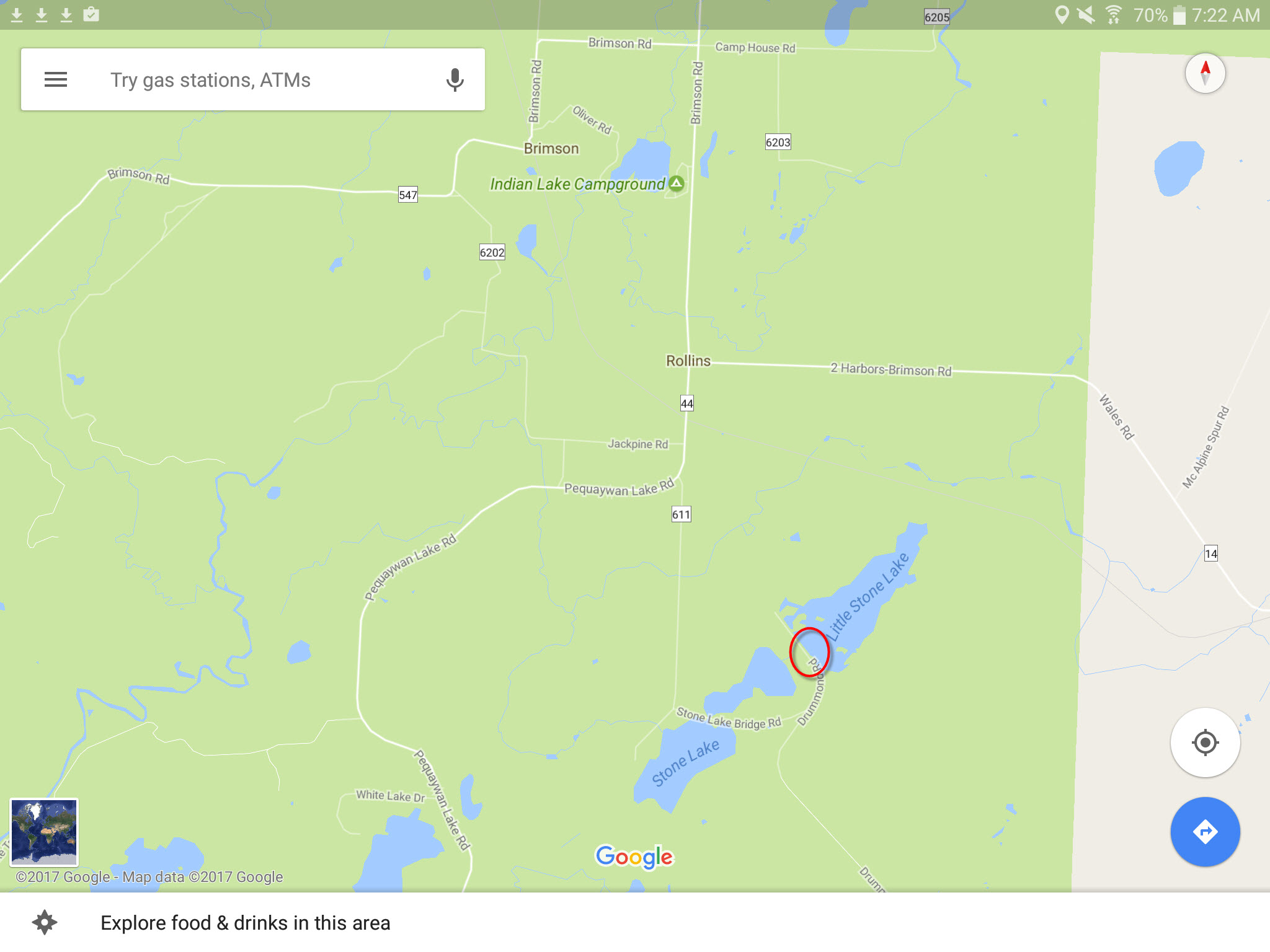
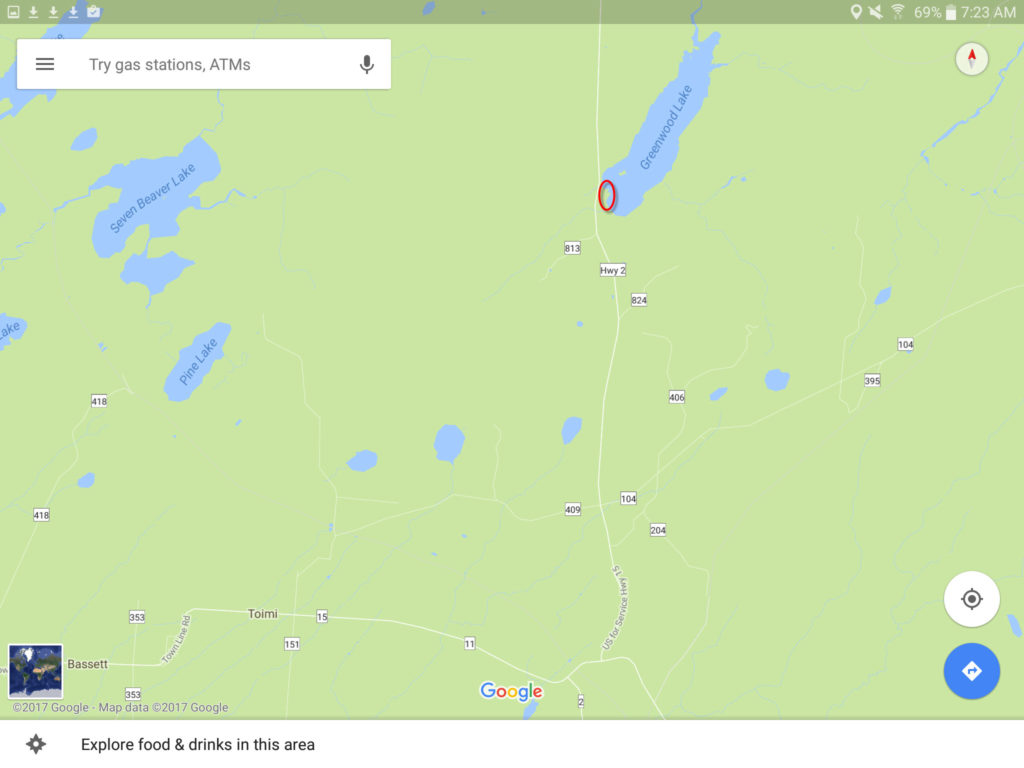
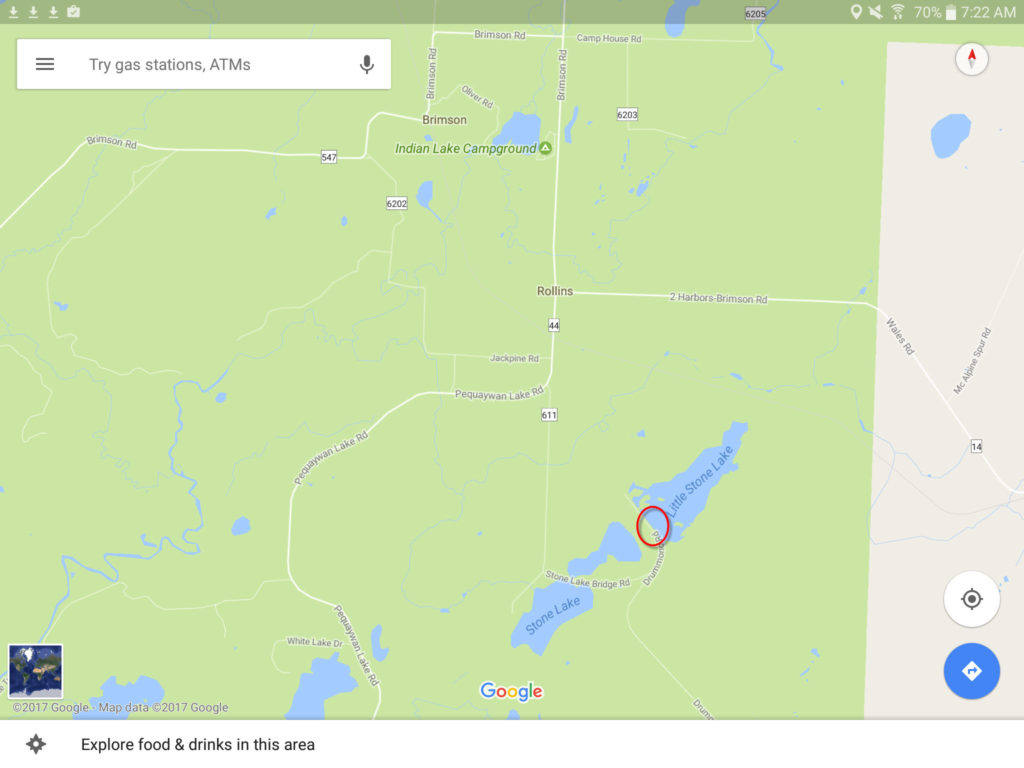
DO NOT USE GPS or GOOGLE MAPS DIRECTIONS!!! If you follow my directions, you will safely reach each location via good roads. Google may put you on unpassable winter roads where you will get stuck miles from civilization. Your cell phone will not work. You will be off the grid.

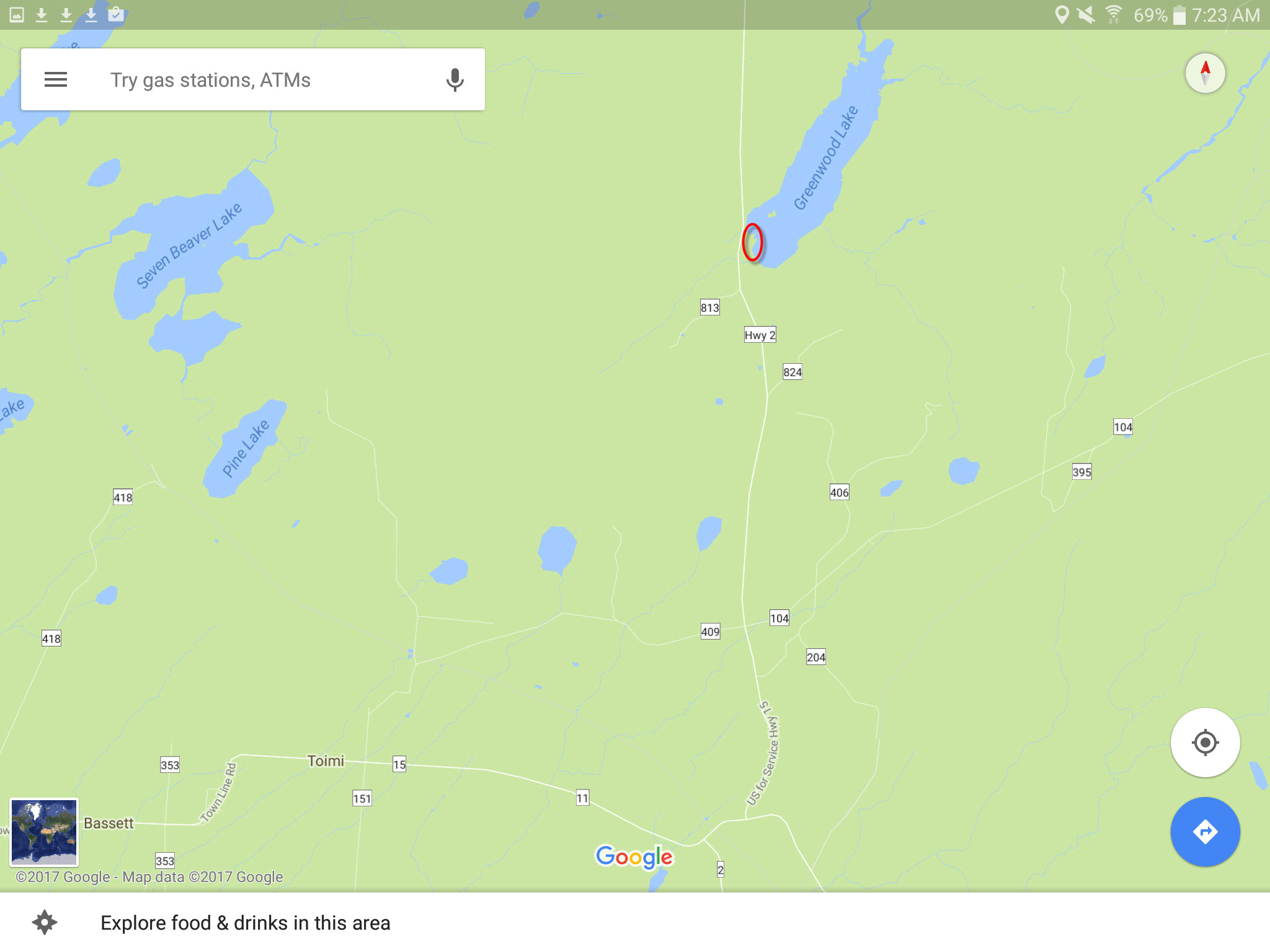
Greenwood Lake Public Boat Access: Drive north from Two Harbors on Lake County #2. Shortly after you see a highway sign for Greenwood Creek (about 1/3 mile), the public boat access will be on your right. It is normally plowed out in the winter allowing you to park your car right against the shoreline pointed North / Northeast.
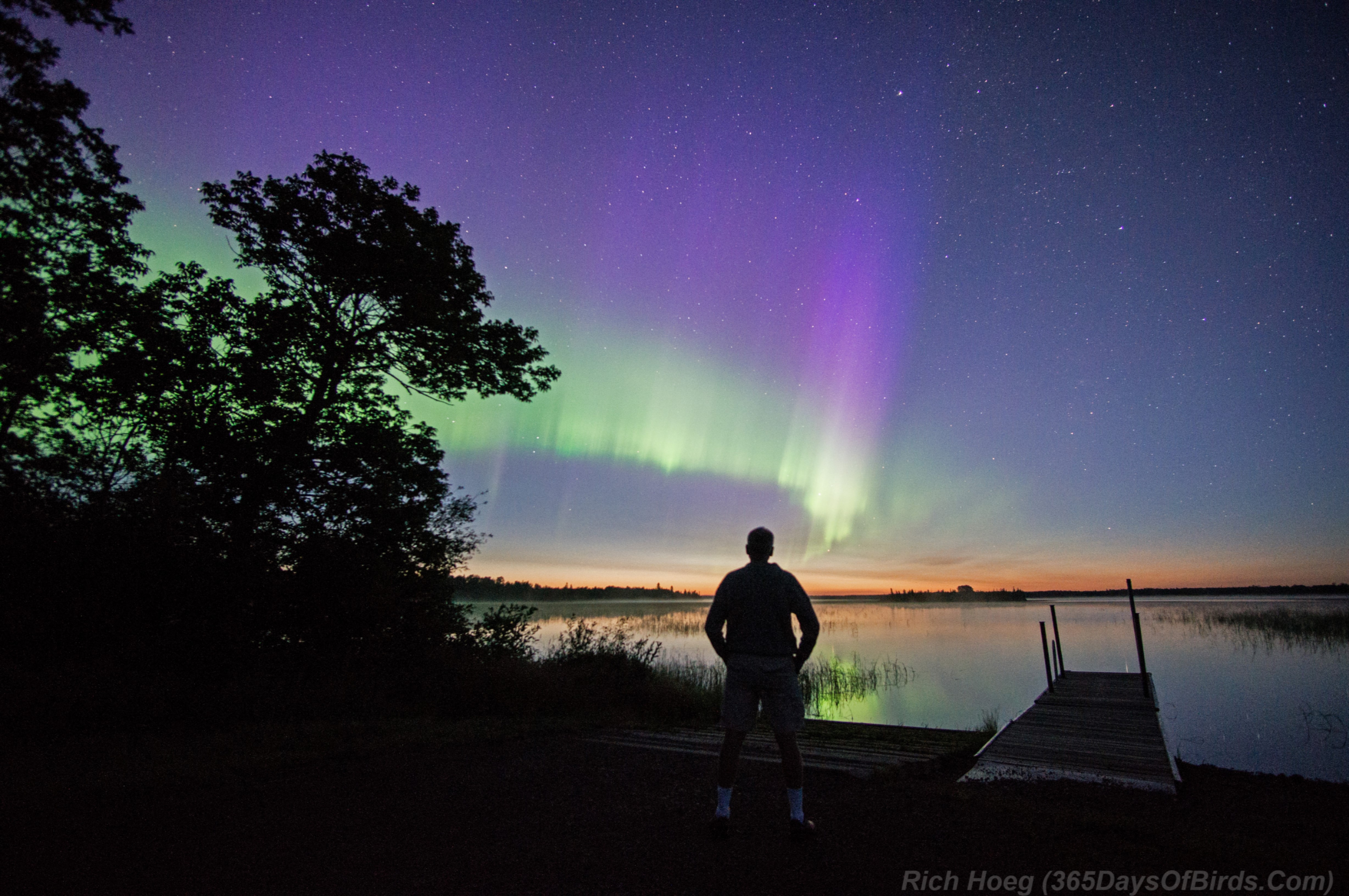
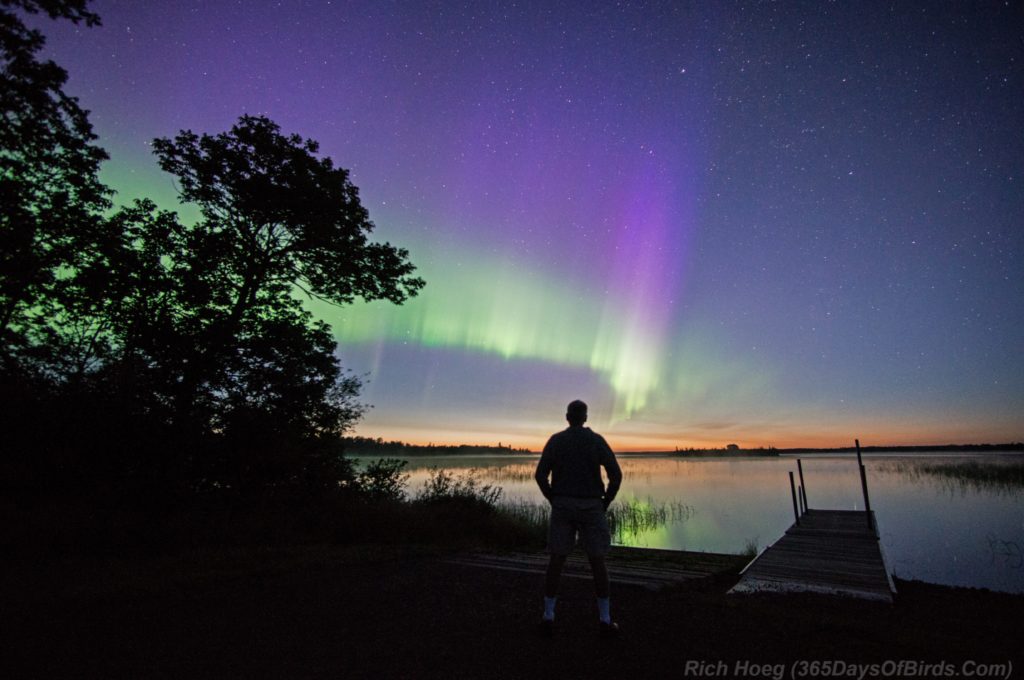
A photograph of the author, and also taken by the author (10 second shutter delay) at Greenwood Lake in August 2016 during a rare sunrise Aurora.
Little Stone Lake: Drive from the Duluth area using Pequaywan Lake Road to Rt. #611 (Hopper Road); Left onto Stone Lake Bridge Road; Left onto Drummond Rd (North Little Stone Lake Road). DO NOT TAKE Drummond Rd in the other direction. When you reach Little Stone Lake you will find yourself on an earthen dam road with great views to the North / Northeast. Just pull over towards the side of the road in the very unlikely event someone should need drive by you. At the end of the earthen dam their is a small plowed public boat access where you will be able to turn around your car.
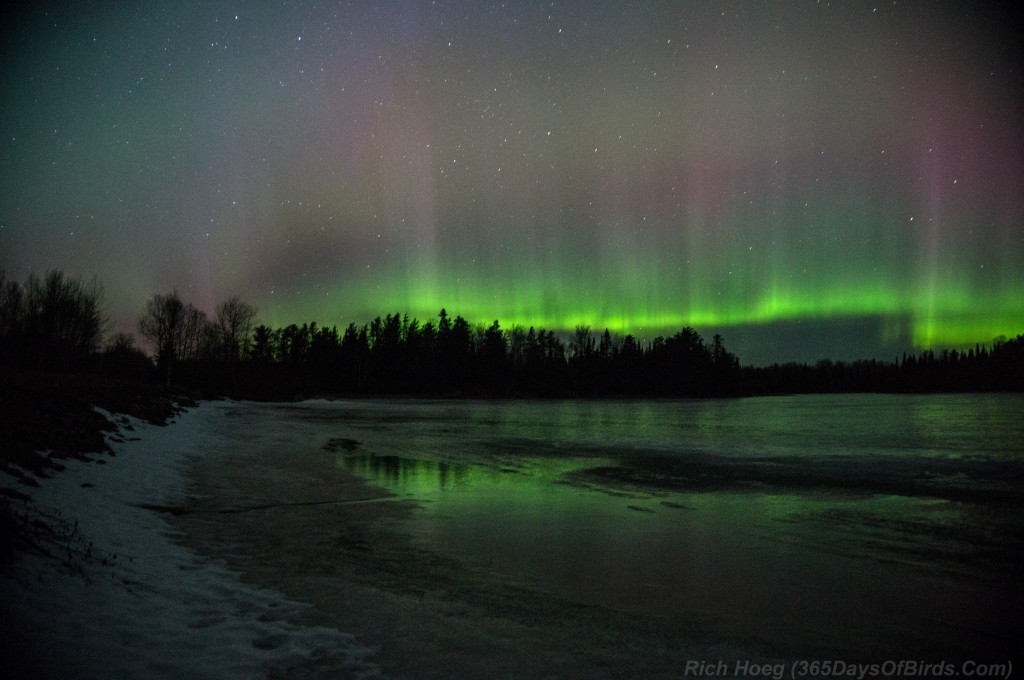
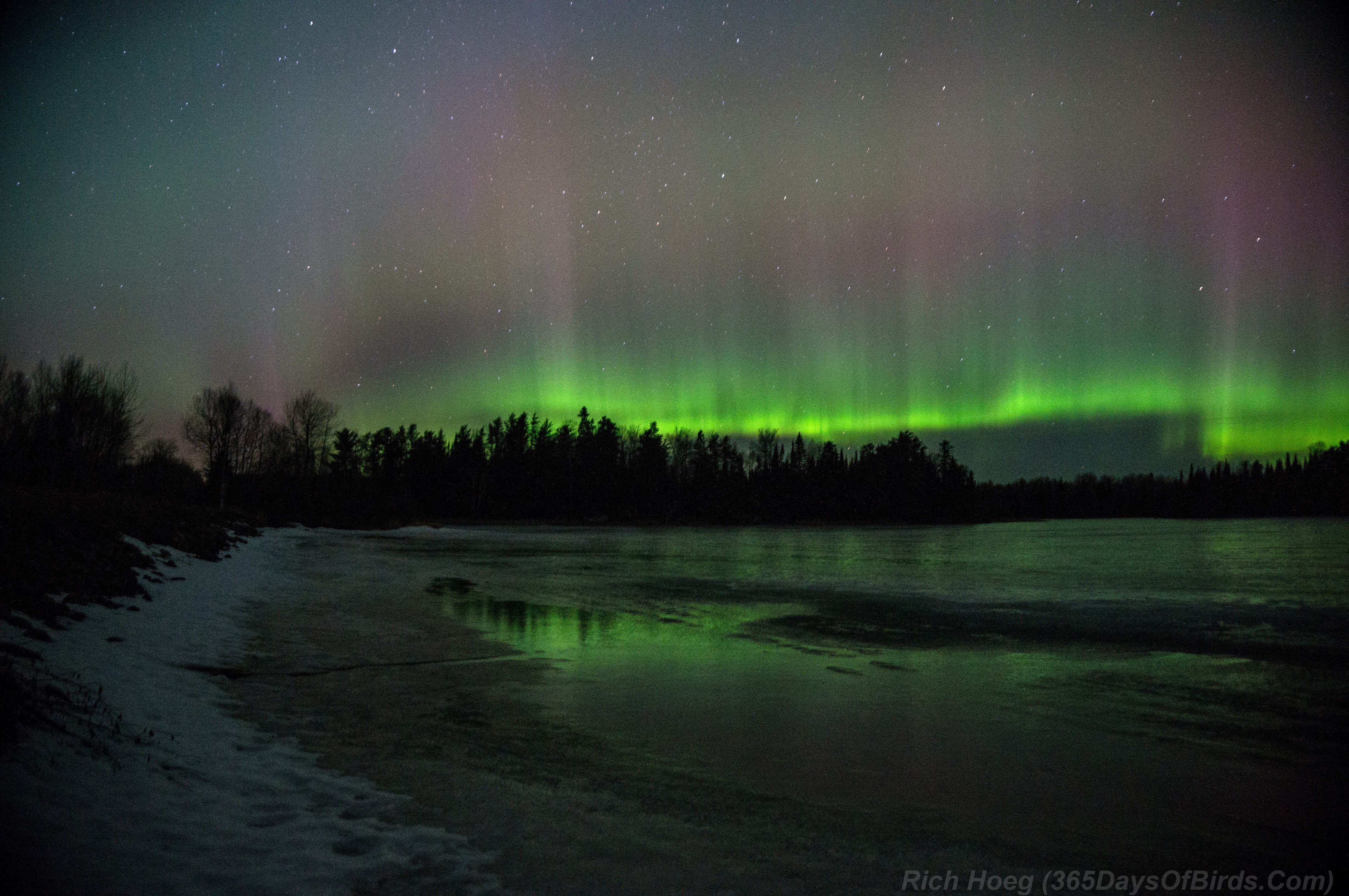
A photograph taken by the author at Little Stone Lake during the St. Patrick’s Day 2015 Aurora. The Aurora is reflected in refreeze snow melt lake ice.