Tag Archives: MN North: Canosia Wildlife Area

Tracking the Sun for Your Bird Outing: SunCalc

I am enjoying a morning at home, as the rains finally arrived overnight and the weather is ugly outside, but such was not the case yesterday. The day dawned crystal clear and with the first hint of autumn. It was 39F on Admiral Road in Sax-Zim Bog at 6 am, and did not rise to 40F till after 7 am. I had an excellent morning, and enjoyed my route.

One very important aspect of any birding outing (or even just a longer hike in a local park) is knowing in advance where the sun will be located relative to your current or planned position. If you are visiting a new area, and slowly driving down a remote dirt road scanning for birds, if that road ends up tracking into the morning sun, your birding success will be poor. It is no fun on a birding hike or slow drive in your car to be staring directly into the sun. It makes it darn hard to see anything.

While I use an advanced app on my phone and tablet called PlanIt for Photographers, which allows me to not only know the sun’s and moon’s location on any given day (and time), or additional items like planning milky way photographs for a given time of night and learning where truly dark night time skies are located (and much more) … for most people an app of this nature is overkill. Thus in this post I am reviewing a free service you may use on computer (not phone) that easily allows you to plan your own outings, and is free! The service is named SunCalc.Org.

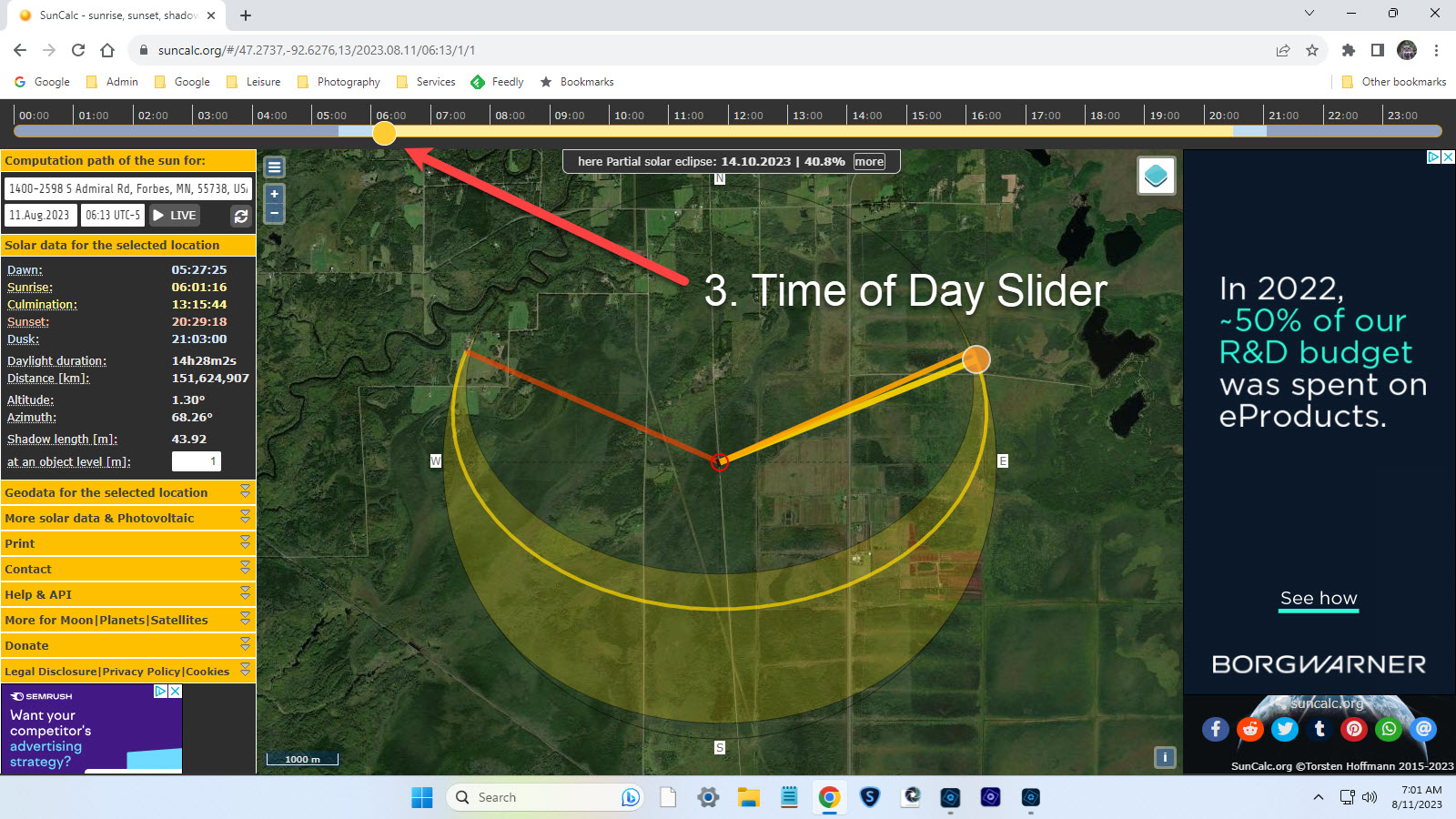
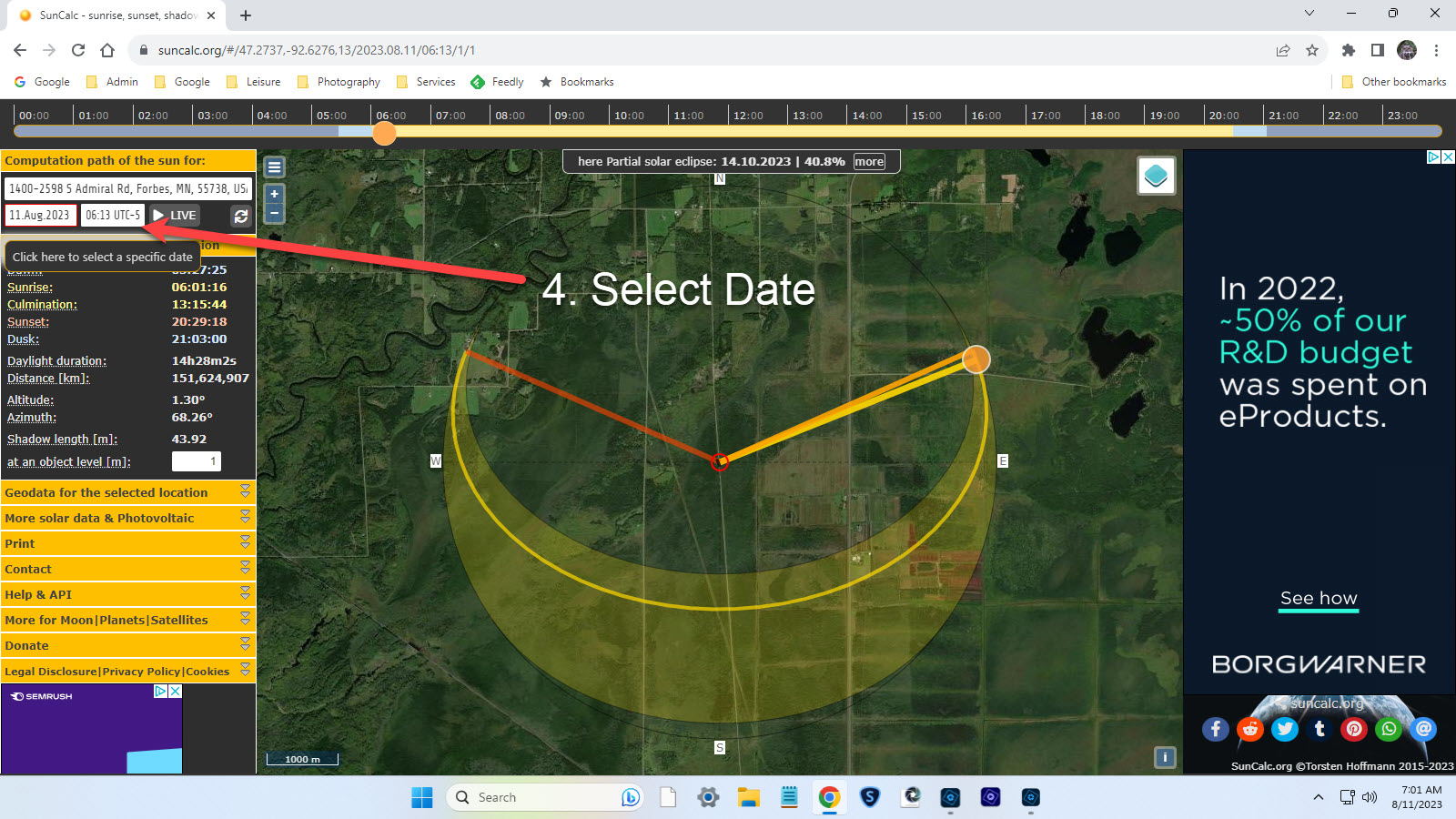
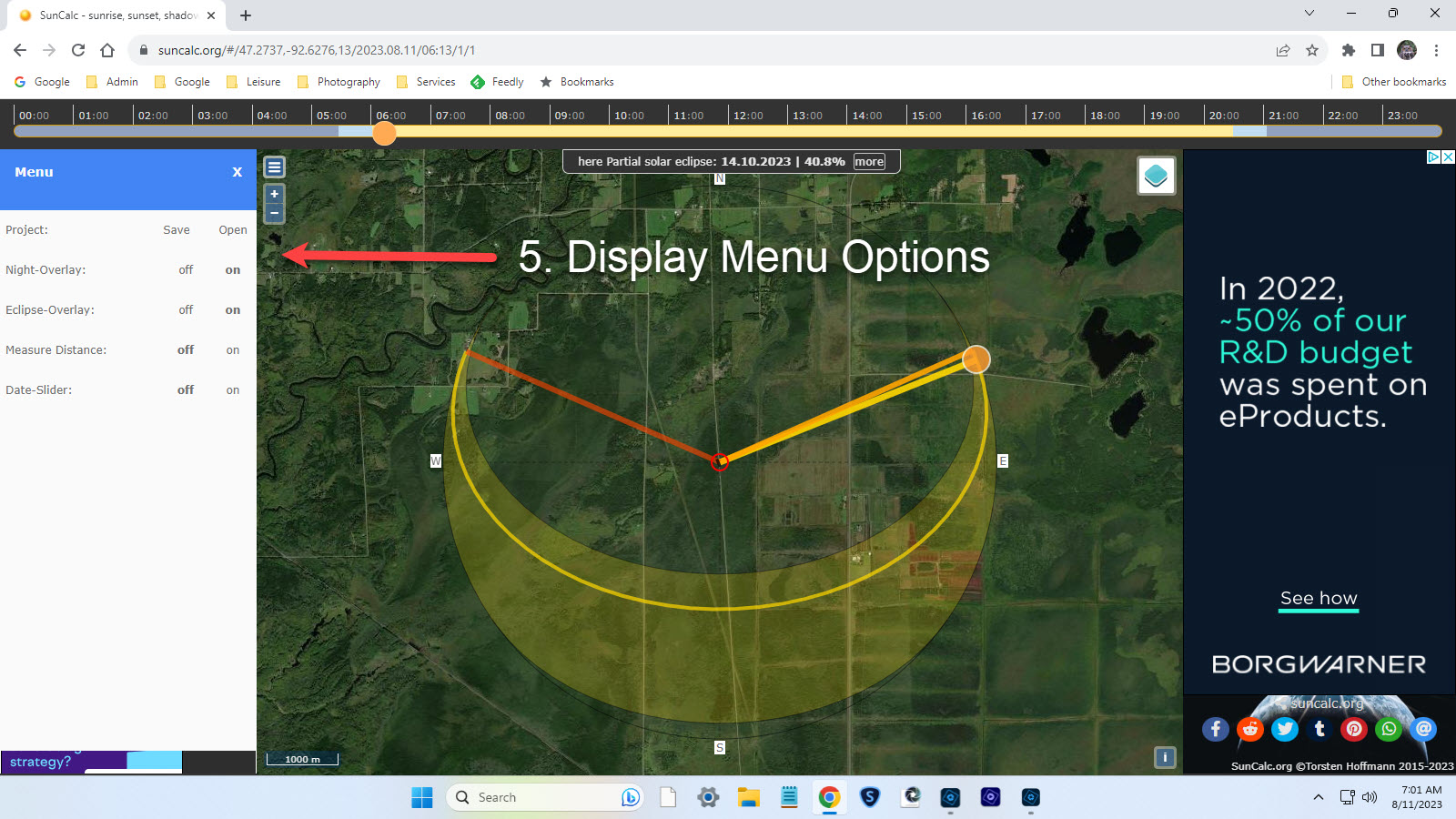
SunCalc allows the user to accomplish the basics, but arguably the most important task … where will the sun be located relative to a given (or expected) location at some time in the future.

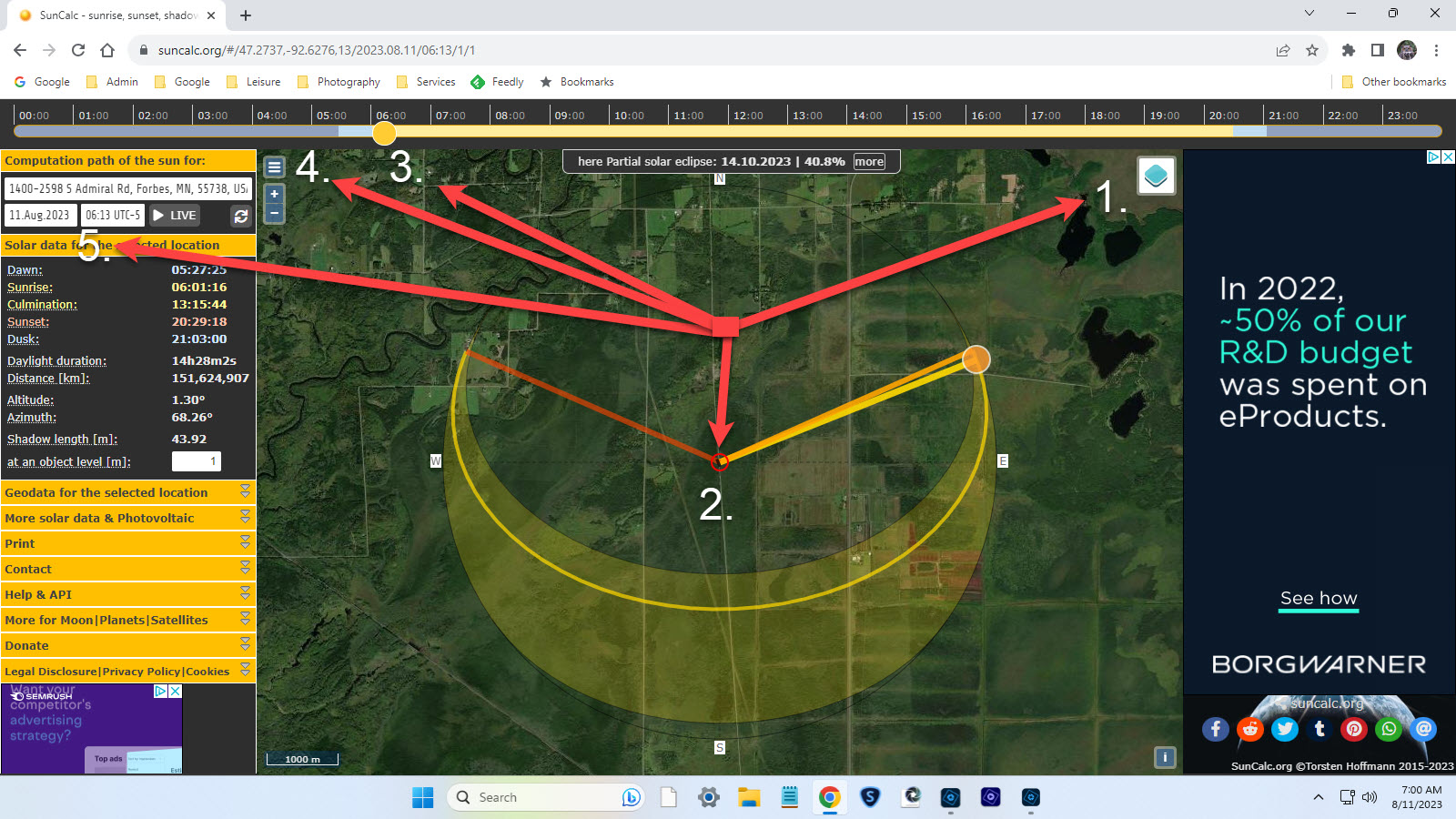
SunCalc.Org (basic or entry screen upon loading web page)

The Red Arrows and White Numbering & Text are my Annotations!


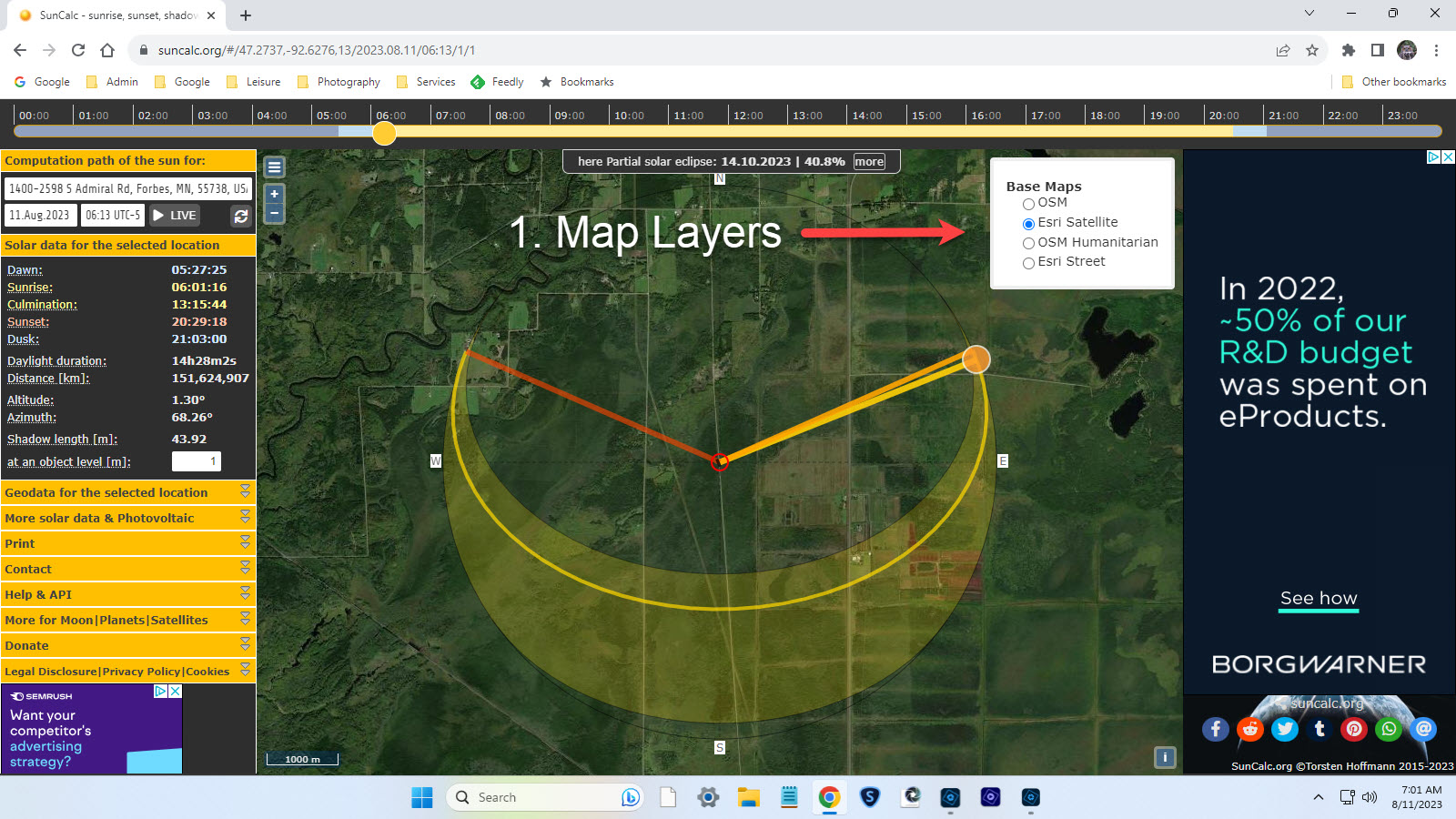
Map Layers


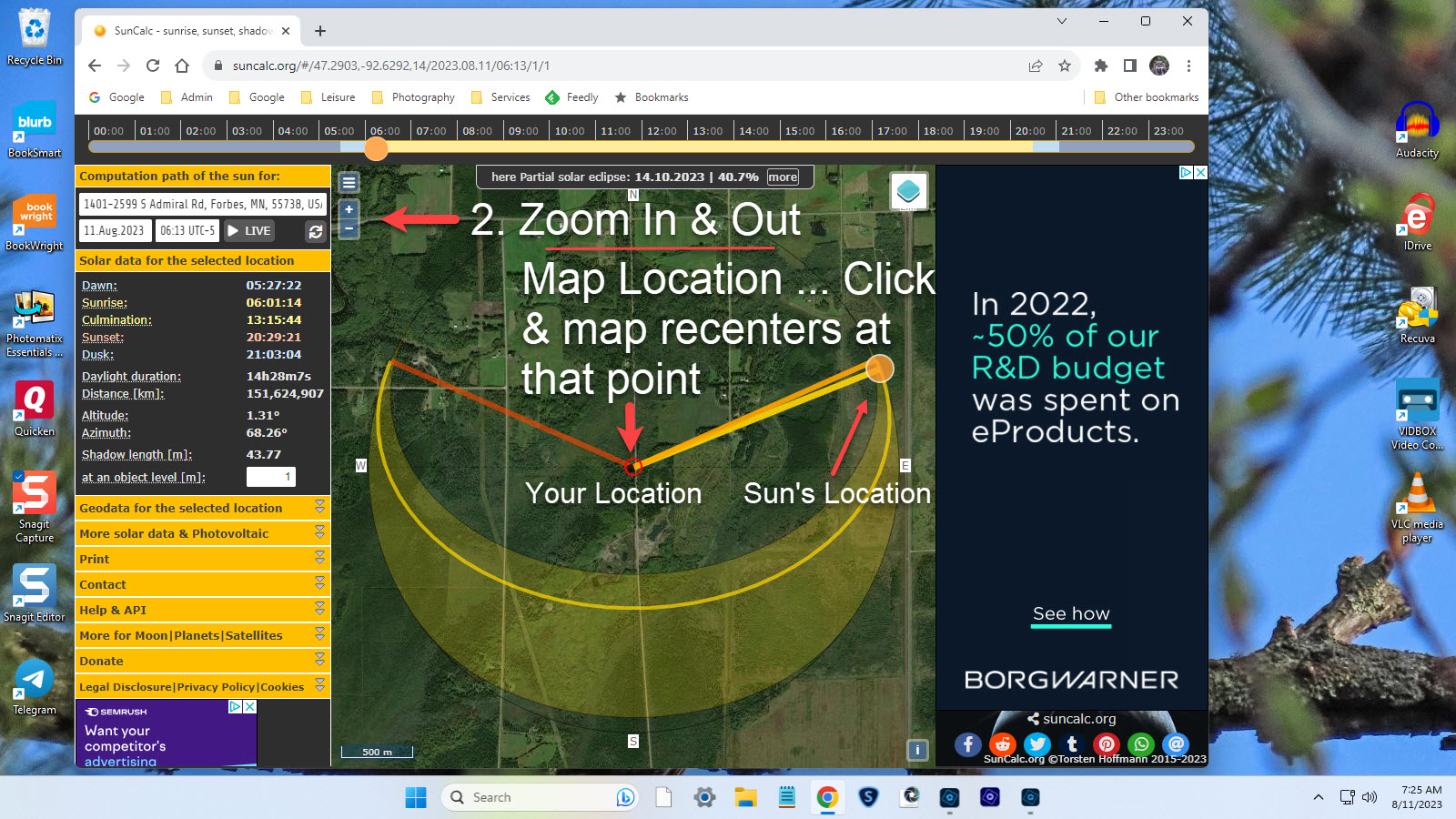
Zoom In and Out & Location


Time of Day Slider


Select Date


Selected Menu Options


Once again, SunCalc provides only the basics, but it does a good job and has an easy to learn interface. Happy birding.

Northern Harrier Nest!

There are epic days while out birding, and seven days ago I had just such a day/find. I left home at 5:30 am and had actually not seen much, till my last stop of the morning when I found a Northern Harrier nest!!!!
.
Actually, I know where the nest was located (young now fledged), but could not actually see the nest. Northern Harriers nest on the ground on small raised mounds of land in the middle of bogs. It is impossible to see their nests unless you are a glutton for punishment. One would need to wade through the swamp / bog braving all the horse flies, mosquitoes, other bugs to get anywhere near the actual nest. I stayed on dry land!
.
A few days prior to my find I had noticed a male and female Northern Harrier on the wing at this location. The female dove down into the Bog, and disappeared. Seeing two harriers together made me wonder if a nest was in the vicinity and when I returned to that location … jackpot!  I now saw four harriers together … Mom and her three juveniles. In the intervening two days the young had fledged and often sat in a nearby dead Tamarack Pine. I proceeded to watch the juvenile Northern Harriers for hours. Their acrobatics as the young hawks learned to fly told me where the nest was located. The juvenile harriers would dive to the ground out of sight … at the same exact spot.
.
Here are some images I have taken over the past seven days of the Northern Harriers.
.
All Three Juvenile Northern Harriers

Learning to Fly


One Juvenile Landed on a Remote Road


More Images ...


I took all of my Harrier photographs from quite a distance while seated in my car. My tool for camera stabilization is a “bean bag mount”. I love the medium sized bag from Grizzly. They are inexpensive mounts and a person may place it directly on the window frame of a car. I have also placed mine on rocks, tree stumps, etc. to get a stable camera platform. It is easier to carry in a small backpack than a tripod. One does need to fill the bag with your favorite “stuffing. I am using dried peas! Link to the Grizzly company. I bought mine via Amazon … minimal cost.

Raspberries +Thimbleberries = Owls!

I had my first “yummy” owl hike yesterday afternoon. Summer’s berries are becoming ripe in the Northwoods, and the birds (and small mammals) are very aware of this fact. For me ripening berries means I get to snack as I walk, but it also attracts other consumers which are perfect prey for young owls learning to hunt. In one of my bigger berry patches I found both Great Horned Owlets yesterday afternoon. Thimbleberries like shade, and the owls love the fact that this fruit grows underneath some of their favorite white pine perches.

I am pretty certain FuzzBall is the owlet in the back of these photographs. Fuzz is the older owlet, and thus has darker plumage. Junior still looks younger. Regardless, it was great to find them.

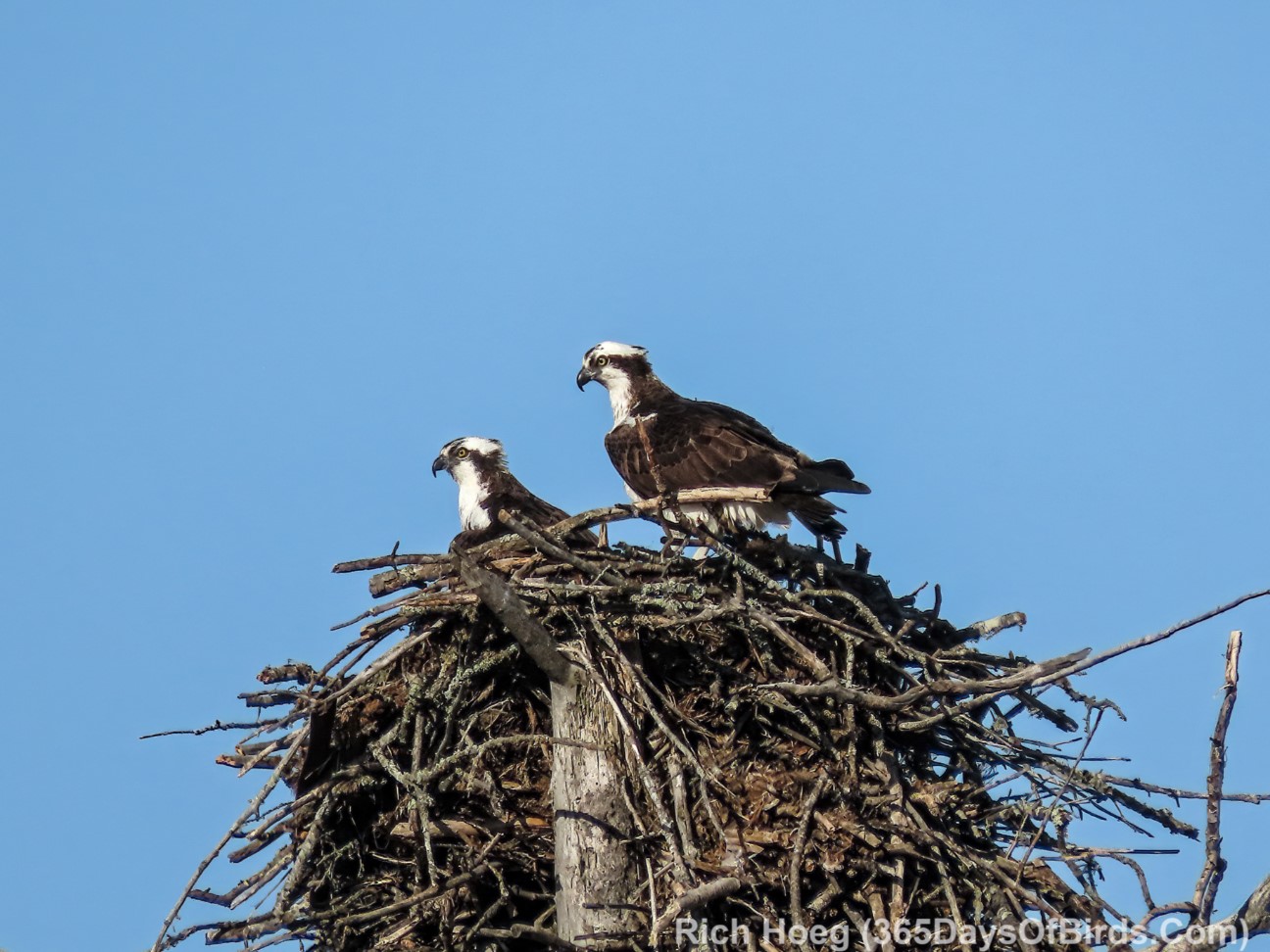
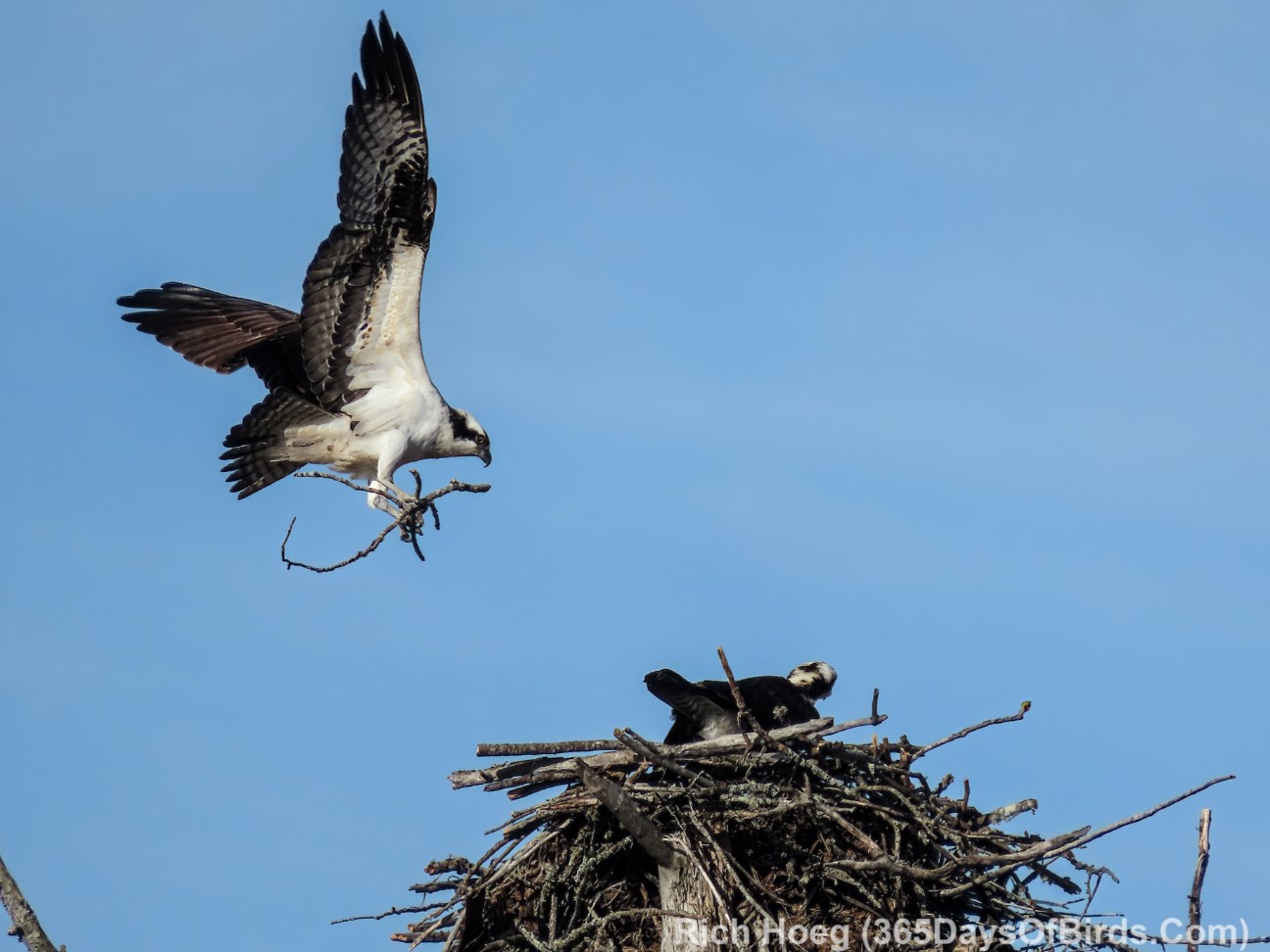
The Osprey Twins are getting big! As I drove past them once again an hour later Mom Osprey had left them in the nest alone for the first time. Big chicks require both parents actively fishing.

Once I actually got to Sax-Zim Bog, my best “bird” was this Alligator Snapping Turtle on Admiral Road. I was hoping I might find a few juvenile Great Gray Owls. I did see multiple Northern Harrier Couples hunting. Just like the Osprey family, the Harriers need to have both parents hunting for their young.

Finally, as the sun rose a bit in the sky and the day warmed, I was reminded by this Red Fox Kit of the song … Bring Back the Lazy, Hazy, Crazy Days of Summer.


In closing pay attention to mid Summer to late Summer food sources. The birds are not starting to actively use these foods. Here on the shores of Lake Superior, some of the first southern migrants are now appearing as they leave the Arctic and start their long journeys to winter habitat. Remember, during the fall migration, birds will often linger in an area for significant periods of time if good food sources are near by.

In my own garden, the Bee Balm is starting to bloom, which means Chardonnay and Hummers!